
Why India's Coal Output Is Rising Even as Non-Fossil Capacity Exceeds Thermal Power
India's power grid is undergoing a complex transition where rapid renewable energy growth coexists with expanding coal production. Evidence suggests thermal power is shifting from a steady baseload to a flexible shock absorber required to manage extreme heatwaves and grid intermittency.
By Layla Zaher

Share this story
In short
- India has surpassed its target of achieving 50% non-fossil installed power capacity five years ahead of schedule.
- Despite the renewable capacity milestone, coal still accounts for approximately 75% of actual electricity generation.
- The government plans to scale annual coal production to 1.5 billion tonnes by 2030 to meet surging aggregate demand.
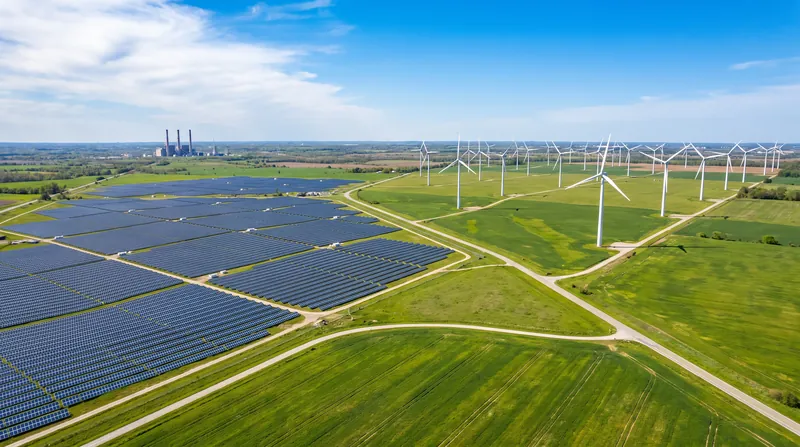
India's power grid is currently navigating one of the most complex energy transitions in the world, characterized by a striking divergence between installed capacity and actual electricity generation. In a significant milestone for the developing nation, India recently crossed the threshold of having more than half of its installed power capacity derived from non-fossil sources, achieving this goal five years ahead of its 2030 target.
However, this rapid expansion of renewable infrastructure is occurring alongside a massive surge in domestic coal production. The Indian government has set an ambitious target to scale annual coal output to 1.5 billion tonnes by the end of the decade, a move that appears to contradict global decarbonization efforts. This dual-track approach highlights a fundamental reality of managing a rapidly growing economy: adding renewable capacity does not immediately eliminate the structural need for fossil fuels.[1][2]
The core of this paradox lies in the operational differences between variable renewable energy and dispatchable thermal power. As of early 2026, India's non-fossil installed capacity reached 263.19 gigawatts, officially surpassing its coal and lignite capacity of 227.83 gigawatts. Despite this capacity advantage, coal continues to account for roughly 75 percent of the country's actual electricity generation.
This discrepancy underscores the dispatchability premium in a fast-growing grid. Solar and wind energy are inherently intermittent, dependent on weather conditions and time of day, whereas coal plants provide a continuous, reliable baseload. Consequently, a single gigawatt of installed thermal capacity currently yields significantly more actual power over a 24-hour period than an equivalent renewable installation, anchoring the stability of the national grid.[1][4]
A primary driver of this continued reliance on thermal generation is the increasing frequency and severity of extreme weather events. India has faced prolonged heatwaves in recent years, which have fundamentally altered the country's electricity consumption patterns. In 2024 and 2025, peak electricity demand surged to roughly 250 gigawatts, driven largely by the massive deployment of air conditioning and cooling systems.
Empirical estimates suggest that each one-degree Celsius increase above normal temperatures can add approximately six to eight gigawatts to the peak demand load. This climate-fueled surge in energy requirements places unprecedented strain on the grid, forcing system operators to maximize output from all available generation sources, including older and less efficient coal plants, to prevent widespread outages.[5][6]
The structural vulnerability of India's grid is exacerbated by a temporal mismatch between renewable generation and peak demand. Solar power provides substantial support during the daytime, significantly offsetting the need for fossil fuels when the sun is shining. However, solar output drops sharply after sunset, creating a steep evening ramp exactly when residential cooling demand reaches its zenith.
This phenomenon, often referred to as the "duck curve," requires conventional generation sources to rapidly increase their output to bridge the gap. Without sufficient grid-scale battery storage or pumped hydropower to shift daytime solar generation into the evening hours, the system remains heavily dependent on the dispatchability of coal to maintain voltage stability and meet the evening peak.[5][6]
In response to these operational realities, the role of coal-based generation in India is undergoing a fundamental shift. Rather than serving exclusively as a steady, uninterrupted baseload provider, the thermal fleet is increasingly being utilized as a flexible balancing resource. The Indian government has recognized this necessity, notifying regulations that require coal plants to improve their ramping capabilities and operate at lower minimum technical loads.
This flexibilization allows thermal units to dial down their output during peak solar hours and rapidly ramp up as the sun sets. By acting as a system shock absorber, the coal fleet accommodates the integration of larger volumes of variable renewable energy, albeit at the cost of reduced overall plant efficiency and increased wear and tear on the thermal infrastructure.[3][4]
While the headline tariffs for utility-scale solar and wind projects in India have fallen to some of the lowest levels globally, the broader economics of grid integration present a more complex picture. Renewable energy is highly cost-competitive on a standalone basis, but the effective system cost narrows significantly when factoring in the necessary investments in transmission upgrades, grid balancing, and energy storage.
Coal plants, particularly those located near domestic mines, continue to provide predictable power at tariffs that remain attractive to state distribution companies. Until battery storage technologies achieve greater economies of scale and domestic manufacturing capacity expands, thermal power remains a pragmatic economic hedge against demand volatility and the inherent intermittency of renewable sources.[1][3]
Driven by these reliability and economic imperatives, India is actively expanding its thermal power pipeline alongside its renewable ambitions. The federal ministry projects that coal capacity will rise toward 307 gigawatts by the 2034-35 fiscal year, with plans to add at least 97 gigawatts of new thermal infrastructure.
This expansion is not officially framed as a reversal of the country's climate commitments, but rather as a necessary parallel investment to ensure energy security during the transition decade. Policymakers argue that scaling clean energy quickly is critical, but it must be matched by sufficient dispatchable capacity to reliably and affordably meet an electricity demand curve that is growing by roughly seven percent annually.[1][6]
However, this dual-track strategy carries substantial environmental implications that extend beyond standard carbon dioxide emissions. The ambitious push to reach 1.5 billion tonnes of annual coal production includes a specific government mandate to triple output from underground mines by the end of the decade.
While underground mining avoids some of the severe surface-level ecological disruption and land-use conflicts associated with sprawling opencast operations, it introduces a distinct and potent climate challenge. Deep coal seams contain significant pockets of trapped gas, which are inevitably released into the atmosphere during the extraction process.[2]
These fugitive emissions represent a growing concern for global climate models. Annual methane emissions from Indian coal mining are projected to more than double from 2019 levels by the end of the decade, potentially exceeding 1.6 million tonnes.
Given that methane possesses a short-term atmospheric warming impact over 80 times greater than that of carbon dioxide, the rapid expansion of underground operations threatens to offset a measurable portion of the climate benefits gained from the concurrent rollout of renewable energy. Environmental analysts warn that without stringent monitoring and capture technologies, this localized production boom could complicate international emissions reduction efforts.[2][3]
Despite the ongoing reliance on thermal generation, India's commitment to fundamentally transforming its energy architecture remains robust. The national target to deploy 500 gigawatts of renewable energy capacity by 2030 continues to serve as a powerful, market-shaping signal to global investors and developers.
This ambition is driving massive capital flows into utility-scale solar parks, onshore wind farms, and emerging clean technologies like green hydrogen. By consistently meeting and exceeding interim capacity milestones, the government is demonstrating that its long-term policy trajectory remains firmly pointed toward a non-fossil future, even as short-term operational realities necessitate continued fossil fuel use.[1][3]
To bridge the gap between intermittent generation and reliable supply, the transition is also prompting critical regulatory and infrastructure reforms. Policymakers are increasingly mandating the inclusion of battery storage components in new solar and wind capacity tenders, shifting the market toward hybrid "round-the-clock" power contracts.
Furthermore, the government is providing viability gap funding to accelerate the deployment of grid-scale storage solutions and pumped hydropower projects. These targeted infrastructure investments are systematically laying the technical groundwork for a future grid where renewable sources, backed by massive storage capacity, can eventually assume the baseload responsibilities currently shouldered by coal.[1][4]
Ultimately, India's power transition is best understood not as a linear pathway toward immediate decarbonization, but as a highly calibrated balancing act. The country is not choosing between coal and renewables; it is scaling both in parallel to accommodate an unprecedented surge in aggregate energy demand.
Coal remains the system's vital shock absorber, providing the dispatchability required to navigate extreme weather and grid intermittency. Meanwhile, renewables represent the undeniable growth engine of the future. The speed at which this balance permanently tilts away from fossil fuels will largely depend on the pace of advancements in energy storage and the expansion of national transmission networks.[1][3][5]
How we did this
- Method
- Calculated the generation-to-capacity yield ratio between coal and non-fossil sources by comparing their respective shares of actual power output against their shares of installed grid capacity.
- What we found
- A single gigawatt of installed coal capacity currently yields 3.4 times more actual electricity generation than a gigawatt of non-fossil capacity on the Indian grid, quantifying the dispatchability premium that drives continued thermal expansion.
- What we worked from
- Coal and lignite installed capacity: 227.83 GW — S&P Global
- Non-fossil installed capacity: 263.19 GW — S&P Global
- Coal share of actual generation: 75% — S&P Global
- Limits of this analysis
- This ratio represents a snapshot of current grid operations and does not account for future improvements in battery storage or pumped hydro, which would increase the effective yield of variable renewable capacity.
Terms to know
- Baseload Power
- The minimum level of electricity demand on a grid over a 24-hour period, traditionally supplied by power plants that run continuously.
- Dispatchability
- The ability of a power plant to turn on, turn off, or adjust its electricity output on demand at the request of grid operators.
- Duck Curve
- A graph of power production that shows a steep drop in net load during the day when solar generation is high, followed by a sharp increase in the evening as the sun sets and demand peaks.
- Fugitive Emissions
- Gases, such as methane, that leak or are intentionally vented into the atmosphere during the extraction and processing of fossil fuels.
- Plant Load Factor (PLF)
- A measure of the output of a power plant compared to the maximum output it could produce, indicating how efficiently the capacity is being utilized.
Different angles
Grid Operators & Planners
Emphasize reliability and the necessity of dispatchable baseload.
System operators argue that until grid-scale battery storage becomes economically viable and widely deployed, thermal plants remain the only reliable mechanism to manage the steep evening demand ramps caused by the sudden drop in solar generation. They view coal expansion as a pragmatic necessity to prevent catastrophic blackouts during extreme heatwaves, prioritizing immediate energy security and grid stability over accelerated phase-down timelines.
Climate Policy Analysts
Focus on the long-term emissions lock-in and environmental costs.
Environmental analysts warn that expanding coal infrastructure and underground mining operations risks locking India into a high-emissions trajectory. They argue that the capital invested in new thermal plants could be better utilized to accelerate the deployment of battery storage, pumped hydro, and grid modernization, thereby addressing the intermittency issue without increasing methane and carbon emissions that undermine global climate targets.
Energy Economists
Highlight the total system cost and the coexistence of both energy sources.
Economists point out that while headline renewable tariffs are lower, the effective system cost narrows significantly when factoring in the necessary balancing, transmission, and storage infrastructure. They view India's strategy not as a binary choice between coal and renewables, but as a parallel scaling of both to meet an unprecedented surge in aggregate electricity demand, ensuring that power remains affordable for industrial growth.
- Grid Reliability Advocates
- Argue that dispatchable thermal power remains an absolute necessity to prevent blackouts during extreme heatwaves and evening demand spikes.
- Climate Mitigation Advocates
- Warn that expanding coal infrastructure and underground mining locks the country into a high-emissions trajectory that undermines global climate goals.
- Transition Economists
- Emphasize that the effective system cost of renewables requires massive storage investments, making coal a pragmatic economic hedge in the interim.
Perspectives this story doesn't cover
- Local communities affected by the expansion of underground coal mining operations
- Domestic battery manufacturers seeking stronger policy support to scale production
Sources
Source coverage
7 outlets
3 viewpoints surfaced







- [1]S&P GlobalGrid Reliability Advocates
India's power transition: A balancing act between coal and renewables
Read on S&P Global → - [2]EmberClimate Mitigation Advocates
India's coal distribution and production targets
Read on Ember → - [3]Climate Action TrackerClimate Mitigation Advocates
Coal as a shock absorber and not a solution
Read on Climate Action Tracker → - [4]Centre for Science and EnvironmentTransition Economists
India's coal fleet flexibilisation
Read on Centre for Science and Environment → - [5]Down To EarthGrid Reliability Advocates
India's power sector is entering one of its most complex transition phases
Read on Down To Earth → - [6]ResearchGateGrid Reliability Advocates
Electricity demand scenarios for summer 2026
Read on ResearchGate → - [7]Factlen Editorial Team
Synthesis by Factlen editorial team
Read on Factlen Editorial Team →

More in Energy
See all →Carbon Pricing
Market Stability Reserve Controls EU Carbon Prices by Invalidating Excess Permits
4 sources

Methane Tracking
Why the Global Methane Pledge Relies on Satellites to Track 30% Emissions Cuts
6 sources

Social Cost of Carbon
Calculating the Social Cost of Carbon: How Integrated Assessment Models Price CO2
8 sources

Grid Transition
Wind and Solar Surpass Gas for First Time to Become Second-Largest Global Power Source
3 sources
Comments
Every angle. Every day.
Get Energy stories with full source coverage and perspective breakdowns, free every day.