
Riot Games Eliminates Regional Prize Pools for League of Legends Pro Leagues in Major Financial Overhaul
Riot Games will remove regional prize pools for major League of Legends leagues starting in 2026, redirecting funds into a Global Revenue Pool to prioritize long-term ecosystem sustainability. The move has sparked debate among team owners over the shift from win-based incentives to broader revenue sharing.
By Jackson Reed

- Riot Games & Ecosystem Planners
- Argues that pooling funds into the Global Revenue Pool provides better long-term stability and equitable digital revenue sharing.
- Competitive Organizations & Team Owners
- Concerned that removing direct prize money eliminates crucial win-based incentives and creates uncertainty for organizations.
- Esports Analysts & Community
- Views the change as a necessary correction for an industry maturing past its initial boom, focusing on sustainable digital revenue.
How we got here
March 2024
Riot Games introduces the Global Revenue Pool (GRP) to share digital content sales with partnered teams.
April 2025
Financial reports reveal the LCK accumulated 42.7 billion KRW in operating losses over three years.
January 2026
Riot officially announces the elimination of regional prize pools for the LCS, LEC, and LCK starting in the 2026 season.
Why it matters
The elimination of direct prize money in top-tier regional leagues marks a fundamental shift in esports economics. By prioritizing guaranteed stipends and digital revenue sharing over traditional tournament winnings, Riot is attempting to stabilize an industry that has recently struggled with massive operating losses and team closures.
The era of hoisting a regional trophy for a massive cash payout is officially over in top-tier League of Legends. Riot Games is fundamentally restructuring the financial foundation of its flagship esport, announcing the abrupt elimination of regional prize pools for its premier leagues—the LCS, LEC, and LCK—starting in the 2026 season. Instead of awarding a traditional cash prize to the teams that conquer their respective regional splits, Riot will redirect those funds entirely into its centralized Global Revenue Pool (GRP). The move marks a definitive, high-stakes shift away from the traditional sports tournament model, signaling that the developer is prioritizing broad ecosystem survival and guaranteed revenue sharing over top-heavy, win-based incentives that only benefit a handful of elite organizations.[1][2]
The mechanics of the overhaul reflect a desperate strategy to stabilize an industry that has faced severe economic headwinds over the past two years. Rather than rewarding the top-placing teams with a lump sum at the end of a regional split, the redirected capital will be distributed across the entire tier-one ecosystem. This distribution will take the form of fixed stipends and a more equitable share of digital content revenue, such as in-game team skins and emotes. Riot Games executives explained that as the leagues expanded and player salaries skyrocketed, the actual cash payouts reaching individual players from regional prize pools had become "comparatively small." By pooling the money centrally, the developer argues it can deploy the capital far more strategically to support long-term ecosystem development and provide a predictable financial floor for all partnered teams.[1][6][7]
This financial recalibration arrives during a period of documented, severe economic strain across the global esports landscape, often referred to as the "esports winter." The LCK, widely considered the most competitive and prestigious regional league in the world, has been particularly hard hit. Recent financial disclosures revealed that the South Korean league accumulated staggering operating losses of 42.7 billion KRW (approximately $31 million USD) over a three-year period. This deficit was heavily exacerbated by a nearly 60 percent plummet in revenue following the loss of lucrative Chinese broadcasting rights. For Riot Games, continuing to pay out regional prize money while the underlying leagues operated at massive deficits was no longer a viable long-term strategy. The pivot to the Global Revenue Pool is designed to stop the bleeding and protect the competitive integrity of the sport's most recognizable properties.[1][6]
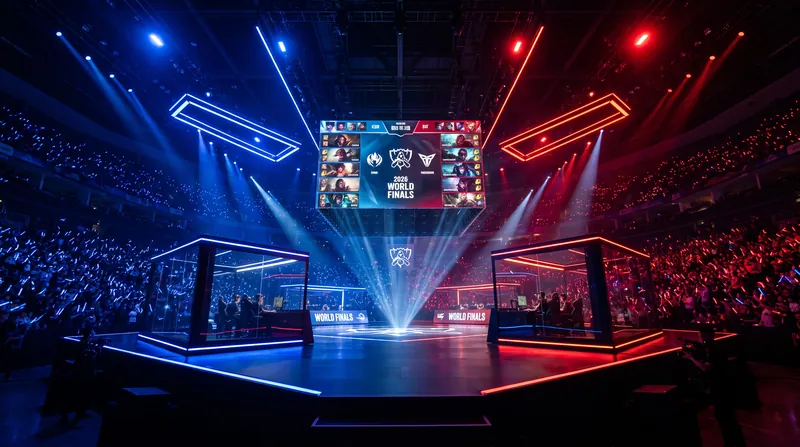
Despite the sweeping changes to the North American, European, and South Korean circuits, not all global regions are losing their direct prize pools. Leagues operating under distinctly different partnership and franchise models, such as Brazil's CBLOL and the newly formed Asia-Pacific LCP, will retain their current financial structures and continue to award regional prize money. Furthermore, the elimination of prize pools strictly applies to regional domestic play. International marquee events—which draw millions of concurrent viewers and serve as the pinnacle of the competitive calendar—will remain untouched. Tournaments such as the newly introduced First Stand, the Mid-Season Invitational (MSI), and the culminating World Championship will continue to feature massive, multi-million-dollar prize pools funded directly by the Global Revenue Pool, ensuring that the highest stakes remain on the international stage.[4][5]
Despite the sweeping changes to the North American, European, and South Korean circuits, not all global regions are losing their direct prize pools.
The decision has sparked immediate and vocal pushback from prominent team owners who have historically relied on competitive success to drive their business models and appease venture capital investors. Arnold Hur, the CEO of Gen.G—a dominant force in the LCK that recently captured the Mid-Season Invitational title—publicly criticized the removal of the prize pools. Taking to social media, Hur expressed deep concern over the shifting financial dynamics, noting that teams will now "live or die" based on whether they can accurately predict and adapt to the publisher's new revenue cycles. "As publishers push esports toward profitability, some will focus on creating new revenue streams, others on cutting costs," Hur stated, highlighting the inherent tension between a publisher's need for overarching sustainability and an individual esports organization's drive for profitability and competitive reward.[2][4]
Industry analysts and esports economists point out that the shift, while highly controversial among top-performing teams, reflects a necessary, albeit painful, maturation of the esports economy. During the industry's initial boom in the late 2010s, prize money was the primary metric of success and the main source of income for professional gamers. Today, the financial reality is entirely different. Guaranteed player salaries, individual performance incentives baked into contracts, and the explosive growth of in-game digital item sales—like the highly lucrative Worlds Winner skins—represent a vastly larger share of the financial pie than traditional tournament winnings. By removing the relatively small regional prize pools, Riot is acknowledging that the old model is obsolete, forcing organizations to build sustainable businesses around content creation, brand partnerships, and digital sales rather than relying on the unpredictable variance of tournament victories.[3][7]
Under the Global Revenue Pool model, which Riot initially introduced to teams as a lifeline in 2024, digital revenue generated by League of Legends esports is aggregated and split into three distinct buckets to reward different facets of team operation. Fifty percent of the GRP goes into "General Shares," which is allocated evenly to all Tier 1 partnered teams to provide a stable baseline income. Another 35 percent flows into the "Competitive" bucket, which allocates shares based on a team's competitive performance both regionally and internationally, effectively replacing the old prize pool with a digital revenue multiplier. The remaining 15 percent is dedicated to "Fandom Shares," a novel metric that directly rewards teams for developing strong, measurable fandom for their players, leagues, and team brands, incentivizing organizations to invest heavily in marketing and content creation.[4][7]
By doubling down on this shared-revenue model, Riot Games is committing to reinvesting the saved prize pool capital into tangible, high-visibility ecosystem improvements. The publisher has already signaled that the redirected funds will support new initiatives, such as financing international bootcamps for developing regions and taking leagues like the LCS on the road for more live arena events outside of their Los Angeles studio. Ultimately, the 2026 financial overhaul signals the definitive end of the traditional, localized sports tournament model in League of Legends. As the new season approaches, esports organizations must fundamentally pivot their operational strategies—moving away from a singular focus on chasing regional split victories for cash, and toward maximizing their digital footprint, global fandom, and collaborative revenue generation alongside the publisher.[1][3]
What to know
- Riot Games is eliminating regional prize pools for the LCS, LEC, and LCK starting in the 2026 season.
- Funds will be redirected into the Global Revenue Pool (GRP) to provide fixed stipends and digital revenue sharing for partnered teams.
- The overhaul aims to stabilize the esports ecosystem following severe financial losses, including a $31 million deficit in the LCK.
- International events like MSI and the World Championship will continue to feature massive prize pools funded by the GRP.
- Team owners have expressed concern that removing win-based incentives will force organizations to rely entirely on digital sales cycles.
Where opinion splits
Riot Games' Strategy
The publisher argues that pooling resources ensures long-term sustainability over short-term payouts.
Riot Games maintains that the traditional prize pool model is inefficient for a mature esports ecosystem. By transitioning to the Global Revenue Pool, the publisher can guarantee a baseline stipend for all partnered teams, protecting the league's foundation during economic downturns. Executives emphasize that individual player payouts from regional wins had become negligible compared to base salaries, making the centralized reinvestment into digital revenue sharing and live events a far more impactful use of capital.
Competitive Team Owners
Organizations fear the loss of direct win incentives will harm profitability and competitive drive.
For team owners, particularly those fielding championship-caliber rosters, the elimination of regional prize money removes a direct return on their massive roster investments. Figures like Gen.G CEO Arnold Hur argue that this shift forces teams to rely entirely on the publisher's digital sales cycles and subjective 'fandom' metrics rather than pure competitive excellence. Owners worry that without the immediate cash injection of a split victory, organizations already operating at a loss will struggle to justify high player salaries to their investors.
Esports Economists
Analysts view the overhaul as a necessary correction for an industry moving past its venture-capital boom.
Financial analysts tracking the esports sector view Riot's move as a harsh but necessary market correction. During the 'esports winter,' the disparity between massive operating costs and actual revenue generation became unsustainable, as evidenced by the LCK's $31 million three-year loss. Economists argue that shifting the financial burden away from localized prize pools and toward globally shared digital goods—such as in-game skins—better aligns the incentives of the publisher, the teams, and the fans, ultimately creating a more resilient business model.
Sources
Source coverage
7 outlets
3 viewpoints surfaced







- [1]Ministry of SportRiot Games & Ecosystem Planners
Riot Games Eliminates Regional Prize Pools in Strategic Esports Revenue Overhaul
Read on Ministry of Sport → - [2]Inven GlobalCompetitive Organizations & Team Owners
Riot Games to Eliminate LCK Split Prize Money Starting in 2026, Reinvesting in LoL Esports Ecosystem
Read on Inven Global → - [3]Esports InsiderEsports Analysts & Community
Why Riot Games removed prize pools from LoL regional leagues
Read on Esports Insider → - [4]Esports News UKCompetitive Organizations & Team Owners
Riot Games removes prize pools from regional LoL esports events
Read on Esports News UK → - [5]Sheep EsportsEsports Analysts & Community
Riot Games removes funded prize pools in regional splits ahead of the 2026 esports season
Read on Sheep Esports → - [6]Esports RadarRiot Games & Ecosystem Planners
Riot Games removes regional prize pools in global revenue pool overhaul for 2026
Read on Esports Radar → - [7]Riot GamesRiot Games & Ecosystem Planners
Building the Future of Esports at Riot Games
Read on Riot Games →
Comments

Every angle. Every day.
Get gaming esports stories with full source coverage and perspective breakdowns delivered to your inbox.