
NHTSA Grants First-Ever Commercial Exemption to Zoox Robotaxi, Waiving Eight Federal Safety Standards
The federal government has officially cleared Amazon-owned Zoox to charge for rides in its purpose-built, steering-wheel-free robotaxis, breaking a 59-year-old regulatory barrier.

- Purpose-Built AV Developers
- Companies like Zoox argue that true autonomy requires a vehicle designed from the ground up without human controls.
- Federal Regulators
- NHTSA aims to balance the rapid advancement of autonomous technology with strict public safety oversight.
- Traditional AV Operators
- Companies like Waymo prioritize scaling their services rapidly using retrofitted, compliant vehicles.
At a glance
- NHTSA granted Zoox the first-ever commercial exemption for a purpose-built robotaxi lacking human driving controls.
- The exemption waives eight Federal Motor Vehicle Safety Standards, including requirements for mirrors and windshield wipers.
- Zoox is permitted to commercially deploy up to 2,500 of its bidirectional vehicles annually for the next two years.
- The regulatory clearance allowed Zoox to transition its Las Vegas fleet from free test rides to a paid ride-hailing service.
- The Department of Transportation is concurrently funding a consortium to develop national AV performance standards.
For over half a century, the federal definition of a safe passenger vehicle has been rigid and uncompromising: it must possess a steering wheel, manual brake pedals, windshield wipers, and rearview mirrors. But what happens when a vehicle is explicitly designed from the ground up to never have a human driver? This regulatory paradox has kept purpose-built, fully autonomous robotaxis trapped in a legal gray area for years, forcing technology companies to retrofit traditional passenger cars with bulky sensors just to comply with laws written for human operators. The tension between rapidly advancing artificial intelligence and legacy automotive regulations has been the single largest bottleneck preventing the next generation of urban transit from reaching the public.[1][4]
That 59-year-old regulatory barrier has finally cracked. The National Highway Traffic Safety Administration (NHTSA) has officially granted Amazon-owned Zoox the first-ever commercial exemption for a purpose-built robotaxi, waiving eight specific Federal Motor Vehicle Safety Standards (FMVSS). The historic decision allows Zoox to commercially deploy up to 2,500 of its steering-wheel-free vehicles annually for the next two years. By acknowledging that a computer vision system does not require the same physical safety tools as a human driver, federal regulators have effectively cleared the runway for a completely new architecture of passenger vehicles to enter the commercial market.[1][2][3]
For a resident or visitor in Las Vegas, this abstract regulatory shift in Washington translates into an immediate, tangible change on the ground. The free test rides that Zoox has been offering to early adopters are officially over. Starting this month, the company is flipping the switch to a paid, commercial ride-hailing service. Riders will now pay a base fee plus distance and time to travel in a vehicle that looks and feels more like a private lounge than a traditional taxi. It anchors the abstract promise of autonomous driving into a concrete daily decision for commuters choosing how to get across town.[4][5]
The Zoox vehicle itself represents a radical departure from conventional automotive design. It is entirely bidirectional, meaning it has no defined front or back. This unique engineering allows the pod to pull into tight urban driveways and roll out without ever needing to perform a cumbersome U-turn. Inside the cabin, passengers sit in a carriage-style arrangement with two rows of comfortable bench seats facing each other. It is a fundamental reimagining of the passenger experience, made possible only by removing the driver's seat entirely and dedicating the entire footprint of the vehicle to the riders.[2][6]
To get this unconventional vehicle on public roads legally, Zoox had to petition NHTSA for a Part 555 exemption. This specific regulatory pathway allows automotive manufacturers to temporarily deploy a limited number of noncompliant vehicles if they can conclusively prove that the overall safety level is at least equal to that of a fully compliant car. Zoox argued extensively that features like windshield defrosting systems and rearview mirrors provide absolutely zero safety benefit in a vehicle that relies entirely on an automated driving system to perceive its environment and make navigational decisions.[2][3]
To get this unconventional vehicle on public roads legally, Zoox had to petition NHTSA for a Part 555 exemption.
NHTSA ultimately agreed with this logic, granting waivers for eight specific federal standards. These include FMVSS 103 and 104, which mandate windshield defrosting and wiping systems, and FMVSS 111, which requires rear visibility mirrors. The agency also waived stringent requirements for manual brake controls, turn-signal controls, and headlamp beam switching devices. The underlying rationale is straightforward: an artificial intelligence system utilizing radar, lidar, and thermal cameras does not need a sun visor or a rearview mirror to navigate safely through a dense urban environment.[2][7]
However, the exemption is not a blank check; it comes with strict conditions and enhanced federal oversight. Under the agreement, NHTSA will issue Operational Authorizations that can be updated or expanded as Zoox's automated driving technology matures. The agency is prioritizing transparency and ongoing monitoring, ensuring that the commercial deployment of these 2,500 annual vehicles does not compromise public safety. Furthermore, Zoox is legally required to remove any statements or marketing materials claiming that the vehicles fully comply with standard FMVSS regulations, maintaining clear communication with the public.[1][2]
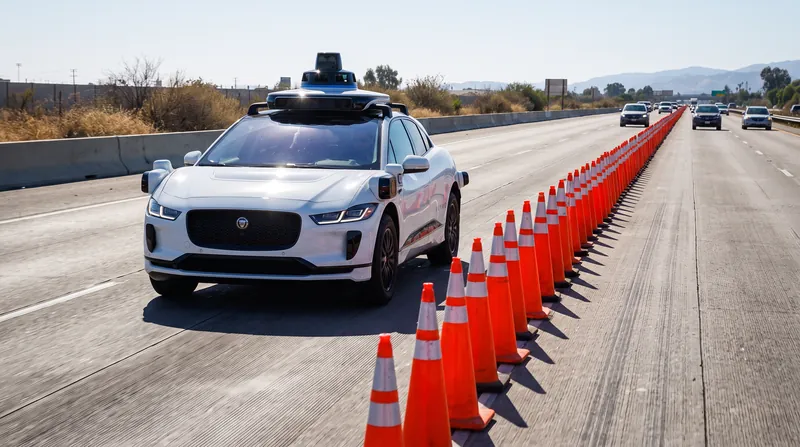
This milestone sharply contrasts with the deployment approach taken by major competitors like Alphabet's Waymo. Waymo has successfully scaled its paid robotaxi service across multiple major cities, including Phoenix and Los Angeles, but it relies heavily on retrofitted vehicles—like the Jaguar I-PACE—that still feature traditional steering wheels and pedals. Because those vehicles technically comply with existing federal standards, Waymo did not need this specific type of exemption to begin charging fares. They simply added their autonomous hardware to a compliant chassis.[5][6]
However, retrofitting traditional cars inherently limits the interior space and design possibilities for passengers. By securing this federal exemption, Zoox is betting heavily that the future of urban mobility lies in vehicles built exclusively for the rider experience. The heavy-duty independent steering on both axles allows the Zoox pod to maneuver deftly through dense city centers, offering a smoother and significantly more spacious ride than a converted SUV. It represents a shift from adapting old forms to inventing new ones.[3][6]
The broader implications of NHTSA's decision signal a massive shift in federal transportation policy. Alongside the Zoox exemption, the Department of Transportation announced a series of actions aimed at accelerating autonomous vehicle innovation across the country. This includes a $5 million partnership with the SAE Industry Technologies Consortia to develop the first-ever national AV performance standards. The ultimate goal is to replace the current patchwork of state-by-state regulations with a unified federal framework that encourages technological advancement.[1]
For the everyday consumer, this means the era of the purpose-built robotaxi is officially here. As Zoox expands its paid operations in Las Vegas and continues extensive testing in San Francisco, the novelty of a driverless carriage will soon become a routine transit option. The federal government has clearly signaled its willingness to adapt legacy rules for modern technology, clearing the runway for a new class of vehicles designed entirely around the passenger rather than the driver.[3][4]
Ultimately, the long-term success of this commercial rollout will depend heavily on public trust and the flawless execution of Zoox's automated driving system in unpredictable real-world conditions. But the regulatory logjam has definitively been broken. By formally acknowledging that a safe passenger car no longer requires a steering wheel, NHTSA has opened the door to a more efficient, spacious, and innovative future for urban transportation, setting a precedent that will likely reshape the automotive industry for decades to come.[1][3]
Terms to know
- Automated Driving System (ADS)
- The hardware and software complex that is capable of performing the entire dynamic driving task on a sustained basis.
- Federal Motor Vehicle Safety Standards (FMVSS)
- U.S. federal regulations specifying design, construction, performance, and durability requirements for motor vehicles.
- Part 555 Exemption
- A regulatory pathway allowing manufacturers to temporarily deploy a limited number of vehicles that do not comply with standard federal safety rules.
- Bidirectional Vehicle
- A vehicle designed with symmetrical front and rear ends, allowing it to drive in either direction without needing to turn around.
Sources
Source coverage
7 outlets
3 viewpoints surfaced







- [1]National Highway Traffic Safety AdministrationFederal Regulators
NHTSA is accelerating development of first-ever AV performance standards, streamlining testing exemptions, and allowing Zoox to commercially deploy robotaxis.
Read on National Highway Traffic Safety Administration → - [2]Federal RegisterFederal Regulators
Zoox-Grant of Temporary Exemption From Portions of Various Requirements of the Federal Motor Vehicle Safety Standards for an Automated Driving System-Equipped Vehicle
Read on Federal Register → - [3]ZooxPurpose-Built AV Developers
Zoox granted first-ever NHTSA commercial exemption for purpose-built robotaxi
Read on Zoox → - [4]Smart Cities DiveTraditional AV Operators
No steering wheel, no pedals, no problem: Zoox will start charging customers for rides in Las Vegas next month
Read on Smart Cities Dive → - [5]Los Angeles TimesTraditional AV Operators
Sleeping robotaxi riders are triggering 911 calls and straining first responders
Read on Los Angeles Times → - [6]New AtlasPurpose-Built AV Developers
Amazon subsidiary Zoox granted commercial exemption to deploy custom robotaxis
Read on New Atlas → - [7]VitalLawFederal Regulators
NHTSA grants Zoox temporary exemption to deploy robotaxis
Read on VitalLaw →
Comments
Every angle. Every day.
Get automotive stories with full source coverage and perspective breakdowns delivered to your inbox.