
NHL Front Offices Race the Clock as September 16 CBA Deadline Threatens Eight-Year Extensions
With a new Collective Bargaining Agreement set to reduce maximum contract lengths from eight years to seven on September 16, NHL teams are accelerating negotiations to lock in core talent. The looming deadline has already spurred major deals and intensified talks for stars like Drake Batherson and Quinn Hughes.

Share this story
The sand is officially running out of the hourglass for NHL general managers trying to lock down their franchise cornerstones. On September 16, a massive structural shift hits the league's Collective Bargaining Agreement: the maximum allowable term for player contract extensions drops from eight years to seven. For unrestricted free agents, the cap shrinks from seven years to six. That single missing year changes the math on everything from salary cap management to championship windows, and front offices are scrambling to get ink on paper before the buzzer sounds.[1]
We've already seen the first domino fall. The Pittsburgh Penguins didn't wait around, securing rising star Ville Koivunen to a massive eight-year, $32 million extension earlier this month. By getting the deal done on August 6, Pittsburgh secured that crucial extra year of team control, setting the market rate and firing the starting gun for the rest of the league's negotiators.[1][5]
Now, the spotlight shifts to the Canadian capital, where the Ottawa Senators are in a high-stakes dance with top forward Drake Batherson. Batherson is entering the final year of a six-year deal that has become one of the league's best bargains, and he's due for a massive raise after consistently clearing the 60-point mark. General Manager Steve Staios has made it clear the club wants to keep their homegrown talent in the fold long-term.[3]
According to industry insiders, there is a legitimate path to an agreement between Batherson and the Senators before the September 15 cutoff. The numbers being discussed are staggering but necessary in a rising-cap environment; projections suggest Batherson's next deal won't come in under the $10 million average annual value (AAV) mark. If Ottawa can finalize an eight-year pact now, they avoid the headache of in-season negotiations and secure their offensive engine through his prime.[3][4]
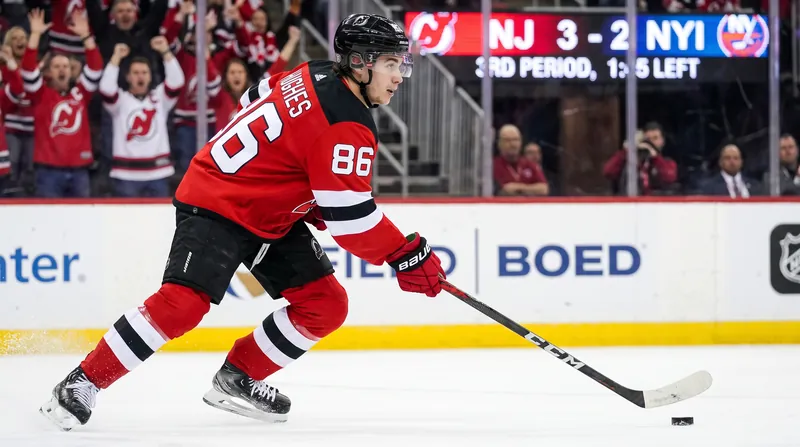
Out West, the Minnesota Wild are dealing with their own ticking clock regarding superstar defenseman Quinn Hughes. Despite rampant summer rumors suggesting the Wild might trade Hughes to the New Jersey Devils to unite him with his brothers, team sources have emphatically shut that noise down. Instead, Minnesota management is locked in ongoing discussions with Hughes' camp to hammer out an extension before the regular season begins.[2]
The stakes for Hughes are astronomical. As one of the league's premier blueliners entering the final season of a deal carrying a $7.85 million cap hit, his next contract will redefine the defensive market. With the salary cap climbing, projections put his next deal in the $19 million to $20 million AAV range. While the Wild desperately want to secure him for the full eight years before the CBA rules change, negotiations remain a tug-of-war over term length.[2]
While the blockbuster extensions dominate the boardroom whiteboards, teams haven't stopped tweaking the margins of their rosters. The late-summer transaction wire has seen a steady hum of minor trades as clubs balance their prospect pools. The Detroit Red Wings recently acquired forward Sutter Muzzatti from the Nashville Predators, while the Anaheim Ducks picked up Cruz Lucius from Pittsburgh, both deals executed for future considerations.[5]
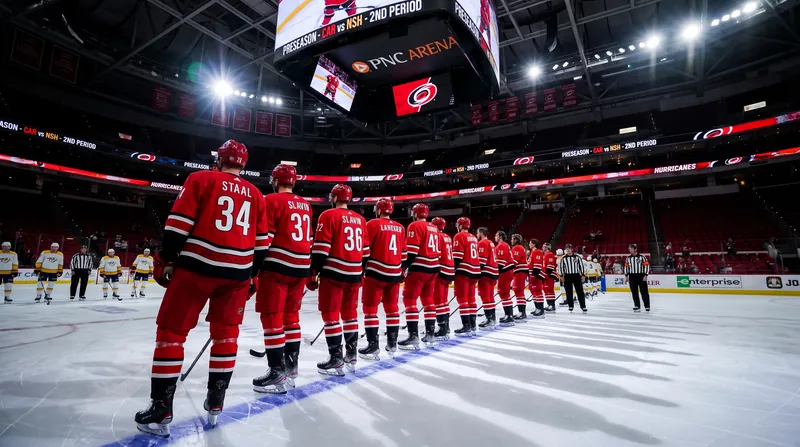
Similarly, the Carolina Hurricanes added forward Stiven Sardarian from the Buffalo Sabres. These depth moves might not grab the headlines like an eight-year, $80 million extension, but they reflect front offices fine-tuning their organizational depth charts before training camps open.[5]
Even the trade rumor mill is being influenced by the looming contract landscape. Speculation has swirled around veteran defenseman Erik Karlsson potentially moving from Pittsburgh to the Toronto Maple Leafs. While nothing is imminent, Karlsson entering the final year of his deal makes him a prime target for contenders looking for elite puck-moving ability, provided they can navigate his $11.5 million cap hit.[6]
Ultimately, the next three weeks will define the NHL's financial landscape for the next decade. Once September 16 hits, the eight-year contract—the ultimate tool for securing franchise loyalty and spreading out cap hits—vanishes from the GM toolkit. The race is on, and the teams that act decisively now will reap the benefits long after the ink dries.[1][3]
The essentials
- The NHL's maximum contract extension length drops from eight years to seven on September 16.
- The Pittsburgh Penguins recently capitalized on the current rules, signing Ville Koivunen to an eight-year, $32M deal.
- The Ottawa Senators are actively negotiating an extension with top forward Drake Batherson, projected around $10M AAV.
- The Minnesota Wild are prioritizing an extension for Quinn Hughes, dismissing recent trade rumors.
- Depth trades continue across the league, with Anaheim, Detroit, and Carolina acquiring prospects for future considerations.
Timeline
July 2026
The NHL announces the upcoming CBA rule changes, setting the September 16 deadline for eight-year extensions.
August 6, 2026
The Pittsburgh Penguins sign Ville Koivunen to an eight-year, $32 million extension, setting the market.
August 17-20, 2026
A flurry of minor trades occurs, with Carolina, Anaheim, and Detroit acquiring prospects.
Late August 2026
Negotiations intensify for stars like Drake Batherson and Quinn Hughes as the deadline approaches.
September 16, 2026
The new CBA rule takes effect, permanently capping contract extensions at seven years.
- Front Office Executives
- General managers rushing to lock in long-term cap stability before the rules change.
- Player Agents
- Representatives balancing the security of an eight-year deal against the potential of a rising salary cap.
- Rebuilding Franchises
- Clubs focusing on minor trades and prospect acquisition rather than massive extensions.
Perspectives this story doesn't cover
- The NHL Players' Association leadership, who negotiated the term reduction.
- Mid-tier players who may be squeezed out of long-term money as teams commit heavily to their stars.
Sources
Source coverage
6 outlets
3 viewpoints surfaced






- [1]The Hockey NewsFront Office Executives
Five NHL Players Who Could Sign Eight-Year Extensions Before Time Runs Out
Read on The Hockey News → - [2]Spector's HockeyPlayer Agents
NHL Rumor Mill – August 26, 2026
Read on Spector's Hockey → - [3]Heavy.comFront Office Executives
The Ottawa Senators are in line to retain one of their top forwards in Drake Batherson
Read on Heavy.com → - [4]Last Word on SportsPlayer Agents
NHL Rumours with Batherson and the Sens Perspectives
Read on Last Word on Sports → - [5]NHL.comRebuilding Franchises
2026-27 NHL Trade Tracker
Read on NHL.com → - [6]India TimesRebuilding Franchises
Could Erik Karlsson join Toronto Maple Leafs after Elliotte Friedman sparks fresh NHL trade rumors for 2026-27
Read on India Times →

More in Sports
See all →Preview
Canadiens and Senators Clash in Trois-Rivières as Shortened NHL Preseason Opens
7 sources

Power ranking
NHL Preseason Power Rankings: Hurricanes on Top, Panthers Poised for Massive Rebound
7 sources
Trade
Devils Acquire Luke Evangelista in Blockbuster Trade, Ink Forward to $36.25 Million Extension
5 sources
Trade
Canucks Sign Defenseman Zeev Buium to Eight-Year, $75 Million Extension
8 sources

Comments
Every angle. Every day.
Get Sports stories with full source coverage and perspective breakdowns, free every day.