
2026 UCI Road World Championships Preview: The Stakes and Matchups for Montreal's Mount Royal Showdown
With less than a month until the 2026 UCI Road World Championships, Montreal's brutal Mount Royal circuit sets the stage for a historic clash between cycling's biggest stars.
By Meera Iyer

Share this story
Fifty-two years after Eddy Merckx conquered Mount Royal, the rainbow jersey is coming back to Quebec. With less than a month until the 2026 UCI Road World Championships kick off in Montreal on September 20, the tactical battle lines are being drawn.
The eight-day, 13-event urban takeover marks the first time the global cycling community has descended on North America for the World Championships since Richmond in 2015, and the first time in Canada since Hamilton in 2003. For a city that prides itself on its deep cycling heritage, the return of the sport's flagship event is a monumental milestone that will command the attention of millions worldwide.[1]
The stakes are astronomical, and the route is an old-school, classics-style brawl. Unlike the extreme vertical climbing that defined the 2024 Zürich and 2025 Kigali editions—which featured up to 5,500 meters of elevation—Montreal offers a punchy, attritional 3,803 meters of climbing for the Elite Men and 2,570 meters for the Elite Women.
It is a course designed not for pure, featherweight climbers, but for the sport's most resilient powerhouses. The constant acceleration and deceleration required on the urban roads will slowly drain the peloton's legs, turning the final hour of racing into a brutal test of endurance and willpower.[1]
The focal point of the road races is the legendary Mount Royal circuit. After starting in Brossard and crossing the Samuel-De Champlain Bridge, the peloton will hit the 13.4-kilometer downtown loop. The men will tackle it 12 times; the women will ride it eight times.
Each lap features the Voie Camillien-Houde—a 2.3-kilometer ascent averaging a 6.2 percent gradient—followed immediately by the Chemin de la Polytechnique, which pitches past 11 percent. There is nowhere to hide on this circuit; every lap will shed riders out the back of the peloton until only the elite contenders remain.[1]
"The parcours will juxtapose riverside scenery, historic neighborhoods, and a world-class climbing challenge," the Montreal 2026 organizing committee noted during the route's unveiling. The finish line on Avenue du Parc sits at the end of a grueling false flat, guaranteeing that only a rider with immense late-race explosivity will cross it first. The design intentionally mirrors the annual Grand Prix Cycliste de Montréal, meaning the top riders in the world already know exactly how much suffering this specific stretch of tarmac demands.[1]
For the Elite Men's 273.7-kilometer race on September 27, the profile sets up a generational clash. Tadej Pogačar, who turned the Kigali hills into a personal playground last year, will face a route that gives his rivals a fighting chance. The reduced elevation gain brings classics specialists like Mathieu van der Poel and Remco Evenepoel squarely back into the frame.
The dynamic between Pogačar's climbing superiority and Van der Poel's raw power on the Camillien-Houde will define the final 50 kilometers. If the pure climbers cannot drop the heavier puncheurs on the climbs, the uphill sprint on Avenue du Parc will be a chaotic, heavyweight slugfest.[1][2]
The Elite Women's 180.4-kilometer race on September 26 promises equal drama. The peloton will navigate a 72.8-kilometer opening loop through the Montérégie region before hitting the Mount Royal circuit. Home crowds will be roaring for Quebec's own Magdeleine Vallières Mill, who scored a massive upset in Kigali and is looking to repeat the feat on home soil.
She will have to fend off a deep, fiercely competitive field featuring heavyweights like Lotte Kopecky, Demi Vollering, and Marlen Reusser, all of whom have the tactical acumen to exploit the circuit's technical descents and punchy climbs.[1][2]
Before the road races take center stage, the time trialists will have their say. The Elite Men and Women will both tackle a 39.9-kilometer route that threads through Old Montreal, runs along the Saint Lawrence River, and orbits the Circuit Gilles-Villeneuve—home to the Formula 1 Canadian Grand Prix.
With only 195 meters of elevation, the flat, technical course heavily favors pure aerodynamic specialists over the lighter climbers. The ability to hold a massive gear through the sweeping corners of the motor-racing circuit will be the deciding factor in the race against the clock.
Beyond the fight for the rainbow bands, the event is a massive logistical and legacy undertaking for Montreal. The city is leveraging the championships to accelerate its metropolitan cycling network, including a 13.4-kilometer upgrade to the Grand Montréal Riverfront Promenade.
With an expected 1,000 athletes from 75 countries and hundreds of thousands of fans lining the free-admission streets, the 2026 Worlds are poised to be the city's largest sporting event since the 1976 Summer Olympics. For eight days in September, Montreal will not just host a bike race; it will become the undisputed capital of the cycling world.[1]
Key points
- The 2026 UCI Road World Championships will take place in Montreal from September 20 to 27.
- The Elite Men's road race covers 273.7 kilometers with 3,803 meters of elevation gain.
- The Elite Women's road race spans 180.4 kilometers with 2,570 meters of climbing.
- Both road races culminate on a grueling 13.4-kilometer circuit around Mount Royal.
- The time trial events feature a flat, aerodynamic 39.9-kilometer loop through Old Montreal.
How we got here
1974
Montreal hosts the UCI Road World Championships, the first time the event is held outside of Europe.
2003
Hamilton, Ontario hosts the World Championships, marking the last time the event was held in Canada.
September 2022
The UCI officially awards the 2026 Road World Championships to Montreal during a congress in Wollongong, Australia.
September 2025
The official route maps and elevation profiles are unveiled at the conclusion of the Kigali World Championships.
September 20, 2026
The 2026 Championships kick off with the Elite Women's and Men's Individual Time Trials.
- Classics Specialists
- Favor the punchy, technical circuit and aim to out-sprint climbers on the final drag.
- Pure Climbers
- Rely on the cumulative 3,803 meters of elevation to exhaust heavier rivals.
- Local Organizers
- Focus on the race's legacy, economic impact, and infrastructure upgrades for Montreal.
Perspectives this story doesn't cover
- Local residents affected by eight days of downtown road closures
Sources
Source coverage
2 outlets
3 viewpoints surfaced


- [1]Wikipedia
2026 UCI Road World Championships
Read on Wikipedia → - [2]UCI
2026 UCI Road World Championships
Read on UCI →
More in Sports
See all →Injury
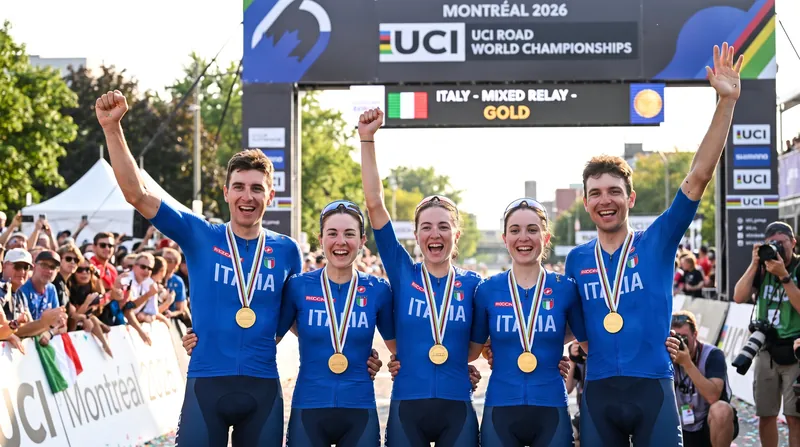
Knee Fracture Ends Justine Ghekiere's Season and Derails Belgium's World Championship Plans
5 sources
Pro Cycling Rules
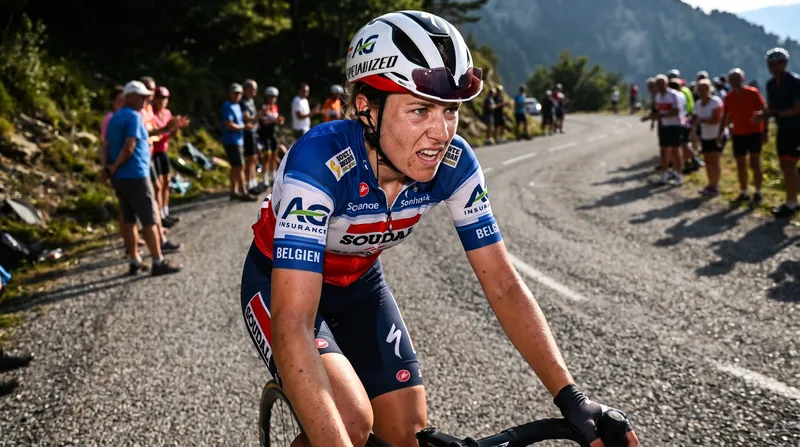
UCI Approves Major 2027 Calendar and Safety Overhaul, Moving Vuelta Femenina and Mandating New Finish-Line Barriers
3 sources
Equipment Rules
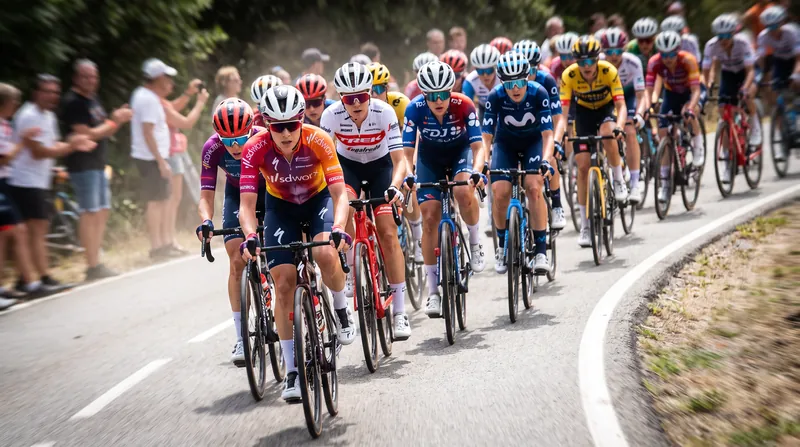
The 6.8-Kilogram Minimum Weight Limit Governing UCI Race Bicycles
8 sources
Standings
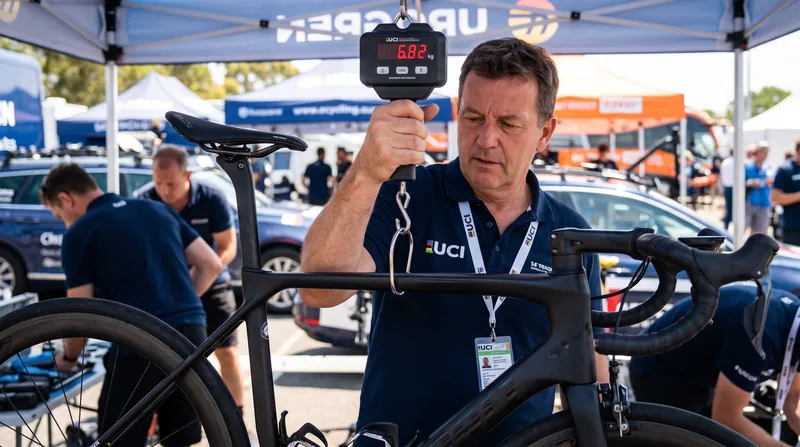
Late-Season Surge: Philipsen Overtakes Pidcock in UCI World Rankings as Martinez Enters Top 10
5 sources
Comments
Every angle. Every day.
Get Sports stories with full source coverage and perspective breakdowns, free every day.