
NASA Cements SpaceX Dominance, Cuts Boeing's Firm Starliner Missions to Four Amid Certification Delays
NASA has reduced Boeing's firm order for Starliner missions from six to four and converted the next flight to an uncrewed cargo run, leaving SpaceX as the sole provider of American astronaut transportation as certification delays stretch toward 2027.

Share this story
In short
- NASA has modified Boeing's Commercial Crew contract, reducing the firm order from six to four Starliner missions.
- The next Starliner flight will be an uncrewed cargo mission to validate system upgrades following the June 2024 Crew Flight Test anomalies.
- Ongoing root-cause investigations into thruster degradation have pushed Starliner's projected certification to 2027.
The United States relies on a continuous, uninterrupted pipeline to low Earth orbit for scientific research, national security, and commercial development. When that pipeline narrows to a single provider, the entire space economy feels the bottleneck. For the past decade, the architecture of American spaceflight has been built on the promise of two independent transportation systems ferrying astronauts to the International Space Station. Today, that dual-provider vision has been significantly curtailed.
NASA has officially modified its Commercial Crew contract with Boeing, reducing the definitive order for CST-100 Starliner missions from six to four. This decision, coupled with internal projections that Starliner's final certification could slip to 2027, effectively cements SpaceX's near-monopoly on crewed spaceflight for the remainder of the space station's operational life. The remaining two flights of Boeing's original order have been converted to optional add-ons, signaling a major shift in the agency's near-term logistical planning.[1][5]
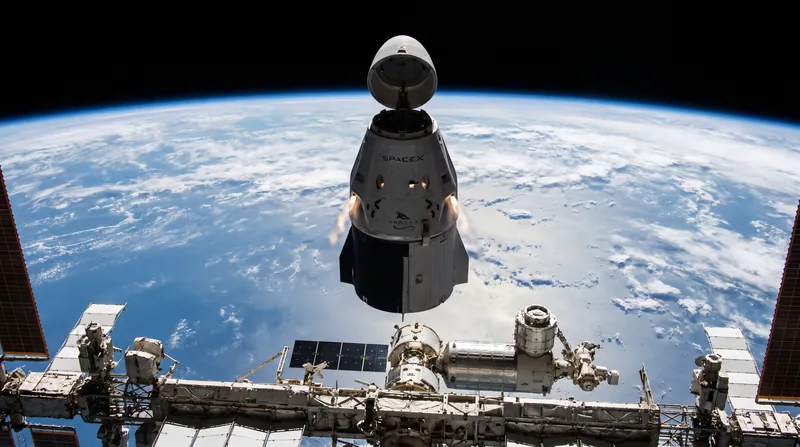
The immediate consequence of this contract modification is that SpaceX's Crew Dragon remains the sole operational vehicle for American human spaceflight. This fundamentally alters NASA's long-standing strategy of "dissimilar redundancy"—the engineering principle that having two completely independent spacecraft ensures that if a technical flaw grounds one fleet, the nation does not lose access to space. With Starliner's operational debut delayed, the entire U.S. space transportation pipeline rests on a single architecture.[2][5]
Under the revised agreement, the next Starliner flight, designated Starliner-1, will no longer carry astronauts. Instead, it will fly uncrewed to deliver cargo to the orbiting laboratory and validate a series of critical system upgrades. This converts what was supposed to be Boeing's first operational crew rotation into another demonstration flight, pushing the timeline for a fully certified, human-rated Starliner even further into the future.[1][5]
The roots of this strategic pivot trace back to the June 2024 Crew Flight Test. During that mission, Starliner launched with NASA astronauts Butch Wilmore and Suni Williams on board. However, as the spacecraft approached the International Space Station, it suffered multiple thruster degradation issues and helium leaks within its service module. These propulsion anomalies turned a planned eight-day test flight into a months-long engineering investigation.[1][3]
Out of an abundance of caution, NASA ultimately made the difficult call to bring the Starliner capsule back to Earth empty. The spacecraft successfully executed an uncrewed landing at White Sands Space Harbor in September 2024. Meanwhile, Wilmore and Williams remained aboard the space station, eventually returning home on a SpaceX Crew Dragon in early 2025.[3][4]
Since that uncrewed return, aerospace engineers have been mired in intensive root-cause investigations. The primary focus has been understanding exactly how the spacecraft's thruster seals degraded under the intense thermal stress of orbital maneuvering. Because these anomalies require significant hardware redesigns, software overhauls, and rigorous new testing cycles, neither NASA nor Boeing has been able to commit to a firm calendar date for Starliner's next launch.[1][5]
By mid-2026, safety advisory panels and the NASA Office of Inspector General flagged that Starliner's final certification could slip to 2027. This represents a delay of nearly a decade versus the Commercial Crew Program's original schedule, raising intense governance and program-management scrutiny. The prolonged timeline has forced agency planners to continuously adjust the space station's tightly coordinated orbital manifest, modifying commercial cargo arrivals and extending crew expeditions to avoid port congestion.[5]
For Boeing, the delays represent a severe financial bleed. The Commercial Crew Program operates under fixed-price contracts, a structure designed to protect taxpayers from government cost overruns by shifting the financial risk to the corporate developers. As a result, the legacy aerospace giant has already absorbed billions of dollars in internal charges to cover the extended development and testing of the Starliner system. The reduced flight manifest further limits the company's ability to recoup those losses through routine operational missions.[1][2][5]
The ripple effects of this bottleneck extend well beyond the current space station. The broader aerospace market is actively planning for life after the International Space Station, which is scheduled for retirement and deorbit by 2030. Private consortia are currently designing commercial space stations, and their business models depend heavily on having multiple, competing transport providers available to ferry corporate clients, researchers, and tourists to low Earth orbit.[5]
In the interim, SpaceX's dominance in the sector is absolute. Having successfully launched numerous crewed missions for NASA and private clients since 2020, the company has proven the reliability and rapid reusability of its Falcon 9 and Crew Dragon architecture. This track record has momentarily cemented a monopoly in the low-Earth orbit transport economy, highlighting the stark contrast between iterative, hardware-rich development and traditional aerospace engineering methodologies.[2][5]
Boeing's immediate hurdle is the execution of the uncrewed Starliner-1 cargo mission. If that flight successfully validates the redesigned thruster seals and the permanent mitigations for the helium system leaks, it will open the door for Starliner-2 to finally become the company's first operational crewed mission. The engineering teams are currently focused on ensuring that every corrective recommendation from the Crew Flight Test investigation is fully implemented.[1][5]
However, the window for Boeing to execute its remaining four firm flights is rapidly closing. With the International Space Station slated for deorbit at the end of the decade, the timeline leaves little room for further technical setbacks. The global aerospace industry is watching closely to see if the legacy contractor can overcome its engineering hurdles and deliver on the promise of dissimilar redundancy before the station's operational life comes to an end.[5]
Key terms
- Commercial Crew Program
- A NASA initiative that partners with private American aerospace companies to transport astronauts to and from the International Space Station.
- Dissimilar Redundancy
- An engineering and planning strategy that uses two completely independent systems to perform the same critical function, ensuring a backup is available if one fails.
- Service Module
- The unpressurized section of a spacecraft that houses critical support systems, including propulsion, power generation, and thermal control.
- Fixed-Price Contract
- An agreement where the contractor is paid a set amount for a project, meaning the company must absorb any cost overruns caused by delays or technical issues.
- Low Earth Orbit (LEO)
- An orbit relatively close to Earth's surface, typically at an altitude of 2,000 kilometers or less, where the International Space Station operates.
Frequently asked
Why did NASA reduce Boeing's Starliner missions?
NASA reduced the firm order from six to four missions to align with the remaining operational life of the International Space Station and to allow Boeing to focus on safely certifying the spacecraft after technical delays.
What happened during the Starliner Crew Flight Test?
During its approach to the ISS in June 2024, Starliner experienced thruster degradation and helium leaks. NASA ultimately decided to return the spacecraft uncrewed, while the astronauts returned on a SpaceX Crew Dragon.
Will the next Starliner mission carry astronauts?
No. The next mission, designated Starliner-1, has been converted to an uncrewed cargo flight to validate system upgrades and redesigned thruster seals.
How does this affect the International Space Station?
The delays force NASA to rely solely on SpaceX for crew transportation, complicating the station's tightly coordinated schedule for launches, dockings, and crew rotations.
Viewpoints in depth
Space Agency Planners
Prioritizing dissimilar redundancy to protect the ISS manifest.
For NASA, the primary concern is maintaining a continuous human presence on the International Space Station. Relying on a single provider creates a single point of failure. Agency planners argue that despite the delays and contract modifications, keeping Boeing in the Commercial Crew Program is essential to ensure that an anomaly with SpaceX's Falcon 9 or Crew Dragon does not completely sever American access to low Earth orbit.
Legacy Aerospace Contractors
Focusing on rigorous engineering validation over rapid iteration.
Boeing's approach reflects traditional aerospace engineering philosophies, where extensive ground testing and root-cause analysis take precedence over rapid flight iteration. Following the thruster degradation observed during the Crew Flight Test, the company's engineers have prioritized a complete understanding of the thermal stress on the service module's seals. This methodical pace, while costly under a fixed-price contract, is viewed internally as the only responsible path to certifying a human-rated spacecraft.
Industry Observers & Analysts
Advocating for the efficiency of proven, operational systems.
Advocates for the newer commercial space sector point to SpaceX's track record as validation of iterative, hardware-rich development. With Crew Dragon having successfully executed numerous operational missions, this camp argues that the market has already selected a winner. They view the continued investment in a delayed secondary system as a necessary but frustrating drag on resources that could otherwise be directed toward post-ISS commercial space stations.
- Space Agency Planners
- Prioritizing dissimilar redundancy to protect the ISS manifest.
- Industry Observers & Analysts
- Advocating for the efficiency of proven, operational systems.
- Legacy Aerospace Contractors
- Focusing on rigorous engineering validation over rapid iteration.
Perspectives this story doesn't cover
- International partner space agencies whose astronauts rely on the Commercial Crew Program for access to the ISS.
- Commercial space station developers whose future business models depend on multiple competing transport providers.
Sources
Source coverage
5 outlets
3 viewpoints surfaced



- [1]WikipediaIndustry Observers & Analysts
Boeing Starliner
Read on Wikipedia → - [2]WikipediaIndustry Observers & Analysts
Commercial Crew Program
Read on Wikipedia → - [3]WikipediaIndustry Observers & Analysts
Boeing Crew Flight Test
Read on Wikipedia → - [4]BoeingLegacy Aerospace Contractors
CST-100 Starliner
Read on Boeing → - [5]Factlen Editorial TeamIndustry Observers & Analysts
Synthesis by Factlen editorial team
Read on Factlen Editorial Team →
More in Transportation
See all →Orbital Mechanics
The J2 Perturbation: How Earth's Oblateness Causes Orbital Precession
6 sources

Orbital Mechanics
The Delta-V Savings and Time Penalty of Bi-Elliptic Transfers Over Hohmann Transfers
6 sources
Propellant Chemistry
The Physics of Liquid Rocket Propellants: Cryogenic, Hypergolic, and Storable Architectures
6 sources
Spacecraft Engineering
How Angular Momentum Storage and Conservation Maintain Spacecraft Orientation
7 sources
Comments
Every angle. Every day.
Get Transportation stories with full source coverage and perspective breakdowns, free every day.