
First-Ever Phase 3 Success for In Vivo CRISPR Therapy Achieved, Paving Way for New Class of Medicine
A single infusion of a CRISPR gene-editing therapy successfully reduced dangerous swelling attacks by 87% in a Phase 3 trial, marking the first time the technology has been proven to work directly inside the human body.
By Sofia Matos

Share this story
When people hear "CRISPR therapy," they usually picture a grueling, highly invasive process: doctors extracting a patient's bone marrow, editing the cells in a sterile laboratory, and reinfusing them after a harsh round of chemotherapy. That ex vivo approach is how the first generation of approved gene editing works.
But the clinical data released this week tells a fundamentally different story. For the first time, a Phase 3 trial has proven that the CRISPR machinery can be injected directly into the bloodstream to hunt down and fix a broken gene inside a living human body.[1]
The milestone comes from Intellia Therapeutics, which just published the results of its global HAELO trial. The study tested an experimental treatment called lonvoguran ziclumeran—or lonvo-z—on 80 patients suffering from hereditary angioedema (HAE). By meeting its primary and secondary endpoints with overwhelming statistical significance, the trial clears the largest scientific hurdle that stood between CRISPR technology and broad, accessible clinical use.[3][4]
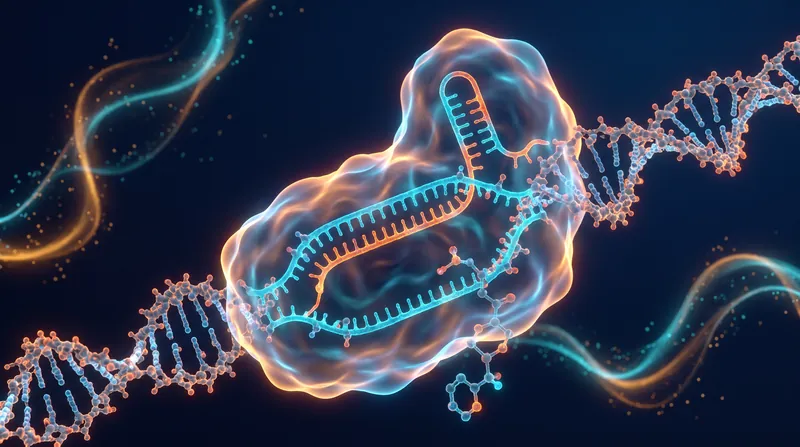
To understand why this succeeded where earlier attempts struggled, you have to look at the delivery mechanism. Instead of relying on hollowed-out viruses to carry the genetic instructions, lonvo-z packages the CRISPR-Cas9 molecular scissors inside lipid nanoparticles. These microscopic fat bubbles are the same delivery envelopes that made mRNA vaccines possible. When infused into the arm, the nanoparticles naturally accumulate in the liver, where they are absorbed by the cells that need editing.[7]
Once inside the liver cells, the CRISPR machinery unpacks itself and targets a highly specific sequence: the KLKB1 gene. In patients with HAE, an overactive pathway leads to the massive overproduction of bradykinin, a peptide that causes fluid to leak from blood vessels. This results in sudden, severe, and potentially fatal swelling attacks in the skin, gastrointestinal tract, or airways. The lonvo-z therapy is programmed to simply cut and inactivate the KLKB1 gene, permanently shutting down the factory that produces the dangerous swelling triggers.[5]
The clinical evidence supporting this mechanism is robust. In the double-blind trial, patients were randomized to receive either a single 50-milligram intravenous infusion of the CRISPR therapy or a placebo. During the core evaluation period—measured from week 5 to week 28 after the infusion—the patients who received the active gene edit experienced an 87 percent relative reduction in monthly swelling attacks compared to the placebo group.[2][5]
The absolute numbers paint an even clearer picture of the therapy's impact. The average monthly attack rate plummeted to just 0.26 in the treatment group, compared to 2.10 for those receiving the placebo. Furthermore, 62 percent of the treated patients remained entirely attack-free and required no chronic preventative medication during the six-month evaluation window. In contrast, only 11 percent of the placebo group managed to avoid attacks over the same period.[3][7]
On the safety front, the short-term evidence is highly reassuring. Editing DNA inside the body carries theoretical risks of off-target cuts or severe immune reactions, but the Phase 3 data showed no serious or grade 3 adverse events in the treatment arm. The most common side effects were mild to moderate infusion-related reactions, temporary headaches, and fatigue. Total plasma kallikrein levels dropped by roughly 65 percent within two weeks of the infusion and remained stable, indicating that the edit took hold safely.[5][6]
However, the evidence pack remains thin regarding long-term durability and latent risks. At the time of the data cutoff in February 2026, the median follow-up for the trial participants was only 7.5 months. While the liver cells that received the edit should theoretically pass the inactivated gene to their daughter cells, it is not yet empirically proven that a single infusion will last for decades. Researchers note that extended monitoring is required to rule out any slow-emerging off-target genetic effects outside the controlled setting of the trial.[5]
This uncertainty is why clinical investigators are careful with their terminology. While biotech executives frequently use the phrase "functional cure," the trial data shows that 38 percent of treated patients still experienced at least one attack, even if their overall attack rate dropped by an average of 72 percent from baseline. As one lead investigator noted, the therapy is genuinely effective and represents a paradigm shift, but it is not an absolute zero-attack guarantee for every single patient.[4]
With the scientific proof of concept now secured, the focus shifts to regulatory and commercial realities. Intellia has already initiated a rolling Biologics License Application with the FDA, targeting a potential US launch in the first half of 2027. If approved, lonvo-z will enter a market that already features highly effective, albeit chronic, treatments. The ultimate test will be whether healthcare systems are willing to pay a massive upfront cost for a one-time genetic edit over the recurring expenses of lifelong disease management.[1][2]
Key points
- Intellia Therapeutics reported the first-ever Phase 3 success for an in vivo CRISPR therapy, editing genes directly inside the body.
- The single-infusion treatment targets hereditary angioedema by inactivating a liver gene to prevent dangerous swelling.
- Trial data showed an 87% reduction in attacks compared to a placebo, with 62% of treated patients requiring no further medication.
- The milestone proves that lipid nanoparticles can safely deliver CRISPR machinery to specific organs without removing cells from the patient.
What we don’t know
- Whether the genetic edit will remain durable for decades as liver cells naturally turn over and regenerate.
- If any off-target DNA cuts or unforeseen genetic consequences will emerge after years of extended monitoring.
- How healthcare systems and insurers will price and reimburse a one-time 'functional cure' compared to existing chronic medications.
How we got here
Dec 2023
The FDA approves Casgevy, the first commercial CRISPR therapy, which requires extracting and editing cells outside the body.
Nov 2024
Initial early-stage data shows that in vivo CRISPR can successfully reduce disease-causing proteins in the liver.
Jan 2025
The global Phase 3 HAELO trial begins dosing patients with hereditary angioedema.
Apr 2026
Intellia announces Phase 3 success, marking the first late-stage clinical victory for gene editing inside the human body.
H1 2027
Targeted timeline for potential FDA approval and commercial launch of the therapy.
- Genetic Medicine Advocates
- Argue that this milestone proves in vivo editing is safe and effective, opening the door to one-time treatments for thousands of genetic diseases.
- Clinical Realists
- Emphasize that while the therapy is highly effective, it is not a perfect cure for everyone and requires years of follow-up to confirm long-term safety.
- Market Analysts
- Question how a high-priced, one-time infusion will compete commercially against established, effective chronic therapies already on the market.
Perspectives this story doesn't cover
- Health insurance payers
- Patients who did not respond fully to the therapy
Sources
Source coverage
7 outlets
3 viewpoints surfaced







- [1]ForbesGenetic Medicine Advocates
A CRISPR Therapy Just Cured A Disease From Inside The Body For The First Time
Read on Forbes → - [2]Fierce BiotechMarket Analysts
Intellia's phase 3 Haelo data validate the hypothesis
Read on Fierce Biotech → - [3]BioPharma DiveMarket Analysts
An experimental gene editing medicine from Intellia Therapeutics has succeeded in a Phase 3 trial
Read on BioPharma Dive → - [4]Endpoints NewsClinical Realists
Intellia's in vivo CRISPR therapy first to succeed in Phase 3
Read on Endpoints News → - [5]The Medicine MakerGenetic Medicine Advocates
In Vivo CRISPR Therapy Succeeds in Phase 3 Trial
Read on The Medicine Maker → - [6]Amsterdam UMCClinical Realists
World First: First Phase 3 Trial of In Vivo CRISPR Therapy Successfully Completed
Read on Amsterdam UMC → - [7]CRISPR Medicine NewsGenetic Medicine Advocates
A single intravenous dose of Intellia Therapeutics' in vivo CRISPR-Cas9 therapy lonvoguran ziclumeran (lonvo-z) reduced monthly hereditary angioedema attacks by 87%
Read on CRISPR Medicine News →
More in Science
See all →Population Genetics
Calculating the Hidden Carriers: How the Hardy-Weinberg Equation Maps Population Genetics
6 sources

Genomic Sequencing
Decoding the Genome: How Synthesis, SMRT, and Nanopore Architectures Read DNA
8 sources
Epigenetics
What is Epigenetics? The Mechanics of Gene Regulation Beyond the DNA Sequence
9 sources

Synthetic Biology
Engineered Cell-Free System Creates Proteins With 34 Amino Acids, Overturning Decades of Genetic Code Understanding
6 sources
Comments
Every angle. Every day.
Get Science stories with full source coverage and perspective breakdowns, free every day.