
Disney Invests $1 Billion in OpenAI, Licensing Over 200 Characters for Sora Video Platform
In a landmark deal for Hollywood, Disney is investing $1 billion in OpenAI and granting the AI startup a three-year license to feature iconic characters in its Sora video generator.
By Chen Wang
- Corporate Strategists
- Viewing the partnership as a necessary evolution to monetize IP and reduce production costs.
- Creative Labor Advocates
- Raising alarms about the existential threat generative AI poses to Hollywood's workforce.
- Media Observers
- Focusing on the cultural impact of turning fans into active content generators.
Picture a photorealistic Darth Vader ordering a latte at a Parisian cafe, or Ariel swimming through the neon-lit streets of a cyberpunk Tokyo. Thanks to a landmark $1 billion investment by the Walt Disney Company into OpenAI, those fever-dream mashups are about to become officially sanctioned reality.[1][2]
The three-year licensing agreement marks a seismic shift in how Hollywood's most protective studio handles its crown jewels. Disney is handing over the keys to more than 200 characters across its core, Marvel, Pixar, and Star Wars brands, allowing users of OpenAI's Sora video generator to conjure up short clips featuring everyone from Mickey Mouse to the Mandalorian.[2][7]
It is a staggering pivot for a company that has historically guarded its intellectual property with the ferocity of a dragon hoarding gold. Under the terms of the deal, Sora users will be able to prompt the AI to generate videos using these characters, alongside hundreds of iconic props like lightsabers and Captain America's shield.[6][8]
The $1 billion equity stake gives Disney a roughly 0.2 percent slice of the $500 billion AI juggernaut, but the real play is strategic. Disney CEO Bob Iger framed the partnership as a way to thoughtfully and responsibly extend the reach of the company's storytelling, leaning into the inevitable rather than fighting it in court.[3][7]
The $1 billion equity stake gives Disney a roughly 0.2 percent slice of the $500 billion AI juggernaut, but the real play is strategic.
Beyond the consumer-facing Sora integration, Disney is embedding OpenAI's technology deep into its corporate infrastructure. The studio will become a major customer of OpenAI's enterprise tools, rolling out ChatGPT to its employees and using the tech to streamline production pipelines—a move analysts estimate could eventually shave hundreds of millions off Disney's massive annual content expenditures.[3][8]
But Disney is not entirely taking its hands off the wheel. The agreement comes with strict guardrails: OpenAI is prohibited from using the licensed characters to train its foundational models, and the deal explicitly excludes the likenesses and voices of real-world actors. A joint steering committee will oversee the partnership to ensure the generated content does not veer into brand-damaging territory.[3][7]
Unsurprisingly, the announcement has sent a fresh wave of anxiety through Hollywood's creative class. Just months after major talent agencies warned that generative AI posed a significant risk to artists, the sight of the industry's biggest studio embracing the technology has reignited fears over job displacement and the devaluation of human artistry.[2][4]
The timing of the deal also highlights a fascinating dual strategy. On the exact same day Disney announced its embrace of OpenAI, the studio reportedly fired off a cease-and-desist letter to Google, accusing the search giant of using Disney's copyrighted materials to train its own AI models without permission. The message is clear: AI is the future, but only if Disney gets paid for it.[3][5]
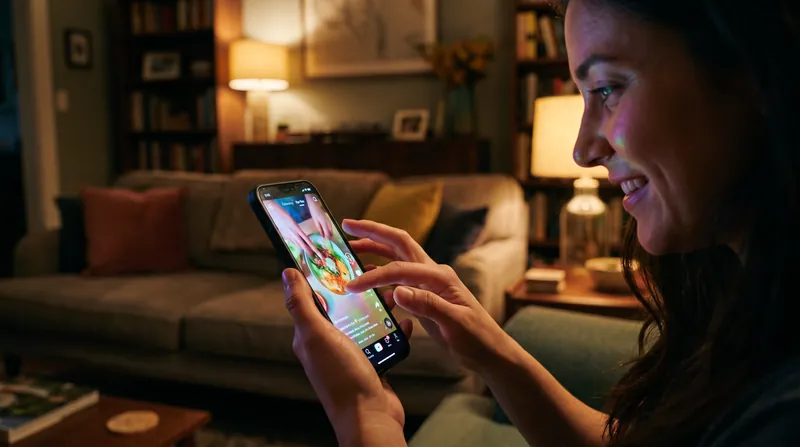
Starting early next year, a curated selection of these user-generated Sora videos will begin appearing on the Disney+ streaming service, effectively turning the platform's subscribers into an unpaid army of content creators. For better or worse, the Magic Kingdom has officially opened its gates to the algorithm.[1][2]
The stakes
This partnership signals a historic shift in how fiercely protective studios handle their intellectual property. By officially sanctioning AI-generated fan content, Disney is setting a new industry standard that blends traditional Hollywood storytelling with Silicon Valley's algorithmic future.
The essentials
- Disney is investing $1 billion in OpenAI, securing a roughly 0.2% equity stake in the AI startup.
- A three-year licensing deal allows Sora users to generate short videos featuring over 200 Disney, Marvel, Pixar, and Star Wars characters.
- The agreement explicitly excludes the likenesses and voices of real-world actors and prohibits OpenAI from training its models on Disney IP.
- Disney will integrate ChatGPT Enterprise across its workforce and feature select user-generated Sora videos on the Disney+ streaming platform.
Perspectives explored
Corporate Strategists
Viewing the partnership as a necessary evolution to monetize IP and reduce production costs.
For financial analysts and Disney executives, the OpenAI deal is a pragmatic masterstroke. By licensing its characters rather than fighting a futile war against user-generated content, Disney creates a new revenue stream while maintaining strict brand guardrails. Furthermore, integrating OpenAI's enterprise tools into Disney's production pipeline is seen as a crucial step toward reducing the studio's massive annual content expenditures, ensuring the company remains competitive in an increasingly tech-driven media landscape.
Creative Labor Advocates
Raising alarms about the existential threat generative AI poses to Hollywood's workforce.
Unions and talent agencies view the partnership with deep skepticism, arguing that it normalizes the replacement of human artistry with algorithmic generation. Despite Disney's assurances that actor likenesses and voices are excluded, advocates worry that allowing users to generate infinite content with classic characters will inevitably depress demand for traditional animation and visual effects work. For this camp, the deal represents a dangerous precedent where studios prioritize tech-driven efficiency over the livelihoods of the creators who built the IP.
Media Observers
Focusing on the cultural impact of turning fans into active content generators.
Cultural critics and tech journalists are fascinated by the shift in Disney's historically draconian approach to copyright. By allowing fans to use Sora to create their own Star Wars or Marvel mashups, Disney is effectively crowdsourcing its brand engagement. Observers note that this could usher in a new era of 'participatory fandom,' where the line between consumer and creator blurs, though many question how effectively the joint steering committee will be able to police the inevitable flood of bizarre or off-brand user generations.
Sources
Source coverage
8 outlets
3 viewpoints surfaced








- [1]CBS NewsMedia Observers
Disney invests $1 billion in OpenAI under a new commercial partnership
Read on CBS News → - [2]Los Angeles TimesCreative Labor Advocates
Disney invests $1 billion in OpenAI and licenses more than 200 characters
Read on Los Angeles Times → - [3]ForbesCorporate Strategists
Key Terms Of Disney's OpenAI Deal
Read on Forbes → - [4]CBCCreative Labor Advocates
Disney to invest $1B US in OpenAI, license Marvel, Star Wars characters for Sora tool
Read on CBC → - [5]AP NewsMedia Observers
Disney invests $1B in OpenAI in deal to bring characters like Mickey Mouse to Sora AI video tool
Read on AP News → - [6]Screen RantMedia Observers
Disney has inked a deal with OpenAI and Sora to bring over 200 characters to the generative video platform
Read on Screen Rant → - [7]The Walt Disney CompanyCorporate Strategists
Disney and OpenAI Announce Partnership
Read on The Walt Disney Company → - [8]OpenAICorporate Strategists
Disney and OpenAI reach agreement to bring characters to Sora
Read on OpenAI →
Comments
Every angle. Every day.
Get entertainment stories with full source coverage and perspective breakdowns delivered to your inbox.