
DOE Names Five States for New Nuclear Fuel Cycle 'Innovation Campuses' to Modernize US Supply Chain
The U.S. Department of Energy has selected Utah, Tennessee, Oklahoma, Louisiana, and Idaho as potential hosts for massive regional hubs designed to co-locate nuclear fuel production, power generation, and waste disposal.

- Federal Policymakers
- View the campuses as essential to securing the domestic energy supply chain and maintaining technological leadership.
- State Governments
- Focus on the massive economic development, job creation, and energy independence the hubs could bring to their regions.
- Nuclear Industry & Innovators
- See the integrated model as a commercial breakthrough that solves the back-end waste problem and attracts private capital.
At a glance
- The DOE signed memorandums of understanding with Utah, Tennessee, Oklahoma, Louisiana, and Idaho.
- The proposed "Innovation Campuses" will co-locate nuclear fuel enrichment, power generation, and waste disposal.
- Each regional hub has the potential to attract $50 billion in private investment and create 25,000 jobs.
- The initiative aims to solve the fragmented U.S. nuclear supply chain and provide a permanent solution for spent fuel.
- The campuses may also host energy-intensive industries like advanced manufacturing and data centers.
- The agreements are currently non-binding, with formal hosting and regulatory approvals still required.
Out of 28 applications from 26 states, the U.S. Department of Energy has selected five finalists—Utah, Tennessee, Oklahoma, Louisiana, and Idaho—to potentially host the nation's first "Nuclear Lifecycle Innovation Campuses." Energy Secretary Chris Wright signed non-binding memorandums of understanding with the governors of these states, marking the beginning of a federal-state partnership aimed at modernizing the domestic nuclear supply chain.[1][2][3]
The stakes are immense. According to the Energy Department, each of these proposed campuses has the potential to attract up to $50 billion in private capital investment, generate $10 billion in state and local tax revenue, and create nearly 25,000 high-paying jobs. The initiative represents a significant shift in federal nuclear policy, moving away from funding isolated reactor projects and toward the creation of integrated regional ecosystems that handle every stage of atomic energy production.[1][4][5]
The core concept of an Innovation Campus is co-location. Currently, the U.S. nuclear supply chain is highly fragmented, with uranium mining, conversion, enrichment, fuel fabrication, power generation, and waste disposal scattered across different regions and often reliant on foreign suppliers. By consolidating these functions into massive, centralized hubs, the federal government hopes to eliminate logistical bottlenecks and accelerate the deployment of next-generation reactors.[1][5]
The scope of activities envisioned for these sites is comprehensive. A fully realized campus would house facilities for uranium enrichment and advanced fuel manufacturing, alongside commercial power generation and advanced reactor demonstrations. Crucially, the hubs are also designed to tackle the back end of the fuel cycle, incorporating technologies for reprocessing used nuclear fuel and managing final waste disposition.[2][5][8]
This end-to-end approach is intended to solve one of the industry's most persistent challenges: what to do with the nearly 100,000 metric tons of spent nuclear fuel currently stranded at commercial power plants across the country. For decades, the lack of a permanent disposal solution has hampered the expansion of civil nuclear energy. By integrating waste management directly into the fuel production and power generation ecosystem, the Department of Energy aims to close the loop on the nuclear lifecycle.[1][4][7][8]
The selected states bring distinct regional advantages to the table. In Louisiana, state officials have proposed a multi-campus model that leverages the advanced research capabilities of institutions like Louisiana State University. The state is exploring three potential specialized hubs, including one in Baton Rouge, to support manufacturing, research, and energy production.[6]
Utah is positioning its potential campus as a cornerstone of "Operation Gigawatt," a state-level initiative designed to double Utah's energy production by 2034. Governor Spencer Cox emphasized that the state is prepared to develop the entire nuclear lifecycle, from fuel production to advanced reactor deployment, to secure long-term energy independence.[1][2][3]
Utah is positioning its potential campus as a cornerstone of "Operation Gigawatt," a state-level initiative designed to double Utah's energy production by 2034.
Tennessee and Idaho, both of which have deep historical ties to the Manhattan Project and the early development of civil nuclear power, are leaning on their established institutional knowledge. Tennessee Governor Bill Lee highlighted his state's legacy as a global epicenter of nuclear research, while Idaho Governor Brad Little pointed to the ongoing work at the Idaho National Laboratory as a foundation for future expansion.[1][2][3]
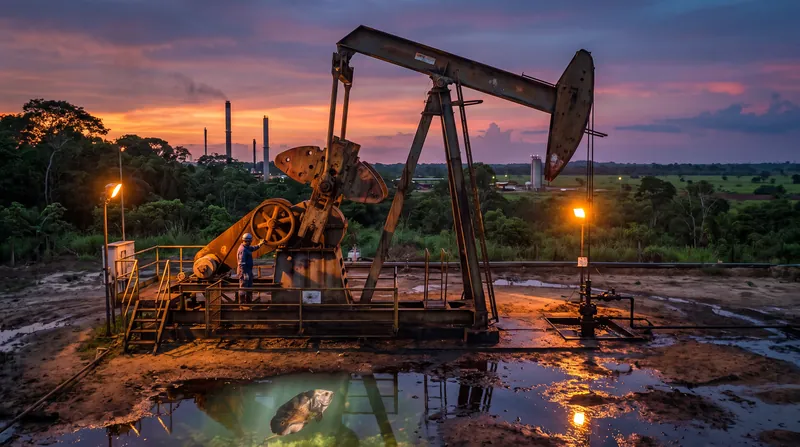
Oklahoma, a state traditionally known for its dominance in oil and gas production, views the initiative as a natural extension of its energy abundance agenda. Governor Kevin Stitt framed the potential campus as a new frontier for the state, adding nuclear capabilities to a portfolio that has historically relied on fossil fuels and, more recently, wind energy.[3]
Beyond the core nuclear functions, the Department of Energy envisions these campuses serving as magnets for energy-intensive industries. Depending on regional capabilities, the sites could co-locate advanced manufacturing facilities and massive data centers directly alongside the power generation assets. This direct-wire approach would provide tech companies with the reliable, zero-carbon baseload power required to run artificial intelligence workloads without straining the broader electrical grid.[1][4][5][6]
The financial structure of the initiative is designed to leverage massive private investment. Unlike traditional grant programs, the federal government expects these campuses to be self-sustaining economic engines funded through project finance, tax equity, and potential loan guarantees. The scale of the proposed hubs is intended to provide the long-term demand visibility necessary to attract institutional investors and venture capital to the nuclear sector.[5]
Private technology developers are already positioning themselves to participate in the campus ecosystems. Deep Isolation, a company specializing in deep borehole disposal technology, publicly welcomed the announcement, noting that its modular waste management systems are highly adaptable to the regional campus model. The company emphasized that incorporating permanent waste solutions from the outset is critical to the success of the broader nuclear expansion.[7]
Despite the ambitious vision, significant hurdles remain before any concrete is poured. The memorandums of understanding signed this week are non-binding agreements to continue exploring the feasibility of the campuses. States that choose to move forward will eventually need to negotiate formal hosting agreements with the Department of Energy, a process that will require navigating complex regulatory frameworks and securing buy-in from local communities.[1][2][4][5]
The regulatory pathway for co-locating enrichment, power generation, and waste disposal on a single site is largely untested in the United States. The Nuclear Regulatory Commission will need to evaluate unprecedented licensing applications for integrated facilities, a process that could take years and face intense scrutiny from environmental watchdogs and local stakeholders concerned about the transportation and storage of radioactive materials.[5][8]
Nevertheless, the selection of the five finalist states marks a definitive step toward restructuring the American nuclear industry. By shifting the focus from isolated projects to comprehensive regional ecosystems, the federal government is betting that co-location and scale can overcome the supply chain vulnerabilities and waste management challenges that have long constrained the sector.[1][3][5]
Terms to know
- Nuclear Fuel Cycle
- The progression of nuclear fuel through different stages, including uranium mining, enrichment, power generation, and final waste disposal.
- Spent Nuclear Fuel
- Nuclear reactor fuel that has been used to generate power and is no longer efficient, requiring safe storage or reprocessing.
- Deep Borehole Disposal
- A waste management technique that involves drilling narrow, miles-deep holes into stable rock formations to permanently isolate radioactive material.
- Baseload Power
- The minimum amount of electrical demand on a grid over a given period, requiring power plants that can run continuously and reliably.
Questions readers ask
What is a Nuclear Lifecycle Innovation Campus?
It is a proposed massive regional hub that co-locates every stage of nuclear energy production, from fuel enrichment and reactor operation to the final disposal of radioactive waste.
Which states were selected as finalists?
The Department of Energy selected Utah, Tennessee, Oklahoma, Louisiana, and Idaho from a pool of 26 applicant states.
Why is the government pushing for co-location?
The current U.S. nuclear supply chain is highly fragmented. Co-locating these facilities aims to eliminate logistical bottlenecks, attract private investment, and solve the long-standing problem of stranded nuclear waste.
Are these campuses definitely being built?
Not yet. The current agreements are non-binding memorandums of understanding. The states and the federal government must still negotiate formal hosting agreements and navigate complex regulatory approvals.
Sources
Source coverage
8 outlets
3 viewpoints surfaced








- [1]Department of EnergyFederal Policymakers
DOE announces Utah, Tennessee, Oklahoma, Louisiana, and Idaho as potential hosts to modernize the nation's nuclear fuel cycle
Read on Department of Energy → - [2]World Nuclear NewsNuclear Industry & Innovators
DOE names five states nuclear supply chain
Read on World Nuclear News → - [3]American Nuclear SocietyState Governments
Idaho, Louisiana, Oklahoma, Tennessee, and Utah are the finalists to potentially host Nuclear Lifecycle Innovation Campuses
Read on American Nuclear Society → - [4]Mining.comNuclear Industry & Innovators
US Department of Energy shortlists five states for nuclear sites
Read on Mining.com → - [5]OrrickFederal Policymakers
DOE's Vision for Nuclear Lifecycle Innovation Campuses
Read on Orrick → - [6]WBRZState Governments
Louisiana could soon be part of the federal government's push to invest in atomic energy
Read on WBRZ → - [7]Deep IsolationNuclear Industry & Innovators
Deep Isolation Stands Ready to Support States in Developing a Comprehensive, End-to-end Nuclear Fuel Cycle Strategy
Read on Deep Isolation → - [8]Society of Environmental JournalistsNuclear Industry & Innovators
Names 5 States For Possible Nuclear Waste Disposal
Read on Society of Environmental Journalists →
Comments
Every angle. Every day.
Get energy stories with full source coverage and perspective breakdowns delivered to your inbox.