
Evidence Pack: The Legal Architecture of the DOJ's Plan to Revive Maritime Prize Courts
The U.S. Justice Department is preparing to reactivate Civil War-era maritime prize courts to streamline the seizure of Iranian oil tankers, bypassing the bottlenecks of standard civil forfeiture.
By Marina Lopez

- U.S. Justice Department
- Views prize courts as a necessary legal tool to enforce the blockade and offset conflict costs.
- Maritime Legal Experts
- Warns that applying 19th-century prize law to modern shipping presents unprecedented legal challenges.
- Anti-War Advocates
- Views the revival of prize courts as an aggressive escalation of economic warfare and state confiscation.
- 1898
- Last major active period for U.S. prize courts (Spanish-American War)
- 50 miles
- Length of the Houston port channel considered for vessel storage
- 1945
- Year prize courts were last utilized in any capacity (World War II)
The U.S. Justice Department is preparing to reactivate maritime "prize courts"—a legal framework largely dormant since World War II—to streamline the seizure and liquidation of Iranian oil tankers. The initiative, coordinated with the Pentagon, aims to bypass the bottlenecks of standard civil forfeiture, allowing the U.S. government to more rapidly condemn captured vessels as prizes of war and transfer the proceeds directly to the Treasury.[1]
The evidence for this shift centers on the logistical and legal friction the U.S. currently faces in enforcing its naval blockade of Iran. Under existing civil forfeiture laws, the seizure of a vessel triggers a complex, multi-party legal process. When the U.S. intercepts a tanker, the ensuing civil case often draws in the vessel's owners, cargo claimants, lienholders, and even families of terrorism victims holding judgments against Iran.[1][4]
These competing claims slow down the liquidation process while the physical carrying costs of maintaining and guarding a seized supertanker continue to compound. By invoking prize law, the Justice Department seeks a cleaner legal pathway. Prize proceedings are specifically designed for wartime captures, theoretically limiting the avenues for third-party claimants to intervene and slowing the transfer of assets.[1]
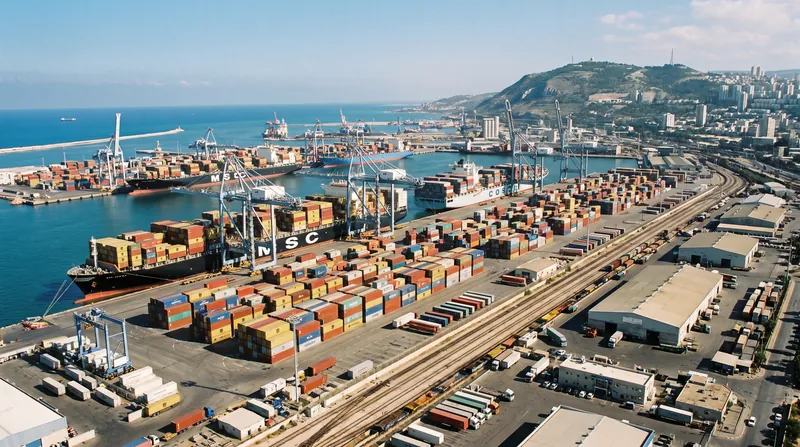
The operational node for this legal architecture is expected to be the U.S. District Court for the Southern District of Texas. The selection of the Houston-based court is driven by physical infrastructure rather than purely legal strategy. Captured oil tankers require massive port facilities, specialized storage, and refining capacity. Houston's 50-mile port and its status as the nation's largest petrochemical complex provide the necessary physical logistics to store and monetize large volumes of condemned crude oil.[3]
However, the legal foundation for reviving prize courts remains untested in the modern era. The framework was widely used during the U.S. Civil War to enforce the blockade of the Confederacy, and saw its last major active period during the Spanish-American War of 1898. Maritime legal experts caution that international law and the laws of war have evolved significantly over the last century.[5]
However, the legal foundation for reviving prize courts remains untested in the modern era.
The primary area of uncertainty lies in how a 19th-century legal mechanism will interact with 21st-century international tribunals and commercial shipping regulations. Allison Luzwick, a maritime attorney at Holland & Knight, notes that the DOJ's plan represents a "historical area of law that is not tested in modern times," and that modern legal strides will inevitably complicate proceedings.[4]
The commercial shipping industry is closely monitoring the development, as it introduces a new category of risk for owners, charterers, and insurers. A tanker fixture that previously presented a standard sanctions-compliance issue could now expose the vessel to outright capture and prize condemnation. This shifts the financial calculus for any shipping company operating near the blockade zone, potentially driving up insurance premiums and altering global crude transit routes.[1]
From a strategic standpoint, the revival of prize courts serves a dual purpose for the administration. Beyond the immediate logistical benefits of faster liquidation, it acts as a signaling mechanism. Eugene Kontorovich, an international law professor, observes that the move demonstrates the U.S. is treating the blockade as a serious military engagement and is willing to utilize every available tool to enforce it.[5]
Furthermore, the financial proceeds from condemned prizes are slated to be deposited directly into the U.S. Treasury, providing a mechanism to partially offset the mounting costs of the prolonged conflict. Critics of the policy, however, argue that the strategy amounts to state-sanctioned confiscation and risks escalating the economic war into broader geopolitical instability.[2]
The distinction between enemy property and neutral cargo presents another significant legal hurdle. In historical prize cases, neutral ships carrying contraband of war were subject to seizure, but the evidentiary burden was high. Today's shadow fleet of oil tankers often utilizes complex ownership structures, stateless flags, and ship-to-ship transfers to obscure the origin of the crude.[1]
Proving that a specific cargo is directly tied to the Iranian state, rather than a neutral third party, will require extensive intelligence sharing in open court. If the DOJ fails to meet this burden, the U.S. could be forced to release the vessels or pay substantial damages to neutral shipping companies, undermining the economic rationale of the prize court system.[1][4]
Ultimately, the reactivation of prize courts represents a profound shift in how the United States prosecutes economic warfare. By bridging the gap between military action and domestic jurisprudence, the DOJ is attempting to build a self-sustaining legal engine for the blockade. The coming months will reveal whether this 19th-century tool can withstand the friction of modern global commerce.[3]
What we don’t know
- Whether federal judges in the Southern District of Texas will accept jurisdiction over the proposed prize claims without a formal congressional declaration of war.
- How modern international tribunals will respond to the U.S. reactivating 19th-century prize law to seize foreign assets.
- The exact evidentiary standards the DOJ will use to differentiate between Iranian state assets and neutral commercial cargo.
Sources
Source coverage
5 outlets
3 viewpoints surfaced





- [1]ShipUniverseMaritime Legal Experts
Old Maritime Law Meets Modern Tanker Seizures
Read on ShipUniverse → - [2]Antiwar.comAnti-War Advocates
White House Planning to Reactivate Civil War-Era Court to Accelerate Theft of Iranian Oil
Read on Antiwar.com → - [3]Caspian PostU.S. Justice Department
US Justice Department Weighs Revival of "Prize Courts" to Seize Iranian Oil Tankers
Read on Caspian Post → - [4]Holland & KnightMaritime Legal Experts
U.S. Aims to Revive Civil War-Era Court to Claim Iran Oil as Prize
Read on Holland & Knight → - [5]The CradleAnti-War Advocates
US weighs reviving Civil War-era prize courts to seize Iranian oil tankers
Read on The Cradle →
Comments


Every angle. Every day.
Get defense security stories with full source coverage and perspective breakdowns delivered to your inbox.