
Amtrak and Norfolk Southern to Launch Second Daily Pennsylvanian Service in November
A second daily passenger train between Pittsburgh and New York City will begin operating in mid-November, leveraging over $220 million in state and federal infrastructure upgrades to share the corridor with heavy freight.

Share this story
For decades, travelers in Western and Central Pennsylvania needing to conduct business in Harrisburg or Philadelphia faced a systemic logistical hurdle: the single daily passenger train made a same-day return trip impossible, mandating an overnight stay. That constraint will officially lift in mid-November.
Pennsylvania Governor Josh Shapiro announced Monday that Amtrak and Norfolk Southern will launch a second daily Pennsylvanian service between Pittsburgh and New York City, doubling the corridor's passenger capacity and fundamentally altering how residents navigate the commonwealth. The addition represents the culmination of years of state-level planning aimed at bridging the transit divide between Pennsylvania's eastern and western economic centers.[2][4]
The new frequency will mirror the existing route's footprint, originating in Pittsburgh and making vital intermediate stops in Greensburg, Latrobe, Johnstown, Altoona, Huntingdon, Lewistown, Harrisburg, and Philadelphia before terminating at New York's Penn Station. Amtrak anticipates opening ticket sales in October, at which point the railroad will publish the precise schedule for the new eastbound and westbound departures. For passengers, the expansion does not introduce a new destination, but rather injects a critical second daily departure into a schedule that previously offered zero flexibility for missed connections or shifting itineraries.[2][3][8]
The operational expansion is the downstream result of a complex, three-way coordination effort between Amtrak, the Pennsylvania Department of Transportation (PennDOT), and freight operator Norfolk Southern. Because Amtrak does not own the tracks west of Harrisburg, adding passenger volume required engineering a structural solution that would not degrade the performance of the host railroad's existing freight network.
Negotiating the shared use of the corridor took nearly three years of planning, reflecting the inherent friction between the rigid schedules of passenger rail and the fluid, high-tonnage demands of modern precision scheduled railroading.[1][5]
To achieve a functional equilibrium, the state committed $80 million in capital, which was subsequently supplemented by a $143 million federal passenger rail grant awarded by the Federal Railroad Administration in 2023. These combined funds are financing a comprehensive suite of 11 distinct infrastructure upgrades along Norfolk Southern's 248-mile Pittsburgh Line.
The capital injection effectively subsidizes the physical expansion of a private freight corridor in exchange for guaranteed passenger access, a model of public-private infrastructure investment that federal regulators are increasingly utilizing to bypass the prohibitive costs of building dedicated passenger-only rail lines.[2][3][7]
The engineering work funded by the agreement includes the construction of new crossovers, bypass tracks, and interlocking upgrades, with construction particularly concentrated around the historically congested Harrisburg and Altoona areas. While the complete slate of infrastructure projects will continue through 2030, Norfolk Southern and PennDOT prioritized early-action improvements to facilitate the November launch.
The completion of initial elements, such as the new CP-SG interlocking west of Johnstown that opened in 2025, provided the necessary routing flexibility to safely introduce the second daily passenger frequency without waiting for the entire decade-long construction program to conclude.[1][7]
For Norfolk Southern, the physical upgrades were a non-negotiable prerequisite for the agreement. The Pittsburgh Line serves as a primary artery for double-stack intermodal traffic moving between Chicago and the East Coast, handling dozens of freight movements daily. Dispatching 79-mph passenger trains through a twisting, mountainous corridor—including the 1.8 percent grades of the Alleghenies and the landmark Horseshoe Curve—presents a significant operational challenge when sharing track with heavy freight consists that often stretch up to three miles long and operate at lower speeds.[1][3]
At the municipal level, the added frequency restores a degree of regional connectivity that has been absent since the late twentieth century. Local advocates and municipal leaders note that the second train will allow residents of communities like Altoona, Johnstown, and Lewistown to travel east for medical appointments, government business, or recreation and return home the same evening. By eliminating the requirement for an overnight hotel stay, the expanded service effectively integrates these central and western communities more closely with the state capital and the broader Northeast Corridor economy.[4][8]
The expansion arrives as the corridor experiences sustained, verifiable ridership growth. In fiscal year 2025, the single daily Pennsylvanian carried 236,000 passengers, surpassing pre-pandemic utilization levels and demonstrating clear demand for the route. East of Harrisburg, where the tracks are electrified and already support frequent service, the second Pittsburgh train is expected to replace an existing Keystone Service round-trip. This integration optimizes Amtrak's equipment deployment while absorbing pent-up demand across the state, setting a baseline for potential future expansions if the new mid-November frequency proves commercially successful.[1][3][5]
Key points
- Amtrak will launch a second daily Pennsylvanian round-trip between Pittsburgh and New York City in mid-November 2026.
- The expansion is funded by an $80 million state investment and a $143 million federal grant awarded in 2023.
- The capital is financing 11 infrastructure upgrades on Norfolk Southern's Pittsburgh Line to prevent passenger trains from delaying heavy freight.
- The second frequency enables residents of Western and Central Pennsylvania to make same-day round trips to Harrisburg and Philadelphia.
Timeline
2020
Norfolk Southern completes a capacity study identifying the infrastructure needed to support a second passenger train.
June 2022
Pennsylvania and Norfolk Southern announce an initial agreement to pursue a $200 million capacity improvement plan.
December 2023
The Federal Railroad Administration awards $143.6 million to fund the necessary track upgrades.
August 2025
The new CP-SG interlocking opens west of Johnstown, completing the first major early-action infrastructure project.
August 2026
Governor Josh Shapiro announces the mid-November launch date for the second daily service.
- Passenger Rail Advocates
- Advocates view the expansion as a critical restoration of regional mobility that enables same-day business and medical travel.
- State and Federal Planners
- Planners see the project as a successful blueprint for public-private partnerships in shared rail corridors.
- Freight Operators
- Railroads emphasize that passenger expansions must be fully funded by the public sector to prevent supply chain disruptions.
Perspectives this story doesn't cover
- Intercity bus operators
- Airlines operating short-haul flights between Pittsburgh and Eastern hubs
Sources
Source coverage
8 outlets
3 viewpoints surfaced








- [1]Trains.comFreight Operators
Second Amtrak Pennsylvanian will begin running in mid-November
Read on Trains.com → - [2]Pennsylvania Governor's OfficeState and Federal Planners
Governor Shapiro Announces Second Daily Pennsylvanian Train Will Begin Operating in Mid-November
Read on Pennsylvania Governor's Office → - [3]The Philadelphia InquirerFreight Operators
A second daily Amtrak passenger train between New York's Penn Station and Pittsburgh will begin operating in mid-November
Read on The Philadelphia Inquirer → - [4]Altoona MirrorPassenger Rail Advocates
Amtrak sets debut for second daily trip of Pennsylvanian train
Read on Altoona Mirror → - [5]WITFState and Federal Planners
Amtrak will operate a second daily passenger train between Pittsburgh and New York via Harrisburg and Philadelphia starting in mid-November
Read on WITF → - [6]Railway SupplyFreight Operators
Second Daily Pennsylvanian Train Set for Mid-November
Read on Railway Supply → - [7]Advancing PA RailState and Federal Planners
Pennsylvanian Service Expansion
Read on Advancing PA Rail → - [8]The SentinelPassenger Rail Advocates
Services expand in November: Second daily Amtrak service will run between Pittsburgh and New York City
Read on The Sentinel →
More in Transportation
See all →Oversight Audit
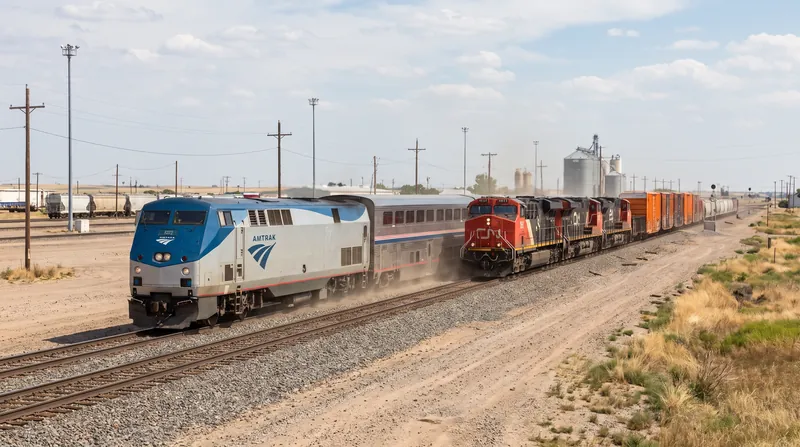
Inspector General Finds California High-Speed Rail Paid $600,000 in Unallowable Consultant Travel Expenses
6 sources
Freight Rail Safety
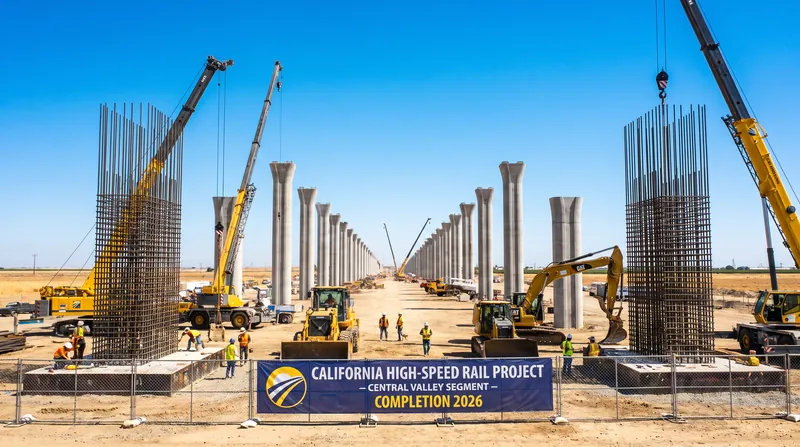
Multi-Car Train Derailment in Montana Prompts Precautionary Evacuations With No Hazardous Spills
5 sources
Break of Gauge
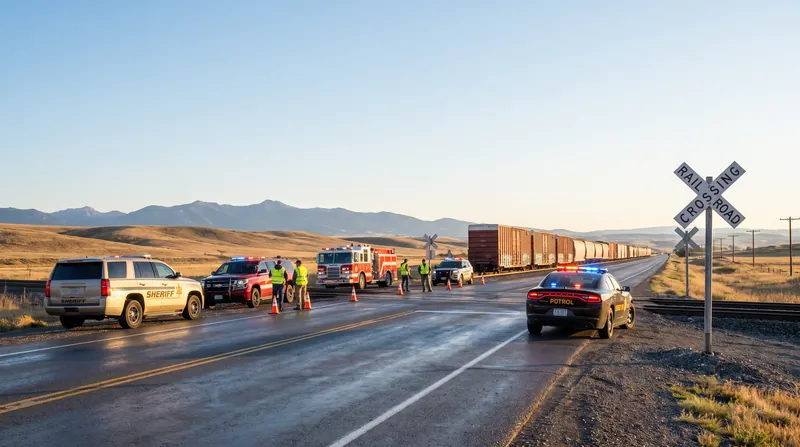
Rebuild the Track or Rebuild the Train: The Engineering Behind Variable-Gauge Railways
5 sources
Ukraine Rail Logistics
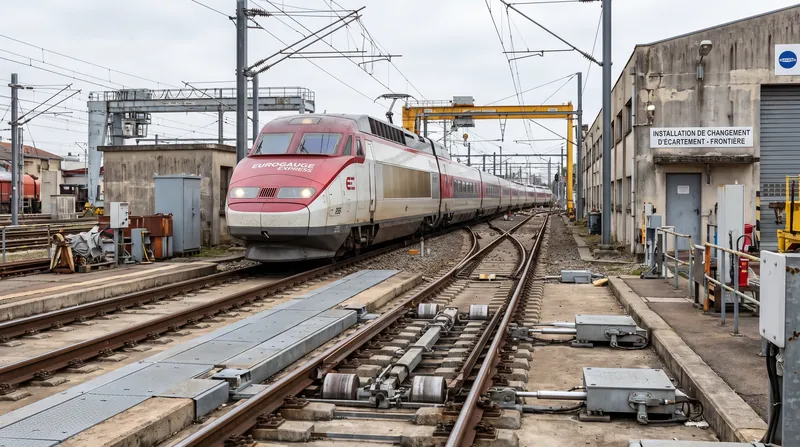
Russia Strikes Western Ukraine Rail Infrastructure, Citing NATO Military Cargo
6 sources

Comments
Every angle. Every day.
Get Transportation stories with full source coverage and perspective breakdowns, free every day.