
Russia Strikes Western Ukraine Rail Infrastructure, Citing NATO Military Cargo
Russian forces targeted railway nodes near the Polish border, aiming to disrupt European military supply lines into Ukraine. The strikes resulted in four casualties and narrowly missed a train carrying former UK Prime Minister Boris Johnson.

- Russian Military Command
- Focuses on neutralizing NATO supply lines and military logistics nodes.
- Western & Ukrainian Observers
- Highlights the civilian casualties and risks to diplomatic transit.
Perspectives this story doesn't cover
- Ukrainian Railway Workers
- Polish Border Authorities
Why this matters
Western Ukraine's rail network is the primary artery for European military aid entering the country. Sustained damage to these logistics nodes threatens to throttle the delivery of NATO equipment to the eastern frontlines.
The Russian Ministry of Defense maintains that its weekend strikes on Western Ukraine systematically dismantled key rail infrastructure, stating the sites were "used to transport military cargo" from Europe to the frontlines. Ukrainian and Western officials, conversely, characterize the September 2026 bombardment as an assault on civilian transit corridors that killed four people and nearly struck a passenger train carrying former United Kingdom Prime Minister Boris Johnson.[1][3][4][6]
The rail network connecting Poland to Western Ukraine operates as the central logistical artery for the Ukrainian war effort. Because the country's airspace remains contested and commercial flights have been grounded since 2022, surface transport—specifically the 1,520-millimeter broad-gauge rail system—carries the vast majority of inbound military hardware, humanitarian aid, and diplomatic personnel. Disrupting these nodes forces a reliance on slower, lower-capacity road transport networks.
The weekend operations targeted logistics centers, power facilities, and drone manufacturing plants situated near the Polish border. According to statements from Moscow, the strikes successfully hit sites where European military cargo was being unloaded and staged for eastward distribution. The precision of the strikes on rail junctions indicates a deliberate strategy to create bottlenecks at the border where standard 1,435-millimeter European gauge trains transfer cargo to Ukrainian broad-gauge rolling stock.[2][5]
The human and diplomatic toll of the strikes underscores the dual-use nature of the rail network. Drone strikes associated with the broader offensive resulted in four fatalities in the region. During the bombardment, a train transporting Boris Johnson—a prominent advocate for Western military aid to Kyiv—was navigating the Ukraine-Poland railway, narrowly avoiding the targeted zones.[4][6]
The human and diplomatic toll of the strikes underscores the dual-use nature of the rail network.
The incident highlights the inherent risks of routing high-level diplomatic visits through active military logistics corridors. Over the past four years, dozens of world leaders have utilized the rail route from Przemysl, Poland, to Kyiv. The proximity of the strikes to Johnson's transit route demonstrates that the airspace above these critical rail lines remains highly vulnerable to long-range drone and missile incursions.[4][6]
This targeting of rail infrastructure represents a node-focused approach to the conflict, shifting pressure from the eastern tactical front to the western strategic supply lines. By degrading the transfer capacity at the Polish border, Russian forces aim to starve forward Ukrainian units of necessary munitions and equipment. The downstream consequence of these strikes is a compounding logistical delay, requiring Ukrainian engineers to rapidly repair tracks and reroute trains to maintain the flow of NATO supplies.[3]
Beyond the immediate rail lines, the coordinated attacks also struck regional power facilities. The Ukrainian rail system is heavily electrified, meaning that degrading the regional grid simultaneously degrades the capacity to move heavy freight trains. When overhead catenary lines lose power, operators are forced to substitute diesel locomotives, which are fewer in number and less efficient for hauling massive military payloads across the country.[5]
Repairing the damaged rail links will require immediate allocation of engineering resources, while the continued threat of strikes may force Ukraine to disperse its cargo transfer operations across a wider array of smaller, less efficient border crossings. As long as the rail network remains the primary conduit for European military support, it will persist as a primary target in the infrastructure war.[1][2]
Viewpoints in depth
Russian Defense Ministry
Views the rail network as a legitimate military target facilitating NATO supply lines.
From Moscow's perspective, the rail junctions in Western Ukraine are the critical vulnerability in the Ukrainian military apparatus. By targeting the specific transfer points where NATO equipment is unloaded from European trains, Russian forces aim to neutralize Western military aid before it reaches the eastern front. The Defense Ministry characterizes these strikes as precise operations against military logistics centers, drone plants, and the power grid that supports them, framing the disruption of the rail network as a necessary step to degrade Ukraine's combat capabilities.
Ukrainian and Western Officials
Emphasizes the civilian toll and the diplomatic risks of targeting dual-use infrastructure.
Western and Ukrainian leaders view the bombardment of the rail network as an indiscriminate attack on dual-use infrastructure that endangers civilians and international diplomats. Because the same rail lines that carry military cargo also transport humanitarian aid, civilian passengers, and visiting dignitaries, officials argue that strikes near the Polish border carry an unacceptable risk of collateral damage. The near-miss involving former UK Prime Minister Boris Johnson and the deaths of four individuals in related drone strikes are cited as evidence of the reckless nature of targeting these logistical corridors.
Key points
- Russian forces confirmed strikes on railway infrastructure in Western Ukraine, citing the disruption of NATO military cargo from Europe.
- The attacks targeted logistics centers, power facilities, and drone plants near the Polish border.
- Drone strikes associated with the bombardment resulted in four fatalities in the region.
- A train carrying former UK Prime Minister Boris Johnson narrowly avoided the targeted zones during the attacks.
- The rail network remains the primary logistical artery for transporting Western military aid into Ukraine.
How we got here
2022
Ukraine's airspace is closed to commercial flights, making the rail network the primary transit route for international visitors and cargo.
September 13, 2026
Russian forces launch strikes against rail infrastructure, logistics centers, and power facilities in Western Ukraine.
September 13, 2026
Former UK Prime Minister Boris Johnson narrowly avoids the bombardment while traveling on the Ukraine-Poland railway.
September 14, 2026
The Russian Ministry of Defense confirms the strikes, stating they targeted sites used to transport European military cargo.
Sources
Source coverage
6 outlets
2 viewpoints surfaced






- [1]Al ArabiyaRussian Military Command
Russia says hit Ukraine rail site 'used to transport military cargo' from Europe
Read on Al Arabiya → - [2]LBCI LebanonRussian Military Command
Russia says hit Ukraine rail site used to transport military cargo from Europe
Read on LBCI Lebanon → - [3]EADailyRussian Military Command
The Ministry of Defense confirmed the strikes on the railway in Western Ukraine
Read on EADaily → - [4]The Jerusalem PostWestern & Ukrainian Observers
Ex UK PM Johnson narrowly misses Russian attack on Ukraine-Poland railway
Read on The Jerusalem Post → - [5]China.orgRussian Military Command
Russian forces hit drone plants, logistics centers, power facilities in Ukraine
Read on China.org → - [6]Al JazeeraWestern & Ukrainian Observers
Ukraine drone strikes kill four as Russia attacks close to Poland border
Read on Al Jazeera →
Comments

More in Transportation
See all →Motor Architecture
Axial Flux vs. Radial Flux Motors: The Trade-Offs Defining Next-Generation EV Performance
7 sources

Maritime Tech
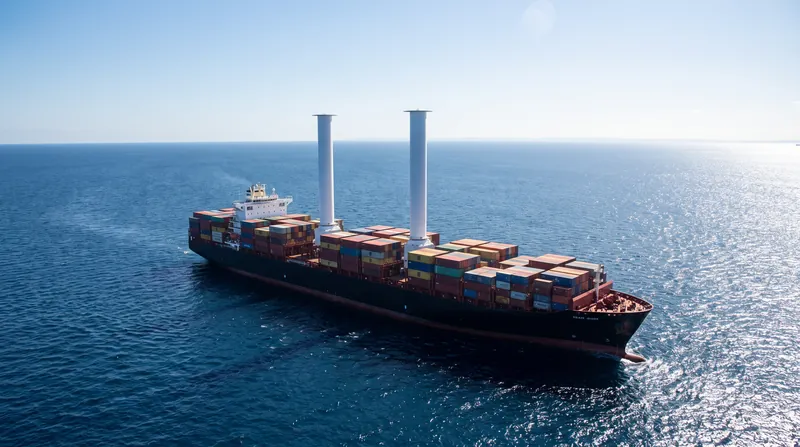
How Flettner Rotors Use the Magnus Effect to Cut Commercial Shipping Emissions
4 sources
Aerodynamics
How a Winglet's Cant Angle and Toe Angle Reduce Induced Drag by Managing Tip Vortices
8 sources

Battery Tech
How Toyota's Solid-State Battery Prototype Aims to Deliver 600-Mile Range and 10-Minute Charging
4 sources

Every angle. Every day.
Get Transportation stories with full source coverage and perspective breakdowns delivered to your inbox.