
full timeline
COP31 climate summit
International delegates and United Nations officials are convening to negotiate global climate action and address rising global temperatures.
Follow COP31 climate summit in the Factlen app and get an alert when there is news. Get the app
Share this story
Latest report
Greta Thunberg Issues Urgent Warning as UN Climate Talks Open in Antalya
Swedish climate activist Greta Thunberg ended her multi-year boycott of UN summits to address delegates at COP31 in Turkey. She warned that accelerating global temperatures and diplomatic delays have put the planet's future at stake.
- Greta Thunberg arrived at the COP31 summit in Antalya, ending her multi-year boycott of the UN climate negotiations.
- The Swedish activist warned delegates that "everything and everyone we love is at stake" amid accelerating global temperatures.
- Her return coincides with new WMO data confirming that 2026 saw unprecedented heat extremes and a continuous breach of the 1.5-degree threshold.
- Negotiators face deep divisions over fossil fuel phase-outs and the capitalization of a new global climate finance target.
Swedish climate activist Greta Thunberg arrived at the United Nations COP31 climate summit in Antalya, Turkey, on Tuesday, ending a multi-year boycott of the annual negotiations. Stepping into the plenary venue, she delivered a stark assessment of the accelerating global temperature rise to assembled delegates.[1][2]
"Everything and everyone we love is at stake," Thunberg told reporters and negotiators gathered outside the main hall. She described the current trajectory of global carbon emissions as an existential threat that diplomatic incrementalism has failed to halt.[1][4]
Her presence in Antalya marks a sharp reversal in strategy. Thunberg had previously dismissed recent UN climate summits as "greenwashing circuses," refusing to attend the gatherings in Dubai and Belém over the heavy presence of fossil fuel lobbyists.[3]
She told the press that the sheer scale of the climate extremes recorded throughout 2026 compelled her to return to the formal diplomatic arena. The World Meteorological Organization recently confirmed that the planet is entering an unprecedented age of accelerating heat.[1][5]
The COP31 summit opens under the shadow of those WMO findings, which track a continuous breach of the 1.5-degree Celsius warming threshold over the past 24 months. Negotiators from 197 parties face mounting pressure to mandate immediate fossil fuel phase-outs.[1][2]
The Return to the Plenary
Thunberg did not spare the UN process from criticism despite her attendance. She immediately hit out at the hypocrisy of the annual talks, pointing to the gap between the pledges made at previous summits and the continued expansion of fossil fuel infrastructure globally.[2][3]
"We cannot negotiate with the laws of physics," she stated during a brief address near the summit's entrance. "While leaders pose for photographs, the emissions curve continues to rise, and marginalized communities are already paying the ultimate price."[1][4]
The 23-year-old activist was flanked by representatives from the Fridays for Future movement and indigenous youth leaders from the Global South. Together, they demanded that the COP31 text produce binding enforcement mechanisms rather than another round of voluntary declarations.[2][5]
German publication Die Welt noted that Thunberg’s reappearance injects a volatile element into the carefully choreographed proceedings in Antalya. Her previous interventions at UN summits have historically galvanized massive street protests and disrupted official schedules.[3]
Summit organizers in Turkey have designated specific zones for civil society demonstrations, but activists have already signaled their intent to bring their demands directly to the negotiation rooms. Security around the Antalya Expo Center has been heavily reinforced ahead of the opening plenary.[2][4]
A Year of Accelerating Heat
The urgency of Thunberg's warning aligns with the scientific consensus presented to delegates on the summit's opening day. The UN Environment Programme reported that global greenhouse gas emissions rose by 1.3 percent in 2025, pushing the world further off track.[1][5]
Delegates are reviewing a draft text that attempts to operationalize the transition away from fossil fuels agreed upon at COP28. However, early drafts show deep divisions between major oil-producing nations and the coalition of highly vulnerable island states.[1][2]
Thunberg specifically targeted the presence of fossil fuel lobbyists at the summit. At previous conferences, industry representatives outnumbered the delegations of the ten most climate-vulnerable nations combined, a dynamic activists fear will repeat in Antalya.[2][3]
"You cannot solve a crisis with the very people who are deliberately causing it," Thunberg told the crowd. She called for a complete overhaul of the UN Framework Convention on Climate Change rules to exclude fossil fuel interests from the drafting process.[4][5]
The host nation, Turkey, finds itself navigating these intense competing pressures. The Turkish government aims to use the COP31 presidency to highlight its investments in solar and wind energy, while simultaneously defending its continued reliance on coal for baseload power.[3][4]
The Diplomatic Standoff
European negotiators arrived in Antalya pushing for stricter nationally determined contributions ahead of the 2027 deadline. They argue that the current pledges would result in a catastrophic 2.6-degree Celsius temperature rise by the end of the century.[1][2]
Developing nations, meanwhile, are prioritizing the fulfillment of the loss and damage fund. They argue that wealthy nations have failed to capitalize the fund sufficiently to cover the billions in damages caused by the severe floods and droughts of 2026.[1][5]
Thunberg echoed these demands, stating that climate justice requires immediate financial transfers from the Global North to the Global South. She characterized the current funding levels as a fraction of what industrialized nations spend on fossil fuel subsidies annually.[2][4]
The Independent reported that several high-profile world leaders have skipped the opening days of the Antalya summit, leaving the initial negotiations to environment ministers and climate envoys. Activists view this absence as a signal of waning political will.[2]
Despite the procedural hurdles, the youth climate movement views COP31 as a critical inflection point. The presence of their most recognizable figure has already shifted the media narrative away from diplomatic technicalities and back toward the existential stakes.[3][5]
The Financial Deadlock
Financial commitments remain the most intractable issue on the COP31 agenda. The New Collective Quantified Goal on climate finance is supposed to replace the previous $100 billion annual target, but parties are hundreds of billions of dollars apart in their proposals.[2][5]
Thunberg criticized the framing of these financial discussions, arguing that the Global North owes a historical climate debt rather than voluntary charity. "This is not about aid; it is about reparations for decades of ecological destruction," she stated.[4]
The South China Morning Post highlighted that the Chinese delegation is pushing back against attempts to broaden the donor base for climate finance. Beijing maintains that traditional industrialized nations must bear the primary financial burden under the principle of common but differentiated responsibilities.[4]
The World Meteorological Organization's latest bulletin, released just hours before the summit opened, provided a grim backdrop to the proceedings. It confirmed that ocean heat content reached another record high in the first half of 2026, accelerating sea-level rise.[1]
The negotiations in Antalya are scheduled to run through November 22. The final text must be adopted by consensus among all 197 parties, leaving the outcome highly vulnerable to vetoes from nations heavily invested in hydrocarbon extraction.[1][3]
Security and Access
Access to the negotiation zones has become a flashpoint between civil society groups and the UN secretariat. Several prominent climate justice organizations reported that their delegate badges were severely restricted compared to previous years, limiting their ability to monitor the plenary sessions.[2][5]
Sources
- [1]The Guardian — Cop31 as it happened: 'Everything and everyone we love is at stake,' Greta Thunberg warns Read on The Guardian →
- [2]The Independent — Greta Thunberg hit out at the hypocrisy of the annual talks Read on The Independent →
- [3]Die Welt — Greta Thunberg meldet sich nach Jahren wieder bei einem UN-Klimagipfel zurück Read on Die Welt →
- [4]South China Morning Post — 'Everything we love at stake': Greta Thunberg arrives at UN climate talks Read on South China Morning Post →
- [5]SFGate — Greta Thunberg warns 'everything we love is at stake' as she arrives at UN climate talks Read on SFGate →
What to watch
- The European Union intends to push for accelerated global climate action during the summit proceedings.
- An intensifying El Niño is acting as a risk multiplier that threatens to push global temperatures even higher in 2027.
- Pacific delegations are preparing to present unified regional demands regarding the global loss and damage fund.
- Current national commitments place the world on a trajectory for a 2.6 degrees Celsius temperature rise by the end of the century.
Where things stand
Global Delegations Assemble for COP31 Climate Summit in Turkey
Key point: The COP31 climate summit opened in Turkey with a focus on global electrification, though negotiations face significant hurdles from geopolitical conflicts, surging AI power demands, and disputes over climate finance.
AIIllustration: The intensifying El Niño acts as a risk multiplier, supercharging extreme weather events such as prolonged droughts.From: UN Warns Planet Is Entering Age of Climate Extremes as WMO Tracks Accelerating Heat Ahead of COP31 Representatives from nearly 200 countries gathered in Antalya, Turkey, on Monday for the opening of the COP31 United Nations climate summit. The two-week conference commenced amid mounting geopolitical tensions and escalating energy demands that threaten global climate goals.
Turkey's COP31 presidency introduced an Action Agenda focused on increasing electricity's share of the global economy to 35 percent by 2035. However, the pledge has drawn criticism from climate advocates because it does not mandate that the additional power come from low-carbon sources. Meanwhile, UN Secretary-General Antonio Guterres urged world leaders to accelerate emissions cuts and deliver necessary funding to vulnerable nations.
The negotiations faced immediate hurdles as developing countries pushed to include climate finance on the official agenda, highlighting the ongoing divide over how wealthy nations should support poorer ones. The diplomatic landscape is further complicated by the United States shunning official climate cooperation for a second consecutive year, alongside energy market disruptions caused by the U.S. war with Iran and surging power demands from artificial intelligence.
The summit follows a year of severe weather extremes, including punishing European heatwaves and catastrophic floods in Nepal. A recent UN report warned that global temperatures remain on track to breach the 1.5-degree Celsius warming limit established by the Paris Agreement, underscoring the urgency of translating previous climate pledges into concrete implementation.
WMO warns of accelerating global heat and climate extremes as COP31 opens
Key point: The World Meteorological Organization has warned that Earth is accumulating heat at an unprecedented rate, supercharging extreme weather events as global leaders gather for the COP31 climate summit.
The World Meteorological Organization (WMO) has warned that the Earth is accumulating heat at an accelerating rate, driving unprecedented climate and weather extremes. The stark assessment was highlighted on Monday to coincide with the opening of the COP31 climate summit in Antalya, Turkey.
According to the WMO's State of the Global Climate update, the imbalance between incoming solar energy and outgoing energy has reached its highest level since monitoring began. The UN agency noted that 2026 is continuing a streak of exceptional global temperatures, melting ice, and rising sea levels, giving "new meaning to off the charts."
The report underscores a worsening trajectory for global heating, prompting the UN chief to declare that the world is entering a "new age of climate extremes." This escalating heat accumulation threatens to supercharge extreme weather events, including those driven by an intensifying El Niño, which is expected to exacerbate water shortages and other crises into next year.
These warnings set a sobering tone for the COP31 negotiations, where international delegates are gathering to address the steadily worsening climate situation. The summit will focus on implementing urgent targets to cut greenhouse gas emissions as countries face the mounting consequences of global warming.
COP31 Climate Summit Opens in Turkey Amid Geopolitical Tensions
Key point: Delegates from nearly 200 nations have gathered in Antalya for the COP31 climate summit, aiming to implement concrete energy transitions despite overshadowing geopolitical conflicts and the absence of an official U.S. delegation.
AIDelegates gather at the COP31 climate summit in Antalya, Turkey, as the UN warns of an accelerating age of climate extremes.From: UN Warns Planet Is Entering Age of Climate Extremes as WMO Tracks Accelerating Heat Ahead of COP31 The COP31 United Nations climate summit has officially opened in Antalya, Turkey, drawing delegates and leaders from nearly 200 nations to negotiate the next phase of global climate action. The critical conference commences amid significant geopolitical strain, with ongoing wars in the Middle East and Ukraine, international trade conflicts, and the recent United States presidential election heavily overshadowing the environmental agenda.
Under a unique power-sharing arrangement designed to resolve a previous hosting dispute, Turkey is hosting the event and managing voluntary action initiatives, while Australia leads the formal negotiations. COP31 President and Turkish Environment Minister Murat Kurum has emphasized the need to shift from past pledges to concrete implementation. A centerpiece of this effort is the new "35-by-35" goal, which aims to increase electricity's share of global energy consumption from its current level of around 20 percent to 35 percent by 2035.
The summit faces immediate diplomatic hurdles, most notably the glaring absence of an official U.S. delegation following President Donald Trump's formal withdrawal from the Paris Agreement earlier this year. Beyond the U.S. absence, negotiators are grappling with deep divisions over climate finance for developing nations, who are demanding that wealthy countries meet their $300 billion annual funding commitments. Delegates are also clashing over the transition away from fossil fuels, especially after last year's COP30 omitted explicit mentions of fossil fuels from its final text due to pushback from oil-producing states.
These tense negotiations unfold against a backdrop of escalating climate emergencies, as global temperatures are projected to breach the critical 1.5 degrees Celsius warming threshold. Driven by an exceptionally strong El Nino, 2026 is on track to potentially become the hottest year on record. While the landmark 2015 Paris Agreement successfully lowered long-term warming projections from catastrophic levels, current national commitments still place the world on a trajectory for a dangerous 2.6 degrees Celsius temperature rise by the end of the century.
COP31 climate summit opens in Antalya amid record global temperatures
Key point: Officials from around the world have gathered in Antalya, Turkey, for the UN COP31 climate summit to negotiate climate action as global temperatures hit record highs.
The United Nations COP31 climate summit has officially commenced in Antalya, Turkey, bringing together negotiators and leaders from nearly every nation to confront the escalating crisis of global warming. The annual climate negotiations open against a stark environmental backdrop, as global temperatures are currently on track to breach key warming thresholds established in previous agreements.
While the formal agenda in Antalya centers on the implementation of past climate commitments, the summit is already being overshadowed by broader global crises, including ongoing wars, the rapid advancement of artificial intelligence, and the incoming Trump administration in the United States. Despite these headwinds, the European Union has announced its intention to push for accelerated global climate action during the proceedings. Meanwhile, Australian minister Chris Bowen faces the complex diplomatic challenge of brokering key negotiations, a role complicated by his own country's status as a major exporter of coal and gas.
This year's conference has been distinctly dubbed a "Blue COP," carrying a specific mandate to spotlight the urgent need for comprehensive ocean protections amid record-breaking marine heat. This dedicated focus on oceans represents a strategic shift to address the compounding impacts of climate change on vulnerable marine ecosystems, which have historically absorbed the vast majority of the excess heat trapped by greenhouse gas emissions.
COP31 arrives at a critical juncture for international climate policy, with delegates facing a combination of low political expectations and unprecedented high temperatures. The talks in Antalya will ultimately test the international community's resolve to maintain momentum and secure necessary funding for the global transition away from fossil fuels, even as shifting political landscapes and competing geopolitical priorities threaten to derail long-term environmental goals.
Earlier updates
1 update
Turkey Unveils National Energy Plan and Global Electrification Push Ahead of COP31
Key point: Turkey has announced plans to transition away from coal and is pushing for a 35 percent global electrification target by 2035 ahead of the COP31 climate summit.
Turkey's flagship initiative aims to raise electricity's share of global final energy consumption to 35 percent by 2035.From: Turkey Replaces Fossil Fuel Phase-Out on COP31 Agenda With Voluntary Electrification Pledge Turkey has outlined plans for a paradigm shift in energy use, pushing for a global electrification drive ahead of hosting the COP31 climate summit in Antalya. Turkish Energy Minister Alparslan Bayraktar revealed the National Energy Plan 2040 on Friday, aiming to transition the country away from coal and reduce emissions by 40 percent by 2040. The initiative seeks to help Turkey fulfill its pledge to reach net-zero emissions by 2053.
Bayraktar stated that Turkey aims to reach 36 percent electrification by 2040, which includes increasing the number of electric vehicles on its roads from 500,000 to 20 million over the next 13 years. At the international level, the Turkish COP31 presidency will invite attending nations to sign a voluntary pledge to achieve a 35 percent global electrification rate by 2035. The presidency's priorities also include cutting the growth in waste generation and reducing energy intensity in buildings.
The push for clean electricity comes as the summit's co-hosts face scrutiny over their own fossil fuel reliance. Turkey remains Europe's largest coal power generator, and its national climate plan currently allows for an increase in greenhouse gas emissions. Meanwhile, Australia, which holds the role of president of negotiations for the summit, continues to be a major coal exporter.
The COP31 conference, running from November 9 to 20, takes place against a backdrop of geopolitical volatility, including conflicts in Iran and Gaza that are destabilizing global alliances. Experts note that the recent closure of the Strait of Hormuz has catalyzed the clean energy transition, making the ambitious electrification targets more attainable as countries seek energy security. The rapid deployment of large-scale battery storage and affordable solar power has further bolstered the feasibility of these goals.
Charts, maps and images
Timeline
November 2026
Greta Thunberg Issues Urgent Warning as UN Climate Talks Open in Antalya
International delegates and United Nations officials are convening to negotiate global climate action and address rising global temperatures.
AI- WMO warns of accelerating global heat and climate extremes as COP31 opensKey point: The World Meteorological Organization has warned that Earth is accumulating heat at an unprecedented rate, supercharging extreme weather events as global leaders gather for the COP31 climate summit.
- Global Delegations Assemble for COP31 Climate Summit in TurkeyKey point: The COP31 climate summit opened in Turkey with a focus on global electrification, though negotiations face significant hurdles from geopolitical conflicts, surging AI power demands, and disputes over climate finance.
Nations and regional leaders are holding preparatory meetings and negotiations surrounding the United Nations COP31 climate conference.
- COP31 climate summit opens in Antalya amid record global temperaturesKey point: Officials from around the world have gathered in Antalya, Turkey, for the UN COP31 climate summit to negotiate climate action as global temperatures hit record highs.
- COP31 Climate Summit Opens in Turkey Amid Geopolitical TensionsKey point: Delegates from nearly 200 nations have gathered in Antalya for the COP31 climate summit, aiming to implement concrete energy transitions despite overshadowing geopolitical conflicts and the absence of an official U.S. delegation.
Turkey is preparing its policy priorities and international proposals as the host of the upcoming COP31 climate conference.
- Turkey Unveils National Energy Plan and Global Electrification Push Ahead of COP31Key point: Turkey has announced plans to transition away from coal and is pushing for a 35 percent global electrification target by 2035 ahead of the COP31 climate summit.

October 2026
Turkey Replaces Fossil Fuel Phase-Out on COP31 Agenda With Voluntary Electrification Pledge
Pacific Leaders and Australia Open Pre-COP31 Summit in Fiji and Tuvalu to Set Climate Agenda

June 2026
COP31 Hosts Propose '35 by 35' Global Electrification Target to Accelerate Fossil Fuel Phaseout
AI
How the story developed
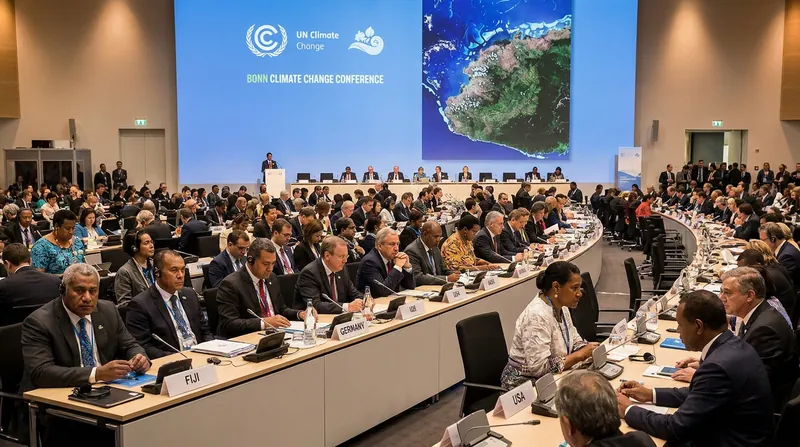
The agenda for the COP31 climate summit began taking shape on June 13, when co-hosts Australia and Turkey proposed a global target to increase the share of electricity in final energy consumption to 35 percent by 2035. Announced at mid-year UN climate talks in Bonn, Germany, the initiative aimed to accelerate the transition away from fossil fuels through the deployment of electric vehicles, heat pumps, and electric industrial processes. Climate campaigners welcomed the target but warned that electrification must reach 45 percent by 2035 to keep global warming below 1.5 degrees Celsius.
Preparations continued on October 5, when Pacific Island leaders and Australian officials convened a pre-COP31 summit across dual locations in Suva, Fiji, and Funafuti, Tuvalu. Pacific negotiators pushed to formalize an "ocean agenda" that would mandate marine conservation targets alongside greenhouse gas reductions. Concurrently, human rights organizations demanded that industrialized nations match their diplomatic engagement with a phase-out of domestic fossil fuel extraction.
A significant shift in the summit's framework occurred on October 13, when the Turkish presidency formally removed a binding fossil fuel transition from the COP31 agenda. The negotiations were redirected to center on the voluntary "35-by-35" electrification pledge. Climate advocates warned that the pledge lacked a clean-energy mandate and could drive up coal and gas generation to meet new grid demand. Both host nations faced scrutiny at the time, with Turkey expanding its coal capacity and Australia approving new coal-mine extensions.
On November 6, Turkey announced plans to transition away from coal while continuing to push the 35 percent global electrification target. The COP31 summit officially opened in Antalya on November 8 under a unique power-sharing arrangement designed to resolve a previous hosting dispute. Turkey hosted the event and managed voluntary action initiatives, while Australia led the formal negotiations, with Australian minister Chris Bowen brokering key talks.
The November 8 opening proceedings were distinctly dubbed a "Blue COP" to spotlight the need for comprehensive ocean protections amid record-breaking marine heat. COP31 President and Turkish Environment Minister Murat Kurum emphasized the need to shift from past pledges to concrete implementation. However, delegates immediately clashed over the transition away from fossil fuels, following the omission of explicit mentions of fossil fuels from the final text of the previous year's COP30 due to pushback from oil-producing states.