
AMD Secures Anthropic Partnership With $5B Equity Option and 2-Gigawatt GPU Compute Deal
AMD will invest up to $5 billion in Anthropic as part of a massive infrastructure agreement that will see the AI lab deploy two gigawatts of AMD's next-generation AI processors. The partnership includes a unique engineering collaboration where Anthropic's Claude models will help write and optimize AMD's software stack.
By Harper Lane

- Hardware Challengers
- Chipmakers seeking to break the current compute monopoly by offering integrated, open-source alternatives.
- Frontier AI Labs
- Model builders prioritizing massive, diversified compute capacity to ensure uninterrupted development.
- Market Analysts
- Observers tracking the financial mechanisms and supply chain risks of the AI infrastructure boom.
Why it matters
This $5 billion partnership proves that the artificial intelligence industry is actively moving away from a single-vendor hardware monopoly. By combining massive infrastructure commitments with AI-driven software co-development, the deal ensures that the next generation of frontier AI models will be trained on a diverse, competitive silicon ecosystem.
The short version is stated plainly in the term sheet: AMD is investing up to $5 billion into Anthropic, and in return, the AI lab is committing to deploy up to two gigawatts of AMD's next-generation AI infrastructure. The deal marks one of the largest single hardware commitments in the history of the artificial intelligence industry, signaling a massive shift in how frontier models will be built.[1][4]
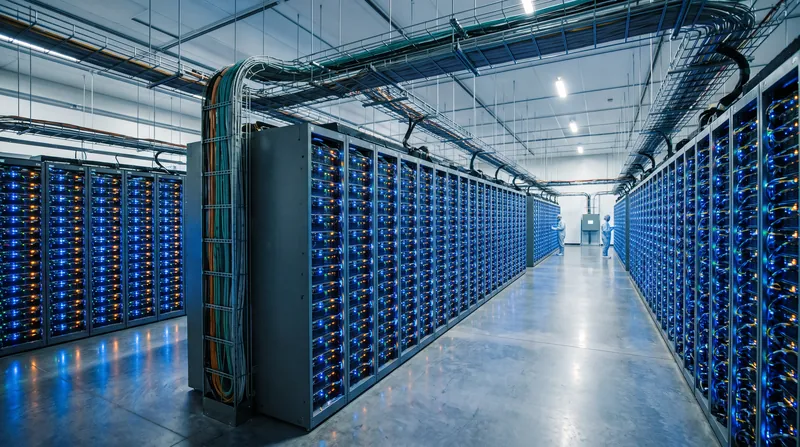
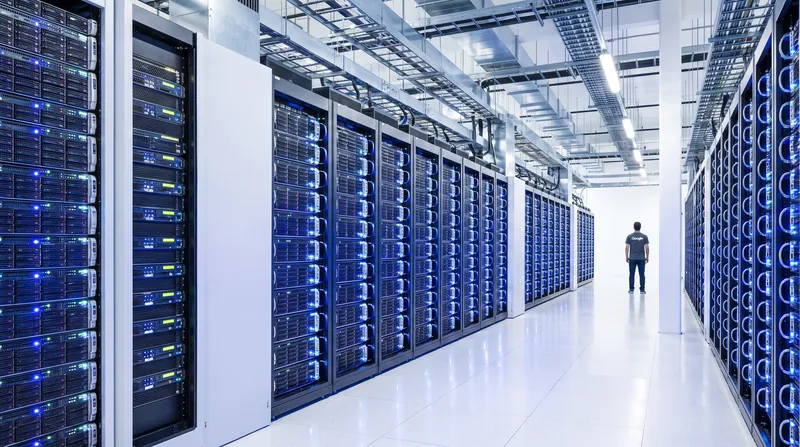
The scale of the agreement is difficult to overstate. A "gigawatt" is a measure of electrical power, not a chip count, and it is the metric by which hyperscale data centers are now measured. Two gigawatts of power equates to roughly 14,000 of AMD's integrated server racks, representing tens of billions of dollars in hardware and infrastructure investment.[4][5]
The first phase of this massive deployment is scheduled to begin in the first half of 2027. It will be built around AMD's forthcoming Instinct MI450-series graphics processing units (GPUs), specifically the MI455X accelerators, which are designed to handle the immense computational loads required by frontier AI models.[1][7]
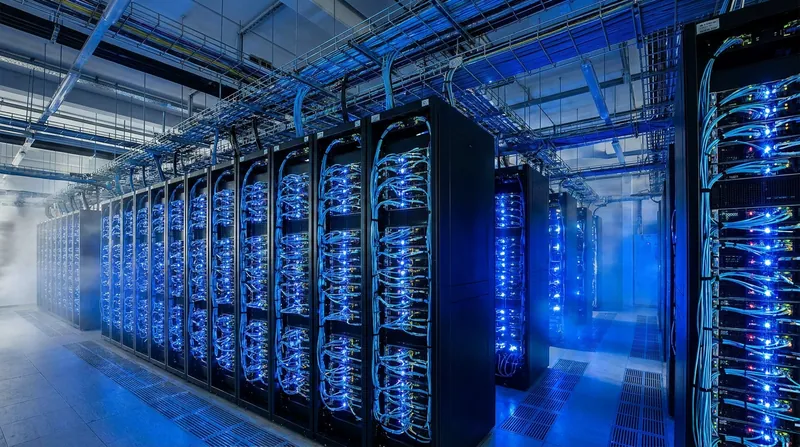
But frontier AI models are no longer trained on isolated chips. They require highly synchronized, rack-scale systems. Anthropic will utilize AMD's new Helios architecture, which integrates the MI455X GPUs with AMD's EPYC "Venice" central processing units and Pensando networking technology into a single, unified platform.[4][7][8]
This integrated approach is necessary to solve the physical bottlenecks of AI training. When thousands of chips are working simultaneously to train a model like Claude, the speed at which data moves between them—and the efficiency with which they are cooled and powered—matters just as much as the raw calculation speed of the individual processors.[4][8]
While the hardware scale is unprecedented, the software component of the partnership is arguably its most critical mechanism. For years, Nvidia has maintained a near-monopoly on AI compute not just because of its silicon, but because of CUDA, its proprietary software platform that developers use to write AI applications.[1][7]
AMD's alternative to CUDA is an open-source platform called ROCm. Despite hardware that often matches or exceeds Nvidia's specifications, AMD has historically struggled to convince developers to port their workloads over to ROCm, leaving a persistent software gap between the two hardware giants.[1][7]
The Anthropic deal introduces an elegant solution to this software gap: using AI to fix the AI hardware problem. Under a multi-year engineering collaboration, Anthropic will use its Claude models to optimize workloads specifically for AMD Instinct GPUs and to accelerate the development of the ROCm software stack itself.[1][4][8]
The Anthropic deal introduces an elegant solution to this software gap: using AI to fix the AI hardware problem.
By turning its most advanced customer into a co-developer, AMD is leveraging Claude's coding capabilities to bridge the software moat that has protected Nvidia for a decade. In return, AMD will adopt Claude broadly across its own internal engineering and product development teams, deeply integrating the AI into its own workflows.[1][3][8]
For Anthropic, the partnership is a strategic move to diversify its supply chain. Compute is the binding constraint on frontier model development, and relying on a single vendor for that compute represents an existential risk to any AI lab aiming to stay at the cutting edge.[1][4]
Anthropic's infrastructure strategy is now genuinely heterogeneous. The company already maintains a massive cloud partnership with Amazon Web Services utilizing Trainium chips, a major deployment of Google's Tensor Processing Units (TPUs), and separate arrangements for Nvidia hardware through providers like CoreWeave.[1][6]
Adding two gigawatts of AMD Helios capacity gives Anthropic the ability to map specific AI workloads to the hardware best suited for them. It also provides crucial leverage; by proving it can train and serve models at scale on AMD silicon, Anthropic reduces its vulnerability to pricing power and supply shortages from any single chipmaker.[1][5]
The financial structure of the deal is equally revealing of the current AI economy. AMD is not merely selling hardware; it is acting as a financier. The chipmaker has committed to a strategic equity investment of up to $5 billion in Anthropic, with the capital released as the AI lab hits agreed-upon deployment milestones.[2][7]
This vendor-financing model has become a defining feature of the AI boom. Chip designers, flush with record margins from the initial wave of infrastructure buildouts, are using their balance sheets to underwrite the massive capital requirements of their own customers.[7]
By taking an equity stake, AMD aligns its financial success with Anthropic's growth while simultaneously locking in a marquee customer for its next-generation silicon. It is a circular ecosystem where capital flows from the hardware provider to the model builder, and then back to the hardware provider in the form of massive purchase orders.[2][5]
The timeline, however, introduces significant execution risk. The MI450 accelerators and EPYC Venice processors are expected to be manufactured on TSMC's cutting-edge 2-nanometer process node, pushing the limits of current semiconductor fabrication capabilities.[7]
Securing two gigawatts of capacity by 2027 means AMD must navigate a supply chain where advanced packaging and high-bandwidth memory are already allocated years in advance. The physical gigawatts will likely be built by original design manufacturers in Asia before being deployed to data centers worldwide.[7]
Ultimately, the AMD-Anthropic partnership signals a maturation of the artificial intelligence industry. The era of a single-vendor hardware monopoly is beginning to fracture, replaced by a complex web of strategic investments, software co-development, and multi-gigawatt infrastructure commitments.[2][6]
What to know
- AMD will invest up to $5 billion in Anthropic, tied to deployment milestones.
- Anthropic commits to deploying up to 2 gigawatts of AMD's MI450-series GPUs.
- The hardware will be integrated into AMD's Helios rack-scale architecture.
- Anthropic will use Claude to help optimize AMD's ROCm software platform.
- The first gigawatt of capacity is scheduled to come online in the first half of 2027.
- The deal significantly diversifies Anthropic's compute supply chain away from a single vendor.
Key terms
- Gigawatt
- A unit of electrical power equal to one billion watts, increasingly used to measure the total scale and capacity of massive AI data centers rather than counting individual chips.
- Rack-scale architecture
- A design approach where entire server racks—including processors, networking, and cooling—are engineered as a single integrated system to maximize efficiency for AI workloads.
- ROCm
- AMD's open-source software platform designed for GPU computing, serving as the primary alternative to Nvidia's proprietary CUDA ecosystem.
- Vendor financing
- A financial arrangement where a supplier provides capital or equity investments to a customer to help fund the purchase of the supplier's own products.
Reader questions
What does a 2-gigawatt deployment actually mean?
It measures the electrical power required to run the data center infrastructure, equating to tens of thousands of server racks and tens of billions of dollars in hardware.
Why is Anthropic using Claude to help AMD?
AMD's ROCm software platform has historically lagged behind Nvidia's CUDA. Anthropic is using its AI to help write and optimize ROCm code, making AMD's hardware easier for developers to use.
When will this hardware be operational?
The first gigawatt of capacity is scheduled to begin deployment in the first half of 2027.
Why is AMD investing $5 billion into its own customer?
Vendor financing allows chipmakers to use their high margins to underwrite the massive capital needs of AI labs, locking in long-term hardware orders and aligning their financial success.
Sources
Source coverage
8 outlets
3 viewpoints surfaced








- [1]The Next WebFrontier AI Labs
AMD will invest up to $5B in Anthropic and deploy 2GW of MI450 GPUs
Read on The Next Web → - [2]Tech Funding NewsMarket Analysts
NVIDIA challenger AMD commits $5B to Anthropic and wins Microsoft in the same week
Read on Tech Funding News → - [3]Fierce NetworkMarket Analysts
AMD invests $5B in Anthropic, bags major chip deal
Read on Fierce Network → - [4]Pulse 2.0Frontier AI Labs
AMD And Anthropic Partner On 2-Gigawatt AI Infrastructure Deployment And Up To $5 Billion Investment
Read on Pulse 2.0 → - [5]Seeking AlphaMarket Analysts
AMD, Anthropic sign chip and investment deal worth billions
Read on Seeking Alpha → - [6]Briefs.coMarket Analysts
AMD Pours $5 Billion Into Anthropic for Massive AI Compute Capacity
Read on Briefs.co → - [7]CRN AsiaMarket Analysts
AMD lands a 2-gigawatt Anthropic deal and a Cerebras inference pact
Read on CRN Asia → - [8]AMDHardware Challengers
AMD and Anthropic Announce Strategic Partnership
Read on AMD →
Comments
Every angle. Every day.
Get ai stories with full source coverage and perspective breakdowns delivered to your inbox.