
Why Dutch Bros Just Paid $105 Million for the Ghost of Salad and Go
Following Salad and Go's abrupt bankruptcy and closure, Dutch Bros immediately acquired 65 of its drive-thru leases—highlighting how second-generation real estate has become the restaurant industry's most valuable asset.
By Baran Demir

Share this story
When a beloved neighborhood restaurant abruptly goes dark, the public autopsy usually focuses on the kitchen. We assume the recipes grew stale, the ingredients slipped in quality, or the local lunch crowd simply found a new favorite spot.
But in the modern fast-casual industry, the food is often just a temporary tenant. The real empire is the concrete it sits on. When Arizona-based Salad and Go filed for Chapter 11 bankruptcy and locked the drive-thru windows at its remaining 70 locations on August 5, 2026, the real story wasn't the end of a fresh-food favorite. It was the immediate, $105 million feeding frenzy for the drive-thru lanes they left behind.[5][6]
Within hours of the bankruptcy filing, Oregon-based coffee giant Dutch Bros swooped in, securing an agreement to acquire the leases and site assets of 65 former Salad and Go locations across four states.[1][2]
This lightning-fast acquisition highlights a massive shift in how restaurant chains grow today. It is a strategy built entirely around "second-generation real estate"—the industry term for taking over a fully permitted, already-built restaurant space rather than pouring fresh concrete.[1]
To understand why Dutch Bros moved so aggressively, you have to look at the physical footprint Salad and Go built. Founded in Gilbert, Arizona, in 2013, the salad chain pioneered a hyper-efficient model: tiny, drive-thru-only boxes with no indoor dining rooms, supplied by massive off-site central kitchens. Customers simply rolled up, grabbed a freshly tossed salad through the window, and drove off.[4][5]
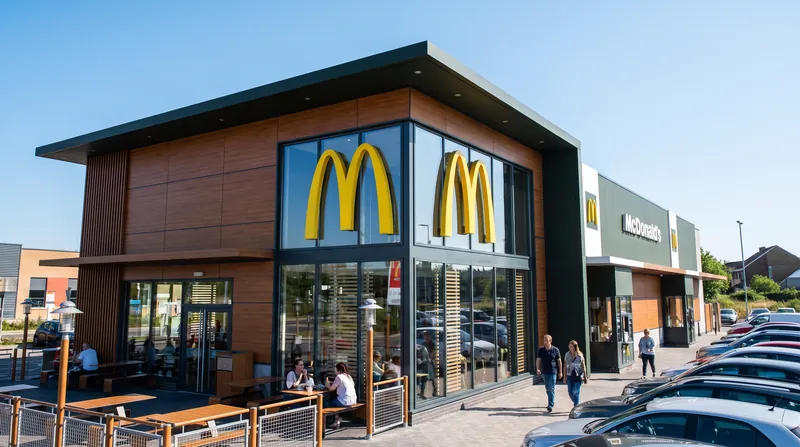
For a beverage brand like Dutch Bros, which operates on the exact same drive-thru-only philosophy, these buildings are essentially turnkey goldmines. Converting an existing drive-thru cuts the build-out time in half and bypasses the grueling, multi-year process of securing new municipal zoning approvals for drive-thru lanes—a permit that is becoming increasingly difficult to pull in many American suburbs.[1]
The deal structure reflects this immense value. Dutch Bros is paying $105 million for 51 leases in Arizona and Nevada, plus a nominal $50 for a bundle of 14 shuttered leases in Texas and Oklahoma. They aren't buying the Salad and Go brand, the recipes, or the intellectual property. They are buying the traffic patterns, the window placements, and the right to hand a cup of coffee through an existing window.[3]
If the real estate was so valuable, why did Salad and Go collapse? The bankruptcy filings reveal a classic cautionary tale of overexpansion. For its first eight years, the chain grew methodically in its home state of Arizona, building a fiercely loyal following for its affordable, fresh ingredients.[4]
But beginning in 2021, under the direction of private equity investors, the company launched an aggressive push into Texas and Oklahoma. They spent over $72 million building out a massive central production commissary in Garland, Texas, anticipating a flood of new customers eager for drive-thru greens.[4][7]
The demand never materialized at the scale required to support the massive overhead. The central region became significantly cash-flow negative. By the time the company tried to course-correct—closing 41 Texas and Oklahoma locations in late 2025 and shutting the Garland facility in early 2026—the financial damage was fatal.[7]
Compounding the crisis was the burden of "dead rent"—the ongoing lease payments for those shuttered Texas and Oklahoma stores. Even though the remaining Arizona and Nevada locations were operating at roughly break-even, the corporate overhead and dead rent created an unsustainable cash burn. A July 2026 cyclospora outbreak in the broader salad industry, though completely unrelated to Salad and Go, further dampened consumer confidence and accelerated the final collapse.[4][5][7]
For Dutch Bros, the acquisition is a massive accelerant. The coffee chain has publicly stated its goal to reach 2,029 locations by 2029. Building from scratch is too slow to hit that target, making conversions of existing drive-thrus the ultimate growth hack.[1][2]
This isn't their first time executing this playbook. Earlier in 2026, Dutch Bros acquired the 20-unit Clutch Coffee Bar chain in the Carolinas, immediately converting those spaces. By absorbing the Salad and Go portfolio, they instantly densify their presence in key Southwestern markets without breaking new ground.[1][2]
Ultimately, the Salad and Go saga is a masterclass in modern restaurant economics. It proves that a great menu and a loyal local following aren't enough to survive the crushing weight of rapid, debt-fueled expansion. But it also shows that in today's convenience-obsessed culture, a well-placed drive-thru window is the most resilient asset a brand can build—even if the brand itself doesn't survive to use it.
Key points
- Salad and Go permanently closed its remaining 70 locations on August 5, 2026, following a Chapter 11 bankruptcy filing.
- Dutch Bros immediately agreed to acquire 65 of the drive-thru leases and site assets for $105 million.
- The acquisition allows Dutch Bros to bypass lengthy zoning approvals and construction times by utilizing second-generation real estate.
- Salad and Go's bankruptcy was driven by rapid, debt-fueled expansion into Texas and Oklahoma, which created unsustainable overhead and dead rent.
What we don’t know
- How quickly local municipalities will approve the exterior signage and branding changes required to convert the buildings into Dutch Bros locations.
- Whether other fast-growing beverage chains will attempt to outbid Dutch Bros for any of the remaining unacquired Salad and Go leases.
- What will happen to the massive, $72.5 million central production commissary in Garland, Texas, that Salad and Go abandoned.
How we got here
2013
Salad and Go is founded in Gilbert, Arizona, pioneering a drive-thru-only model for fresh, affordable salads.
2021
Backed by private equity, the company launches an aggressive expansion into Texas and Oklahoma, including a $72.5 million central commissary.
Late 2025
Struggling with low demand and high overhead, the company closes 41 locations across its new Central Region markets.
January 2026
Salad and Go shutters its remaining Texas and Oklahoma stores and closes its massive Garland production facility.
August 4, 2026
The company files for Chapter 11 bankruptcy protection, citing dead rent, rising costs, and industry-wide consumer hesitation.
August 5, 2026
All 70 remaining Salad and Go locations permanently close, and Dutch Bros agrees to acquire 65 of the leases for $105 million.
- Real Estate Strategists
- Argue that the physical drive-thru footprint and zoning approvals are the most valuable assets a modern fast-casual brand owns.
- Expansion Skeptics
- Emphasize that rapid, debt-fueled geographic expansion and heavy central-commissary overhead can fatally crush a brand.
- Local Consumers
- Focus on the sudden loss of an affordable, healthy neighborhood staple, viewing the corporate maneuvering as secondary to the loss of their daily routine.
Perspectives this story doesn't cover
- Former Salad and Go employees navigating sudden job losses across 70 locations.
- Local municipal planners managing the zoning transitions of these drive-thru properties.
Sources
Source coverage
7 outlets
3 viewpoints surfaced







- [1]Restaurant DiveReal Estate Strategists
Dutch Bros buys 65 former Salad and Go units
Read on Restaurant Dive → - [2]Nation's Restaurant NewsReal Estate Strategists
Fast-growing Dutch Bros is buying up to 65 Salad and Go locations
Read on Nation's Restaurant News → - [3]Daily Coffee NewsReal Estate Strategists
Dutch Bros Pursuing $105 Million Acquisition of Salad and Go Locations
Read on Daily Coffee News → - [4]Fast CompanyExpansion Skeptics
Why are Salad and Go locations closing?
Read on Fast Company → - [5]12NewsLocal Consumers
Salad and Go permanently closing all locations
Read on 12News → - [6]FOX 10 PhoenixLocal Consumers
Dutch Bros to buy Salad and Go locations in Arizona and Nevada
Read on FOX 10 Phoenix → - [7]BondoroExpansion Skeptics
Update (Aug 5, 2026): A comprehensive case summary is now available for the Chapter 11 bankruptcy filing of And Go Concepts, LLC
Read on Bondoro →
More in Lifestyle
See all →Restaurant Economics
The 30% Food Cost and 30% Labor Cost: How the Industry Standard Ratios Dictate the Price of a Restaurant Meal
5 sources
Culinary Science
Why Dry-Aging Fish Unlocks Richer Umami and Firmer Texture Than Fresh Seafood
4 sources
Food Chemistry
The 285°F Threshold: How Amino Acids and Reducing Sugars Create Hundreds of Flavor Compounds in the Maillard Reaction
8 sources
Michelin Guide
The Five Universal Criteria: How Michelin Inspectors Actually Judge a Restaurant for One, Two, or Three Stars
5 sources
Comments
Every angle. Every day.
Get Lifestyle stories with full source coverage and perspective breakdowns, free every day.