
US Government Commits $80 Billion to Build 10 New Large-Scale AP1000 Nuclear Reactors
The United States has launched an $80 billion strategic partnership with Westinghouse to deploy 10 new AP1000 nuclear reactors, driven by the surging power demands of artificial intelligence. The initiative relies on standardized designs and a $17.5 billion federal loan commitment to overcome the industry's history of construction delays.
By Hao Li

Share this story
The technology industry is racing to build massive artificial intelligence data centers across the country, but the United States power grid cannot support their insatiable electricity demand with intermittent renewable energy alone. Data centers already consume a significant and rapidly growing share of the nation's total electricity, and some federal estimates predict that nationwide electricity use could rise by as much as 20 percent over the next decade.
This concentrated, impatient demand requires firm baseload power—electricity generation that operates reliably around the clock, regardless of weather conditions or time of day. Tech giants and utility operators are increasingly realizing that wind and solar power, even when paired with grid-scale batteries, cannot currently provide the uninterrupted gigawatts required to keep the next generation of AI supercomputers running.[3][4]
The proposed solution to this looming energy shortfall is a massive expansion of nuclear baseload power, but the United States has a deeply troubled history with large-scale nuclear construction. Most of the country's existing nuclear power plants were built between 1970 and 1990, and the industry's recent attempts to build new reactors from scratch have been plagued by severe delays and catastrophic cost overruns.
The tension between the urgent need for clean, reliable power and the immense financial risks of building it has paralyzed the domestic nuclear industry for years. Utility executives have historically been wary of committing to mega-projects that could bankrupt their companies, leaving the grid increasingly dependent on natural gas to fill the gaps left by retiring coal plants and intermittent renewables.[3]
To bridge this critical gap and force a breakthrough, the United States government has committed to an $80 billion strategic partnership with Westinghouse Electric, Cameco, and Brookfield Asset Management to build a standardized fleet of 10 new AP1000 reactors. The landmark agreement, which includes long-term profit-sharing mechanisms for the federal government, aims to comprehensively reinvigorate the domestic nuclear industrial base.
By stepping in to help arrange financing and secure complex regulatory permits, the administration hopes to make nuclear energy a central pillar of America's program to maintain global leadership in both advanced nuclear technology and artificial intelligence development. The sheer scale of the $80 billion commitment signals a profound shift in federal energy policy, moving away from piecemeal reactor approvals toward a coordinated national deployment strategy.[1]
The mechanism behind this ambitious initiative relies heavily on achieving economies of scale rather than custom-building individual, bespoke power plants. By committing to 10 identical reactors distributed across five strategic sites, the partnership is designed to create a predictable, long-term pipeline for specialized manufacturers.
Energy officials argue that building in volume will allow the industry to stand up a robust domestic supply chain, build deep construction expertise, and ultimately drive down the cost and timeline for each subsequent unit. Instead of treating every nuclear plant as a unique engineering experiment, the standardized fleet approach treats reactor construction more like an industrial assembly line, theoretically eliminating the redesigns and regulatory hurdles that have historically caused budgets to spiral out of control.[3]
To jumpstart this industrial assembly line, the Department of Energy recently backed the overarching effort with a conditional $17.5 billion loan commitment. Crucially, these funds are not traditional construction loans meant to pay for pouring concrete or assembling the reactor on-site; rather, they are specifically targeted at purchasing long-lead components.
By providing massive upfront capital, the federal government allows manufacturers to confidently tool up their factories and produce heavy steel forgings, specialized cooling valves, and internal reactor components at a fixed price. This targeted financial intervention is designed to reduce the upfront capital risk that typically derails nuclear mega-projects before they even break ground, ensuring that the physical parts are ready and waiting when site construction officially begins.[2][6]
The specific technology at the center of this national push is the AP1000, a Generation III+ pressurized water reactor designed and licensed by Westinghouse. Each individual reactor is capable of generating approximately 1.1 gigawatts of electricity, meaning a fully completed 10-unit fleet could theoretically power nearly 10 million American homes or dozens of hyper-scale data centers.
The AP1000 design is primarily characterized by its advanced passive safety systems, which rely on natural forces like gravity, natural circulation, and compressed gas to cool the reactor core in the event of an emergency. Because these systems do not require active human intervention or electrically powered backup pumps to prevent a meltdown, the reactor requires significantly less piping, fewer valves, and less safety-grade cabling than older Generation II designs.[4]
Currently, the only two operational AP1000 reactors in the United States are Units 3 and 4 at Plant Vogtle in Georgia, which finally came online in 2023 and 2024 after a grueling construction process. The development of these two units was notoriously difficult, running billions of dollars over the initial budget and falling years behind the original schedule.
The Vogtle project was severely challenged by bad initial planning, the loss of experienced nuclear construction labor, massive supply chain disruptions, and the global pandemic. The financial bleeding at Vogtle was so severe that it led to the bankruptcy of Westinghouse in 2017, forcing a complete restructuring of the company before it was eventually acquired by Brookfield Asset Management and Cameco.[3][4]
Despite this painful recent history, federal energy officials and industry executives maintain that the underlying AP1000 design itself is robust, sound, and ready for mass deployment. They argue that the brutal lessons learned at Plant Vogtle—from managing complex supply chains to navigating the Nuclear Regulatory Commission's inspection process—will translate directly into a much smoother, faster process for the next 10 units.
Because the engineering is now complete and the initial regulatory hurdles have been cleared, proponents believe the primary risk is now execution rather than invention. The government's stated goal is to have all 10 of the new reactors under active construction by 2030, with the first units starting to provide firm power to the grid in the mid-2030s.[3][6]
The economic stakes of this nationwide deployment are massive, extending far beyond the immediate goal of powering artificial intelligence data centers. A recent comprehensive economic analysis estimates that building this 10-reactor fleet could generate over $92 billion in gross domestic product for the country over the course of the project.
During the projected 13-year construction phase, the initiative is expected to support an average workforce of more than 44,000 jobs annually, spanning high-tech manufacturing, advanced engineering, and heavy on-site construction across more than 40 states. Once the fleet is fully operational, it is projected to create an additional trillion dollars in economic impact over its 80-year lifespan, cementing a multi-generational industrial base that could eventually export Westinghouse technology globally.[7]
However, significant uncertainty remains regarding the ultimate cost of this initiative to American taxpayers and local utility ratepayers. Critics and economic watchdogs warn that the $80 billion commitment might simply serve to absorb the inherent, unavoidable excess costs of nuclear power, pointing out that wind, solar, and geothermal energy remain significantly cheaper per megawatt-hour to deploy.
Skeptics question whether the projected economies of scale will actually materialize in the real world, given the nuclear industry's historical inability to deliver complex infrastructure projects on time and on budget. These advocates argue that the massive federal loans and potential clean energy tax credits could end up subsidizing a technology that is fundamentally uncompetitive in modern electricity markets.[5]
Furthermore, the Department of Energy's $17.5 billion loan commitments remain entirely conditional, meaning the money will not flow until several major hurdles are cleared. Westinghouse, its ownership group, and its utility partners must still satisfy a stringent series of technical, legal, environmental, and financial conditions before the federal funds are officially dispersed.
Crucially, the final investment decisions depend entirely on utilities and tech companies signing binding, long-term power purchase agreements to guarantee the revenue needed to pay off the massive construction debts. Without guaranteed buyers willing to pay a premium for firm, carbon-free nuclear power, the financial math behind the 10-reactor fleet quickly falls apart.[2][4]
Ultimately, this $80 billion initiative represents a high-stakes, historic bet that standardizing the AP1000 can successfully reindustrialize the United States nuclear sector before grid constraints throttle the tech industry.
If the strategic partnership can successfully turn a proven reactor design into a repeatable, efficient, and financially viable build process, surging artificial intelligence demand may accomplish what decades of climate policy alone could not: making large-scale nuclear construction financeable again. If it fails, however, the ambitious 2030 construction targets will likely serve as a very expensive reminder of the immense difficulties inherent in building modern nuclear infrastructure.[4]
Key points
- The US government has formed an $80 billion partnership with Westinghouse to build 10 new AP1000 nuclear reactors.
- The initiative is driven by the surging electricity demands of artificial intelligence data centers, which require firm baseload power.
- The Department of Energy has offered a conditional $17.5 billion loan to fund long-lead components and standardize the supply chain.
- Officials hope that committing to 10 identical units will create economies of scale and prevent the cost overruns seen in past nuclear projects.
What we don’t know
- Whether utilities and data center operators will sign the long-term power purchase agreements required to finalize the investment decisions.
- If the domestic supply chain can successfully manufacture the specialized long-lead components on the accelerated timeline.
- How the final $80 billion cost will be distributed among private investors, ratepayers, and federal tax credits.
How we got here
March 2017
Westinghouse Electric files for bankruptcy due to massive cost overruns on AP1000 construction projects in Georgia and South Carolina.
July 2023 & April 2024
Plant Vogtle Units 3 and 4, the only operational AP1000 reactors in the US, finally enter commercial service after years of delays.
October 2025
The US government announces an $80 billion strategic partnership with Westinghouse, Cameco, and Brookfield to build a new fleet of reactors.
June 2026
The Department of Energy issues a conditional $17.5 billion loan commitment to fund long-lead components for 10 new AP1000 units.
- Federal & Industry Proponents
- Argue that standardizing the AP1000 fleet will solve historical cost overruns and provide necessary power for AI.
- Economic & Environmental Skeptics
- Warn that the massive investment forces taxpayers to absorb the high costs of nuclear power instead of funding cheaper renewables.
Perspectives this story doesn't cover
- Local communities near proposed reactor sites
- Renewable energy developers competing for grid interconnection
Sources
Source coverage
7 outlets
2 viewpoints surfaced







- [1]Utility DiveFederal & Industry Proponents
Westinghouse, Cameco and Brookfield Asset Management partner with US government to deploy $80B in reactors
Read on Utility Dive → - [2]World Nuclear NewsFederal & Industry Proponents
US DOE offers $17.5 billion in loans for 10 AP1000 reactors
Read on World Nuclear News → - [3]PBSFederal & Industry Proponents
Trump administration provides $17.5 billion to speed development of 10 new large nuclear reactors
Read on PBS → - [4]Startup FortuneFederal & Industry Proponents
Westinghouse lands an $80 billion nuclear contract and AI is the reason why
Read on Startup Fortune → - [5]Nuclear Information and Resource ServiceEconomic & Environmental Skeptics
White House announced an $80 billion deal with Westinghouse to finance construction of eight large new reactors
Read on Nuclear Information and Resource Service → - [6]Engineering News-RecordFederal & Industry Proponents
US government to offer loans to support development of 10 nuclear reactors
Read on Engineering News-Record → - [7]NucNetFederal & Industry Proponents
Study Highlights Economic Benefits Of Proposed AP1000 Buildout In US
Read on NucNet →
More in Energy
See all →SMR Financing
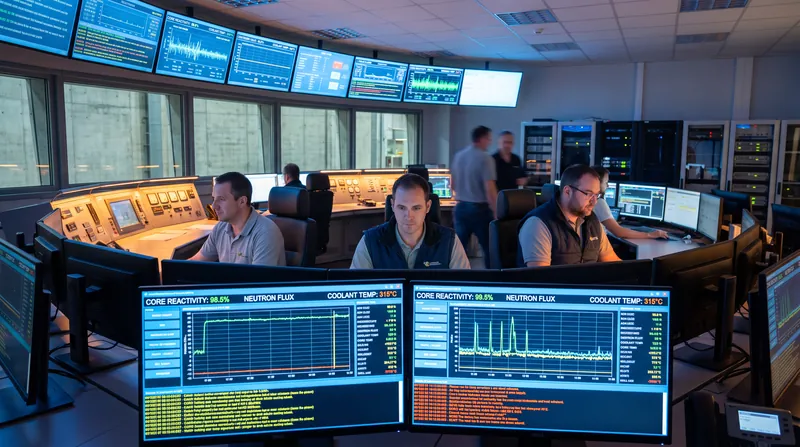
Holtec International Halts $900 Million IPO Amid Shifting AI Data Center Demand
6 sources
Reactor Physics
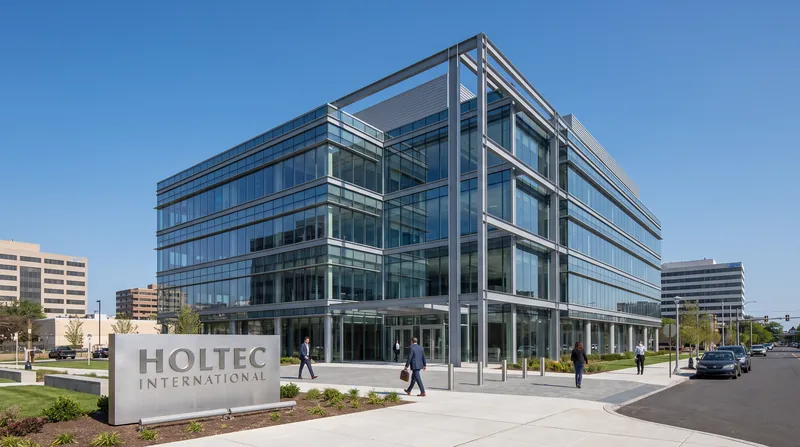
The Neutron Fluence and Displacement Per Atom (DPA) That Dictate a Reactor Pressure Vessel's Lifespan
7 sources
Neutron Economy
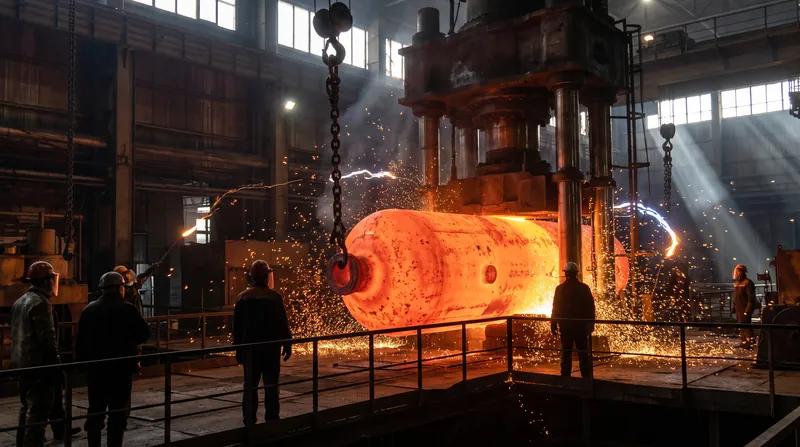
The Breeding Ratio and Neutron Economy That Dictate a Reactor's Ability to Create New Fuel
8 sources
Reactor Physics
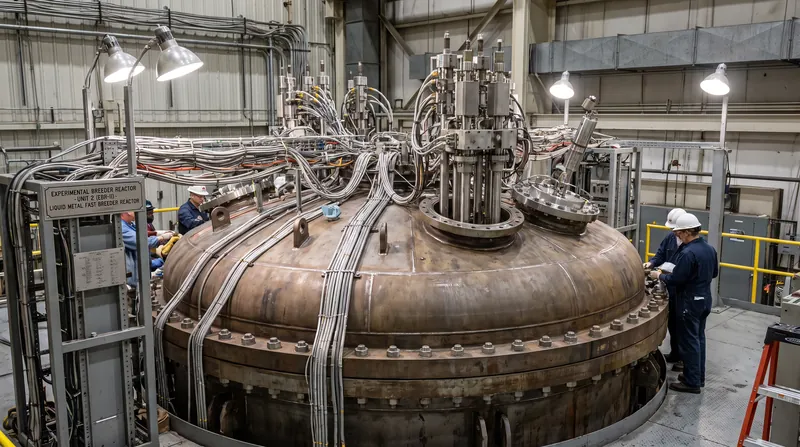
The Physics of Decay Heat: Why Nuclear Reactors Require Cooling Long After the Chain Reaction Stops
7 sources
Comments
Every angle. Every day.
Get Energy stories with full source coverage and perspective breakdowns, free every day.