
Trump Administration Petitions Supreme Court to Overturn Ruling Blocking Termination of University DEI Research Grants
The Trump administration has asked the Supreme Court to allow federal agencies to terminate university research grants tied to diversity, equity, and inclusion, escalating a legal battle over nearly $800 million in scientific funding.
Share this story
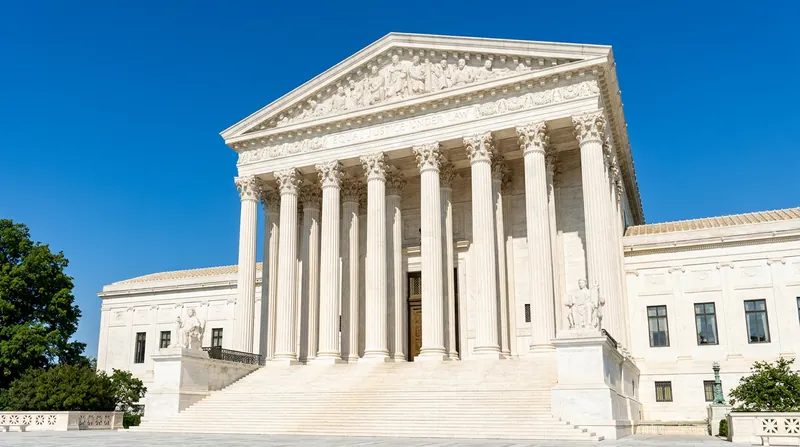
The Trump administration has formally petitioned the Supreme Court to overturn a lower court ruling that blocked federal agencies from terminating university research grants tied to diversity, equity, and inclusion (DEI). U.S. Solicitor General D. John Sauer filed the appeal this week, escalating a high-stakes legal battle over hundreds of millions of dollars in scientific, medical, and environmental funding.
The petition asks the nation's highest bench to definitively rule on whether the executive branch has the constitutional authority to unilaterally cancel previously awarded, peer-reviewed federal grants if the administration determines that the research promotes ideological viewpoints it opposes. The move represents the latest escalation in a sweeping, government-wide effort to dismantle DEI initiatives across all federal agencies and their external funding networks.[1][2][3]
At the center of the administration's petition is the assertion that the First Amendment permits the government to end funding for projects that conflict with its policy priorities. In the filing, Sauer argued that "the general requirement of viewpoint neutrality does not require taxpayers to continue funding projects that the government concludes no longer serve the public interest."
The administration contends that just as the government can award highly competitive artistic or scientific grants based on specific criteria like decency and respect, it is equally permitted to terminate grants based on its opposition to the viewpoints of the DEI projects in question. This legal theory effectively frames federal research funding not as an independent academic entitlement, but as an extension of the sitting administration's policy agenda.[1][2]
The appeal directly challenges a May 2026 decision by the 9th Circuit Court of Appeals. In that ruling, the appellate court sided with eight University of California researchers, determining that the federal government's termination of their grants based on assumed beliefs about DEI constituted unlawful viewpoint discrimination.
The 9th Circuit found that while the government has broad discretion in awarding funds, abruptly canceling active, peer-reviewed scientific research solely because it contains diversity-related language or touches on equity initiatives violates the First Amendment protections afforded to academic researchers. The researchers had filed suit after their funding was frozen, arguing that the administration was unlawfully weaponizing the federal grant apparatus to enforce ideological purity.[2]
The frozen funds span multiple federal agencies, including the Environmental Protection Agency (EPA), the National Science Foundation (NSF), the National Endowment for the Humanities (NEH), and the National Institutes of Health (NIH).
Among the specific projects targeted for termination were a $1.3 million EPA grant awarded to researcher Neeta Thakur to study the health risks of wildfire smoke in communities of color, a $2 million grant to develop a cost-benefit analysis framework for enhanced aquifer recharge projects, and a $1 million initiative seeking to use satellites and artificial intelligence to monitor hazardous air pollutants from landfills. In each case, the administration alleged a nexus to DEI or equity that disqualified the research from continued taxpayer support.[1][2][3]
The mass terminations stem from a series of executive orders signed by President Trump shortly after taking office in January 2025. Those directives ordered federal agencies to cancel all programs related to "illegal DEI" and to cease promoting or funding "gender ideology."
In response, federal agencies utilized keyword searches relating to diversity, gender, and COVID-19 to flag and terminate more than 1,000 research grants nationwide. The sweeping implementation of these orders immediately triggered a wave of lawsuits from universities, researchers, and state attorneys general, who argued that the administration was bypassing the Administrative Procedure Act and inflicting irreversible damage on the American scientific enterprise.[2]
The Supreme Court has already weighed in on earlier phases of this sprawling legal dispute. In August 2025, a fractured 5-4 court granted a partial stay that allowed the NIH to proceed with $783 million in grant cuts while underlying litigation continued. In that instance, the conservative majority cited the government's risk of "irreparable harm" if it paid out grant money that it could not later recover.
However, the justices left in place a lower court injunction blocking the administration's broader anti-DEI guidance for future funding. The new petition regarding the 9th Circuit ruling now forces the Court to confront the core First Amendment question directly, rather than just ruling on emergency administrative stays.[4][5]
Universities and medical associations have warned that the abrupt cancellation of peer-reviewed grants imperils critical scientific progress and undermines the stability of the U.S. research ecosystem. Organizations like the Association of American Medical Colleges and the American Public Health Association argue that the cuts disrupt life-saving studies—including research on HIV prevention, vaccine efficacy, and environmental hazards—under the guise of ideological alignment.
Academic leaders warn that if the Supreme Court upholds the administration's authority to terminate grants at will, it will exert a chilling effect on researchers, who may avoid studying vulnerable populations or critical public health issues out of fear of losing their funding.[4][5]
The Supreme Court has given the plaintiffs until September 18 to formally respond to the administration's petition. The justices will then decide whether to grant certiorari and hear oral arguments in their upcoming term. If the Court agrees to take the case, its eventual ruling could fundamentally redefine the limits of executive power over federal research funding.
A decision in favor of the Trump administration would establish a sweeping precedent, effectively granting the executive branch the unilateral authority to defund academic and scientific research that does not align with its political and ideological priorities.[2]
Key points
- The Trump administration petitioned the Supreme Court to overturn a 9th Circuit ruling that blocked the termination of DEI-related research grants.
- The administration argues the First Amendment permits the government to end funding for projects that conflict with its policy priorities.
- The 9th Circuit previously ruled that terminating the grants constituted unlawful viewpoint discrimination.
- The frozen funds include nearly $800 million across agencies like the EPA, NIH, and NSF.
How we got here
January 2025
President Trump signs executive orders directing federal agencies to end 'illegal DEI' programs, prompting mass grant terminations.
August 2025
A divided Supreme Court allows the NIH to proceed with $783 million in grant cuts while litigation continues.
May 2026
The 9th Circuit Court of Appeals rules in favor of UC researchers, finding the grant terminations violate the First Amendment.
August 2026
The Trump administration formally petitions the Supreme Court to overturn the 9th Circuit's ruling.
- The Trump Administration
- Argues that the executive branch has the authority to terminate federal grants that promote DEI ideology, asserting taxpayers should not fund projects contrary to government policy.
- University Researchers
- Contend that canceling peer-reviewed scientific grants based on political opposition to diversity initiatives constitutes unlawful viewpoint discrimination.
- Medical and Scientific Associations
- Warn that the mass cancellation of grants disrupts critical public health and environmental research, prioritizing ideological purity over scientific merit.
Perspectives this story doesn't cover
- Independent constitutional law scholars
- Communities directly affected by the canceled environmental and health research
Sources
Source coverage
5 outlets
3 viewpoints surfaced





- [1]Politico ProThe Trump Administration
Trump asks Supreme Court to let him terminate DEI research grants
Read on Politico Pro → - [2]Daily BruinUniversity Researchers
The Trump administration on Tuesday asked the Supreme Court to hear an appeal to a ruling in favor of UC researchers
Read on Daily Bruin → - [3]E&E NewsThe Trump Administration
Trump asks Supreme Court to let him terminate DEI research grants
Read on E&E News → - [4]Health Care DiveMedical and Scientific Associations
Supreme Court will allow NIH to cut millions in research funds
Read on Health Care Dive → - [5]Fierce BiotechMedical and Scientific Associations
Supreme Court allows Trump administration to ax $783M in federal research funding
Read on Fierce Biotech →
More in News & Politics
See all →School Finance
The 45% Local, 45% State, 10% Federal Split: How US Public K-12 Schools Are Primarily Funded
6 sources

Legal Education
ABA Accreditation Council Repeals Mandatory Diversity Standard for US Law Schools
4 sources
Special Education Law
The 'Meaningful Progress' Standard: How the Supreme Court Redefined Special Education Under IDEA
8 sources
Education Finance
Structural Weighting in the Title I Formula: How Federal Poverty Aid Favors Large Wealthy School Districts
3 sources

Comments
Every angle. Every day.
Get News & Politics stories with full source coverage and perspective breakdowns, free every day.