
Serie A Clubs Surge Past €1 Billion in Spending, Second Only to Premier League in Summer Outlay
Italian top-flight clubs have committed over €1.16 billion in summer transfer fees, reclaiming their position as Europe's second-highest spenders. Despite the aggressive investment, Serie A still trails far behind the English Premier League's unprecedented €3.2 billion outlay.

- Italian Ambition
- Highlights Serie A's aggressive €1 billion investment to reclaim its status among Europe's elite.
- Premier League Dominance
- Emphasizes that despite Italy's spending surge, English clubs still vastly outspend the rest of Europe combined.
Why it matters
The billion-euro milestone signals a major financial resurgence for Italian football after years of austerity. By aggressively investing in top-tier talent, Serie A clubs are positioning themselves to challenge English dominance in the Champions League and elevate the league's global commercial appeal.
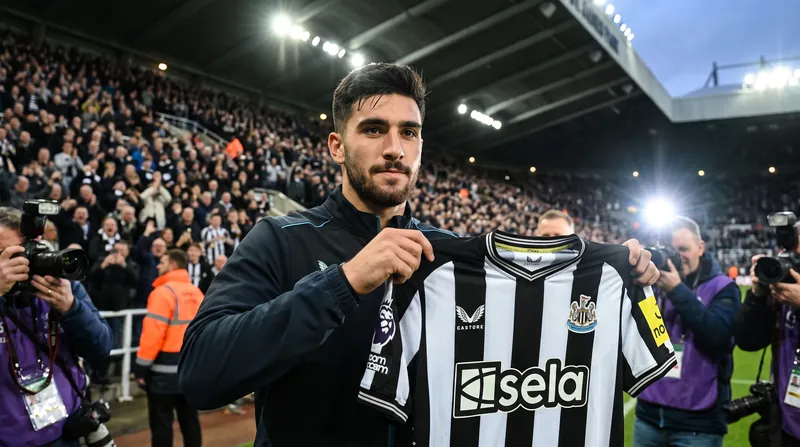
When AC Milan wired Paris Saint-Germain €74 million to secure Portuguese striker Gonçalo Ramos, it was not merely the most expensive Italian transfer in half a decade. It was the exclamation point on a massive €1 billion statement of intent from a league desperate to reclaim its European royalty. With the September 1 transfer deadline rapidly approaching, Serie A clubs have collectively surged past the ten-figure spending mark, aggressively asserting their place in the global financial pecking order. After years of being forced to sell their brightest talents to balance the books, Italian executives are finally pushing their chips to the center of the table.[1][5][6]
The sheer volume of capital flowing out of the Italian peninsula marks a stark departure from recent years of pandemic-induced austerity. According to market data from Transfermarkt, Italy’s top-flight clubs have committed over €1.16 billion in total outgoings during the current summer window. That figure places Serie A comfortably second among Europe’s traditional "Big Five" leagues, easily eclipsing La Liga’s €750 million outlay and leaving the German Bundesliga far behind. The spending surge proves that despite a challenging broader economic climate for the sport, Italy's historic institutions are finding ways to finance major squad overhauls.[1][2][6]
Yet, the €1 billion milestone simultaneously highlights the staggering financial chasm that now defines the modern European game. While Serie A’s spending spree is historic by its own recent standards, it remains entirely dwarfed by the English Premier League's unprecedented financial muscle. English clubs have already authorized an astonishing €3.2 billion in transfer fees this summer—a figure that exceeds the combined total of Italy, Spain, Germany, and France. For all of Serie A's ambition, the concept of a competitive 'Big Five' has effectively fractured into the Premier League operating as a financial monolith, with everyone else scrambling for the remaining elite talent.[1][3]
AC Milan has driven the Italian resurgence, reclaiming its traditional role as the peninsula's heaviest spender under new management. Beyond the blockbuster acquisition of Ramos—which stands as the costliest Serie A signing since Juventus landed Dušan Vlahović from Fiorentina—the Rossoneri also secured highly-rated winger Diego Moreira from Strasbourg for €50 million. In total, Milan’s summer investment sits near €160 million, narrowly edging out Juventus in the race to retool. The aggressive recruitment has immediately reshaped the squad for new manager Rúben Amorim, who arrived from Manchester United tasked with delivering a domestic title.[1][2][4]
AC Milan has driven the Italian resurgence, reclaiming its traditional role as the peninsula's heaviest spender under new management.
This aggressive recruitment strategy carries significant financial risk for a league that does not share England's astronomical broadcasting revenues. Across all 20 clubs, Serie A is currently operating with a net deficit of nearly €430 million for the summer window. That imbalance is substantially deeper than Spain’s €300 million shortfall, reflecting a collective willingness among Italian owners to leverage debt and future earnings in pursuit of immediate sporting success. The strategy relies heavily on the assumption that these expensive new squads will secure lucrative Champions League qualification spots.[1][2][6]
This high-stakes gamble stands in sharp contrast to the operational models currently favored in Germany and France. Both the Bundesliga and Ligue 1 are navigating the current window in profit, prioritizing sustainable player development and lucrative outbound sales over massive inbound expenditures. French clubs, in particular, have capitalized on the market by exporting talent at premium prices. For Italian executives, however, the calculation is fundamentally different. They believe that keeping pace with English wealth and remaining competitive in the latter stages of European tournaments requires spending money they may not strictly have on hand, accepting the short-term deficit as the cost of doing business.[1][2][6]
The urgency on the peninsula is palpable following a chastening year for the national sport, underscored by Italy's failure to qualify for the World Cup and early exits in continental competitions. Domestic clubs view deep Champions League runs as the only viable mechanism to generate the broadcasting and commercial revenues necessary to survive long-term. The €1 billion outlay is therefore less a display of limitless wealth than a desperate, calculated bid to remain relevant at the absolute highest level of UEFA competition before the financial gap becomes entirely insurmountable.[1][5]
With the transfer window set to close in a matter of days, the spending frenzy may not be entirely finished. AC Milan manager Amorim pointedly refused to rule out further additions following his squad's opening 2-1 victory over Torino to kick off the domestic campaign. 'We have to wait five more days until the transfer window closes,' Amorim noted during his pre-match press conference, signaling that the Italian market could still produce late fireworks. 'If someone arrives, it will be because they can help us both now and in the future.' Until the deadline finally hits, Serie A's billion-euro statement remains open for revision.[1][2]
What to know
- Serie A clubs have spent over €1.16 billion in the summer transfer window, ranking second in Europe.
- AC Milan leads the Italian spending with nearly €160 million, including a €74 million deal for Gonçalo Ramos.
- The English Premier League remains the undisputed financial powerhouse, spending €3.2 billion.
- Serie A is operating with a net deficit of nearly €430 million, prioritizing immediate sporting success.
- The Bundesliga and Ligue 1 are navigating the transfer window in profit, contrasting with Italy's aggressive approach.
Where opinion splits
Italian Ambition
Highlights Serie A's aggressive €1 billion investment to reclaim its status among Europe's elite.
For Italian executives, the massive summer outlay is a calculated necessity rather than reckless spending. Following a chastening year that saw the national team miss the World Cup, domestic clubs view aggressive recruitment as the only way to remain relevant in UEFA competitions. By securing marquee signings like Gonçalo Ramos and Diego Moreira, clubs like AC Milan and Juventus are deliberately leveraging short-term debt to build squads capable of deep Champions League runs, which in turn generate the broadcasting and commercial revenues required for long-term survival.
Premier League Dominance
Emphasizes that despite Italy's spending surge, English clubs still vastly outspend the rest of Europe combined.
Financial analysts and English outlets point out that the concept of a competitive 'Big Five' in Europe is increasingly a myth. While Serie A's €1.16 billion investment is historic for the peninsula, it is entirely eclipsed by the Premier League's €3.2 billion expenditure. English clubs continue to benefit from unparalleled global broadcasting deals and commercial partnerships, allowing them to outspend Italy, Spain, Germany, and France combined. From this perspective, Serie A's resurgence is impressive, but it merely secures them the title of 'best of the rest' in a market fundamentally monopolized by English wealth.
Sources
Source coverage
6 outlets
2 viewpoints surfaced






- [1]The Straits TimesItalian Ambition
In shadow of Premier League, Serie A flexes financial muscle
Read on The Straits Times → - [2]MathrubhumiItalian Ambition
Serie A clubs reassert standing in Europe's financial hierarchy
Read on Mathrubhumi → - [3]NairametricsPremier League Dominance
Premier League transfer spending surpasses €2.7 billion, exceeding La Liga, Serie A and Bundesliga combined
Read on Nairametrics → - [4]Planet FootballPremier League Dominance
Ranking the top 10 highest net spends in summer 2026: Tottenham ahead of Real Madrid…
Read on Planet Football → - [5]SuperSportItalian Ambition
In shadow of Premier League, Serie A flexes financial muscle
Read on SuperSport → - [6]RTLItalian Ambition
Serie A clubs have spent the summer asserting their place in Europe's financial pecking order
Read on RTL →
Comments

Every angle. Every day.
Get sports stories with full source coverage and perspective breakdowns delivered to your inbox.