
Tata and Unilever Enforce Strict Pesticide Limits, Halting Procurement From 50,000 Indian Tea Farmers
India's largest tea buyers have mandated strict new safety standards, triggering a sudden supply chain freeze that has left thousands of small growers unable to sell their harvest.

Across the lush, rolling estates of North Bengal, the peak summer plucking season has abruptly ground to a halt. In late July 2026, roughly 50,000 small tea growers found themselves staring at a sudden and catastrophic livelihood crisis. Tonnes of freshly harvested, bright green tea leaves—usually destined for the morning cups of millions—were left to wilt in the humid heat or be discarded. The buyers had simply vanished.[1][3]
Yet this sudden freeze was not the result of a market crash or a sudden drop in global demand. It was a deliberate, structural reset triggered by a long-overdue reckoning with food safety. India's two largest packet tea companies—Tata Consumer Products and Hindustan Unilever (HUL)—have drawn a hard line on pesticide residues, fundamentally altering the rules of engagement for the nation's tea supply chain.[2]
To understand the scale of this disruption, you have to look at how your morning cup of chai is actually sourced. While historic imagery conjures up massive, manicured corporate estates, the reality of modern Indian tea production is highly decentralized. The vast majority of the country's tea is now cultivated by Small Tea Growers (STGs), independent farmers who typically work plots of land smaller than two acres, carefully plucking the two leaves and a bud that yield the best flavor.[1][2]
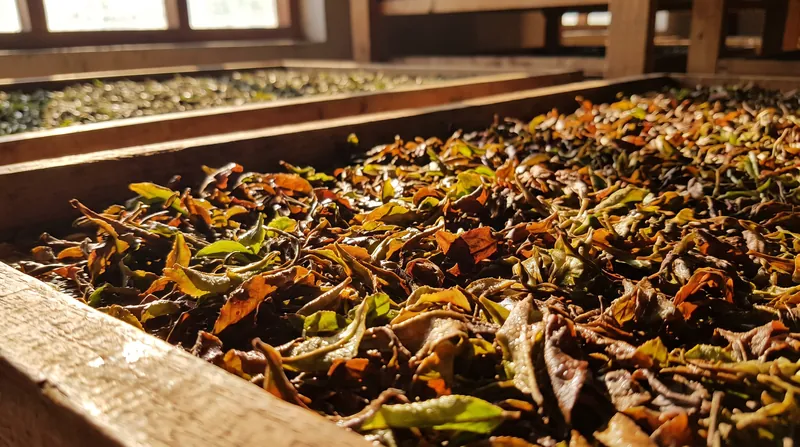
These independent farmers do not process their own harvest. Instead, they carry their daily pluckings in woven baskets to Bought Leaf Factories (BLFs). These localized processing hubs wither, roll, oxidize, and dry the leaves into the dark, fragrant 'made tea' that is then sold at auction or directly to massive packaging conglomerates like Tata and HUL.[1][3]
For years, this decentralized model allowed for rapid expansion and sustained rural employment, but it also created a traceability nightmare. With thousands of small plots feeding into centralized factories, monitoring agricultural practices—specifically the application of chemical pesticides—became nearly impossible.[2]
The breaking point arrived when Tata Consumer Products and Hindustan Unilever, which together command roughly 40 percent of the Indian packet tea market, informed their suppliers that they would no longer accept tea that failed to meet strict Maximum Residue Limits (MRL).[2]
The mandate was clear: any shipment lacking a mandatory MRL compliance test report from an NABL-accredited or Tea Board-approved laboratory would be rejected. The companies are enforcing standards set by the Food Safety and Standards Authority of India (FSSAI), aiming to bridge the glaring quality gap between the pristine teas produced for export markets like Japan and the European Union, and the tea sold domestically.[1][2]
Caught in the middle, the North Bengal Tea Producers Association (NBTPA)—representing the Bought Leaf Factories—was left with no alternative. On July 27, they officially suspended the procurement of green leaves from small growers entirely, stating they could not risk purchasing raw material that the major brands would ultimately refuse to package.[1][3]
The immediate fallout has been severe. The Confederation of Indian Small Tea Growers' Associations (CISTA) appealed urgently to the state government, noting that the sudden stoppage pushed thousands of farming families into acute financial distress. For farmers who rely entirely on the daily cash flow from green leaf sales, a suspended harvest means immediate hardship.[1]
The core of the dispute centers on the use of unapproved or excessive chemical interventions. Industry representatives allege that some small growers have continued to rely on hazardous chemicals like Monocrotophos to combat the increasing pest pressures exacerbated by climate change.[1]
Environmental groups have long warned about this dynamic. Over a decade ago, investigations by organizations like Greenpeace highlighted the presence of unapproved pesticide cocktails in branded Indian teas, sparking initial commitments from major corporations to explore non-pesticide management and sustainable agriculture.[5][6]
Today's strict enforcement is the culmination of those long-term sustainability pledges meeting the reality of a changing climate. As rising temperatures and erratic rainfall increase the prevalence of sap-sucking pests like red spider mites and loopers, farmers without access to advanced agronomic training often default to cheaper, harsher chemical sprays to save their yields.[4]
The logistical hurdle of the new mandate is equally daunting. Small growers argue that requiring an independent farmer with two acres of land to secure an NABL-accredited lab report for their daily harvest is entirely disconnected from ground realities. Transporting samples from remote rural gardens to certified testing facilities adds a layer of cost and complexity that the current pricing model simply cannot support.[1][2]
However, the major buyers and the Tea Board of India maintain that this friction is a necessary growing pain. By refusing to compromise on MRL compliance, Tata and HUL are effectively forcing a modernization of the entire sector. The goal is to push hazardous chemicals out of the market at the source, ensuring that agrochemical suppliers can no longer sell banned substances to uninformed farmers.[1][2]
To resolve the immediate crisis, emergency meetings have been convened involving Members of Parliament, the Tea Board, factory owners, and grower associations. Preliminary agreements have focused on securing pledges from growers to abandon banned pesticides in exchange for a phased resumption of procurement, allowing the local economy to restart while testing infrastructure is scaled up.[3]
Ultimately, this standoff represents a critical maturation point for Indian agriculture. The era of a two-tiered safety system—where premium, pesticide-free crops are exported while chemically burdened harvests are sold domestically—is coming to an end. For the consumer, it guarantees a safer, cleaner cup of tea; for the industry, it is a painful but essential leap toward long-term sustainability.[2][4]
Key points
- Tata Consumer Products and Hindustan Unilever have mandated strict Maximum Residue Limit compliance for all domestic tea procurement.
- Bought Leaf Factories in North Bengal subsequently suspended purchases from roughly 50,000 small tea growers.
- The sudden halt caused immediate financial distress during the peak summer plucking season, leaving tonnes of green leaves to waste.
- The policy shift aims to eliminate hazardous chemicals from the supply chain and standardize domestic food safety.
What we don’t know
- How small-scale farmers will finance the ongoing cost of NABL-accredited laboratory testing for their daily harvests.
- Whether the state government will step in to subsidize localized testing infrastructure or provide financial relief for the discarded crops.
- How quickly the supply chain can fully transition to Non-Pesticide Management (NPM) without suffering massive yield losses to climate-driven pests.
How we got here
2014
Environmental groups publish reports highlighting unapproved pesticide residues in major Indian tea brands, sparking initial corporate sustainability pledges.
2020
The Tea Board of India bans 20 types of hazardous pesticides to improve tea quality and align with global safety standards.
July 23, 2026
Tata Consumer Products and Hindustan Unilever inform suppliers they will only procure tea that strictly complies with Maximum Residue Limits (MRL).
July 27, 2026
Bought Leaf Factories in North Bengal officially suspend the procurement of green leaves from small growers lacking mandatory lab testing reports.
August 1, 2026
Emergency stakeholder meetings are convened in Jalpaiguri to negotiate a phased resumption of procurement based on strict safety pledges.
- Small Tea Growers and Processors
- Facing logistical impossibilities and immediate financial ruin.
- Major Brands and Regulators
- Prioritizing consumer safety and standardizing domestic food quality.
- Environmental and Agricultural Advocates
- Pushing for a complete phase-out of hazardous agrochemicals.
Perspectives this story doesn't cover
- Agrochemical Suppliers and Retailers
- Agricultural Extension Workers
Sources
Source coverage
6 outlets
3 viewpoints surfaced






- [1]The StatesmanSmall Tea Growers and Processors
North Bengal Tea Producers Association suspends procurement from small tea growers
Read on The Statesman → - [2]WhalesBookMajor Brands and Regulators
Tata Consumer Products and Hindustan Unilever mandate stricter pesticide residue standards
Read on WhalesBook → - [3]ETV BharatSmall Tea Growers and Processors
Around 50,000 small tea growers in North Bengal in trouble over pesticide residue concerns
Read on ETV Bharat → - [4]Thirst-TeaEnvironmental and Agricultural Advocates
Pesticide-fertiliser restrictions straining smallholder tea famers
Read on Thirst-Tea → - [5]BeverageDailyMajor Brands and Regulators
Hindustan Unilever India and Tata Global Beverages insist teas comply with legal standards
Read on BeverageDaily → - [6]Greenpeace IndiaEnvironmental and Agricultural Advocates
Tea companies commit to Non-Pesticide Management in tea
Read on Greenpeace India →
More in Food & Drink
See all →Tea Chemistry
The 80°C to 85°C Window: How 3-Minute Brewing Maximizes EGCG Yield Before Epimerization
10 sources
Food Chemistry
The Casein-Catechin Bond: How Milk Proteins Neutralize Astringency and Alter the Antioxidant Profile of Black Tea
6 sources

Tea Chemistry
The 20-Day Sun Deprivation: How Shade-Grown Tea Preserves L-Theanine and Blocks Bitter Catechins
6 sources

Cold Extraction
The 4°C Extraction Gap: Why Cold-Steeping Tea Leaves Behind Bitter Catechins While Preserving Sweet Amino Acids
4 sources
Comments
Every angle. Every day.
Get Food & Drink stories with full source coverage and perspective breakdowns, free every day.