
Netflix in Talks to Become 'One-Stop Shop' for Streaming, Offering Rival Services Like Peacock
Netflix is reportedly negotiating to host rival streaming platforms like Peacock and Fox One directly within its app. The move marks a major strategic pivot as the company seeks to become a centralized entertainment hub.

Share this story
Netflix is currently in talks to host rival streaming services like Peacock and Fox One directly inside its own app, marking a massive pivot from its historic "walled garden" strategy to become the ultimate, one-stop television hub. For years, the streaming giant has fiercely protected its ecosystem, requiring users to leave its platform if they wanted to watch anything produced by a direct competitor.
Now, as the streaming wars enter a new phase focused on retention rather than sheer subscriber growth, Netflix is reportedly willing to open its doors. By transforming its app into a centralized gateway for all entertainment, the company hopes to ensure that viewers never have a reason to switch inputs or open another application on their smart televisions.
If you have tried to watch television lately, you know the drill. You turn on the screen, stare at a grid of brightly colored tiles, and try to remember which of your six monthly subscriptions holds the specific football game or prestige drama you are looking for. The great unbundling of cable TV promised us freedom, but it mostly delivered a fragmented, expensive chore.
The average American household now juggles nearly five different streaming services, often paying as much as they did for traditional cable just to access a complete library of sports, movies, and weekly series. Now, the company that started the streaming revolution in the first place is quietly trying to reassemble those scattered pieces into a cohesive, user-friendly package.
According to reports first surfaced by The New York Times, executives at Netflix have been holding active discussions with NBCUniversal and Fox Corporation about bringing their respective streaming platforms—Peacock and Fox One—under the Netflix umbrella. The exact mechanics of the proposed deals are still being ironed out behind closed doors.
Netflix might opt to sell add-on subscriptions to these rivals directly through its interface, mirroring the successful a-la-carte model pioneered by Amazon Prime Video Channels. Alternatively, it might fold their programming more seamlessly into its existing library, creating a unified viewing experience where the lines between Netflix originals and third-party content blur. Either approach would represent a seismic shift in how the world's largest streaming service operates.[1][5]
Regardless of the technical execution, the underlying motivation for Netflix is entirely clear: maximizing screen time. As the broader streaming industry shifts its focus from aggressively acquiring new subscribers to simply keeping the ones it already has, retention has become the ultimate metric of success.
If Netflix can successfully position itself as the digital front door for its competitors, it can command a lucrative share of third-party subscription revenue while drastically increasing the hours users spend locked into its ecosystem. Every minute a viewer spends watching a Peacock comedy or a Fox One drama inside the Netflix app is a minute they are not exploring a rival platform's interface.[3][6]
While this strategy is a sharp departure from Netflix's long-held philosophy of exclusivity, it is not entirely unprecedented for the company. For years, executives dismissed the idea of aggregation, preferring to keep viewers exclusively focused on their own original and licensed content. But the walls have already started to come down in international markets.
In June 2026, Netflix launched a quiet pilot program in France, integrating live channels and on-demand programming from the French broadcaster TF1 directly into the Netflix app. The move allowed French subscribers to access traditional television broadcasts without ever hitting the 'home' button on their remotes.[2][7]
The results of that French experiment appear to have emboldened Netflix's leadership to pursue larger aggregation deals. During the company's second-quarter earnings call in July 2026, Netflix co-CEO Greg Peters described early viewer engagement with the TF1 integration as 'very promising.'
He explicitly noted that the company would remain open to similar arrangements that create value for viewers, partners, and Netflix itself. That public openness signaled to the rest of the industry that Netflix was finally willing to play ball, setting the stage for the current negotiations with major American media conglomerates.[2][7]
Netflix is also feeling intense pressure from competitors who are already leaning hard into the aggregation model. Amazon has spent years persuading tens of millions of people to use its Prime Video app to subscribe to other services like Max and Paramount+. Roku has long served as a neutral marketplace for third-party subscriptions.
Most notably, YouTube recently established a formidable blueprint for this exact strategy, striking a multi-year deal in July 2026 to bundle Peacock into its commercial-free Premium tier starting next year. With tech giants racing to become the default operating system for the living room, Netflix cannot afford to remain an isolated island.[1][4]
A partnership with Peacock and Fox One would also solve one of Netflix's most glaring vulnerabilities: live sports. While Netflix has dipped its toes into live events with WWE programming, select NFL holiday games, and one-off boxing matches, it lacks the week-to-week sports inventory that keeps traditional television alive and drives appointment viewing.
Peacock carries Sunday Night Football, Premier League soccer, and comprehensive Olympic coverage. Fox One is a powerhouse of broadcast sports. Bringing those live feeds into the Netflix app would instantly transform the service into a mandatory destination for sports fans.[4][5]
That influx of live programming would fundamentally alter the behavioral habits of Netflix subscribers. It is the difference between a viewer logging in to binge a specific ten-episode season and a viewer simply turning on Netflix because it is Sunday afternoon and the game is on.
By serving as the gateway to rival content, Netflix ensures that even when its own original series are between seasons, the viewer never actually leaves the building. This behavioral design turns a passive video library into an active, daily ecosystem, cementing Netflix's status as the default screen in the modern living room.
For NBCUniversal and Fox, the incentive to partner with a direct competitor comes down to the raw economics of scale. Netflix currently boasts more than 325 million global subscribers, dwarfing the reach of almost every other platform. Gaining access to even a fraction of that massive user base could dramatically accelerate the path to profitability for smaller streaming services.
Comcast recently reported that Peacock achieved its first profitable quarter in July 2026, and a high-profile integration with Netflix could supercharge that momentum, trading a degree of platform independence for guaranteed distribution and a steady stream of new viewers who might never have downloaded the standalone Peacock app.[7]
Despite the obvious mutual benefits, no deal is imminent, and the logistical hurdles are significant. Negotiating the revenue splits, user data sharing, and interface design for such a massive partnership will take months of complex wrangling.
Furthermore, it remains to be seen if other major players like Disney+ or Apple TV+ would ever agree to be swallowed up by the Netflix interface, or if they will continue to fight for their own standalone real estate on your television screen. The streaming wars are far from over, but the battle lines are clearly shifting from content creation to platform aggregation.
Ultimately, the streaming landscape is coming full circle. The industry that disrupted the traditional cable bundle is now racing to recreate it, recognizing that consumers crave convenience just as much as they crave premium content.
If Netflix succeeds in becoming the primary hub for its rivals, it will have won a much larger game than simply having the most popular shows. It will no longer just be a channel on your television; it will effectively become the television itself, dictating how millions of people discover, consume, and pay for their daily entertainment.
Key points
- Netflix is reportedly in talks to host rival streaming platforms like Peacock and Fox One directly within its app.
- The move marks a major departure from Netflix's historic strategy of exclusively promoting its own content.
- Executives aim to increase user retention and screen time by transforming Netflix into a centralized entertainment hub.
- The company recently piloted a similar integration with French broadcaster TF1, which leadership described as promising.
What we don’t know
- Whether Netflix would sell add-on subscriptions or integrate the content directly into its existing library.
- How revenue and user data would be split between Netflix and the partner services.
- If other major streaming platforms like Disney+ or Apple TV+ would ever agree to join a Netflix-hosted bundle.
How we got here
2022
Netflix introduces an ad-supported tier, signaling a willingness to adapt its traditional business model to boost revenue.
June 2026
Netflix integrates live channels from French broadcaster TF1 into its app in France, its first major third-party aggregation.
July 2026
YouTube announces a multi-year deal to bundle Peacock into its Premium tier starting in 2027.
August 2026
Reports emerge that Netflix is in active negotiations to host Peacock and Fox One on its platform.
- Platform Aggregators
- Believes the future of streaming is a centralized hub where they control the user interface and take a cut of third-party revenue.
- Content Providers
- Willing to sacrifice some platform independence in exchange for access to massive global subscriber bases to drive profitability.
- Consumer Advocates
- Values the convenience of a single app but remains cautious about the long-term pricing implications of a re-bundled streaming landscape.
Perspectives this story doesn't cover
- Independent Filmmakers
- Antitrust Regulators
Sources
Source coverage
7 outlets
3 viewpoints surfaced







- [1]Android AuthorityConsumer Advocates
Netflix could soon let you access other rival streamers through its platform
Read on Android Authority → - [2]TechDogsPlatform Aggregators
Netflix May Turn Its App Into A Streaming Hub With Peacock And Fox One
Read on TechDogs → - [3]HypebeastPlatform Aggregators
Netflix May Turn Its Platform Into a Streaming Hub by Adding Peacock and Fox One
Read on Hypebeast → - [4]Awful AnnouncingContent Providers
Netflix reportedly in discussions with Fox, NBC to carry Fox One, Peacock
Read on Awful Announcing → - [5]MandatoryConsumer Advocates
Netflix May Add Peacock & Other Rival Streamers to Its Platform
Read on Mandatory → - [6]Kalkine MediaPlatform Aggregators
Streaming Hub Strategy Emerges for Netflix
Read on Kalkine Media → - [7]BetaNewsContent Providers
Netflix reportedly in discussions with Fox, NBC to carry Fox One, Peacock
Read on BetaNews →

More in Entertainment
See all →Platform Consolidation
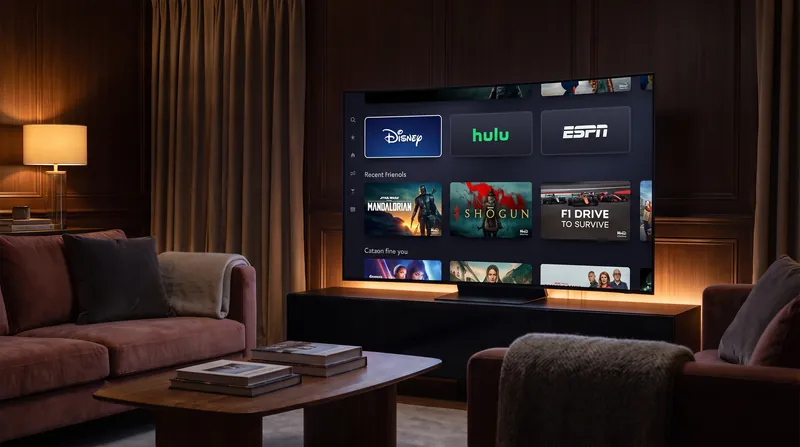
How Disney Built a 'One-Stop Shop' Super-Streamer by Integrating Hulu and ESPN+
7 sources
Streaming Wars
Google TV Freeplay Adds 10,000 Titles, Launching Major New Front in Streaming Wars
8 sources

Streaming Wars
Warner Bros. Discovery Reverts to 'HBO Max' in Major Streaming Brand Reversal
3 sources
Comcast Split
Comcast Splits Into Two Separate Companies, Separating Media Assets from Connectivity
1 sources

Comments
Every angle. Every day.
Get Entertainment stories with full source coverage and perspective breakdowns, free every day.