
Administration Moves Perkins CTE Grants to Labor Dept., Cuts $400M From Community College Vocational Programs
The federal government has transferred oversight of the $1.4 billion Perkins CTE program to the Labor Department, advancing a policy that restricts funding to K-12 schools and cuts $400 million from community colleges.
By Hui Lin

Share this story
The federal government has officially transferred management of the $1.4 billion Carl D. Perkins Career and Technical Education (CTE) grant program to the Department of Labor, fundamentally altering how vocational training is funded. For students and administrators, the most immediate impact is a proposed policy shift that would limit federal CTE funding to K-12 schools, cutting roughly $400 million annually from community colleges and regional training centers.[1][2]
The reorganization, executed through an interagency agreement, aims to consolidate workforce preparation under a single agency. A recent Supreme Court ruling lifted a preliminary injunction against the move, allowing the Labor Department to assume day-to-day oversight of adult education and family literacy programs alongside the Perkins grants.[3]
For prospective students evaluating vocational programs, this shift signals a heavier federal emphasis on immediate workforce placement over traditional academic integration. The administration argues that housing CTE within the Labor Department will better align training with high-wage, high-demand occupations, streamlining the pipeline from the classroom to the job market.[1][2]
By consolidating these programs, federal officials plan to reduce administrative duplication for states. The Labor Department will introduce a unified portal for state plans, which proponents say will make it easier for local workforce boards to coordinate with educational institutions and respond rapidly to shifting industry needs.[2][3]
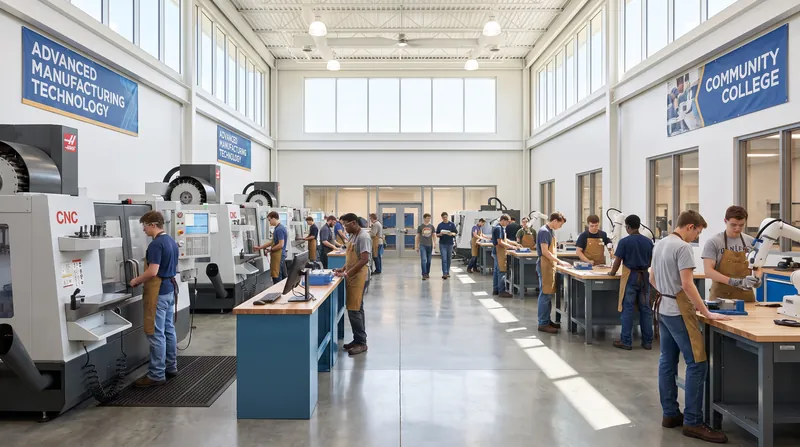
However, the $400 million restriction poses a direct challenge to two-year institutions. Community colleges rely on Perkins funding to purchase industrial equipment, upgrade technology labs, and subsidize clinical placements for allied health programs. Without these federal dollars, colleges may be forced to raise tuition for specific vocational tracks or scale back capital-intensive courses.[1][5]
Educational advocacy groups and lawmakers have strongly opposed the transfer. A formal letter from congressional representatives argued that moving the program bypasses the legislative intent of the 2018 Perkins reauthorization, warning that it risks turning comprehensive career education into narrow, short-term job training.[4]
Critics also caution that the Labor Department lacks the infrastructure to support the academic components of CTE, such as career exploration for younger students and the integration of math and science into technical coursework. Administrators fear that the educational foundation of vocational training will be sidelined in favor of rapid employment metrics.[2][4]
Logistical hurdles remain a pressing concern for school districts and state agencies. With funding now flowing through the Labor Department, local administrators must navigate a new set of compliance standards, reporting timelines, and interagency regulations, creating short-term uncertainty for program directors.[2][5]
As the transition takes effect, K-12 vocational programs remain fully funded and are expected to see expanded federal support. Meanwhile, community colleges are advising current and prospective students to monitor program availability closely, as institutions begin adjusting their budgets to account for the reshaped federal landscape.[1][3][5]
Perspectives explored
The Administration's View
Consolidating CTE under the Labor Department eliminates duplication and aligns training directly with employer needs.
Federal officials argue that the historical separation of education and workforce training has created inefficiencies. By moving the $1.4 billion Perkins program to the Labor Department, the administration aims to create a unified system that prioritizes high-wage, high-demand skills. Proponents emphasize that this structure will allow states to submit combined workforce plans, reducing bureaucratic overhead and ensuring that federal dollars directly support immediate labor market demands rather than generalized academic exploration.
Community Colleges & Educators
Removing CTE from the Education Department threatens the academic foundation of vocational training and strips vital funding from two-year institutions.
Educational advocates and community college administrators warn that the Labor Department's focus on rapid employment will sideline the holistic, educational aspects of CTE, such as early career exploration and the integration of core academics. Furthermore, the proposed $400 million cut to postsecondary institutions threatens the viability of capital-intensive programs like advanced manufacturing and nursing. Critics argue that bypassing the Education Department undermines decades of work designed to build seamless pathways from high school to two-year technical degrees.
Key points
- The administration has transferred management of the $1.4 billion Perkins CTE program to the Department of Labor.
- A proposed policy change would limit federal CTE funding to K-12 schools, cutting $400 million from community colleges.
- A recent Supreme Court ruling lifted an injunction, allowing the interagency transfer to proceed.
- Proponents argue the move streamlines workforce training and aligns education with labor market demands.
Timeline
May 2025
The Education and Labor departments sign an initial interagency agreement to transfer CTE management.
July 2025
The Supreme Court lifts a preliminary injunction, allowing the administrative transfer to proceed.
August 2026
The administration formalizes the move and advances a $400 million cut to community college vocational programs.
- Workforce Alignment Advocates
- Argues that vocational training should be directly managed by labor agencies to maximize employment outcomes and reduce bureaucratic duplication.
- Educational Continuity Defenders
- Maintains that CTE is fundamentally an educational program that requires academic integration and robust funding for community colleges.
Perspectives this story doesn't cover
- State-level workforce board directors
- Current community college vocational students
Sources
Source coverage
5 outlets
2 viewpoints surfaced





- [1]Work ShiftWorkforce Alignment Advocates
Details emerge for Trump's vision of a more coordinated federal education and workforce system
Read on Work Shift → - [2]K-12 DiveEducational Continuity Defenders
As CTE transfers to Labor Department, here's what schools need to know
Read on K-12 Dive → - [3]Community College DailyWorkforce Alignment Advocates
With the Supreme Court on Monday clearing the way for the Trump administration to shrink the Education Department's workforce
Read on Community College Daily → - [4]U.S. House of RepresentativesEducational Continuity Defenders
Letter to Secretary McMahon Opposing CTE Transfer to Labor Department
Read on U.S. House of Representatives → - [5]Factlen Editorial TeamEducational Continuity Defenders
Synthesis by Factlen editorial team
Read on Factlen Editorial Team →

More in Education
See all →Engineering Education
Why Problem-Solving Complexity, Not Degree Length, Determines Global Engineering Credentials
1 sources

Apprenticeship Economics
How Swiss and German Apprenticeship Models Balance Training Costs Against Productive Output
2 sources

Workforce Pell
DOL Awards $65 Million to Community Colleges to Expand Workforce Pell Training
3 sources
Curriculum Design
The DACUM Process: How Expert Workers Define the Duties and Tasks of an Occupation
6 sources

Comments
Every angle. Every day.
Get Education stories with full source coverage and perspective breakdowns, free every day.