
Federal Judge Freezes $110 Billion Paramount-Warner Bros. Discovery Merger Until 2027
A federal judge has temporarily halted the proposed merger between Paramount and Warner Bros. Discovery following an antitrust lawsuit from 12 states. The pause, which extends until at least mid-2027, is being hailed as a victory for consumers, theater owners, and Hollywood creatives.

Share this story
Hollywood's biggest corporate marriage in decades was supposed to be a done deal, a foregone conclusion in an industry obsessed with scale. The ink was seemingly dry, the U.S. Department of Justice had waved it through, and Paramount and Warner Bros. Discovery were preparing to combine their sprawling empires into a $110 billion entertainment behemoth.
But a coalition of state attorneys general saw a vastly different picture, arguing the megamerger would crush competition, hike prices for everyday consumers, and stifle the creative pipeline that fuels the box office. That underlying tension came to a dramatic head this week when a federal judge stepped in, hitting the brakes on the historic consolidation and handing a major, unexpected victory to consumer advocates and Hollywood labor groups who feared the consequences of a shrinking studio landscape.[1][2]
U.S. District Judge Araceli Martínez-Olguín granted a temporary restraining order, effectively freezing the massive transaction in its tracks just days before it was expected to close. Following the judge's decisive ruling, Paramount formally agreed to delay the closing of its buyout of Warner Bros. Discovery until at least June 1, 2027, or until the court reaches a final decision on the merits of the states' antitrust lawsuit.
The judicial pause halts what would have been a seismic shift in the entertainment landscape, ensuring that two of the industry's oldest and largest studios remain separate, competing entities for the foreseeable future while the legal battle plays out in federal court.[1][3]
The legal challenge, spearheaded by California Attorney General Rob Bonta and joined by 11 other states including New York and Oregon, claims the merger blatantly violates the Clayton Antitrust Act. The coalition presented what Judge Martínez-Olguín described in her ruling as "compelling evidence" that a combined Paramount-WBD would possess a dangerously substantial market share.
Specifically, the states warned that the new entity would control nearly a third of the wide-release theatrical distribution market and a massive chunk of basic cable programming. In the eyes of the state prosecutors, giving one corporate boardroom that level of unprecedented leverage over American media consumption would inevitably lead to monopolistic practices.[4][5]
For the average moviegoer or cable subscriber, the states argue, this level of corporate consolidation would be disastrous. A shrinking number of major studios means less competition for audience attention, which historically translates to higher theater ticket prices, steeper monthly cable bills, and a narrower, more homogenized pipeline of original stories making it to the screen.
Oregon Attorney General Dan Rayfield framed the judicial pause as a direct win for working families, noting that everyday audiences are the ones who pay the price when media mergers go unchecked. New York Attorney General Letitia James echoed the sentiment, calling the halt a critical victory for families who rely on a competitive entertainment industry for affordable choices.[1]
It isn't just consumers who are breathing a collective sigh of relief. The Writers Guild of America and other Hollywood labor groups have fiercely opposed the merger from the start, warning that combining two of the industry's biggest employers would suppress wages, reduce the number of greenlit projects, and homogenize content as competing creative visions get absorbed into a single corporate structure.
The court-ordered freeze gives these creative workers a crucial reprieve from the immediate threat of post-merger layoffs and consolidated production slates, preserving a broader, more competitive marketplace for writers, directors, and actors to pitch their work and negotiate fair compensation.[2][3]
Despite the significant legal setback, Paramount—which was recently acquired by David Ellison's Skydance—is attempting to spin the delay as a strategic victory. In a public statement following the ruling, the studio claimed the extended timeline provides a "direct path to a trial based on the evidence," allowing them the necessary runway to prove the merger is actually pro-competitive.
Paramount and WBD executives have consistently argued that combining their legacy forces is the only viable way to survive and compete against tech-backed streaming giants like Netflix, Apple, and Amazon, who have fundamentally rewritten the economics of the entertainment business and possess vastly superior capital resources.[1][2][3]
The state-level intervention highlights a stark and highly unusual divide in modern antitrust enforcement. The U.S. Department of Justice had already cleared the megadeal in June, issuing an unusually long statement asserting that the tie-up would bring tangible benefits to American consumers and workers.
However, critics and progressive lawmakers quickly pointed to the close relationship between the Ellison family and the Trump administration, raising pointed questions about the integrity of the federal approval process. That skepticism prompted the coalition of Democratic attorneys general to launch their own aggressive, independent effort to block the transaction, setting up a clash between state and federal regulatory philosophies.[2]
With the temporary restraining order firmly in place and the closing date pushed to mid-2027, the two sides have agreed to cancel a preliminary injunction hearing that was originally set for early August. Instead, they are bypassing the preliminary skirmishes and heading straight toward a larger, high-stakes antitrust trial scheduled for March 2027.
Key points
- A federal judge has granted a temporary restraining order freezing the $110 billion Paramount-Warner Bros. Discovery merger.
- Paramount has formally agreed to delay the closing of the deal until at least June 2027 while the legal battle plays out.
- A coalition of 12 states sued to block the transaction, arguing it would create an illegal monopoly and raise consumer prices.
- Hollywood labor groups, including the Writers Guild of America, have opposed the merger over fears of job losses and wage suppression.
Open questions
- How the federal court will ultimately define the 'entertainment market' during the 2027 trial—whether it focuses strictly on theatrical and cable distribution, or includes the broader streaming landscape.
- Whether Paramount or Warner Bros. Discovery will attempt to proactively divest specific assets, such as basic cable networks, to appease state regulators before the trial begins.
- How the extended delay will impact the day-to-day operations, production slates, and stock prices of both companies as they remain in corporate limbo for another year.
Timeline
June 2026
The U.S. Department of Justice clears the Paramount-WBD merger, issuing a statement that the deal would benefit consumers.
July 13, 2026
A coalition of 12 state attorneys general, led by California, files a lawsuit to block the merger under the Clayton Antitrust Act.
July 20, 2026
U.S. District Judge Araceli Martínez-Olguín grants a temporary restraining order, pausing the transaction for 14 days.
July 24, 2026
Paramount formally agrees to delay the closing of the buyout until June 2027 or until the antitrust trial concludes.
March 2027
The scheduled start date for the full antitrust trial to determine the ultimate fate of the merger.
- Consumer Protection Advocates
- Argues the merger will lead to higher prices and fewer choices for audiences.
- Studio Consolidation Proponents
- Believes legacy studios must merge to survive against tech-backed streaming giants.
- Hollywood Labor Groups
- Fears the merger will suppress wages and reduce the number of projects greenlit for production.
Perspectives this story doesn't cover
- Independent Theater Owners
- Tech-Backed Streaming Competitors
Sources
Source coverage
5 outlets
3 viewpoints surfaced





- [1]PBSConsumer Protection Advocates
Paramount will delay closing Warner buyout for months while judge considers states' challenge
Read on PBS → - [2]The GuardianConsumer Protection Advocates
Judge orders pause on Paramount-Warner merger after challenge from 12 states
Read on The Guardian → - [3]Fox BusinessStudio Consolidation Proponents
Paramount-WBD merger on hold after judge grants temporary restraining order
Read on Fox Business → - [4]CBS NewsHollywood Labor Groups
Judge temporarily halts Paramount-Warner Bros. Discovery merger
Read on CBS News → - [5]Business InsiderStudio Consolidation Proponents
Paramount-WBD merger paused by judge after 12 states sue
Read on Business Insider →
More in Entertainment
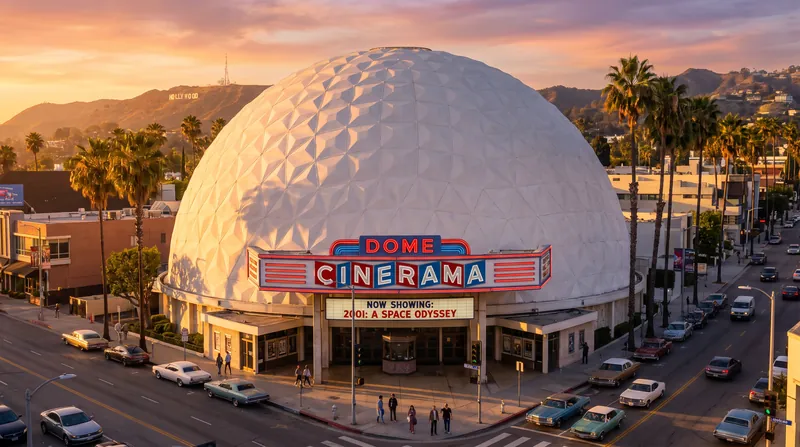
See all →Cinerama Dome
Historic Cinerama Dome to Reopen in 2028 Under Sony Pictures, Signaling Renewed Faith in Theatrical Experience
4 sources
Gaming Strategy
Netflix Closes Two Gaming Studios in Major Shift Toward Cloud and Casual Titles
8 sources
Studio Mergers
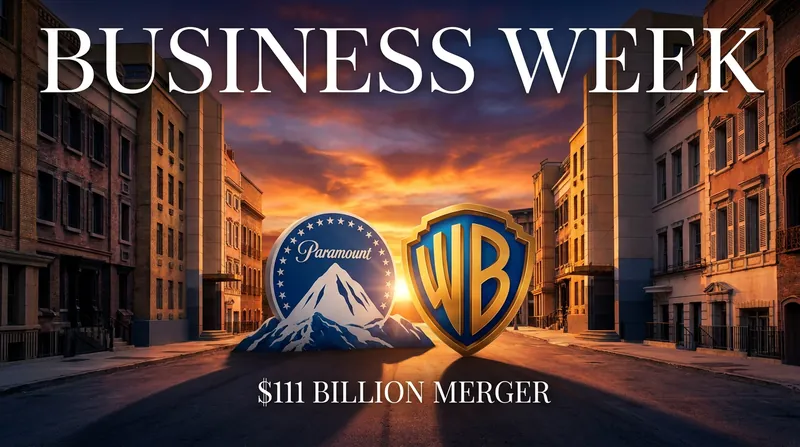
FCC Approves $8.4 Billion Paramount-Skydance Merger, Naming David Ellison CEO
2 sources
Audio Engineering
DCI Calibration Fixes Cinema Audio at 85 dBC Leq, Making Home Releases Sound Too Quiet on TV Speakers
4 sources

Comments
Every angle. Every day.
Get Entertainment stories with full source coverage and perspective breakdowns, free every day.