
Fifth Circuit Restores Texas's Strict Mail-In Voter ID Requirements Ahead of Midterms
A federal appeals court has reinstated Texas rules requiring mail-in voters to provide identification numbers that exactly match their original registration records. The ruling reverses a lower court decision that found the requirement violated the Civil Rights Act.

Share this story
Texas voters relying on mail-in ballots this November will once again face strict identification matching rules that previously led to thousands of rejected votes, following a major federal appellate ruling. The 5th U.S. Circuit Court of Appeals has reversed a lower court injunction, fully restoring the state's requirement that mail-in voters provide a driver's license or Social Security number that perfectly matches the ID used on their original voter registration.
For citizens who registered decades ago and cannot recall which document they used, the reinstated policy transforms the routine act of returning a ballot into a high-stakes memory test, where a single mismatched digit or incorrect ID type results in the immediate disqualification of their vote.[1]
The appellate decision dismantles a prior ruling by a federal district judge who had concluded the matching requirement violated the Materiality Provision of the Civil Rights Act of 1964. That federal provision explicitly prohibits state officials from disenfranchising voters over minor paperwork errors or omissions that are irrelevant to determining their actual eligibility to cast a ballot.
The 5th Circuit panel, however, rejected this interpretation, determining that the state's ID requirement functions as a substantive qualification for voting by mail under Texas law, rather than a trivial administrative hurdle. The court ruled that Texas possesses the sovereign authority to define the parameters of its absentee voting system and enforce strict verification protocols.[2]
Under the reinstated provisions of Senate Bill 1, county election officials are legally mandated to reject any mail-in ballot application or returned ballot envelope if the provided identification number does not perfectly align with the state's centralized voter database.
If a voter registered in the 1980s using a Social Security number but writes their current driver's license number on the 2026 ballot envelope, the electronic sorting system flags the mismatch as a fatal error. This triggers an automatic rejection unless the voter is notified in time and successfully navigates a complex cure process to verify their identity before the final canvassing deadline.[1]
The practical consequences of this administrative stricture are well documented in the state's recent electoral history. When the rules were first implemented during the March 2022 primary elections, county officials across Texas rejected approximately 24,000 mail-in ballots, representing roughly 12 percent of all mail votes cast statewide.
While rejection rates eventually stabilized in subsequent general elections as partisan groups and county clerks expanded voter education campaigns, civil rights organizations argue the baseline risk remains disproportionately high. The burden falls heavily on elderly voters and voters with disabilities, who make up the vast majority of the state's legally restricted mail-in electorate.[2]
The legal battle reflects competing structural incentives surrounding election administration in a deeply polarized environment. Texas state officials and Republican proponents of the legislation maintain that strict ID matching is the only reliable mechanism to prevent ballot harvesting and verify the identity of voters casting ballots outside the direct supervision of a polling place.
They argue the system protects the integrity of the vote. Conversely, voting rights advocates argue the law functions as an arbitrary trap, penalizing eligible citizens for administrative discrepancies that have no bearing on their legal right to vote, effectively weaponizing bureaucracy to suppress turnout.
The timing of the appellate reversal injects immediate logistical pressure into the state's election apparatus just months before a highly contested midterm cycle. County clerks and election administrators must now rapidly recalibrate their processing protocols, reprogram sorting machines, and update instructional materials to ensure compliance with the 5th Circuit's mandate.
Plaintiffs in the case have indicated they are evaluating emergency legal options, including a potential appeal to the U.S. Supreme Court. However, the proximity to the November election makes further judicial intervention highly uncertain under the Purcell principle, a legal doctrine that strongly discourages federal courts from altering election rules close to voting day.[1][2]
Beyond the immediate impact on Texas, the 5th Circuit's interpretation establishes a significant precedent regarding the scope of the Civil Rights Act in modern election litigation. By narrowing the definition of what constitutes an immaterial paperwork error under federal law, the conservative-leaning appellate court has provided a legal blueprint for other states seeking to implement stringent verification requirements for absentee voting.
This interpretation effectively shields state-level administrative hurdles from federal civil rights challenges, provided the state classifies the requirement as a substantive condition of ballot access rather than a mere procedural formality.[2]
As mail-in ballot applications begin processing for the fall elections, the immediate burden shifts away from the federal judiciary and onto local election administrators and partisan turnout operations. Both political parties and nonpartisan advocacy groups are now pivoting their resources from the courtroom to aggressive voter outreach. Their primary objective is to ensure that eligible voters understand the precise, unforgiving identification requirements necessary to prevent their ballots from being discarded, setting the stage for a midterm election where administrative precision will be just as critical as voter turnout.[1]
Key points
- The 5th U.S. Circuit Court of Appeals reinstated Texas's strict ID matching requirements for mail-in ballots.
- The ruling reverses a lower court decision that found the rules violated the Materiality Provision of the Civil Rights Act.
- Voters must provide a driver's license or Social Security number that exactly matches their original voter registration record.
- Mismatched ID numbers led to the rejection of approximately 24,000 mail-in ballots during the state's 2022 primary elections.
- Election Integrity Proponents
- Argue that strict ID matching is a necessary safeguard to verify voter identity and prevent mail-in ballot fraud.
- Voting Rights Advocates
- Contend the matching requirement acts as an arbitrary trap that disenfranchises eligible voters over minor administrative discrepancies.
- Election Administrators
- Focus on the logistical challenges of implementing complex verification rules and managing voter education to prevent high rejection rates.
Perspectives this story doesn't cover
- Voters whose ballots were previously rejected under the law
Sources
Source coverage
2 outlets
3 viewpoints surfaced


- [1]ReutersElection Administrators
Appeals court reinstates Texas mail-in ballot ID rules ahead of midterms
Read on Reuters → - [2]The Washington PostVoting Rights Advocates
Federal appeals court revives Texas mail-in voting restrictions
Read on The Washington Post →

More in News & Politics
See all →Swedish Election
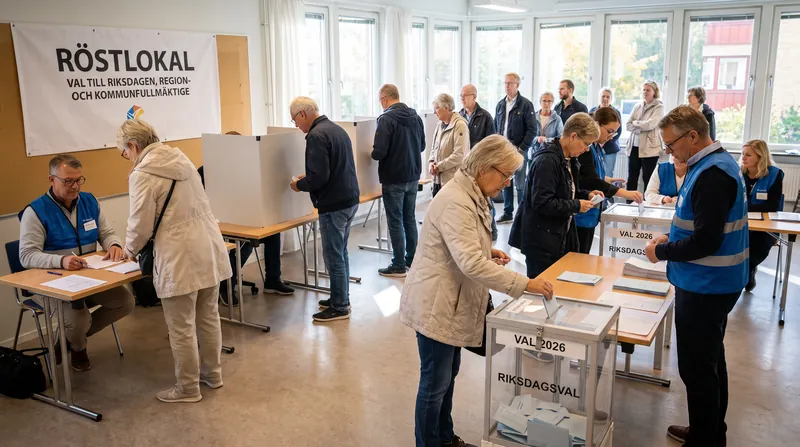
Sweden Holds Tightest Election in Decades as Far-Right Seeks Government Role
6 sources
Ranked-Choice Voting
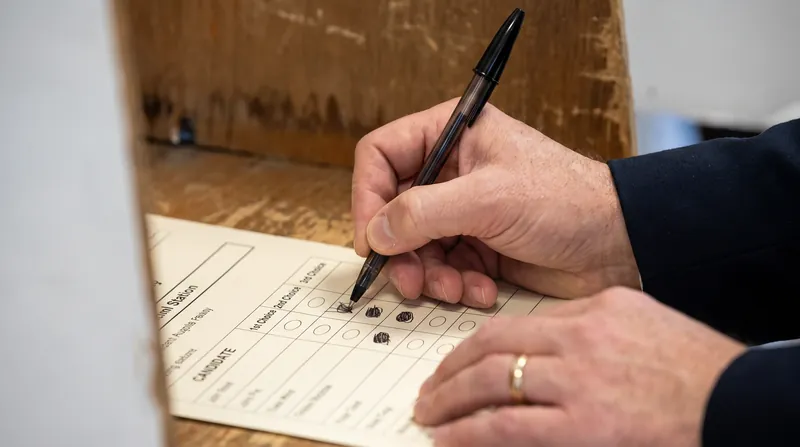
The Mathematical Threshold of Ballot Exhaustion in Ranked-Choice Voting
2 sources
Election Integrity
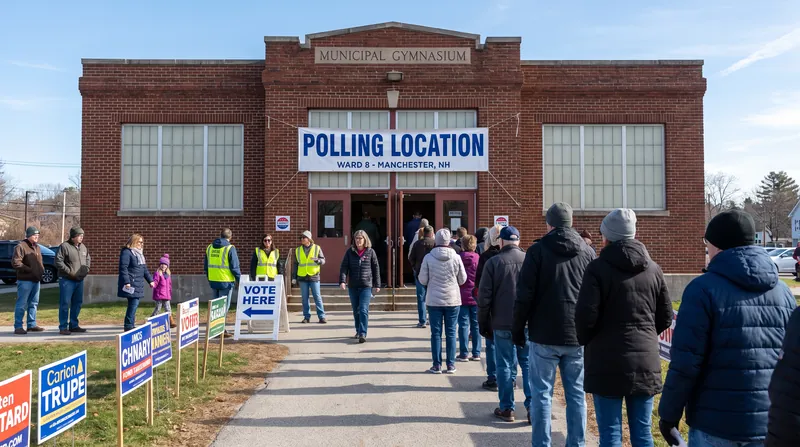
Justice Department Deploys Monitors to New Hampshire Primary Polling Sites
3 sources
Senate Elections
Czech Senate Elections Deal Blow to Prime Minister Andrej Babis' Governing Coalition
3 sources

Comments
Every angle. Every day.
Get News & Politics stories with full source coverage and perspective breakdowns, free every day.