
UN High Seas Treaty Enters Into Force, Unlocking Legal Framework to Protect Two-Thirds of Global Ocean
The landmark BBNJ Agreement has officially become international law, establishing the first comprehensive legal framework to safeguard marine biodiversity in international waters. The treaty enables the creation of large-scale marine protected areas and sets new rules for environmental impact assessments on the high seas.
By Hao Li

Share this story
In short
- The Biodiversity Beyond National Jurisdiction (BBNJ) Agreement has officially entered into force after securing 60 ratifications.
- The treaty provides a legal framework to establish large-scale marine protected areas in international waters.
- It mandates rigorous environmental impact assessments for commercial activities on the high seas, such as deep-sea mining.
The High Seas Treaty, formally known as the Biodiversity Beyond National Jurisdiction (BBNJ) Agreement, has officially entered into force, marking a historic shift in global ocean governance. After securing the necessary 60 ratifications in September 2025, the treaty became binding international law in January 2026, closing a decades-long regulatory gap over the world's international waters. The activation of the treaty establishes the first comprehensive legal framework dedicated to conserving marine life outside the borders of any single nation.[1][3][4][5][6]
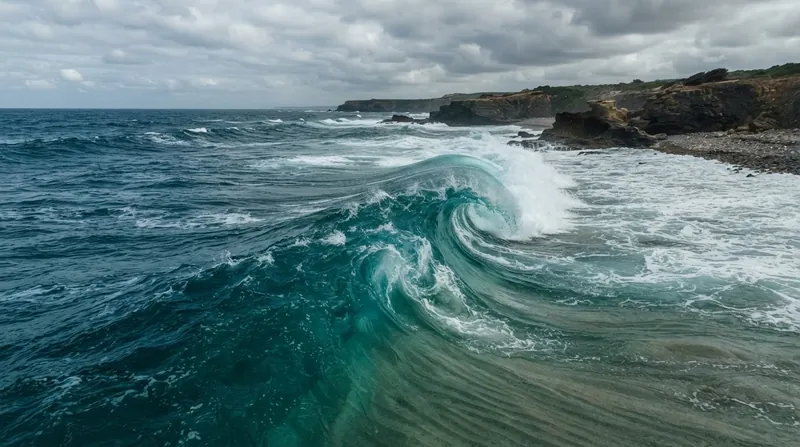
The scale of the high seas is immense, covering roughly two-thirds of the global ocean and nearly half of the planet's surface. Despite their critical ecological role in regulating the global climate and supporting complex food webs, these vast waters have historically operated under fragmented governance. This patchwork of regional agreements and industry-specific regulations left marine ecosystems highly vulnerable to unregulated exploitation, pollution, and the escalating impacts of climate change.[1][4][5]
The new agreement builds upon the foundation laid by the 1982 UN Convention on the Law of the Sea (UNCLOS), which established rules for territorial waters and exclusive economic zones but lacked mechanisms for protecting biodiversity in the open ocean. Negotiators spent nearly two decades drafting the BBNJ text to address this exact shortfall, culminating in its formal adoption by UN member states in June 2023. Its entry into force is widely regarded as a triumph of multilateral diplomacy in an era of geopolitical friction.[1][3][4][6]
Prior to the treaty's activation, less than 1.5 percent of the high seas were subject to formal conservation measures. The treaty provides the sole legal pathway for the international community to achieve the Kunming-Montreal Global Biodiversity Framework target of protecting 30 percent of the planet's land and oceans by 2030. Without a mechanism to safeguard international waters, the ambitious "30x30" goal was mathematically impossible to reach.[1][5]
To achieve these conservation targets, the treaty introduces four core pillars, the most prominent being the ability to establish large-scale marine protected areas (MPAs). Member states can now propose and vote to create highly regulated zones in international waters, creating safe havens for migratory species such as whales, sharks, and tuna. These MPAs will also protect fragile, stationary ecosystems like deep-sea coral reefs and seamounts from destructive practices.[1][3][4][5]
Beyond designated conservation zones, the treaty mandates rigorous environmental impact assessments (EIAs) for any proposed economic activities on the high seas. This requirement ensures that commercial ventures—ranging from deep-sea mining and large-scale industrial fishing to experimental geoengineering—must evaluate and mitigate their potential harm to marine biodiversity before operations can begin. The EIA framework is designed to prioritize sustainable use and prevent irreversible ecological damage.[1][2][3][4]
A central and highly debated component of the negotiations involved the equitable sharing of marine genetic resources (MGRs). Deep-sea organisms, which have evolved to survive in extreme environments, hold immense potential for breakthroughs in pharmaceuticals, cosmetics, and biotechnology. The treaty establishes a benefit-sharing mechanism to ensure that the financial and scientific gains derived from these discoveries are distributed fairly, preventing a monopoly by a handful of wealthy nations.[1][3][4][6]
To support the implementation of these new rules, the agreement heavily prioritizes capacity-building and the transfer of marine technology. Developing countries will receive financial and technical assistance to participate fully in ocean research, environmental monitoring, and conservation enforcement. This assistance, funded through a combination of public and private sources, aims to level the playing field and foster a truly global approach to ocean stewardship.[1][3][4][6]
While the treaty's entry into force is a monumental diplomatic achievement, significant operational and enforcement challenges remain unresolved. Analysts note that the mechanisms for policing international waters, penalizing non-compliance, and managing actors from nations that have not ratified the treaty are still ambiguous. The sheer vastness of the high seas makes physical monitoring difficult, requiring heavy reliance on satellite tracking and international cooperation.[2][6]
As the international community transitions from negotiation to active implementation, the focus now shifts to the treaty's governing bodies. The Preparatory Commission is currently laying the groundwork for the first Conference of the Parties (COP), scheduled to convene within a year of the treaty taking effect. At this inaugural summit, member states will be tasked with finalizing the institutional structures, financing mechanisms, and enforcement protocols necessary to translate the treaty's ambitious text into tangible ocean protection.[2][3][4][6]
Viewpoints in depth
Marine Conservationists
Advocates emphasize that the treaty is the only viable mechanism to achieve the global 30x30 biodiversity target.
For environmental organizations, the treaty's activation is a race against time. Conservationists argue that with less than 1.5 percent of the high seas currently protected, member states must immediately begin proposing and designating large-scale marine protected areas. They view the treaty not just as a legal framework, but as an urgent mandate to establish connected ecological corridors that protect migratory species and shield fragile deep-sea habitats from impending industrial threats like seabed mining.
Developing Nations
Focuses on the equitable distribution of ocean resources and the necessity of technological support.
Representatives from the Global South view the BBNJ Agreement as a critical mechanism for leveling the playing field in ocean science and economics. Historically, only a handful of wealthy nations possessed the capital and technology to explore the deep ocean and patent marine genetic resources. Developing nations emphasize that the treaty's benefit-sharing and capacity-building pillars are non-negotiable, ensuring that the financial windfalls from marine biotechnology and the tools required for environmental monitoring are accessible to all.
Maritime Industry & Economic Analysts
Highlights the operational complexities, compliance costs, and unresolved enforcement mechanisms.
Industry stakeholders and legal analysts express cautious optimism mixed with practical concerns regarding the treaty's implementation. While a unified regulatory framework provides long-term certainty, the immediate requirements for environmental impact assessments introduce new compliance costs and bureaucratic hurdles for commercial operations. Furthermore, analysts point out that the treaty's enforcement mechanisms remain ambiguous, raising questions about how regulations will be policed in remote international waters and how to handle vessels flagged to countries that refuse to ratify the agreement.
- Marine Conservationists
- Advocates prioritizing rapid implementation of MPAs to meet the 30x30 global biodiversity target.
- Global Governance Advocates
- Focuses on the treaty as a triumph of multilateralism and international law.
- Maritime Industry & Economic Analysts
- Emphasizes the operational challenges, compliance costs, and unresolved enforcement mechanisms.
Perspectives this story doesn't cover
- Deep-sea mining contractors
- Distant-water fishing fleets
Sources
Source coverage
6 outlets
3 viewpoints surfaced






- [1]High Seas AllianceMarine Conservationists
Historic Milestone for Global Ocean Protection: 60th ratification triggers entry into force of High Seas Treaty
Read on High Seas Alliance → - [2]Outlook BusinessMaritime Industry & Economic Analysts
High Seas Treaty to Take Effect in January 2026, Key Implementation & Enforcement Details Still Unclear
Read on Outlook Business → - [3]IISD SDG Knowledge HubGlobal Governance Advocates
With 60 Ratifications, BBNJ Agreement to Enter into Force in January 2026
Read on IISD SDG Knowledge Hub → - [4]United Nations UniversityGlobal Governance Advocates
What is the High Seas Treaty and Why is it Important?
Read on United Nations University → - [5]The Nature ConservancyMarine Conservationists
A New Era for Ocean Protection
Read on The Nature Conservancy → - [6]Factlen Editorial TeamGlobal Governance Advocates
Synthesis by Factlen editorial team
Read on Factlen Editorial Team →
More in Environment
See all →Transboundary Pollution
Singapore Weighs Legal Action Against Indonesian Firms as Wildfire Haze Turns Deadly
11 sources

Fire Behavior
Wildfire Spread Rates Double Every 10 Degrees of Incline as Flame Tilt Drives Convective Preheating
4 sources

Coriolis Effect
Zero Coriolis Force at the Equator Lets Inflowing Winds Fill Low-Pressure Centers Before Cyclones Can Spin Up
7 sources

Tsunami Mechanics
Vertical Seafloor Displacement Controls Tsunami Generation Regardless of Earthquake Magnitude
8 sources
Comments
Every angle. Every day.
Get Environment stories with full source coverage and perspective breakdowns, free every day.