
SpaceX Enters Energy Trading Market to Manage Internal Power and Launch Demand
The aerospace company is building an in-house natural gas trading desk to secure fuel for its Starship rockets and power its expanding Texas manufacturing footprint. The move signals a broader trend of technology giants vertically integrating their energy supply chains.
By Layla Zaher

Share this story
When a technology company's energy consumption rivals that of a small municipality, buying power off the grid is no longer a passive administrative task. It becomes a core operational risk. For consumers and traditional energy markets, the entry of massive, price-insensitive corporate buyers changes the fundamental dynamics of how fuel is sourced, priced, and distributed.
SpaceX is now crossing the threshold from energy consumer to energy market participant. The aerospace manufacturer has initiated the creation of an in-house natural gas trading desk, recruiting specialized commodities traders to manage its expanding fuel and electricity requirements.[1][3]
Based in Cape Canaveral, Florida, or Starbase, Texas, the new trading team will be responsible for originating, structuring, and executing both physical and financial natural gas transactions. The operation is designed to function much like a commercial trading desk, complete with its own profit-and-loss responsibilities and strict risk management mandates.[1][6]
The immediate catalyst for this strategic shift is the company's next-generation launch vehicle. SpaceX's massive Starship rocket relies on a propellant mixture of liquid oxygen and super-chilled liquid methane, which is the primary component of natural gas.[3][4]
Each Starship launch consumes approximately 630,000 gallons of liquid methane. As the company pushes toward a dramatically higher launch cadence to support its Starlink satellite constellation and broader spaceflight ambitions, traditional procurement methods—such as hauling fuel to launch sites via tanker trucks—are becoming a severe logistical bottleneck.[5]
To alleviate this constraint, SpaceX is already developing dedicated infrastructure, including the proposed eight-mile "Starpipe" pipeline designed to transport natural gas directly from the Brownsville area to its Starbase facility in Texas by early 2027. An in-house trading team will manage the complex commodity flows required to keep that infrastructure utilized efficiently.[5]
However, rocket propellant is only one half of the energy equation. The company's terrestrial manufacturing and computing footprints are expanding at a rate that demands utility-scale power generation.
SpaceX recently outlined plans to construct its own gas-fired power plants to support the electricity requirements of a massive new semiconductor manufacturing facility it is developing in Texas alongside Tesla.[2][3][4]
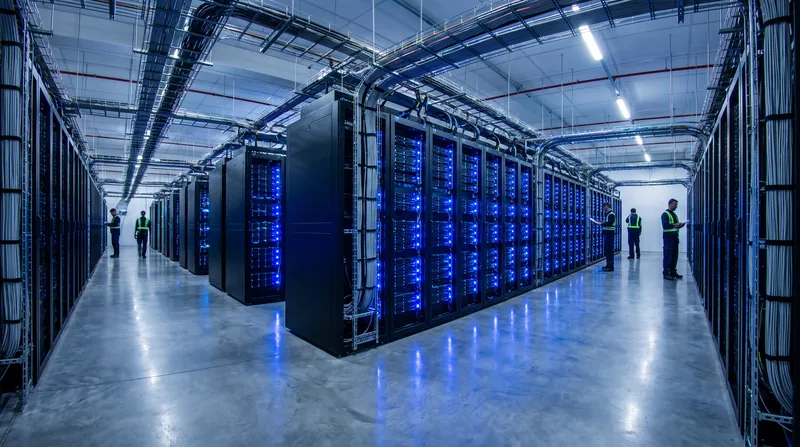
Furthermore, the broader corporate ecosystem overseen by Elon Musk, including the artificial intelligence startup xAI, requires enormous amounts of continuous electricity to power advanced data centers. Natural gas plants, which can be permitted and constructed faster than many large-scale alternative power sources, offer a rapid solution to these surging computing demands.[5]
By establishing a dedicated trading desk, SpaceX aims to optimize these massive supply chains. The job mandate includes developing directional, spread, physical, and financial trading strategies to reduce supply risk and ensure on-time delivery.[6]
This means the team will not merely sign long-term supply contracts. They will actively trade in the spot and futures markets, identifying pricing inefficiencies across different geographic hubs, pipelines, and storage facilities to drive down the company's net energy costs.[6]
Operating at this level requires navigating complex regulatory environments. The new trading desk will be subject to compliance oversight from the Commodity Futures Trading Commission (CFTC) and the Federal Energy Regulatory Commission (FERC), the bodies that govern commodity futures and interstate energy transactions.[5]
The move is a textbook execution of Musk's long-standing corporate philosophy: vertical integration. Rather than relying on external midstream energy companies or specialized brokers to manage its supply chain, SpaceX is bringing the capability entirely in-house.[1][4]
The company already designs and manufactures the vast majority of its rocket components, avionics, and satellite hardware. Applying this same internalized approach to the raw commodities that fuel those operations allows SpaceX to capture margins that would otherwise be paid to third-party energy firms.[1]
SpaceX is not the only technology giant realizing that its future is inextricably linked to energy markets. As the computing requirements for artificial intelligence scale exponentially, the technology sector is quietly transforming into the energy sector.
Other prominent technology companies, including Meta and OpenAI, have recently signaled their own intentions to foray into power trading. Their data centers are consuming electricity at rates that strain existing grid infrastructure, forcing them to take an active role in power generation and procurement.[2][4]
For the broader natural gas market, the arrival of these corporate behemoths introduces a new variable. Traditional energy markets are accustomed to demand fluctuations based on weather patterns and industrial manufacturing cycles.[2]
Technology companies, however, represent a different kind of buyer. A firm that requires continuous power for AI data centers or scheduled fuel for orbital rocket launches cannot simply halt operations when commodity prices spike. This steady, price-insensitive demand has the potential to establish new pricing floors and alter historical volatility patterns across the energy landscape.[2]
Key points
- SpaceX is establishing an in-house natural gas trading desk to manage its expanding energy requirements.
- The new team will execute physical and financial trades to secure fuel for Starship rockets and power for Texas manufacturing facilities.
- The move aligns with Elon Musk's strategy of vertical integration, bringing critical supply chain capabilities internally.
- Other major technology companies, including Meta and OpenAI, are similarly exploring power trading to support massive computing demands.
Open questions
- Whether SpaceX eventually plans to offer energy-trading services to outside customers or remain strictly focused on internal supply.
- How the Commodity Futures Trading Commission (CFTC) will adapt its oversight as more non-traditional technology companies enter financial energy markets.
- The exact volume of natural gas SpaceX expects to trade annually once its Texas power plants and Starpipe pipeline are fully operational.
Timeline
2002
SpaceX is founded with a core philosophy of vertical integration in aerospace manufacturing.
2023
Starship begins orbital flight testing, utilizing a liquid methane and liquid oxygen propellant mixture.
June 2026
SpaceX announces the 'Starpipe' pipeline project to transport natural gas directly to its Texas launch facility.
August 2026
SpaceX posts job listings for an in-house natural gas trading team to manage physical and financial energy markets.
January 2027
Target service date for the Starpipe natural gas pipeline in Texas.
- Corporate Strategists
- Believe bringing critical supply chains in-house reduces risk and captures margin for rapidly expanding companies.
- Energy Market Analysts
- View the entry of tech giants into commodity trading as a structural shift that will alter demand and pricing dynamics.
- Regulatory & Infrastructure Watchers
- Emphasize the logistical and compliance complexities of operating interstate pipelines and trading financial derivatives.
Perspectives this story doesn't cover
- Traditional Midstream Energy Companies
- Local Texas Environmental Groups
Sources
Source coverage
6 outlets
3 viewpoints surfaced






- [1]Arabian BusinessCorporate Strategists
SpaceX enters energy trading
Read on Arabian Business → - [2]Briefs.coEnergy Market Analysts
SpaceX Enters Energy Trading Market, Hiring Gas Traders to Manage Internal Power Demand
Read on Briefs.co → - [3]Investing.comEnergy Market Analysts
SpaceX hiring natural gas trader amid growing energy needs
Read on Investing.com → - [4]The Business TimesCorporate Strategists
SpaceX is hiring for natural gas trading to support energy needs
Read on The Business Times → - [5]KuCoinRegulatory & Infrastructure Watchers
SpaceX is hiring a trader to build a natural gas team
Read on KuCoin → - [6]ZipRecruiterCorporate Strategists
Trader, Natural Gas (Supply Chain)
Read on ZipRecruiter →
More in Energy
See all →Solar Finance
The 20-Year Lifetime and 80% Capacity Threshold That Define a Solar Panel's Warranty
5 sources
Water Electrolysis
The 1.23-Volt Thermodynamic Limit That Dictates the Efficiency of Water Electrolysis
7 sources

Photovoltaic Physics
The P-N Junction and the Electric Field That Converts a Photon to a Free Electron
6 sources

Hydrogen Tech
The Volumetric and Gravimetric Energy Density Trade-Offs That Dictate Hydrogen Storage Methods
10 sources
Comments
Every angle. Every day.
Get Energy stories with full source coverage and perspective breakdowns, free every day.