
Qatar and UK's WATT Partner to Build First Dedicated EV Manufacturing Plant in the GCC Region
The UK-based Watt Electric Vehicle Company and Qatar's JTA International Investment Holding have partnered to build the Gulf region's first dedicated EV manufacturing plant. The facility will utilize a low-cost, modular British chassis to produce vehicles specifically engineered for extreme Middle Eastern climates.
By Hunter Cole

Share this story
The short version is this: the United Kingdom's Watt Electric Vehicle Company (WEVC) and Doha-based JTA International Investment Holding are building Qatar's first dedicated electric vehicle manufacturing plant. The facility will produce EVs engineered specifically for the Gulf's extreme climate, utilizing a low-cost, modular British chassis design. Assembly will take place entirely in Qatar under a "Made in Qatar" banner, marking a significant shift in how the region approaches heavy industry and automotive supply chains.[1][2]
This development targets a rapidly expanding regional sector. The Gulf Cooperation Council (GCC) electric car market, currently valued at $11.64 billion, is projected to nearly triple to $31.66 billion by 2031. As regional governments push to reduce carbon emissions and support clean transportation, consumer adoption of EVs is accelerating. Qatar, which already operates a world-record electric bus depot powered by 11,000 solar panels, is positioning itself to capture a significant share of this emerging industrial sector rather than remaining a passive importer.[3][4]
Initial production at the Doha facility is slated to begin in early 2028. The factory will launch with two primary models: a passenger car and a medium-sized delivery van based heavily on WEVC's existing eCV1 prototype. Rather than attempting to match the massive scale of established automakers immediately, the plant will begin with a modest output of approximately 5,000 vehicles annually. This initial run will focus exclusively on the domestic Qatari market before operations expand to export vehicles across the GCC and selected international markets.[1][5]
At the core of the initiative is WEVC's PACES platform, an aluminum modular architecture that utilizes patented extrusions and interlocking joining pieces. This structural design dramatically simplifies the tooling process and slashes the capital expenditure typically required to establish automotive manufacturing. By eliminating the need for complex, heavy stamping equipment, the PACES system enables profitable production at much lower volumes than traditional automotive mega-factories require to break even.[1][2]
WEVC founder and CEO Neil Yates noted that this low-CapEx approach is increasingly viewed as an effective strategy for navigating geopolitical complexities. As global trade faces rising tariff barriers and protectionist policies, the ability to rapidly stand up localized manufacturing operations offers a distinct strategic advantage. The decentralized model allows companies to build vehicles within the tariff walls of their target markets, bypassing the import duties that currently inflate the cost of foreign-built EVs.[2][5]
For Qatar, the manufacturing facility represents a critical step in its National Vision 2030, a sweeping economic initiative designed to diversify the nation's revenue streams away from a historical reliance on oil and gas exports. Dr. Amir Ali Salemi Zadeh, founder and chief executive of JTA, emphasized that the project extends far beyond simple vehicle assembly. The partnership is explicitly structured to accelerate technology transfer and build localized advanced manufacturing capabilities within the emirate.[3][6]
A major component of this technology transfer involves cultivating a highly skilled industrial workforce. Qatar has traditionally relied on imported labor and expertise for its heavy industries, but the WEVC partnership aims to develop domestic engineering and manufacturing talent. By establishing a complete production ecosystem—from supply chain logistics to final assembly—the initiative seeks to lay the groundwork for a broader, self-sustaining automotive sector in the Middle East.[3][4]
Engineering the vehicles for the Gulf presents unique technical hurdles, primarily centered on thermal management. The WEVC engineering teams operating out of the UK Midlands, Cornwall, and Worcestershire are adapting the PACES platform to handle the region's extreme summer temperatures. Ambient heat in the Gulf places severe stress on lithium-ion battery cooling systems, accelerating degradation and reducing overall vehicle efficiency if not properly mitigated.[1][3]
By designing the thermal architecture specifically for these demanding environmental conditions from the ground up, the joint venture aims to offer a durability advantage over imported EVs. Many vehicles currently shipped to the Middle East are primarily optimized for temperate European, Asian, or North American climates. A platform natively engineered for high heat, aggressive air conditioning demands, and regional usage patterns could provide a compelling value proposition for local fleet operators and consumers.[3][5]
The Qatar facility also serves as a strategic proving ground for WEVC's broader global ambitions. In a highly unusual move for an automotive startup, the British company is standing up its initial volume factory abroad rather than building a centralized hub in its home country. Yates confirmed that the Gulf operation will act as the forerunner for a planned network of similar satellite micro-factories in the United States and Asia.[2][5]
This decentralized manufacturing model attempts to localize production near the end consumer, bypassing the logistical bottlenecks and shipping costs that currently plague the global automotive supply chain. If the Qatari plant successfully demonstrates that the PACES platform can be deployed quickly and profitably in a new market, WEVC plans to replicate the model globally, partnering with local investors to build bespoke regional vehicles without the multibillion-dollar overhead of traditional expansion.[1][2]
However, the micro-factory model faces steep competition from established global players who are also eyeing the lucrative GCC market. Traditional automakers leverage massive economies of scale, producing hundreds of thousands of units in centralized hubs to drive down per-vehicle costs. The Qatari plant will need to prove that its reduced initial capital expenditure and localized design advantages can effectively offset the raw cost efficiency of high-volume imports.[3][6]
This challenge is particularly acute as Chinese EV manufacturers aggressively expand their footprint in the Middle East. Brands like BYD and Geely benefit from deep, localized supply chains for batteries and critical components in their home markets, allowing them to export highly competitive vehicles at aggressive price points. The nascent Qatari supply chain will initially lack this depth, likely requiring the importation of battery cells and electric motors before local alternatives can be established.[1][4]
Ultimately, the success of the "Made in Qatar" EV initiative will test whether specialized, regionally optimized manufacturing can carve out a sustainable niche against globalized mass production. As the facility moves through its detailed planning phase toward the 2028 production target, the broader automotive industry will be watching closely. If successful, the low-CapEx skateboard model could genuinely democratize vehicle manufacturing, shifting the balance of industrial power toward emerging regional markets.[2][6]
Key points
- UK-based WEVC and Qatar's JTA have partnered to build Qatar's first dedicated EV manufacturing plant.
- The facility will utilize WEVC's PACES aluminum skateboard platform, significantly reducing initial capital expenditure.
- Production is scheduled to begin in 2028, targeting an initial output of 5,000 vehicles annually.
- The vehicles will be specifically engineered to handle the extreme summer temperatures of the Gulf region.
Unanswered questions
- The specific pricing and consumer branding for the upcoming passenger car and delivery van.
- How the nascent Qatari supply chain will source critical components like battery cells and electric motors in the near term.
- Whether the low-CapEx micro-factory model can achieve the per-unit cost efficiency needed to compete with established Chinese imports.
- Micro-Factory Advocates
- Argue that low-CapEx, decentralized manufacturing is the future of the automotive industry.
- Economic Diversification Proponents
- View the partnership primarily as a vehicle for technology transfer and regional industrial growth.
Perspectives this story doesn't cover
- Legacy automakers facing new localized competition
- Battery cell suppliers required for the Qatari supply chain
Sources
Source coverage
6 outlets
2 viewpoints surfaced






- [1]AutocarMicro-Factory Advocates
Watt Electric Vehicle Company to build Qatar's first EV plant
Read on Autocar → - [2]CarScoopsMicro-Factory Advocates
A British Startup Is Building Qatar's First EV Factory Before Its Own
Read on CarScoops → - [3]The NationalEconomic Diversification Proponents
Qatar's first electric vehicle factory is to build cars specifically designed for conditions in the Gulf
Read on The National → - [4]Time Out DohaEconomic Diversification Proponents
Qatar is set to build the first electric vehicle factory
Read on Time Out Doha → - [5]Tarantas NewsMicro-Factory Advocates
Watt Electric Vehicle Company will build Qatar's first EV plant with JTA
Read on Tarantas News → - [6]Electric & Hybrid Vehicle TechnologyEconomic Diversification Proponents
JTA and UK's WATT Electric Vehicle Company partner to build Qatar's first EV manufacturing plant
Read on Electric & Hybrid Vehicle Technology →
More in Transportation
See all →EV Charging Tech
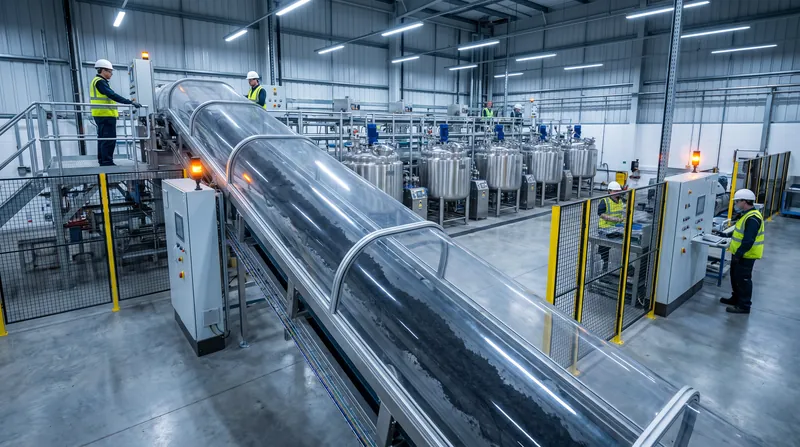
The Onboard Charger's Bypass: Why AC Charging is Limited by the Car and DC Charging is Not
5 sources
Battery Management
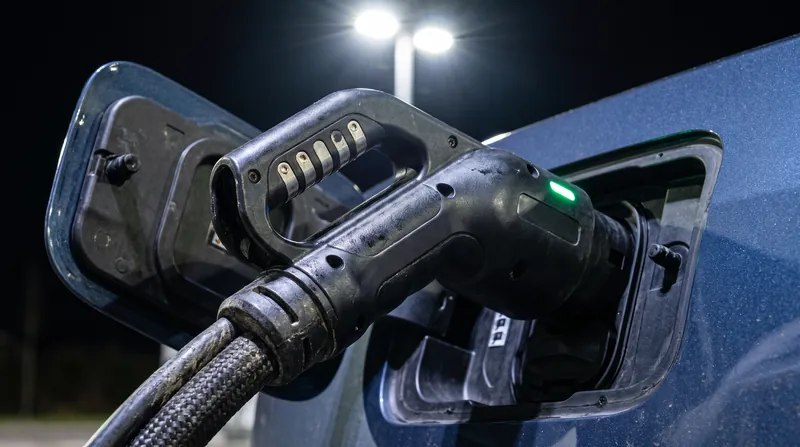
The State of Charge and Temperature Limits: How EV Battery Management Systems Cap Regenerative Braking Power
7 sources
Motor Architecture
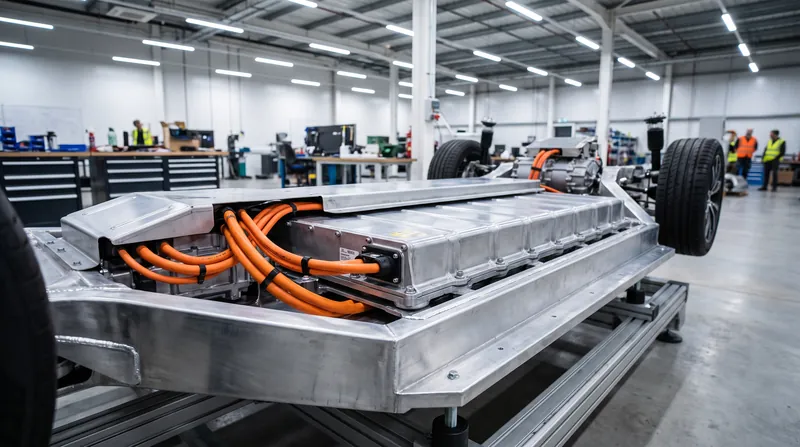
Axial Flux vs. Radial Flux Motors: The Trade-Offs Defining Next-Generation EV Performance
7 sources
Battery Chemistry
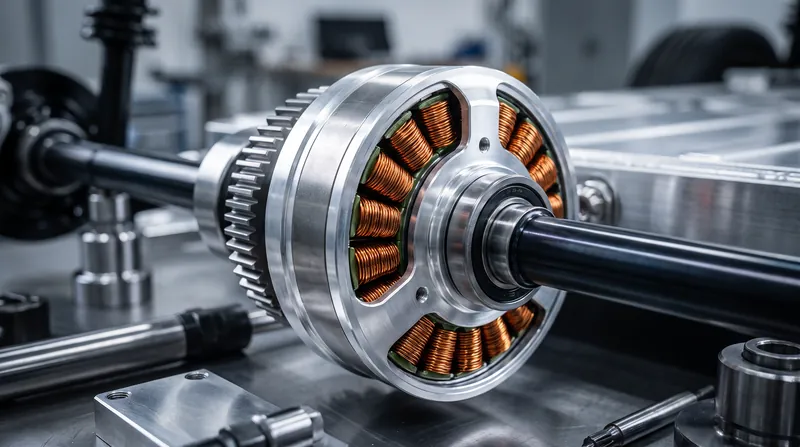
Balancing EV Fast Charging Between Continuous SEI Growth and Acute Lithium Plating
9 sources
Comments
Every angle. Every day.
Get Transportation stories with full source coverage and perspective breakdowns, free every day.