
Inside the MIT Data: The 11.7% of the US Workforce Exposed to AI Automation
A labor market simulation from MIT and Oak Ridge National Laboratory reveals that AI can already perform tasks equivalent to $1.2 trillion in wages. The data shows that routine cognitive work across finance, healthcare, and administration faces five times more exposure than the highly visible tech sector.
By Sofia Matos

Share this story
In short
- MIT's Project Iceberg simulates the entire US labor market to measure AI's technical capabilities against human skills.
- Visible AI disruption in the tech sector accounts for only 2.2% of total wage exposure.
- The hidden 'iceberg' of exposure spans 11.7% of the workforce, heavily concentrated in finance, healthcare administration, and logistics.
Inside the Frontier supercomputer at Oak Ridge National Laboratory, a digital replica of 151 million American workers is currently interacting with more than 13,000 artificial intelligence tools. This massive simulation, known as Project Iceberg, was built to solve a fundamental measurement problem. Traditional economic metrics like GDP and unemployment track disruption only after it has happened. To get ahead of the AI transition, researchers needed a way to measure technical capability before adoption crystallizes.[1][2]
Developed by researchers at the Massachusetts Institute of Technology and Oak Ridge, the initiative uses Large Population Models to map the exact overlap between human skills and machine capabilities. The system breaks down the U.S. labor market into 923 distinct occupations and over 32,000 specific skills, testing each one against what current AI models can reliably execute.[1][2]
The resulting data reveals a massive measurement gap in how the public perceives automation risk. The highly visible disruption in software engineering and coastal tech hubs—what researchers call the "Surface Index"—represents just 2.2% of total wage value, or roughly $211 billion.[1]
Beneath that surface lies a much larger hidden mass of cognitive automation. The "Iceberg Index" shows that AI systems can already perform tasks equivalent to 11.7% of the U.S. labor market.[1][3]
This translates to approximately $1.2 trillion in wages tied to work that machines can technically execute today. Rather than coding or data science, this exposure is heavily concentrated in routine administrative services, financial reporting, healthcare administration, and logistics.[1]
Because these cognitive tasks serve as the connective tissue of the broader economy, the geographic risk profile looks entirely different from past technological waves. The exposure is not confined to Silicon Valley or New York; it is distributed evenly across all 50 states, including industrial centers in Ohio, Michigan, and Tennessee.[1][3]
However, the researchers emphasize a critical distinction: technical exposure is not the same as job displacement. The index measures the overlap in capabilities, not a prediction of mass layoffs.[1]
When an AI tool proves capable of performing 30% of a financial analyst's tasks, the ultimate outcome depends on corporate strategy and workflow design. Companies may choose to reduce their headcount, or they may use the technology to augment the worker, absorbing the routine cognitive load so the employee can increase their total output.[3]
This forward-looking data is already shifting how governments prepare for the economic transition. Because the simulation can drill down to the county and ZIP code level, policymakers can identify exact exposure hotspots before local economic pain materializes.[1][2]
Several states are already using the platform as a sandbox for workforce interventions. Tennessee formally adopted the Iceberg Index in its 2026 AI Action Plan to monitor labor market exposure and test the potential impact of reskilling programs before committing public funds.[1]
By mapping the fault lines of the AI economy today, the data provides a rare strategic window. Instead of reacting to headlines about job losses, institutions finally have the granular intelligence needed to upgrade the workforce before the disruption fully scales.[2][3]
The ultimate value of the Iceberg Index lies in its transparency. By quantifying exactly which skills are vulnerable and which remain uniquely human, it transforms abstract anxiety about artificial intelligence into a concrete, navigable map for the future of work.[3]
Key terms
- Large Population Models (LPMs)
- Computational systems that simulate the behavior and interactions of millions of individual agents to predict large-scale economic or social outcomes.
- Cognitive Automation
- The use of artificial intelligence to perform knowledge-based tasks, such as data analysis, document review, and scheduling, rather than physical labor.
- Technical Exposure
- The degree to which a worker's specific occupational skills overlap with tasks that current AI systems are capable of performing.
- Agent-Based Modeling
- A simulation technique where individuals (like workers) are programmed with specific traits and rules to see how they interact within a larger system.
Where opinion splits
The Measurement Shift
Why economists are moving from historical data to predictive simulation.
Traditional labor metrics like unemployment and GDP only register technological disruption after it has already displaced workers. Labor economists argue this lag is fatal in the AI era. By utilizing Large Population Models, researchers can map the exact overlap between human skills and machine capabilities, providing a leading indicator of structural economic shifts before they manifest in layoff announcements.
The Policy Response
How state governments are utilizing exposure data.
For state policymakers, the Iceberg Index shifts AI preparation from guesswork to targeted intervention. Because the data reaches ZIP-code granularity, states can identify specific communities heavily reliant on exposed administrative or logistics roles. This allows governments to deploy reskilling grants and design workforce transition programs tailored to the exact skills their local populations need to remain competitive.
The Enterprise View
Why technical capability does not automatically equal job loss.
Enterprise leaders and analysts emphasize the distinction between task automation and role replacement. While AI may technically be able to perform 11.7% of the labor market's wage value, businesses rarely automate a job out of existence if the human worker can be redirected to higher-value output. The focus within forward-looking companies is on 'augmentation'—using AI to handle the routine cognitive load so employees can scale their productivity.
- Labor Economists
- Argue that traditional economic metrics are too slow, advocating for simulation models to measure AI exposure before disruption occurs.
- State Policymakers
- Focus on using granular, county-level data to proactively direct reskilling funds and protect local economies.
- Enterprise Leaders
- View technical exposure as an opportunity for task augmentation and productivity gains rather than a mandate for headcount reduction.
Perspectives this story doesn't cover
- Frontline Administrative Workers
- Small Business Owners
Sources
Source coverage
3 outlets
3 viewpoints surfaced



- [1]arXivLabor Economists
The Iceberg Index: Measuring Workforce Exposure Across the AI Economy
Read on arXiv → - [2]MIT Project IcebergLabor Economists
Project Iceberg: A Digital Twin for the U.S. Labor Market
- [3]Factlen Editorial TeamEnterprise Leaders
Synthesis by Factlen editorial team
Read on Factlen Editorial Team →

More in Data & Analysis
See all →Statistical Modeling
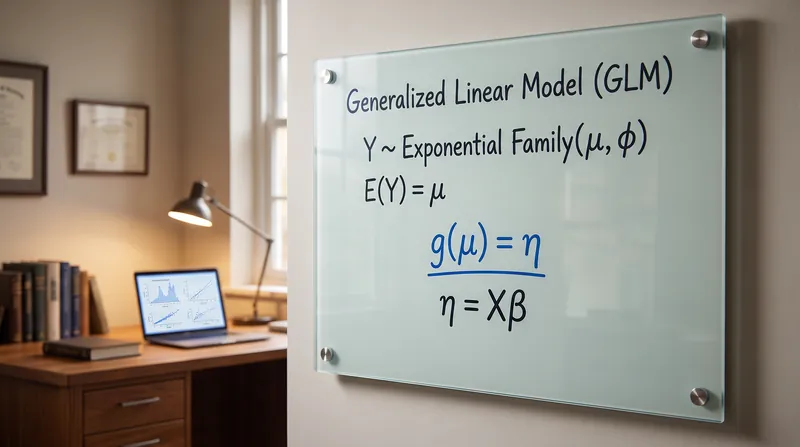
Link Functions: Translating Bounded Outcomes Into Unbounded Linear Predictors
8 sources
Model Selection
Why BIC Identifies the True Model While AIC Optimizes for Prediction
7 sources

Imbalanced Data
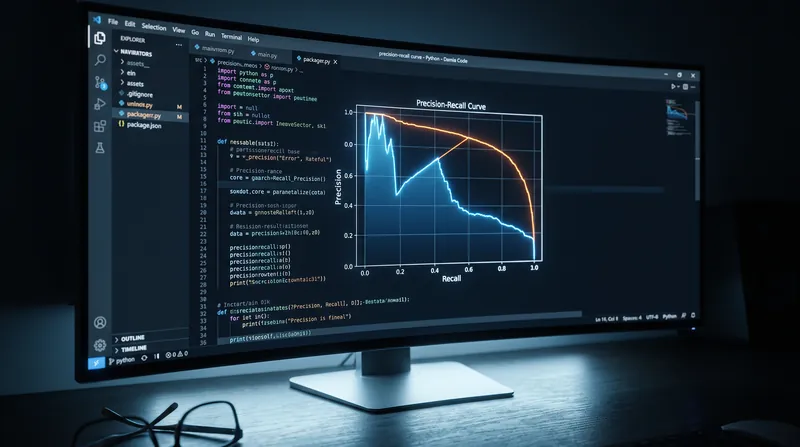
Why the Precision-Recall Curve Exposes Imbalanced Data Failures That ROC AUC Hides
6 sources
Causal Inference
The Three Criteria a Variable Must Meet to Be a Confounder in Causal Inference
7 sources

Comments
Every angle. Every day.
Get Data & Analysis stories with full source coverage and perspective breakdowns, free every day.