
Federal Court Rules Judicial Immunity Protects Judges Even If Rulings Are AI-Generated
A U.S. federal judge has dismissed a lawsuit against a Nevada state court judge accused of delegating a ruling entirely to artificial intelligence, finding that absolute judicial immunity applies regardless of the technology used.
By Sofia Matos

Share this story
On August 12, 2026, U.S. District Judge Gloria Navarro signed an order that answered one of the most novel questions in modern jurisprudence: what happens when a judge allegedly hands their gavel to a machine. The federal court in Nevada dismissed a civil rights lawsuit against state family court Judge Mari D. Parlade, ruling that absolute judicial immunity protects her even if she relied 'wholly on artificial intelligence' to write a decision.
The ruling establishes a critical precedent for the integration of generative AI in the courtroom, confirming that the centuries-old protections afforded to the judiciary will not be pierced simply because a judge utilizes automated tools to draft their orders.[1][6]
The doctrine of absolute judicial immunity is a centuries-old shield designed to let judges decide cases without fear of personal civil liability. It applies broadly across the legal system, protecting judges even if they act maliciously, make egregious errors of law, or exceed their established authority.
The only recognized exceptions to this immunity are when a judge acts in the 'clear absence of all jurisdiction' or when the action in question is not 'judicial in nature.' In the case of Phillips v. Parlade, the plaintiff attempted to thread this narrow legal needle by arguing that a 100 percent delegation to an AI system fundamentally stripped the resulting order of its judicial character, transforming it into an unprotected administrative output.[1][2][3][4]
The dispute originated in a Nevada family law proceeding involving Matthew Phillips, a California-licensed attorney who was representing himself in the state court. In August 2023, Judge Parlade denied five of Phillips's motions and subsequently awarded fees against him. Phillips later sued in federal court, alleging that Parlade had unlawfully delegated her official duties to an AI system without exercising any discretionary human thought.
He pointed to the unusual consolidation of his filings and the judge's finding that his motions lacked 'points and authorities'—despite the documents containing standard legal arguments—as evidence that a machine had processed the paperwork and failed to recognize conventional legal citations.[1][2]
Judge Navarro did not hold a trial or evidentiary hearing to determine whether Parlade actually used an artificial intelligence system, nor did she issue a ruling on whether such use is legally or ethically permissible under state guidelines. Instead, the federal court treated the plaintiff's allegation as legally irrelevant to the core immunity question.
Navarro applied a standard four-part test to determine if the challenged act was judicial in nature: whether it was a normal judicial function, whether the events occurred in the judge's chambers, whether the controversy centered on a pending case, and whether the events arose from the judge's official capacity.[1][3][4][6]
Because issuing a ruling in a pending case is undeniably a normal judicial function, the federal court found the act was fully protected by immunity. The plaintiff's secondary argument—that total reliance on AI meant the ruling was issued 'in clear absence of all jurisdiction'—was firmly rejected for a lack of supporting case law.
The court concluded that the underlying mechanism of drafting the decision—whether it was written by a human law clerk, penned by the judge's own hand, or generated by a large language model—does not alter the fundamental legal nature of the act of issuing the final order.[1][2][4][6]
This decision effectively closes the door on federal civil rights lawsuits as a viable remedy for litigants who believe they have been harmed by AI-generated judicial decisions. Enterprise AI governance experts and legal analysts note that the ruling channels accountability away from civil liability and toward more traditional avenues of legal recourse, such as appellate reversal or state judicial disciplinary proceedings.
If a judge uses a hallucinating model to deny a motion or misinterpret evidence, the harmed party must appeal the decision itself through the standard court hierarchy rather than attempting to sue the judge for damages.[3][5]
The ruling arrives at a critical moment as the broader legal profession grapples with the rapid and often unregulated adoption of generative AI. While much of the recent focus has been on attorneys submitting hallucinated case law—which has prompted severe sanctions and new local rules requiring explicit AI disclosures—the Phillips case flips the dynamic, testing the boundaries of the judiciary's own use of the technology.
As AI tools become deeply embedded in document review, legal research, and drafting, the Nevada decision establishes that the centuries-old shield of immunity will stretch to cover the algorithmic era, protecting the bench from a potential flood of technology-based litigation.[2][5]
What remains entirely untested is how state judicial conduct commissions will view the wholesale delegation of decision-making to artificial intelligence. While federal civil immunity is absolute and protects judges from financial damages, state ethics rules still strictly require judges to exercise independent human judgment in their official duties.
Key points
- A federal court dismissed a lawsuit against a Nevada judge accused of using AI to write a ruling.
- The court found that issuing an order is a protected judicial act, regardless of how it was drafted.
- The ruling did not determine whether the judge actually used AI, treating the allegation as legally irrelevant to immunity.
- Litigants harmed by AI-generated rulings cannot sue the judge but can still appeal the decision or file ethics complaints.
What we don’t know
- Whether Judge Parlade actually used an AI system to draft the disputed family court order.
- How state judicial disciplinary commissions will penalize judges who delegate decision-making to AI without human oversight.
- Whether appellate courts will establish new standards of review for rulings suspected of being AI-generated.
How we got here
August 2023
Nevada state Judge Mari Parlade denies five motions filed by litigant Matthew Phillips.
Late 2023
Phillips files a federal civil rights lawsuit alleging the ruling was generated entirely by AI.
August 12, 2026
U.S. District Judge Gloria Navarro dismisses the lawsuit with prejudice, citing absolute judicial immunity.
August 17, 2026
The ruling gains national attention as a landmark precedent for AI use in the judiciary.
- Legal Accountability Advocates
- Argues that delegating decisions to AI strips the human discretion that immunity is meant to protect.
- AI Governance Experts
- Focuses on the systemic implications of the ruling for AI risk management and policy.
- Federal Judiciary
- Prioritizes protecting judges from retaliatory lawsuits to maintain court independence.
Perspectives this story doesn't cover
- State judicial disciplinary boards, which must now decide how to regulate AI use under professional ethics rules.
- Software vendors developing legal AI tools, whose products are now shielded from indirect civil liability when used by judges.
Sources
Source coverage
6 outlets
3 viewpoints surfaced






- [1]Ediscovery LLCFederal Judiciary
Absolute Judicial Immunity Applies Even IF a Judge's Decision Was “Wholly” Made by AI
Read on Ediscovery LLC → - [2]Global Legal InsightsLegal Accountability Advocates
Judge retains immunity despite claim she delegated decision-making to AI
Read on Global Legal Insights → - [3]Tom's HardwareAI Governance Experts
Judge accused of relying entirely on AI still protected from lawsuit, US court rules
Read on Tom's Hardware → - [4]India TimesLegal Accountability Advocates
Judge accused of relying entirely on AI still protected from lawsuit, US court rules
Read on India Times → - [5]AI GovernanceAI Governance Experts
AI Governance Weekly: Phillips v. Parlade
Read on AI Governance → - [6]Startup FortuneFederal Judiciary
A federal judge ruled that judicial immunity protects a Nevada family court judge even if she let AI write her entire ruling, botched wording included.
Read on Startup Fortune →

More in Artificial Intelligence
See all →AI Regulation
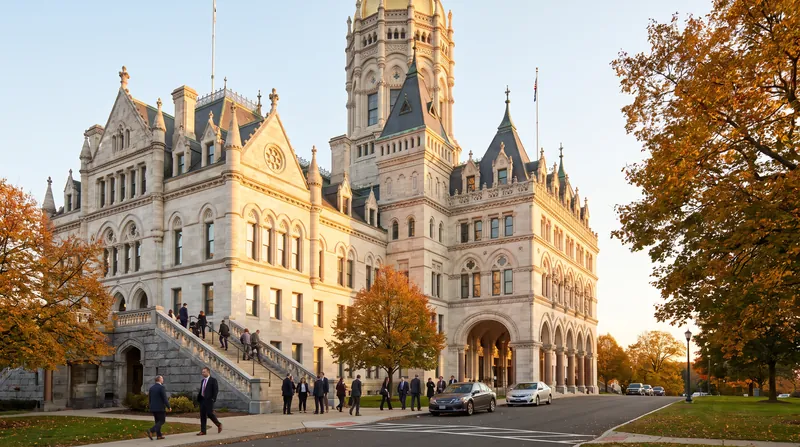
Connecticut Enacts Omnibus AI Law Mandating Frontier Lab Whistleblower Protections and 'AI Is Not a Defense' for Employment Discrimination
8 sources
AI Regulation
EU AI Act Adds New Prohibitions on AI-Generated NCII and CSAM, Imposing Fines Up to €35 Million
7 sources

AI Regulation
Senate Committee Unanimously Advances KOSA and CHATBOT Act to Mandate Controls for AI Chatbots Used by Minors
5 sources
AI Compliance
The Five Steps of an Algorithmic Impact Assessment Regulators Use to Mandate AI Risk Mitigation
3 sources

Comments
Every angle. Every day.
Get Artificial Intelligence stories with full source coverage and perspective breakdowns, free every day.