
California Approves $95.2 Million Investment to Expand ZEV Charging and Hydrogen Infrastructure
The California Energy Commission has authorized a targeted funding package that balances consumer EV charging expansion with high-capacity commercial freight depots.

- State Policymakers
- Focuses on balancing consumer adoption with industrial decarbonization and equity mandates.
- Infrastructure Analysts
- Evaluates the long-term viability, reliability, and market impact of the funded hardware.
- Industry Advocates
- Prioritizes rapid deployment of capital to close persistent gaps in the charging network.
- $95.2 million
- Total CEC infrastructure investment
- $48 million
- Light-duty EV charging allocation
- $30.2 million
- Medium- and heavy-duty ZEV allocation
- $15 million
- Hydrogen refueling allocation
- 216,445
- Publicly available charging ports in California
As California pushes toward its ambitious zero-emission mandates, a persistent structural tension governs its infrastructure spending: should public capital subsidize the passenger chargers that everyday drivers demand, or the high-capacity commercial depots that logistics operators require but hesitate to build? The state's latest funding package attempts to balance these competing priorities, acknowledging that a successful energy transition requires simultaneous investment in both consumer convenience and industrial capacity. By splitting the difference, policymakers are signaling that the era of blanket subsidies is ending, replaced by targeted interventions in specific market gaps.[1][7]
The California Energy Commission (CEC) has officially approved a $95.2 million investment plan for the 2026–2027 fiscal year to accelerate the build-out of zero-emission vehicle (ZEV) infrastructure. The allocation, administered through the state's long-running Clean Transportation Program, functions as a precision tool rather than a general fund. Since its inception in 2008, the program has directed more than $2.7 billion toward zero-emission transportation, but this latest tranche is specifically engineered to address the bottlenecks that threaten to stall the state's decarbonization timeline. The funds will be deployed across four distinct categories, each addressing a different node in the transportation network.[1][5]
The largest single tranche of the package—$48 million—is dedicated to light-duty passenger vehicle charging. This funding prioritizes the installation of direct current (DC) fast charging stations along major transit corridors, as well as at-home or near-home charging solutions specifically designed for multi-unit dwellings. While California already hosts an estimated 800,000 residential chargers and recently surpassed the milestone of 20,000 public DC fast chargers, state planners view this continued public investment as necessary. The goal is to maintain adoption velocity among renters and lower-income drivers who cannot rely on private garage charging, ensuring that the EV transition does not stall at the upper-middle class.[2][6]
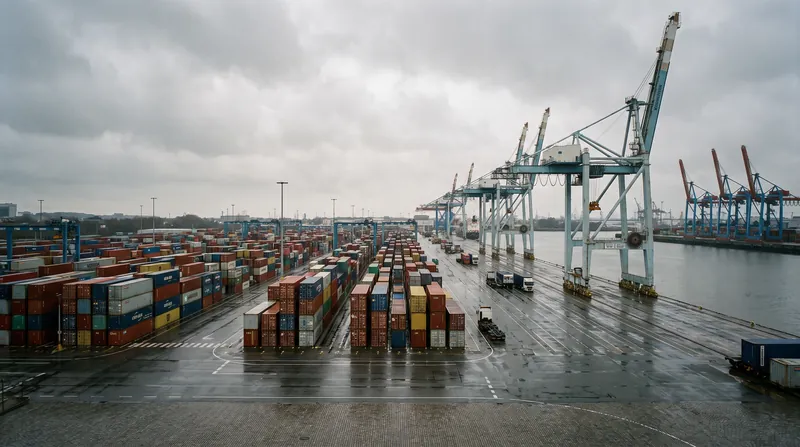
However, the remainder of the capital shifts focus entirely to the industrial supply chain. The CEC allocated $30.2 million specifically for medium- and heavy-duty ZEV infrastructure. This node of the policy chain targets freight operations, port logistics, public fleets, and school buses. These vehicles require specialized, high-megawatt charging depots that draw massive amounts of power from the grid. Because these installations are complex, expensive, and require significant utility upgrades, private capital has been slow to underwrite them without state assistance. This allocation aims to de-risk those initial investments for fleet operators.[2][5]
Alongside the battery-electric heavy-duty allocation, the plan directs $15 million toward hydrogen refueling infrastructure. This maintains California's position as one of the few jurisdictions actively subsidizing a dual-track approach for commercial transport. State regulators are betting that hydrogen fuel cell technology will remain necessary for long-haul routes and heavy payloads where the sheer weight of battery packs becomes economically prohibitive. By funding both megawatt charging and hydrogen dispensing, the CEC is hedging its bets on the future of zero-emission freight, ensuring that logistics companies have multiple viable pathways to compliance regardless of which technology ultimately dominates the heavy-duty sector.[5][7]
Alongside the battery-electric heavy-duty allocation, the plan directs $15 million toward hydrogen refueling infrastructure.
A critical mechanism within the CEC's strategy is its strict geographic and demographic targeting. The program enforces an equity mandate, requiring that at least 50 percent of the funds directly benefit low-income Californians and disadvantaged communities. Historically, the agency has exceeded this statutory floor; as of March 2026, more than 62 percent of the program's supplemental funding had been deployed in these targeted areas. This requirement ensures that public capital does not merely subsidize infrastructure in affluent coastal enclaves, but actively improves conditions in regions historically burdened by industrial pollution.[2][7]
This equity requirement directly influences where the heavy-duty and hydrogen funds will be spent. Because industrial freight corridors, distribution centers, and port facilities are disproportionately located adjacent to low-income neighborhoods, investing in zero-emission logistics infrastructure serves a dual purpose. It enables commercial fleet operators to comply with tightening state emissions regulations while simultaneously reducing localized particulate matter and diesel exhaust that drive up asthma rates in surrounding communities. In this framework, infrastructure spending becomes a direct public health intervention, leveraging transportation budgets to address legacy environmental injustices.[2][5]
Finally, the package includes a $2 million allocation for ZEV workforce training and development. While it represents a small fraction of the total $95.2 million, this funding addresses a severe downstream bottleneck: the acute shortage of certified technicians capable of maintaining high-voltage charging stations and hydrogen dispensers. Industry analysts have repeatedly warned that building new ports is futile if there is no labor force equipped to repair them when they break down, a reality that has historically plagued network reliability across the state.[2][7]
Beyond the initial deployment of hardware, the CEC is increasingly focused on the operational lifespan and reliability of these publicly funded assets. The agency plans to release its first comprehensive reliability report later this year, directly addressing widespread consumer frustration with broken, offline, or software-glitched public chargers. By tying future grant eligibility to strict uptime guarantees and funding the workforce required to meet them, the state aims to shift the industry's focus from mere installation metrics to sustained, long-term performance.[7]
Viewed systematically, California's $95.2 million intervention serves as a localized blueprint for broader national efforts, including the federal National Electric Vehicle Infrastructure (NEVI) program. By simultaneously funding consumer convenience, industrial logistics, and the specialized workforce required to maintain the hardware, the state is attempting to engineer a complete, self-sustaining ecosystem rather than a fragmented collection of subsidized chargers. The success or failure of this balanced allocation will likely inform how other states deploy their own infrastructure capital in the coming years.[1][6]
Viewpoints in depth
Light-Duty Passenger Infrastructure
Focusing public capital on consumer EV charging networks to accelerate mass-market adoption.
The case for this approach centers on volume and visibility. **For:** Expanding public DC fast charging and multi-unit residential access directly reduces consumer range anxiety, which remains the primary barrier to EV adoption. **Against:** Subsidizing passenger chargers yields diminishing returns in a mature market, potentially displacing private capital that is already building out networks. **Evidence:** California already boasts 216,445 public ports and over 800,000 residential chargers; however, the $48 million allocation is required to close persistent gaps in rural corridors and apartment complexes. **Guidance:** This strategy fits well when the objective is maximizing the total number of zero-emission vehicles on the road and ensuring equitable access for renters. It does not fit when the goal is maximizing emissions reductions per dollar spent, as passenger cars emit far less than commercial trucks.
Medium/Heavy-Duty and Hydrogen Corridors
Targeting freight, ports, and commercial logistics to eliminate high-intensity diesel emissions.
The case for heavy-duty investment relies on disproportionate environmental impact. **For:** Commercial trucks generate the majority of transport particulate matter; funding depot charging and hydrogen stations eliminates emissions at the source in heavily polluted industrial corridors. **Against:** The cost per port is exceptionally high, and hydrogen infrastructure carries significant technological and market uncertainty. **Evidence:** The $30.2 million for freight and $15 million for hydrogen targets a sector where fleet operators refuse to transition without guaranteed, high-megawatt charging infrastructure, which private networks currently lack the incentive to build. **Guidance:** This allocation fits well when the objective is improving air quality in disadvantaged communities and decarbonizing the logistics supply chain. It does not fit when aiming for rapid, widespread public visibility or when capital is strictly limited, given the massive costs of megawatt-scale installations.
Sources
Source coverage
7 outlets
3 viewpoints surfaced







- [1]California Energy CommissionState Policymakers
CEC Approves $95.2 Million Investment Plan
Read on California Energy Commission → - [2]Clean Energy SkillsIndustry Advocates
California will invest $95.2 million to expand electric-vehicle charging
Read on Clean Energy Skills → - [3]EV Infrastructure NewsIndustry Advocates
California to invest $95.2 million to support EV infrastructure rollout
Read on EV Infrastructure News → - [4]Smart Cities WorldIndustry Advocates
California Energy Commission approves $95.2m ZEV infrastructure plan
Read on Smart Cities World → - [5]Renewable Energy MagazineState Policymakers
California Governor's $95M Plan to Expand EV Charging and Hydrogen Fueling
Read on Renewable Energy Magazine → - [6]S&P GlobalInfrastructure Analysts
California Energy Commission approves $95.2 million zero-emission vehicle infrastructure plan
Read on S&P Global → - [7]EnerKnolInfrastructure Analysts
California Approves $95.2 Million Plan to Expand Zero-Emission Vehicle Charging Infrastructure
Read on EnerKnol →
Comments
Every angle. Every day.
Get transportation stories with full source coverage and perspective breakdowns delivered to your inbox.