
Guidenew car reviews and ratingsRevision 1Updated
The Definitive Guide to New Car Reviews and Ratings: Understanding the Engineering Behind the Score
A comprehensive breakdown of the structural trade-offs, software architectures, and performance metrics that define modern vehicles, equipping buyers to look past the marketing brochure.

Share this story
In short
- Unibody designs offer superior on-road handling and crash dissipation, while body-on-frame architectures excel at towing and off-road durability.
- Lowering a vehicle often ruins its suspension geometry by dropping the roll center, which increases body lean and induces bump steer.
- Torsen differentials instantly bias torque to the gripping wheel, providing a massive traction advantage over standard open differentials.
When you evaluate a new vehicle, the glossy brochure highlights horsepower, screen size, and trim levels. But the true character of a car is dictated by its underlying engineering and software architecture. Understanding these foundational choices reveals exactly what you are buying and how it will perform over the next decade.
The Architecture Divide
The most consequential decision an automaker makes is the vehicle's structural foundation. Modern passenger vehicles utilize a unibody design, where the frame and body are manufactured as a single integrated unit. In contrast, traditional trucks and rugged SUVs rely on a body-on-frame construction, bolting a separate cabin onto a heavy steel ladder frame.[1][2]
This structural divergence forces a permanent compromise for the buyer. A thick steel ladder frame is incredibly resistant to bending, making it ideal for heavy towing and off-road rock crawling. However, that capability comes with a significant weight penalty, resulting in a truck-like ride quality, slower cornering response, and diminished fuel economy.[1][3]
Unibody vehicles dominate the market because they deliver superior on-road driving dynamics. The integrated structure is lighter and more rigid, which improves acceleration, cornering grip, and fuel efficiency. Furthermore, unibody designs can more easily incorporate advanced crumple zones, allowing them to dissipate crash forces more effectively than their heavier body-on-frame counterparts.[1][2]
Despite the on-road advantages of unibody crossovers, suburban buyers increasingly cross-shop them against traditional body-on-frame SUVs. Choosing the rugged aesthetic of a ladder-frame vehicle means accepting higher daily operating costs and a higher center of gravity. That elevated mass directly impacts how the vehicle manages weight transfer during emergency maneuvers.[2][3]
Suspension Geometry and Grip
A vehicle's handling balance is governed by its suspension geometry, specifically the relationship between its center of gravity and its kinematic roll center. The roll center is the imaginary pivot point around which the chassis leans during cornering. Its exact location is determined by the angles of the control arms and struts.[4][5]
The vertical distance between the center of gravity and the roll center creates a roll moment arm. A longer moment arm gives cornering forces more leverage, resulting in pronounced body roll. Conversely, bringing the roll center closer to the center of gravity reduces body lean, improving the vehicle's responsiveness and stability.[4][5]
Enthusiasts often lower their cars to drop the center of gravity, but this modification frequently ruins the suspension geometry. Lowering a vehicle typically drops the roll center even further than the center of gravity, inadvertently lengthening the roll moment arm. This migration causes increased body roll and unpredictable handling mid-corner.[4][5]
Altering the ride height can also induce bump steer, an unwanted change in the steering angle as the suspension compresses over uneven surfaces. This occurs when the tie rod and control arm arcs are no longer parallel. The resulting geometry forces the steering arm to rotate, making the car dart unpredictably over bumps.[4]
Correcting these geometric flaws requires specialized hardware. Extended lower ball joints and adjustable control arms can raise the pivot points, restoring the roll center to its optimal height. Dialing in the correct camber, caster, and toe angles ensures the tires maintain an optimal slip angle, maximizing mechanical grip without accelerating tire wear.[4][5]
Managing Traction in Corners
Generating mechanical grip is only half the battle; the drivetrain must effectively distribute that power to the pavement. When a vehicle corners, the outside wheels travel a longer distance than the inside wheels. The rear differential allows the wheels to rotate at different speeds, preventing the tires from scrubbing or binding.[6]
Most standard vehicles utilize an open differential, which splits engine torque equally between the two wheels. While perfectly fine for daily commuting, an open differential always sends power to the path of least resistance. If one tire loses traction on ice or during hard cornering, it will spin helplessly while the gripping tire receives nothing.[6][7]
Performance vehicles solve this with a limited-slip differential (LSD). A traditional plated LSD uses internal clutch packs to resist the free movement of the wheels. When one tire begins to slip, the friction plates lock the axles together, redirecting torque to the tire with the most grip and allowing the car to power out of corners.[6][7]
A Torsen, or torque-sensing differential, achieves this without wearable clutch plates. Instead, it relies on a complex arrangement of helical worm gears that bind together under load. The Torsen instantly biases torque to the wheel with traction, providing smooth and predictable power delivery that makes it a popular upgrade for track-focused cars.[6][7]
However, a Torsen differential has a distinct limitation dictated by its mechanical bias ratio. If a Torsen has a 4:1 bias ratio, it can send four times the torque to the gripping wheel as the slipping wheel. But if one wheel is completely in the air and has zero traction, four times zero is still zero, rendering it an open differential.[7]
Other manufacturers opt for a viscous limited-slip differential, which relies on a thick, silicone-based fluid coupling to transfer power between the wheels. While smoother and quieter than a plated clutch design, viscous units can overheat during sustained track use, causing the fluid to thin out and temporarily revert the system to an open differential.[6]
Decoding EV Power Metrics
As the automotive industry transitions to electric propulsion, buyers are confronted with massive, headline-grabbing horsepower figures. However, electric motor output is fundamentally different from internal combustion performance. Automakers frequently advertise peak power, a temporary overboost state that can be up to 400 percent higher than the motor's continuous capability.[8]
Peak power is what delivers the neck-snapping acceleration and rapid overtakes that EVs are famous for. This maximum output is typically available for only a few seconds before thermal limits force the system to dial back. While exhilarating for a quick launch, peak power does not represent the vehicle's true sustained capability.[8]
For commercial vehicles, towing, or long highway climbs, rated continuous power is the metric that matters. This is the mechanical output the motor can sustain indefinitely without overheating the silicon carbide inverters or damaging the battery. A motor with a massive peak rating might still struggle on a steep mountain pass if its continuous rating is low.[8]
Thermal management is the ultimate bottleneck for sustained electric performance. When an EV is pushed hard, the components generate significant heat. Once the system reaches its thermal threshold, it protects itself by reducing current flow, resulting in a noticeable drop in power. Robust cooling systems are essential for maintaining consistent output.[8]
Advanced electric drivetrains mitigate traction issues through active torque vectoring, utilizing dual or tri-motor setups to independently control the power sent to each wheel. This software-driven approach eliminates the need for heavy mechanical differentials, allowing the vehicle to seamlessly rotate through corners while maximizing energy efficiency and tire longevity.[8]
The Real-World Road Trip
The transition to electric vehicles also alters the financial logic of the classic American road trip. While charging an EV at home is remarkably cheap, relying on public fast-charging infrastructure changes the equation entirely. Public fast chargers frequently cost between $0.30 and $0.50 per kilowatt-hour, drastically increasing the cost per mile.[9][10]
Consider a 750-mile highway journey. If an EV consumes 35.8 kWh to travel 100 miles at a fast-charging rate of $0.49 per kWh, the energy cost is approximately $17.54 per 100 miles. In contrast, a modern hybrid vehicle averaging 50 miles per gallon with gas priced at $3.50 per gallon costs just $7.00 to cover the same distance.[9]
Over that 750-mile trip, the hybrid driver saves roughly $79 in fuel costs while avoiding lengthy charging stops. This regional fracture in operating costs means that while EVs dominate in daily commuting savings, highly efficient hybrids remain the most economical and time-efficient choice for drivers who frequently embark on long-distance travel.[9][10]
Plug-in hybrid electric vehicles (PHEVs) attempt to bridge this gap by offering 30 to 40 miles of battery-only range for local errands before the gas engine engages. However, once the battery is depleted on a long highway stint, a PHEV simply operates as a heavier, less efficient hybrid, negating its financial advantage on road trips.[10]
The Subscription Era
Beyond propulsion, the very nature of vehicle ownership is changing as automakers embrace software-defined vehicles (SDVs). In an SDV, the physical hardware is decoupled from the features you experience. Centralized computing platforms allow manufacturers to alter the car's behavior, add capabilities, and patch flaws remotely via over-the-air updates.[11]
This architecture allows automakers to simplify manufacturing by installing identical hardware across all trim levels, locking premium features behind software paywalls. This shift opens the door to post-sale revenue streams, where buyers must pay monthly subscriptions to access hardware already bolted into their cars, fundamentally altering the relationship between driver and manufacturer.[11]
The transition has not been entirely smooth. In 2022, BMW attempted to charge owners $18 a month to activate the heated seats already installed in their vehicles. The consumer backlash was so severe that the automaker canceled the subscription the following year, proving that buyers are fiercely protective of features they feel they have already purchased.[11]
Despite these missteps, digital revenue is projected to account for 51 percent of total auto industry revenue by 2035. Automakers are pivoting toward monetizing advanced driver-assistance systems and autonomous capabilities, framing the vehicle as a continuously evolving platform that improves over time, much like a smartphone receiving an operating system update.[11]
Not all automakers are fully embracing the subscription model. Some manufacturers are actively resisting hardware-gated paywalls, choosing instead to differentiate their vehicles by offering fully unlocked features at the point of sale. This ideological split is creating a fractured market where buyers must carefully weigh the upfront purchase price against the long-term cost of software ownership.[11][15]
Geopolitics in the Dashboard
The rise of the software-defined vehicle has also transformed cars into rolling data centers, prompting unprecedented national security interventions. Modern connected vehicles utilize cameras, microphones, and cellular modules that constantly transmit telemetry to the cloud. This data collection has made automotive supply chains a focal point of international trade disputes.[12][13]
"Cars today have cameras, microphones, GPS tracking, and other technologies connected to the internet," said U.S. Secretary of Commerce Gina Raimondo. She warned that foreign adversaries with access to this infrastructure could pose a severe risk to both national security and the privacy of American citizens.[12]
In response, the U.S. government finalized the Connected Vehicle Rule, which explicitly bans software from Chinese or Russian sources starting with the 2027 model year. Hardware restrictions will follow for the 2030 model year. This sweeping regulation forces automakers to rapidly rip and replace foreign technology from their upcoming vehicle architectures.[12][13]
The enforcement is immediate and strict. The Commerce Department recently denied Polestar authorization to sell its 2027 vehicles in the U.S. market. Because Polestar is majority-owned by China's Geely, the brand was blocked despite assembling vehicles in South Carolina, proving that corporate ownership alone can trigger the federal ban.[13]
Engine Longevity and Oil Viscosity
While software dictates the future, traditional mechanical longevity remains paramount for internal combustion and hybrid owners. Protecting an engine requires understanding the SAE J300 standard, the global classification system that defines motor oil viscosity. The two numbers on an oil bottle represent a strict engineering trade-off between cold-start flow and high-temperature protection.[14]
The first number, followed by a "W" for winter, denotes the oil's low-temperature pumpability. A lower winter grade, such as 0W, ensures the oil remains fluid during freezing cold starts, allowing the pump to quickly circulate lubrication to critical engine components before metal-on-metal wear can occur.[14]
The second number indicates the oil's kinematic viscosity at 100°C and its high-temperature high-shear (HTHS) viscosity at 150°C. This metric simulates the extreme stress inside the engine's hottest tight clearances, such as the bearings. A higher number provides a thicker, more resilient oil film that protects against severe mechanical loads.[14]
The development of multigrade oils, made possible by viscosity index improvers, revolutionized engine maintenance. A multigrade oil like 5W-30 behaves like a thin winter oil when cold, but resists thinning out as the engine reaches its operating temperature. This dual characteristic eliminates the need for owners to switch between seasonal straight-weight oils.[14]
Modern automakers are increasingly specifying ultra-thin oils, such as SAE 16, 12, or even 8, to reduce hydrodynamic friction and improve fleet fuel economy. While these lighter oils maximize efficiency, owners operating under heavy loads or extreme heat must carefully balance the manufacturer's pursuit of fuel economy against the need for robust wear protection.[14]
How we did this
- Method
- Factlen calculated the 'True Cost of Modern Ownership' by comparing the highway energy costs of EVs and hybrids over a 750-mile road trip, and offsetting those figures against the projected 5-year costs of software-defined vehicle subscriptions.
- What we found
- Over a 750-mile road trip, a hybrid saves approximately $79 in energy costs compared to an EV relying on fast chargers. When combined with the $1,080 five-year cost of a single hardware-gated software subscription, the traditional mechanical efficiency of a hybrid vastly undercuts the modern software-defined EV model for frequent travelers.
- What we worked from
- EV fast-charging cost per 100 miles: $17.54 — Recurrent Auto
- Hybrid fueling cost per 100 miles: $7.00 — Recurrent Auto
- Baseline hardware-gated software subscription: $18/month — Happy Team
- Limits of this analysis
- This analysis assumes public fast-charging rates and full subscription opt-in, which does not reflect the massive savings of home charging for daily commuters who rarely take long road trips.
Key terms
- Kinematic Roll Center
- The imaginary pivot point in a vehicle's suspension geometry around which the chassis leans during cornering.
- Bump Steer
- An unwanted change in the steering angle caused by the suspension compressing over uneven surfaces, making the car dart unpredictably.
- Torque Biasing
- The ability of a differential to instantly redirect engine power to the wheel with the most traction.
- Thermal Derating
- A protective software mechanism that reduces an electric motor's power output to prevent the battery and inverters from overheating.
- Over-the-Air (OTA) Updates
- Remote software downloads that allow automakers to add new features, patch flaws, or alter a vehicle's performance without a dealership visit.
Frequently asked
Can I fix a lowered car's handling?
Yes, installing extended lower ball joints and adjustable control arms can raise the roll center back to its optimal height, reducing body roll and correcting bump steer.
Why do EVs lose power on long climbs?
Electric motors generate significant heat under sustained loads. Once they reach their thermal threshold, the system automatically reduces current flow to protect the inverter and battery, resulting in a temporary loss of power.
Is a plug-in hybrid better for road trips?
Not necessarily. Once a PHEV depletes its 30 to 40 miles of battery range, it operates as a heavier, less efficient standard hybrid, which can negate its financial advantage on long highway journeys.
What does the 'W' in motor oil stand for?
The 'W' stands for winter, indicating the oil's low-temperature pumpability. A lower number means the oil will flow more easily during freezing cold starts to protect the engine.
Viewpoints in depth
Software-Defined Advocates
Proponents of centralized computing argue that vehicles should improve over time.
Advocates for software-defined vehicles view the traditional automotive model as obsolete. By decoupling the physical hardware from the user experience, automakers can deliver over-the-air updates that patch security flaws, improve battery management, and add entirely new features years after the vehicle leaves the lot. This camp argues that the subscription model is a necessary evolution to fund the continuous development of these digital ecosystems, transforming the car from a depreciating asset into a living platform.
Traditional Mechanical Purists
Enthusiasts prioritize physical hardware and tactile feedback over digital intervention.
Mechanical purists argue that a vehicle's character is defined by its physical engineering—the geometry of its suspension, the bias ratio of its Torsen differential, and the structural rigidity of its chassis. This camp is highly skeptical of software-defined architectures, viewing hardware-gated subscriptions as anti-consumer and expressing concern that active torque vectoring and digital steering racks isolate the driver from the road. They prioritize long-term mechanical durability and repairability over digital novelty.
What changed
- · Revision 1Published.
Related explainers
- The Roll Center Trade-Off: How Suspension Geometry Dictates Cornering Grip and Ride Quality
- The End of the Fully Loaded Trim: Comparing Car Subscriptions vs. Upfront Ownership
- The EV Power Metric: Comparing Peak Horsepower Against Sustained Output
- The Trade-Off Between High-Frequency and Low-Frequency Damping: How Shock Absorber Valving Dictates Ride and Handling
- The Slip Angle and the Cornering Force: How the Difference Between Front and Rear Tire Angles Dictates Understeer and Oversteer
- Decoding the SAE J300 Standard: How Oil Viscosity Numbers Dictate Engine Wear and Fuel Economy
- Traction Trade-Offs Between Open, Limited-Slip, and Torsen Differentials in Corners
- US EV Market Fractures Regionally as Tax Credit Expiration Exposes Local Cost Divides
- Camber, Caster, and Toe: How Wheel Alignment Angles Dictate Tire Wear and Handling
- The U.S. Ban on Chinese Connected-Car Tech: What It Means for Your Next Vehicle Purchase
- The Hidden Engineering Divide: Why Your Next SUV's Architecture Dictates Its True Cost
- The 750-Mile Road Trip Test: Quantifying the Trade-Offs of EV, Hybrid, and Gas Travel
- Traditional Mechanical Purists
- Value physical hardware, tactile feedback, and mechanical differentials over software intervention.
- Software-Defined Advocates
- Value over-the-air updates, continuous improvement, and centralized computing architectures.
- Efficiency and Range Pragmatists
- Value sustained power, hybrid road-trip economics, and low operating costs.
- National Security Policymakers
- Value supply chain sovereignty and data privacy over globalized manufacturing.
Perspectives this story doesn't cover
- Independent repair shops facing lockouts from software-defined vehicle architectures.
- Used car buyers inheriting hardware-gated subscription models.
Sources
Source coverage
15 outlets
4 viewpoints surfaced















- [1]CJ Pony Parts
Unibody vs Body-On-Frame
Read on CJ Pony Parts → - [2]Carfax
What's the Difference Between Unibody and Body-on-Frame?
Read on Carfax → - [3]Autolist
More About Body-on-Frame Construction
Read on Autolist → - [4]HBJS Suspension
Roll Center and Bump Steer Explained: What They Are and Why They Matter
Read on HBJS Suspension → - [5]Subimods
Understanding Roll Center – A Subaru Suspension Guide
Read on Subimods → - [6]American MuscleTraditional Mechanical Purists
Differential Types Compared: Open vs. LSD vs. Locking vs. Spool
Read on American Muscle → - [7]KMP DrivetrainTraditional Mechanical Purists
Torsen vs. plated limited slip differential
Read on KMP Drivetrain → - [8]Jenwyn TechEfficiency and Range Pragmatists
Rated Power vs Peak Power in Commercial EV Motors
Read on Jenwyn Tech → - [9]Recurrent AutoEfficiency and Range Pragmatists
Cost Comparison: Hybrid vs. EV Fast Charging
Read on Recurrent Auto → - [10]ForbesEfficiency and Range Pragmatists
Full Electric Vehicles For Road Trips
Read on Forbes → - [11]Happy TeamSoftware-Defined Advocates
What 'software-defined' actually means
Read on Happy Team → - [12]IO PlusNational Security Policymakers
US to ban Chinese and Russian tech in cars over security risks
Read on IO Plus → - [13]Fastener ShowsNational Security Policymakers
Why Did the U.S. Ban Chinese Vehicle Hardware?
Read on Fastener Shows → - [14]Valorem Chemicals
SAE J300 Engine Oil Viscosity Classification
Read on Valorem Chemicals → - [15]Factlen Editorial Team
Synthesis by Factlen editorial team
Read on Factlen Editorial Team →
More in Automotive & Transportation
See all →Suspension Geometry
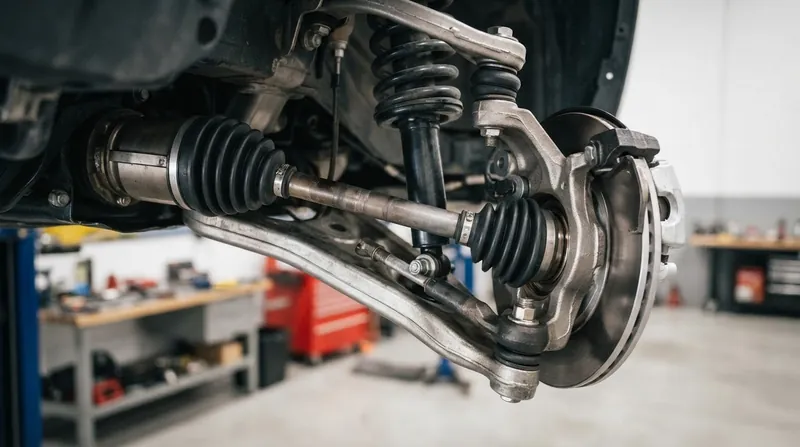
Asymmetric Half-Shaft Angles Exert Unbalanced Kingpin Moments: Why Transverse Front-Wheel-Drive Cars Pull Under Hard Acceleration
4 sources
Suspension Dynamics
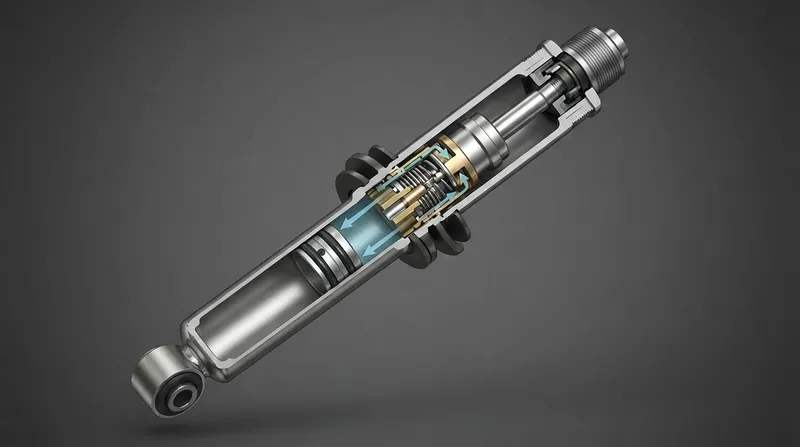
The Trade-Off Between High-Frequency and Low-Frequency Damping: How Shock Absorber Valving Dictates Ride and Handling
7 sources
Auto Sales
Hyundai Forecast to Outsell Ford in U.S. Quarterly Sales for First Time Amid Hybrid Boom
4 sources

Vehicle Dynamics
The Slip Angle and the Cornering Force: How the Difference Between Front and Rear Tire Angles Dictates Understeer and Oversteer
5 sources

Comments
Every angle. Every day.
Get Automotive & Transportation stories with full source coverage and perspective breakdowns, free every day.