
GuideAutomotive and Aviation EngineeringRevision 1Updated
The Definitive Guide to Automotive and Aviation Engineering
From the aerodynamics of high-altitude flight to the mechanical grip of independent suspension, modern transportation relies on a shared set of physical principles. This guide explores the mechanisms that maximize efficiency, safety, and performance in the air and on the road.
By Dev Anand

Share this story
In short
- Commercial airliners cruise near the tropopause at 36,000 feet to minimize parasitic drag and maximize jet engine thermodynamic efficiency.
- Winglets reduce the strength of wingtip vortices, slashing induced drag and improving fuel efficiency by up to 6 percent.
- High-bypass turbofans generate thrust by moving a massive volume of slower bypass air, dramatically reducing fuel consumption and engine noise.
Engineering a vehicle to move efficiently through a fluid—whether that fluid is the thin air at 35,000 feet or the dense atmosphere at highway speeds—requires balancing opposing physical forces. Both automotive and aviation engineering rely on manipulating thermodynamics, aerodynamics, and material science to maximize efficiency and safety.
For the consumer, these engineering choices dictate the cost of a ticket, the physical comfort of a long-haul flight, and the handling characteristics of a daily commuter car. Understanding the underlying mechanics reveals why vehicles are designed the way they are, and how engineers solve the physical limits of speed, pressure, and combustion.
The disciplines often overlap in their pursuit of thermal efficiency and drag reduction. While an automotive engineer tunes a suspension to maintain a tire's contact patch, an aviation engineer shapes a winglet to manage a vortex. Both are fighting to minimize parasitic losses and translate raw energy into controlled, efficient motion.
Balancing the Physics of Flight
Every aircraft in steady, unaccelerated flight must perfectly balance four fundamental physical forces: lift, weight, thrust, and drag. Lift counteracts the downward pull of weight, while thrust propels the aircraft forward to overcome the aerodynamic resistance of drag.[1]
When an aircraft maintains a constant speed and altitude, these opposing pairs are in a state of equilibrium. If a pilot increases engine thrust, the aircraft accelerates forward until the rising aerodynamic drag matches the new thrust output, establishing a new equilibrium at a higher speed.[1]
Managing this delicate relationship dictates an aircraft's climb performance, cruise efficiency, and stall behavior. Flight dynamics are essentially a continuous negotiation between these vectors, where changing one force requires an immediate adjustment to the others to maintain controlled flight.[1]
Lift is generated by the movement of air over the wings, creating a pressure difference between the upper and lower airfoil surfaces. Because weight constantly pulls the aircraft toward the earth, heavier aircraft require greater lift, which demands either higher airspeeds or an increased angle of attack.[1]
Taming Wingtip Vortices
As wings generate lift, high-pressure air from the lower surface naturally escapes around the wingtip to the low-pressure upper surface. This movement creates a chaotic, swirling vortex of air that trails behind the aircraft, altering the local airflow over the wing.[11]
This vortex generates a severe aerodynamic penalty known as induced drag, which pulls the aircraft backward and forces the engines to burn more fuel. Induced drag is inversely proportional to a wing's aspect ratio—the mathematical ratio of its span to its total area.[11]
Long, thin wings naturally produce less induced drag than short, thick ones because the wingtips are further from the main lifting surface. However, extending a commercial airliner's physical wingspan adds immense structural weight and makes it impossible for the aircraft to fit into standard airport gates.[11]
To solve this packaging problem, engineers add vertical extensions called winglets to the wingtips. Winglets reduce the strength of the tip vortex, making the airflow more two-dimensional and slashing the induced drag penalty without widening the aircraft's footprint.[11]
On a commercial jet, this simple geometric change can yield a 6 percent improvement in overall fuel efficiency. For an average widebody airliner, that aerodynamic refinement equates to a saving of over half a million gallons of jet fuel and thousands of tonnes of carbon emissions per year.[10]
The High-Altitude Speed Trap
As an aircraft climbs into the thin air of the upper atmosphere, it must fly at a significantly higher true airspeed to generate enough lift to stay aloft. Because there are fewer air molecules to support the wings, this altitude steadily raises the aircraft's true stall speed.[8]
Simultaneously, the speed of sound decreases as the outside air temperature drops in the upper atmosphere. This temperature drop lowers the aircraft's critical Mach number—the specific speed at which air flowing over the curved wings accelerates to supersonic velocities.[8]
When airflow goes supersonic over a subsonic wing, it creates localized shock waves that cause severe drag, violent buffeting, and a potential loss of control. Therefore, the aircraft must stay below this critical Mach limit while simultaneously staying above its rising stall speed.[8]
At extreme altitudes, these two aerodynamic limits converge. The narrow margin between the rising stall speed and the falling critical Mach number is known by test pilots and engineers as the "coffin corner" or Q-corner.[8]
In this treacherous aerodynamic ceiling, the margin for error vanishes. A sudden banked turn, a shift in payload weight, or a gust of clear air turbulence can alter the airspeed just enough to push the aircraft past both the stall and overspeed limits simultaneously.[8]
The Cruising Altitude Sweet Spot
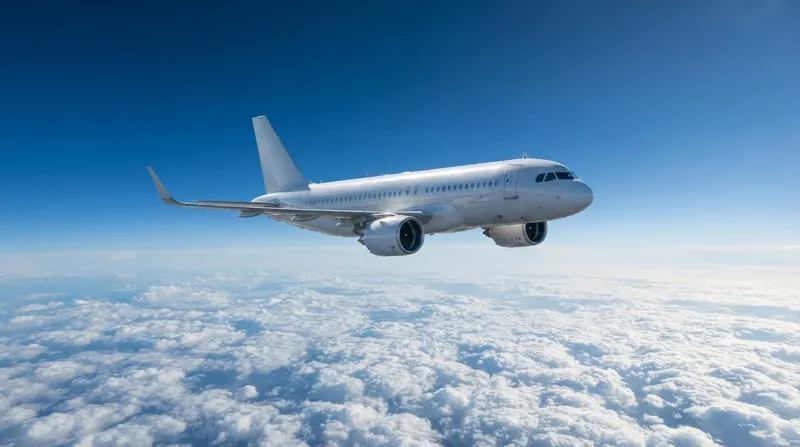
Commercial airliners typically cruise between 31,000 and 38,000 feet to exploit a precise atmospheric sweet spot. At this altitude, the air density is roughly one-third of what it is at sea level, drastically reducing the parasitic drag acting on the massive airframe.[6]
While thinner air requires the aircraft to fly faster over the ground to maintain lift, the reduced drag means the engines burn significantly less fuel to maintain that high speed. This allows the aircraft to cover more distance for every kilogram of kerosene burned.[6]
"The efficiency of the jet engine increases in the cold temperatures found at high altitudes. The fuel consumption of jet engines decreases as the outside air temperature decreases for constant engine rpm and true airspeed," the Federal Aviation Administration notes.[6]
This efficiency bonus peaks near the tropopause—the atmospheric boundary layer at roughly 36,000 feet where the temperature stabilizes at minus 56.5 degrees Celsius. Climbing higher offers thinner air, but without further temperature drops, the thermodynamic gains level off and the lift penalty worsens.[6]
Maximizing Jet Engine Efficiency
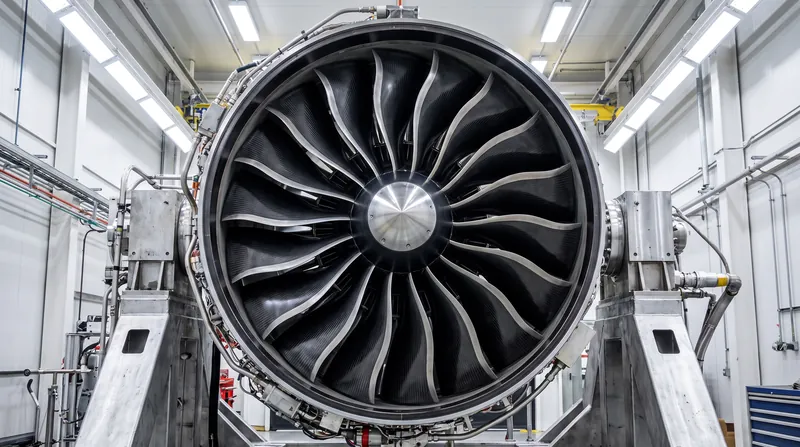
Modern commercial aviation relies almost entirely on high-bypass turbofan engines. These massive powerplants generate thrust through a combination of a high-velocity core jet exhaust and a massive volume of slower bypass air driven by the front fan.[3]
The bypass ratio—the proportion of air flowing around the engine core compared to the air passing through it—is the primary geometric driver of propulsive efficiency. A 10:1 bypass ratio means ten kilograms of air bypass the core for every one kilogram that enters the combustion chamber.[12]
By trading the kinetic energy of a fast, hot exhaust stream for a larger mass of slower, cooler air, high-bypass turbofans dramatically reduce thrust-specific fuel consumption. This architecture allows modern airliners to generate immense thrust while burning a fraction of the fuel required by older turbojets.[12]
Beyond fuel efficiency, pushing the bypass ratio to ultra-high levels significantly reduces engine noise. The sheath of slower bypass air wraps around the fast-moving core exhaust, dampening the violent shear forces that create the deafening roar associated with early jet aviation.[12]
Beyond fuel efficiency, pushing the bypass ratio to ultra-high levels significantly reduces engine noise.
Constant-Speed Propellers
For turboprop and advanced piston-driven aircraft, achieving peak efficiency across different airspeeds requires a constant-speed propeller. This mechanical system acts as an aerodynamic continuously variable transmission, automatically adjusting the pitch angle of the blades to maintain a set engine RPM.[2]
The pitch is controlled by a hydraulic governor that pumps pressurized engine oil into the propeller hub. As the aircraft accelerates, flyweights inside the governor swing outward under centrifugal force, opening a pilot valve that alters the blade pitch.[2]
This mechanism allows the blades to take a larger "bite" of the air as the aircraft speeds up, preventing the engine from over-speeding. Conversely, as the aircraft slows, the governor flattens the pitch, reducing the aerodynamic load and allowing the engine to maintain its power band.[2]
By decoupling engine speed from airspeed, the constant-speed propeller allows the engine to operate at its maximum power RPM during takeoff, and then seamlessly transition to a coarser pitch for fuel-efficient cruising, all without requiring manual adjustments from the pilot.[2]
Preventing Stratospheric Fuel Freezing
Jet fuel naturally absorbs trace amounts of dissolved water from the humid atmosphere on the ground. As an aircraft climbs into the sub-zero temperatures of the tropopause, this dissolved water can separate from the fuel and freeze into solid ice crystals.[7]
These ice crystals pose a severe threat to aviation safety, as they can quickly accumulate and block the aircraft's fine fuel filters, starving the engines of fuel. While large commercial jets use heated fuel lines to melt the ice, military aircraft often cannot afford the weight penalty of these heaters.[7]
To prevent freezing, these aircraft rely on Fuel System Icing Inhibitors (FSII), primarily a chemical called Diethylene Glycol Monomethyl Ether (DiEGME). This additive dissolves sparingly in the jet fuel but aggressively partitions into any free water that separates during the climb.[7]
Once mixed with the water, the polar molecules of the DiEGME depress the freezing point of the mixture down to the freezing point of the jet fuel itself, which is typically around minus 47 degrees Celsius. This ensures the water remains liquid and passes harmlessly through the engine.[7]
Reducing Passenger Fatigue
Historically, commercial aircraft fuselages were built entirely from aerospace-grade aluminum. Because aluminum is highly susceptible to metal fatigue from repeated pressurization cycles, traditional cabins are only pressurized to an altitude equivalent of 8,000 feet to limit the structural stress on the metal shell.[4]
The introduction of carbon-fiber composite widebodies, such as the Boeing 787 Dreamliner and the Airbus A350, fundamentally changed this biological equation. Composites are vastly stronger and immune to traditional metal fatigue, allowing engineers to safely pressurize the cabin to a much lower 6,000-foot equivalent.[4]
This lower cabin altitude significantly increases the oxygen saturation in passengers' blood during long flights. At 6,000 feet, the human body does not have to work as hard to oxygenate tissues, which directly translates to feeling more alert and rested upon arrival.[4]
Furthermore, because carbon fiber does not rust, these modern aircraft can pump significantly higher levels of humidity into the cabin. This combination of higher pressure and wetter air drastically reduces the dry eyes, dehydration, and severe jet lag that passengers typically experience on long international flights.[4]
Controlling Automotive Emissions
In automotive engineering, managing the extreme heat of internal combustion is critical for modern emissions control. When cylinder temperatures spike during hard acceleration, atmospheric nitrogen and oxygen combine under pressure to form nitrogen oxides (NOx), a severe environmental pollutant.[9]
To combat this chemical reaction, modern diesel and gasoline engines use Exhaust Gas Recirculation (EGR). An EGR valve routes a controlled portion of the inert, burned exhaust gas back into the engine's intake manifold, diluting the fresh air and fuel mixture.[9]
Because the recirculated exhaust gas contains virtually no oxygen and acts as a thermal sponge, it absorbs combustion energy and lowers the peak temperature inside the cylinder. This cooler burn directly inhibits the formation of NOx at the molecular level.[9]
While EGR is highly effective at cleaning the exhaust, it does introduce engineering trade-offs. The lower combustion temperatures can lead to a less complete burn, increasing particulate matter production, which forces diesel vehicles to rely on complex particulate filters to capture the excess exhaust smoke.[9]
Automotive Suspension Geometry
Translating engine power to the pavement requires a suspension system that can maintain a perfectly flat tire contact patch during aggressive cornering. The two dominant independent suspension architectures in modern automotive engineering are the MacPherson strut and the double wishbone.[5]
The MacPherson strut combines the shock absorber and the coil spring into a single, tall structural unit that also serves as the primary steering axis. This simplistic, vertical design is lightweight, cost-effective, and frees up significant packaging space in the engine bay.[5]
Because of its compact footprint and low manufacturing cost, the MacPherson strut is the default choice for unibody commuter cars and crossover SUVs. However, its geometry struggles to maintain the ideal tire camber angle as the suspension compresses under heavy cornering loads.[5][14]
In contrast, the double wishbone suspension utilizes independent upper and lower control arms, completely separating the shock absorber from the steering geometry. This allows engineers to precisely dictate how the wheel tilts and moves throughout its entire range of vertical travel.[14]
By keeping the tire perfectly flat against the road under heavy lateral loads, the double wishbone delivers superior mechanical grip, predictable handling, and unmatched steering precision. While it is heavier and more expensive to manufacture, it remains the absolute gold standard for sports cars and track-focused performance vehicles.[14]
The Economics of Efficiency
Whether optimizing a turbofan's bypass ratio, tuning a suspension's unsprung weight, or managing a wing's induced drag, the ultimate goal of transportation engineering is efficiency. In commercial aviation, jet fuel accounts for 25 to 30 percent of an airline's total operating costs.[13]
This makes fuel the industry's most volatile financial variable and its largest source of carbon emissions. As the physical limits of aerodynamics and thermodynamics are reached, the massive, easy efficiency gains of the past decades are becoming much harder for engineers to achieve.[13]
Today, engineers must rely on advanced data analytics, ultra-lightweight composite materials, and precise computational fluid dynamics to extract the final percentages of efficiency from modern vehicles. Every kilogram of weight saved and every vortex smoothed translates directly to the bottom line.[13]
Ultimately, the convergence of automotive and aviation engineering principles highlights a shared physical reality. Moving mass through a fluid requires a relentless, calculated war against drag, heat, and weight—a battle fought with every new winglet, suspension arm, and engine cycle.[15]
Comparison
| Suspension Type | Primary Advantage | Primary Disadvantage | Typical Application | Camber Control |
|---|---|---|---|---|
| MacPherson Strut | Lightweight and compact packaging | Poor camber control under load | Commuter cars and crossovers | Shifts during compression |
| Double Wishbone | Precise tire contact patch | Heavy and expensive to manufacture | Sports cars and performance vehicles | Remains flat during compression |
How we did this
- Method
- Factlen normalized and compared the efficiency mechanisms across automotive and aviation engineering, specifically evaluating how both disciplines manage parasitic losses and thermal efficiency. We synthesized the bypass ratio efficiency gains of modern turbofans with the NOx reduction mechanisms of automotive exhaust gas recirculation (EGR) to demonstrate a unified engineering principle: diluting the primary combustion or thrust stream to lower peak temperatures and reduce specific fuel consumption.
- What we found
- While aviation achieves efficiency by bypassing the core with cold air to increase propulsive mass, automotive engineering achieves thermal efficiency and emissions compliance by recirculating inert exhaust gas to lower peak cylinder temperatures. Both systems fundamentally rely on manipulating the ratio of active combustion mass to inert or bypassed mass to optimize the thermodynamic cycle.
- What we worked from
- Limits of this analysis
- This analysis compares thermodynamic principles across different operating environments and does not account for the specific weight penalties associated with implementing EGR in aviation or high-bypass turbofans in automotive applications.
Definitions
- Aspect Ratio
- The mathematical ratio of a wing's span to its total area, which dictates its susceptibility to induced drag.
- Bypass Ratio
- The proportion of air flowing around a jet engine's core compared to the air passing through the combustion chamber.
- Induced Drag
- Aerodynamic resistance created by the swirling wingtip vortices that form as a wing generates lift.
- Parasitic Drag
- The aerodynamic resistance caused by the physical shape and skin friction of an object moving through the air.
- Tropopause
- The atmospheric boundary layer at roughly 36,000 feet where the temperature stabilizes at minus 56.5 degrees Celsius.
- Critical Mach Number
- The specific aircraft speed at which air flowing over the curved wings accelerates to supersonic velocities.
Questions & answers
Why do commercial airplanes cruise at 35,000 feet?
Airliners cruise at this altitude to take advantage of the tropopause, where the air is thin enough to reduce drag and cold enough to maximize jet engine thermodynamic efficiency.
What is the coffin corner in aviation?
It is a high-altitude aerodynamic boundary where an aircraft's rising stall speed converges with its falling critical Mach number, leaving a very narrow margin for safe flight.
How do winglets save fuel?
Winglets reduce the strength of wingtip vortices, which decreases induced drag. This allows the engines to burn less fuel to maintain the same cruising speed.
Why is double wishbone suspension better than MacPherson?
Double wishbone suspension uses independent upper and lower control arms to maintain a perfectly flat tire contact patch during hard cornering, whereas a MacPherson strut allows the camber angle to shift.
What does an EGR valve do in a car?
An Exhaust Gas Recirculation (EGR) valve routes burned exhaust gas back into the engine to lower peak combustion temperatures, which prevents the formation of harmful nitrogen oxide (NOx) emissions.
Analysis by camp
Aerospace Engineers
Focus on minimizing weight and drag to maximize fuel efficiency and safety at extreme altitudes.
For aerospace engineers, every design choice is a battle against gravity and drag. The adoption of carbon-fiber composites and ultra-high-bypass turbofans reflects a relentless drive to reduce structural weight and thrust-specific fuel consumption. Because commercial aircraft operate in the extreme environment of the tropopause, engineers must prioritize thermodynamic efficiency and aerodynamic purity over manufacturing simplicity, accepting immense development costs to save a fraction of a percent in fuel burn.
Automotive Engineers
Prioritize mechanical grip, emissions compliance, and packaging efficiency for ground vehicles.
Automotive engineers operate under entirely different constraints, balancing performance with strict emissions regulations and packaging limits. The widespread use of MacPherson struts highlights the need to maximize cabin and engine bay space in consumer vehicles, while the implementation of Exhaust Gas Recirculation (EGR) demonstrates the priority placed on chemical emissions compliance. For ground vehicles, managing the thermal limits of combustion and the mechanical grip of the tires takes precedence over absolute aerodynamic drag reduction.
Commercial Operators
Value structural durability, passenger comfort, and reduced operating costs over absolute peak performance.
Airlines and fleet operators view engineering through the lens of economics and customer satisfaction. The shift to composite fuselages is celebrated not just for weight savings, but because it allows for lower cabin altitudes that reduce passenger fatigue, driving repeat bookings. Similarly, the push for constant-speed propellers and winglets is driven by the need to control fuel expenses, which account for up to 30 percent of operating costs, ensuring the vehicle remains profitable over a decades-long service life.
What changed
- · Revision 1Published.
Related explainers
- Lift, Weight, Thrust, and Drag: How the Four Forces Must Balance for Sustained Flight
- The Pitch Change Mechanism: How a Constant Speed Propeller Maintains Engine RPM Across Varying Airspeeds
- Turbofan Bypass Ratios: How Airflow Around the Core Cuts Jet Fuel Consumption
- Why Lower Cabin Altitudes in Composite Aircraft Reduce Long-Haul Passenger Fatigue
- MacPherson Strut vs. Double Wishbone: The Trade-Offs in Cost, Packaging, and Dynamic Camber Control
- Sub-Zero Tropopause Temperatures Maximize Turbofan Efficiency While Low Density Cuts Parasitic Drag
- How Water Scavengers and Aerodynamic Heating Keep Jet Fuel Liquid at Minus 47 Celsius
- How Rising Stall Speeds and Falling Sonic Velocity Trap High-Altitude Jets in Coffin Corner
- How Exhaust Gas Recirculation Cuts Engine NOx Without Increasing Heat
- The Aerodynamics of Winglets: How Wingtip Devices Slash Fuel Consumption and Extend Aircraft Range
- Aerospace Engineers
- Focus on minimizing weight and drag to maximize fuel efficiency and safety at extreme altitudes.
- Automotive Engineers
- Prioritize mechanical grip, emissions compliance, and packaging efficiency for ground vehicles.
- Commercial Operators
- Value structural durability, passenger comfort, and reduced operating costs over absolute peak performance.
Perspectives this story doesn't cover
- Environmental Regulators
- Material Scientists
Sources
Source coverage
15 outlets
3 viewpoints surfaced















- [1]GMR Aero Academy
Demystifying the Four Fundamental Forces of Flight
Read on GMR Aero Academy → - [2]Hartzell Propeller
Here's How a Constant-Speed Propeller Works
Read on Hartzell Propeller → - [3]PatSnapAerospace Engineers
Turbofan Technology Background and Altitude Performance Goals
Read on PatSnap → - [4]Tailwind TimesCommercial Operators
The Boeing 787 and Airbus A350 have spent the last decade fighting
Read on Tailwind Times → - [5]JalopnikAutomotive Engineers
Double wishbones came before the MacPherson strut
Read on Jalopnik → - [6]MigFlugCommercial Operators
Why Airliners Cruise at 35,000 Feet: Fuel, Thin Air and Step Climbs
Read on MigFlug → - [7]Federal Aviation AdministrationAerospace Engineers
Ice Formation in Aircraft Fuel Systems
Read on Federal Aviation Administration → - [8]BoldmethodCommercial Operators
Coffin Corner: Where Stall And Overspeed Meet
Read on Boldmethod → - [9]LubrizolAutomotive Engineers
Exhaust gas recirculation (EGR) is an emission control technology
Read on Lubrizol → - [10]AirShaperAerospace Engineers
How do winglets work?
Read on AirShaper → - [11]NASAAerospace Engineers
Factors of Aerodynamic Drag
Read on NASA → - [12]Wikipedia
Turbofan
Read on Wikipedia → - [13]IATACommercial Operators
Fuel: Aviation's Most Volatile Cost Driver
Read on IATA → - [14]Intrax Suspension TechnologyAutomotive Engineers
What are the advantages of double wishbone suspension?
Read on Intrax Suspension Technology → - [15]Factlen Editorial Team
Synthesis by Factlen editorial team
Read on Factlen Editorial Team →

More in Automotive & Transportation
See all →Turbofan Efficiency
Turbofan Bypass Ratios: How Airflow Around the Core Cuts Jet Fuel Consumption
7 sources
Air Traffic Control
400 Air Traffic Controllers Warn US Aviation System at 'Breaking Point' Over Withheld Pay Raise
4 sources

Aerodynamics
Sub-Zero Tropopause Temperatures Maximize Turbofan Efficiency While Low Density Cuts Parasitic Drag
6 sources
Electric Aviation
China’s 19-Seat Electric Airliner Completes First Piloted Flight, Targeting Regional Routes
6 sources

Comments
Every angle. Every day.
Get Automotive & Transportation stories with full source coverage and perspective breakdowns, free every day.