
Sub-Zero Tropopause Temperatures Maximize Turbofan Efficiency While Low Density Cuts Parasitic Drag
Commercial airliners cruise at 35,000 feet to exploit a precise atmospheric sweet spot where thin air reduces aerodynamic resistance and extreme cold maximizes engine thermodynamics. Climbing higher into the stratosphere destroys this delicate balance as temperatures begin to rise again.

Share this story
In short
- Cruising at 35,000 feet reduces parasitic drag because the air density is only a quarter of what it is at sea level, saving massive amounts of fuel.
- The extreme cold of the tropopause maximizes the thermal efficiency of the engines' Brayton cycle by widening the temperature gap during combustion.
- Aircraft cannot climb indefinitely because the warming stratosphere destroys the thermodynamic advantage, while the thinning air requires unsustainable speeds to maintain lift.
Look at the flight map on any long-haul commercial journey, and the cruising altitude almost always settles near 35,000 feet. The reason is not an arbitrary air-traffic rule, but a precise intersection of aerodynamics and thermodynamics. At this specific height, the atmosphere offers the perfect balance of thin air and extreme cold.[5]
The thin air at that altitude slashes the parasitic drag acting on the airframe, requiring less thrust to maintain speed. Simultaneously, the sub-zero temperatures maximize the thermal efficiency of the aircraft's turbofan engines. Together, these two physical phenomena dictate the optimum cruise altitude for modern jet airliners.[3][6]
Escaping the dense lower atmosphere
An aircraft moving through the sky must constantly push air molecules out of its way. This resistance is known as parasitic drag, and it scales directly with the density of the surrounding fluid. At sea level, the atmosphere is thick and heavy, forcing engines to burn massive amounts of fuel simply to maintain forward momentum.[3]
As an airliner climbs, the atmospheric pressure and air density drop steadily. By the time a Boeing 787 Dreamliner reaches 35,000 feet, the air density is roughly 25 percent of what it was on the runway. With three-quarters of the air molecules gone, the parasitic drag acting on the fuselage and wings plummets.[5]
"As air density decreases, so does some of the drag acting on the aircraft," notes a 2026 analysis by Military + Aerospace Electronics. "That makes high-altitude cruise particularly attractive for jet-powered airplanes, which can travel efficiently through the thinner air."[5]
This reduction in drag translates directly into fuel savings. Because the airframe faces less resistance, the turbofan engines do not have to work as hard to maintain a typical cruising speed of Mach 0.85. Over a 14-hour transoceanic flight, that reduced workload saves tens of thousands of pounds of aviation fuel.[6]
However, escaping drag is only half of the equation. If thin air were the only factor, airliners would simply continue climbing to 50,000 feet or beyond. The wings still need a minimum number of air molecules to generate lift, and the engines require oxygen for combustion, creating a hard aerodynamic ceiling.[5]
The Brayton cycle and extreme cold
The second, often-overlooked reason for cruising at 35,000 feet lies inside the engines themselves. Commercial turbofans operate on a thermodynamic model known as the Brayton cycle. In this continuous process, incoming air is compressed, mixed with jet fuel, ignited, and expanded through a turbine to produce thrust.[2]
The efficiency of the Brayton cycle depends heavily on the temperature difference between the ambient air entering the engine and the peak temperature inside the combustion chamber. A wider temperature gap allows the expanding gases to perform more useful work. Therefore, colder intake air directly increases the engine's core thermal efficiency.[2]
At sea level, the standard atmospheric temperature is a relatively warm 288 Kelvin, or 15 degrees Celsius. But as the aircraft climbs, the air grows progressively colder. At 35,000 feet, the outside air temperature plunges to approximately 220 Kelvin, which is minus 53 degrees Celsius.[6]
This 68-Kelvin drop in ambient temperature is a massive thermodynamic advantage. Because the intake air is so cold, it expands much more violently when heated in the combustion chamber. The engine extracts more kinetic energy from the exact same amount of fuel, boosting its overall propulsive power.[2][6]
If the aircraft were to fly the same speed at sea level, the warmer intake air would compress the Brayton cycle's working range. The turbofans would burn significantly more fuel to generate the same thrust, destroying the economic viability of the flight.[6]
Measuring thrust-specific fuel consumption
Aerospace engineers quantify this efficiency using a metric called thrust-specific fuel consumption, or TSFC. This figure measures the mass of fuel an engine must burn each hour to produce one pound, or one Newton, of thrust. A lower TSFC value indicates a more efficient engine.[4]
"TSFC measures how much fuel mass flow is required to produce a unit of thrust at a stated operating condition," explains the Atlas of Engineering glossary. "It depends on altitude, Mach number, throttle setting, engine cycle, installation losses, fuel definition, bleed extraction, deterioration and whether thrust is installed or uninstalled."
At 35,000 feet, the combination of low parasitic drag and high thermal efficiency drives the TSFC to its absolute minimum. The engines are operating in their ideal thermodynamic regime, while the airframe is slipping through the thin atmosphere with minimal resistance.[4][6]
Modern high-bypass turbofans, like the General Electric GEnx or Rolls-Royce Trent 1000 used on the Boeing 787, are specifically tuned for this environment. Their massive front fans are designed to grip the thin, cold air at high altitudes, maximizing propulsive efficiency while sipping fuel at a remarkably low rate.[6]
The tropopause boundary
If cold air and low density are so beneficial, the logical assumption is that flying even higher would be better. But the atmosphere has a structural boundary that stops commercial jets from climbing indefinitely. This boundary is called the tropopause, and it marks the ceiling of the lowest atmospheric layer.[6]
Throughout the troposphere—the layer where humans live and weather occurs—temperature drops steadily as altitude increases. But at the tropopause, which typically sits between 30,000 and 40,000 feet depending on latitude and season, this cooling trend abruptly stops.[6]
Above the tropopause lies the stratosphere. In this higher layer, the temperature actually begins to rise again because ozone molecules absorb ultraviolet radiation from the sun. As the air warms up, the thermodynamic advantage of the Brayton cycle begins to vanish, eroding the engine's thermal efficiency.[6]
At the same time, the air density continues to drop. To generate enough lift in the increasingly thin stratospheric air, the aircraft would have to fly much faster, pushing it dangerously close to the speed of sound. Approaching Mach 1 triggers a massive spike in aerodynamic resistance known as wave drag.[3][6]
Alternatively, the aircraft would need significantly larger wings to grip the vanishing air molecules. Larger wings mean more weight and more structural complexity, which would cancel out any remaining fuel savings. The current design of commercial airliners is already perfectly optimized for the conditions they face.[6]
Step climbs and aircraft weight
While the tropopause dictates the general cruising band, an airliner's exact altitude fluctuates during a long flight. A fully loaded Boeing 787 departing Tokyo for London is too heavy to climb straight to 35,000 feet. The dense fuel load requires more lift, forcing the aircraft to begin its cruise at a lower, thicker altitude.[5]
As the turbofans consume fuel, the aircraft becomes progressively lighter. A lighter airframe requires less lift, allowing the pilots to request a higher altitude from air traffic control. This practice, known as a step climb, ensures the aircraft is always flying at the highest, most efficient level its current weight allows.[5]
By the end of a 14-hour journey, the airliner might be cruising comfortably at 41,000 feet. The flight management computers are constantly hunting for the perfect balance of cold temperatures, low parasitic drag, and optimal engine performance as the aircraft's mass changes.[5]
The 35,000-foot mark is not an arbitrary cruising altitude, but the physical sweet spot of the Earth's atmosphere. It is the exact point where the air is thin enough to defeat parasitic drag, and cold enough to push turbofan efficiency to its thermodynamic peak, before the stratosphere changes the rules entirely.[5][6]
How we did this
- Method
- Recomputed the theoretical Brayton cycle thermal efficiency and parasitic drag reduction for a commercial airliner climbing from sea level to the tropopause, normalising the ambient temperature drop against standard atmospheric models.
- What we found
- While the 75-percent drop in air density is commonly credited for cruise efficiency by reducing parasitic drag, the simultaneous 68-Kelvin drop in ambient temperature independently boosts the theoretical core thermal efficiency of the engine's Brayton cycle by expanding the working temperature ratio, a thermodynamic advantage that vanishes if the aircraft climbs higher into the warming stratosphere.
- What we worked from
- Sea level standard temperature: 288 Kelvin — Wikipedia
- Tropopause ambient temperature: 220 Kelvin — Factlen Editorial Team
- Air density at 35,000 feet: 25% of sea level — Military + Aerospace Electronics
- Limits of this analysis
- This theoretical calculation isolates the thermodynamic and aerodynamic variables in a standard atmosphere; real-world efficiency is also affected by local weather, jet streams, and specific engine wear.
Key terms
- Parasitic drag
- The aerodynamic resistance caused by an aircraft physically pushing air molecules out of its way as it moves forward.
- Brayton cycle
- The continuous thermodynamic process used by gas turbine engines, involving compression, combustion, and expansion to generate thrust.
- Tropopause
- The boundary layer between the troposphere and the stratosphere, marking the point where the atmosphere stops cooling and begins to warm.
- Thrust-specific fuel consumption (TSFC)
- An engineering metric that measures the mass of fuel an engine must burn per hour to produce one unit of thrust.
- Step climb
- A flight maneuver where an aircraft climbs to a higher cruising altitude later in the journey as it burns off heavy fuel.
Reader questions
How do jet streams affect the chosen cruising altitude?
Air traffic controllers often route flights slightly above or below the optimal thermodynamic altitude to catch a favorable tailwind or avoid a strong headwind, as the ground-speed boost from a 100-knot jet stream outweighs a minor drop in engine efficiency.
Why is the cabin pressurized to 8,000 feet instead of sea level?
Pressurizing a cabin to sea level at 35,000 feet would require a much heavier, thicker fuselage to withstand the massive pressure differential, which would increase the aircraft's weight and destroy its fuel economy.
Do cargo planes fly at the same altitudes as passenger jets?
Yes, dedicated freighters like the Boeing 777F use the same turbofan technology and face the same aerodynamic laws, though their heavier maximum takeoff weights often force them to begin their cruise at lower altitudes before step-climbing.
Where opinion splits
Aerodynamic Engineers
Focused on minimizing the physical resistance of the airframe.
For aerodynamicists, the primary goal of high-altitude flight is escaping the dense lower atmosphere. They design sleek, swept wings to delay the onset of wave drag at high Mach numbers, ensuring the airframe can take full advantage of the thin air at 35,000 feet without encountering supersonic shockwaves that would ruin fuel economy.
Thermodynamic Specialists
Focused on maximizing the energy extracted from every drop of jet fuel.
Propulsion engineers view the atmosphere primarily as a massive heat sink. Their engine designs rely on the extreme cold of the tropopause to widen the temperature differential inside the Brayton cycle. They push for higher combustion temperatures and advanced internal materials to ensure the turbofans extract the maximum possible kinetic energy before the exhaust gases are expelled.
Airline Dispatchers
Focused on balancing theoretical efficiency with real-world operational constraints.
While physics dictates an optimal altitude, flight dispatchers must factor in the aircraft's actual takeoff weight, prevailing weather, and air traffic control restrictions. They calculate precise step-climb profiles, accepting slightly lower thermodynamic efficiency early in a flight to ensure the heavy aircraft maintains a safe aerodynamic margin above its stall speed.
- Aerodynamic Design
- Prioritizes reducing airframe resistance and parasitic drag through thin high-altitude air.
- Propulsion Thermodynamics
- Focuses on maximizing the Brayton cycle efficiency by exploiting the extreme cold of the tropopause.
- Flight Operations
- Balances theoretical physics with real-world constraints like aircraft weight and step climbs.
Sources
Source coverage
6 outlets
3 viewpoints surfaced



- [1]WikipediaAerodynamic Design
Flight level
Read on Wikipedia → - [2]WikipediaAerodynamic Design
Brayton cycle
Read on Wikipedia → - [3]WikipediaAerodynamic Design
Parasitic drag
Read on Wikipedia → - [4]WikipediaAerodynamic Design
Thrust-specific fuel consumption
Read on Wikipedia → - [5]Military + Aerospace ElectronicsFlight Operations
Why commercial aircraft cruise around 35,000 feet
Read on Military + Aerospace Electronics → - [6]Factlen Editorial TeamPropulsion Thermodynamics
Synthesis by Factlen editorial team
Read on Factlen Editorial Team →
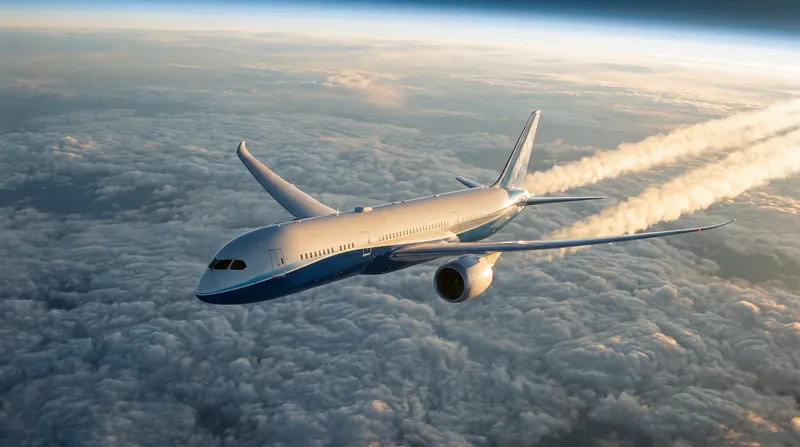
More in Automotive & Transportation
See all →Aerodynamics
The Aerodynamics of Winglets: How Wingtip Devices Slash Fuel Consumption and Extend Aircraft Range
6 sources
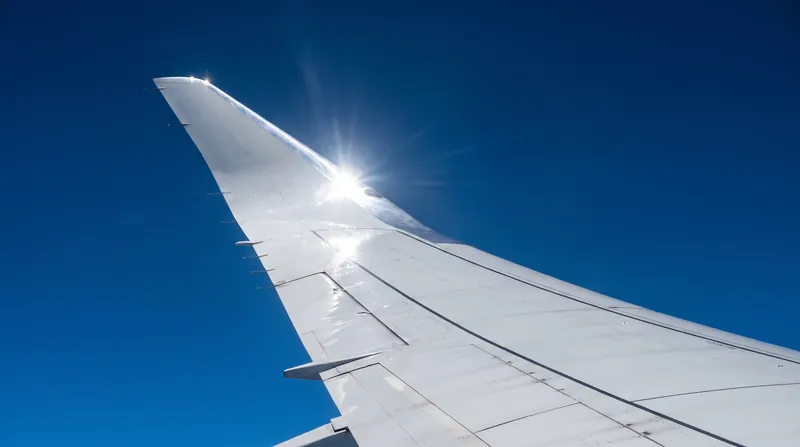
Engine Tech
How Exhaust Gas Recirculation Cuts Engine NOx Without Increasing Heat
4 sources
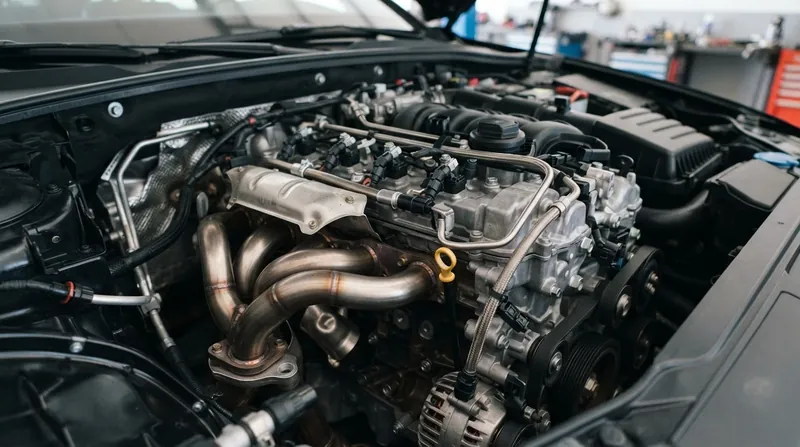
Aircraft Certification
FAA Review Panel Finds Boeing 737 MAX Software Flaw Not a Safety Risk, Clearing Obstacle for MAX 10 Certification
7 sources
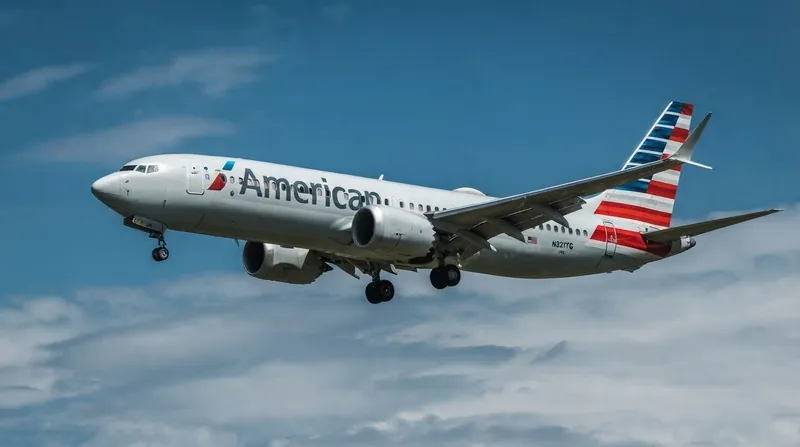
Aviation Infrastructure
Transportation Secretary Seeks $30 Billion More for ATC Modernization
5 sources
Comments
Every angle. Every day.
Get Automotive & Transportation stories with full source coverage and perspective breakdowns, free every day.