
GuideRenewable EnergyRevision 1Updated
The Complete Guide to Renewable Energy: Physics, Grid Storage, and Power Cycles
The transition to renewable energy is governed by strict physical limits, from the energy density of batteries to the thermodynamic constraints of water electrolysis. Understanding these mechanisms is essential for navigating the massive scale of modern grid storage and advanced power cycles.
By Aarav Khanna

Share this story
In short
- U.S. utility-scale battery storage capacity reached 52 gigawatts in mid-2026, averaging 70 percent annual growth over three years.
- PJM Interconnection's reformed queue advanced 200 gigawatts of proposed generation, including 60 gigawatts of battery storage.
- Pumped hydro storage remains the largest form of grid storage, though hydraulic friction limits its round-trip efficiency to 80 percent.
The transition to renewable energy is fundamentally a transition in how we store and dispatch power across the grid. The physical constraints of energy systems dictate what infrastructure gets built, where it is located, and how efficiently it operates under peak demand.
At the cellular level, battery engineers face a strict physical trade-off between energy density and power density. Energy density measures how much total electrical energy a battery contains in proportion to its weight or volume, typically expressed in watt-hours per kilogram.[2]
Power density, conversely, measures how quickly that stored energy can be delivered to the electrical grid. While energy density determines how long a battery can sustain a continuous discharge, power density dictates the maximum surge of current it can provide at any given moment.[2]
This physical reality forces grid operators to choose specific battery chemistries based on their precise operational needs. Thick electrodes increase energy density by packing more active material into a cell, but they lengthen the path ions must travel, inherently reducing the battery's power density.[2]
Lithium-ion batteries currently dominate the utility-scale storage market because they offer a highly effective compromise between these two critical metrics. They provide sufficient energy density to shift midday solar generation into the evening, while maintaining the power density required to stabilize grid frequency in milliseconds.[2]
For applications requiring rapid bursts of energy, such as camera flashes or specific grid stabilization roles, capacitors offer immense power density but minimal energy density. Understanding this distinction is crucial for designing hybrid systems that pair different storage technologies to optimize both duration and response time.[2]
The Scale of the Grid Transition
Utility-scale battery storage has rapidly evolved from a niche technology into the primary shock absorber for the U.S. electrical grid. Over the past three years, domestic battery storage capacity has grown by an astonishing average of 70 percent annually.[6][12]
By the middle of 2026, operators had brought nearly 52 gigawatts of nameplate battery storage capacity online across the United States. During the first six months of the year alone, developers added 8.3 gigawatts to the system, fundamentally altering how grid operators manage daily demand cycles.[6][12]
This massive deployment is driven primarily by the need to shift surplus midday solar generation to the critical evening demand peak. The growth is heavily concentrated in regions with abundant solar resources, particularly the California Independent System Operator and the Electric Reliability Council of Texas.[12]
Solar photovoltaic plants now host the largest battery storage units in the country, leveraging shared infrastructure to maximize economic returns. Facilities like the Bellefield Solar and Energy Storage Farm couple massive solar arrays with equally large battery systems, creating dispatchable renewable power plants.[6][12]
However, the administrative backlog to connect these new projects to the transmission system remains an immense bottleneck for developers. PJM Interconnection, the largest regional grid operator in the United States, recently advanced 715 proposed generation projects into its newly reformed study cycle.[5]
This milestone marks the first large-scale use of a process designed to clear years of administrative delays and speculative applications. The projects advancing in PJM represent more than 200 gigawatts of potential generating capacity, which will undergo rigorous engineering studies over the next two years.[5]
“PJM is encouraged at the number and quality of applications that are proceeding through the study process to help address the long-term shortage of electricity supply that we are facing,” said Jason Connell, Vice President of Planning at PJM Interconnection.[5]
The scale of this single regional queue illustrates the sheer momentum of the energy transition. PJM's first cycle alone contains 60 gigawatts of proposed battery storage, meaning a single regional queue currently holds more proposed storage capacity than the entire United States has built to date.[5]
Private technology companies are also deploying massive localized storage to buffer their own unprecedented grid demands. In Memphis, Elon Musk's xAI installed 168 Tesla Megapacks to power its Colossus supercomputer, creating a massive grid-connected battery to manage the erratic power demands of artificial intelligence training.
Virtual Power Plants and Distributed Resources
As decentralized energy resources proliferate across the grid, operators are increasingly aggregating them into virtual power plants. A virtual power plant connects thousands of distributed assets into a single, centrally managed dispatchable network.[3][11]
These distributed energy resources include residential solar arrays, home battery systems, electric vehicle chargers, and smart thermostats. By coordinating these assets through advanced software platforms, operators can balance supply and demand in real time across a wide geographic area.[3][11]
Virtual power plants provide critical grid services, such as frequency regulation and peak shaving, often responding to market signals in seconds. By shifting consumption patterns or dispatching stored energy, they can alleviate grid stress and avoid the need to fire up expensive natural gas peaker plants.[3]
This aggregation model democratizes energy markets, allowing residential and commercial consumers to sell their flexibility back to the grid. It transforms passive electricity consumers into active market participants, generating new revenue streams for asset owners while reducing overall system costs.[3][11]
The heterogeneity of the connected devices reduces the system's dependence on any single resource, significantly improving overall grid stability. If a localized weather event reduces solar output in one neighborhood, the software can instantly draw on battery reserves or adjust thermostat loads in another.[3]
As the adoption of electric vehicles and home batteries accelerates, virtual power plants are poised to become a foundational pillar of modern grid management. They offer a highly scalable solution that enhances grid resilience without requiring the massive capital investment of traditional centralized power stations.[3][11]
The Mechanics of Pumped Hydro Storage
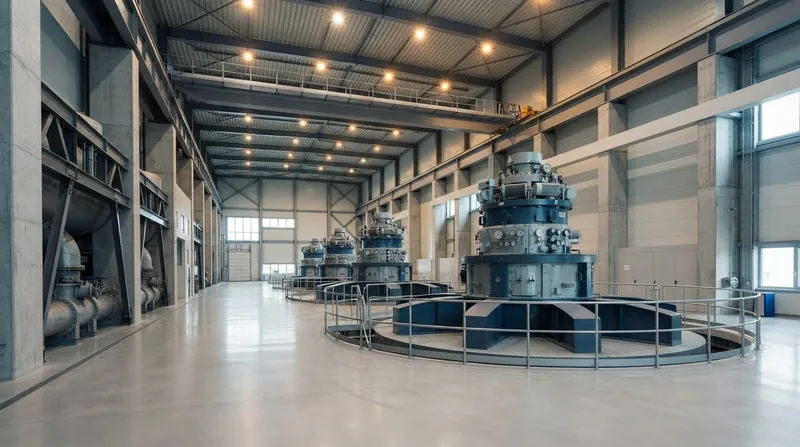
Despite the rapid proliferation of utility-scale lithium-ion batteries, pumped hydro storage remains the undisputed giant of grid-scale energy storage. It accounts for the vast majority of global storage capacity and provides unmatched long-duration discharge capabilities.[1]
Pumped hydro operates by using surplus grid electricity to pump water uphill to a higher elevation reservoir when power is cheap or plentiful. When demand peaks, the water is released back downhill through the same reversible pump-turbines to generate electricity.[1]
The system is highly durable and capable of discharging at full output for 10 to 20 hours, far longer than the two to four hours typical of most battery installations. However, the physical mechanics of moving massive volumes of water inherently result in energy losses.[1]
Modern pumped hydro facilities typically lose about 20 percent of the energy they absorb, yielding a round-trip efficiency of roughly 80 percent. This deficit stems primarily from unavoidable hydraulic friction as water flows rapidly through the concrete and steel penstocks.[1][10]
Additional efficiency losses occur due to the electrical resistance and mechanical friction within the motor-generators, as well as the rigid electrical physics of magnetization. The transformers required to step voltage up and down between the grid and the plant also contribute to the overall energy deficit.[10]
Furthermore, the expansion of pumped hydro is heavily constrained by geography and environmental regulations. Facilities require specific topographical conditions, namely two large reservoirs at significantly different elevations, making new sites difficult to permit and expensive to construct.[1]
The Thermodynamics of Green Hydrogen
Green hydrogen offers a chemical pathway for seasonal renewable energy storage, produced by splitting water into hydrogen and oxygen using renewable electricity. The process relies on the fundamental electrochemistry of water electrolysis.[4]
The physical laws governing water splitting dictate a strict thermodynamic limit. At standard temperature and pressure, it requires a minimum potential of 1.23 volts to break the molecular bonds separating hydrogen from oxygen at the electrodes.[4]
In commercial practice, however, electrolyzers cannot operate at this theoretical minimum. Industrial systems typically require an applied input voltage between 1.8 and 2.5 volts to achieve a practical and economically viable rate of hydrogen gas production.[4]
This gap between theory and practice is driven by kinetic barriers and overpotential. Overpotential represents the extra electrical energy required to overcome resistance within the cell and to physically detach the newly formed gas bubbles from the electrode surfaces.[4]
The specific reactions occurring at the anode and cathode dictate the materials required for the electrolyzer. In alkaline systems, highly durable metals are needed to resist corrosion, while proton exchange membrane technology relies on precious metal catalysts like platinum and palladium.[4]
Overcoming this efficiency loss is a primary focus of global materials science. Researchers are developing advanced, highly active electrocatalysts designed to reduce the overpotential, thereby accelerating the reaction kinetics and making large-scale green hydrogen production more energy-efficient.[4]
Concentrated Solar Power and Thermal Limits
Concentrated solar power systems capture and focus sunlight to heat a transfer fluid, providing dispatchable thermal energy that can generate electricity long after the sun sets. This thermal energy storage allows the plant to deliver power during the critical evening peak.[7][13]
Most commercial concentrated solar plants utilize a binary "solar salt" mixture, typically composed of 60 percent sodium nitrate and 40 percent potassium nitrate. This molten salt serves as both the heat transfer fluid and the thermal storage medium.[7][13]
While highly effective and relatively inexpensive, solar salt faces a strict chemical ceiling. The nitrate mixture begins to thermally degrade at temperatures above 565 degrees Celsius, establishing a hard operational limit for the entire solar facility.[7][13]
This 565-degree thermal limit restricts the maximum temperature of the steam delivered to the turbines, capping the overall efficiency of the power cycle at around 40 percent. To push past these constraints, engineers are exploring alternative heat transfer materials and advanced thermodynamic cycles.[7][13]
By operating at higher pressures and temperatures, ultra-supercritical steam Rankine cycles can boost thermal efficiency up to 45 percent. Coupling these advanced cycles with next-generation, high-temperature heat transfer fluids is essential for extracting more electricity from the same solar input.[8]
Researchers are also investigating supercritical carbon dioxide Brayton cycles, which offer the potential to approach 50 percent thermal efficiency. These compact, high-power-density systems could revolutionize concentrated solar power, provided the industry can develop materials capable of withstanding the extreme temperatures and corrosive environments required.[8]
How we did this
- Method
- Comparing the current operational U.S. battery storage capacity against the volume of storage projects advancing in the PJM interconnection queue to determine the scale of the upcoming grid transition.
- What we found
- The single regional PJM interconnection queue currently holds more proposed battery storage capacity (60 GW) than the entire United States has built and brought online to date (52 GW), illustrating that the grid's transition to dispatchable storage is still in its earliest phases.
- What we worked from
- Current U.S. operational battery storage capacity: 52 GW — CleanTechnica
- Storage capacity in PJM's Cycle 1 queue: 60.0 GW — PJM Interconnection
- Limits of this analysis
- Queue figures represent proposed projects that have advanced to the study phase, not guaranteed construction; historical attrition rates suggest a portion of these projects will ultimately withdraw before completion.
Jargon, explained
- Energy density
- The total amount of electrical energy a battery can store in proportion to its weight or volume.
- Power density
- The rate at which a battery can deliver its stored energy to the grid.
- Overpotential
- The extra voltage required beyond the theoretical minimum to drive an electrochemical reaction at a practical rate.
- Virtual power plant (VPP)
- A cloud-based network that aggregates decentralized energy resources to function as a single, dispatchable power plant.
- Penstock
- A large enclosed pipe that delivers water from an upper reservoir to the turbines in a hydroelectric facility.
- Rankine cycle
- The fundamental thermodynamic cycle used in thermal power plants to convert heat into mechanical work using steam.
Common questions
Why do commercial electrolyzers require more than 1.23 volts to split water?
While 1.23 volts is the theoretical minimum to break the molecular bonds, practical systems require 1.8 to 2.5 volts to overcome kinetic barriers, electrical resistance, and the energy needed to detach gas bubbles from the electrodes.
What is the difference between energy density and power density in batteries?
Energy density measures the total amount of energy a battery can store relative to its weight or volume, while power density measures how quickly that stored energy can be discharged to the grid.
Why are virtual power plants important for grid stability?
They aggregate thousands of small, decentralized energy resources—like home batteries and smart thermostats—into a single network that can instantly adjust demand or supply, replacing the need for expensive fossil-fuel peaker plants.
What limits the efficiency of concentrated solar power plants?
Most plants use a molten nitrate 'solar salt' that chemically degrades above 565 degrees Celsius, capping the temperature of the steam cycle and limiting overall thermal efficiency to around 40 percent.
Competing readings
Grid Operators
Focus on maintaining real-time reliability and managing the massive administrative backlog of interconnection requests.
For regional transmission organizations like PJM Interconnection, the energy transition presents an unprecedented administrative and engineering challenge. The sheer volume of proposed renewable and storage projects has overwhelmed traditional study processes, forcing a shift to a 'first-ready, first-served' cluster approach. Operators emphasize that while battery capacity is growing rapidly, the grid's physical transmission infrastructure must be upgraded simultaneously to prevent bottlenecks and ensure that new dispatchable resources can actually reach load centers during peak demand.
Energy Developers
Prioritize rapid deployment of utility-scale storage and the economic arbitrage of shifting solar generation to peak hours.
Developers view the current market as a race to capture the economic value of energy arbitrage—storing cheap, abundant midday solar power and selling it during the lucrative evening peak. They advocate for streamlined permitting and faster interconnection queues, arguing that the capital is ready to deploy. The rapid 70 percent annual growth in U.S. battery capacity reflects their aggressive push to co-locate storage with solar facilities, maximizing the utility of shared grid connections and land.
Materials Scientists
Seek to overcome physical and chemical limits in battery chemistry, electrocatalysis, and thermal transfer fluids.
Researchers approach renewable energy as a series of fundamental thermodynamic and chemical constraints that must be engineered away. Whether it is developing new electrocatalysts to reduce the overpotential in water electrolysis, or formulating advanced molten salts that can withstand temperatures above 565 degrees Celsius, their focus is on pushing the boundaries of physical efficiency. They argue that long-term cost reductions will come not just from scaling up manufacturing, but from fundamental breakthroughs in materials science that allow systems to operate closer to their theoretical thermodynamic limits.
What changed
- · Revision 1Published.
Related explainers
- The Fundamental Trade-Off Between Energy Density and Power Density That Dictates Battery Application
- US Power Grid to Add Record 86 GW of Capacity in 2026, Driven by Solar and Storage
- The 1.23-Volt Thermodynamic Limit That Dictates the Efficiency of Water Electrolysis
- Why xAI Built the Largest Grid Battery in the US to Power Its Memphis Supercomputer
- Why Pumped Hydro Storage Loses 20 Percent of Its Energy to Friction and Magnetisation
- PJM Grid Reform Unlocks 200 GW of New Power Projects in Largest US Interconnection Queue Overhaul
- How Virtual Power Plants Aggregate Distributed Energy Resources to Balance the Grid
- US Battery Storage Capacity Hits 52 GW After Three Years of 70% Annual Growth
- The 565°C Limit of Solar Salt: How Thermal Degradation Constrains Concentrated Solar Power Efficiency
- Why Thermal Power Plants Hit a 45% Efficiency Wall and How Ultra-Supercritical Steam Pushes the Limit
- Federal Policy Changes Trigger $40 Billion in Canceled US Clean Energy Manufacturing Projects
- Global Battery Deployment Surge Triples Ability to Shift Solar Power to Evening Peak in Five Years
- Grid Operators & Managers
- Focus on maintaining real-time reliability and managing the massive administrative backlog of interconnection requests.
- Energy Developers & Markets
- Prioritize rapid deployment of utility-scale storage and the economic arbitrage of shifting solar generation to peak hours.
- Materials Scientists & Engineers
- Seek to overcome physical and chemical limits in battery chemistry, electrocatalysis, and thermal transfer fluids.
- Neutral Analysts
- Provide objective analysis of the physical constraints and market dynamics shaping the energy transition.
Perspectives this story doesn't cover
- Local communities affected by the land use of massive utility-scale solar and pumped hydro projects
Sources
Source coverage
13 outlets
4 viewpoints surfaced













- [1]Yes EnergyGrid Operators & Managers
What Is Pumped Hydro Storage?
Read on Yes Energy → - [2]Dragonfly EnergyNeutral Analysts
Energy Density vs. Power Density in Batteries
Read on Dragonfly Energy → - [3]gridXGrid Operators & Managers
Virtual power plants: A comprehensive guide
Read on gridX → - [4]Royal Society of ChemistryMaterials Scientists & Engineers
Electrocatalysts for water electrolysis
Read on Royal Society of Chemistry → - [5]PJM InterconnectionGrid Operators & Managers
PJM Advances 200 GW of Generation Projects Under Reformed Interconnection Process
Read on PJM Interconnection → - [6]CleanTechnicaEnergy Developers & Markets
U.S. Battery Storage Capacity Averaged 70% Growth Over The Last Three Years
Read on CleanTechnica → - [7]ResearchGateMaterials Scientists & Engineers
Concentrated Solar Power (CSP) Heat Transfer Materials
Read on ResearchGate → - [8]PSE CommunityMaterials Scientists & Engineers
Advanced Thermodynamic Cycles for Concentrated Solar Power
Read on PSE Community → - [9]Factlen Editorial TeamNeutral Analysts
Synthesis by Factlen editorial team
Read on Factlen Editorial Team → - [10]Oregon State UniversityGrid Operators & Managers
PHES Losses and Efficiency
Read on Oregon State University → - [11]Energy PoolGrid Operators & Managers
Virtual Power Plants (VPPs): Guide to Aggregated Energy Resources
Read on Energy Pool → - [12]Solmar CapitalEnergy Developers & Markets
U.S. Battery Storage Capacity Grows 70% Annually
Read on Solmar Capital → - [13]MDPIMaterials Scientists & Engineers
Thermal Energy Storage in Concentrated Solar Power
Read on MDPI →
More in Energy
See all →Grid Infrastructure
The Break-Even Distance and Conversion Cost That Dictate the Choice Between HVAC and HVDC Transmission
6 sources
Grid Infrastructure
How National Interest Electric Transmission Corridors Work
3 sources
Grid Infrastructure
Global Renewable Investment Shifts to Co-Located Storage as Standalone Solar Financing Hits Five-Year Low
6 sources
Grid Storage Physics
Why Pumped Hydro Storage Loses 20 Percent of Its Energy to Friction and Magnetisation
3 sources
Comments
Every angle. Every day.
Get Energy stories with full source coverage and perspective breakdowns, free every day.