
How Bugatti's 1,775-Horsepower V16 Hybrid Powertrain Actually Works
By replacing its iconic quad-turbo W16 with a naturally aspirated Cosworth V16 and three electric motors, Bugatti has engineered a hybrid system that uses electrification to enhance, rather than replace, the combustion experience.

- Combustion Purists
- Advocates for the emotional and acoustic experience of traditional naturally aspirated engines.
- Electrification Advocates
- Proponents of advanced EV technology who view the hybrid system as a necessary performance multiplier.
- Hypercar Collectors
- Buyers and historians who view the vehicle as a timeless mechanical investment.
Perspectives this story doesn't cover
- Environmental Regulators
- Independent Mechanics
Key terms
- Naturally Aspirated
- An engine that relies on atmospheric pressure to draw air into its cylinders, without the use of forced induction like turbochargers or superchargers.
- Turbo Lag
- The delay between pressing the accelerator and feeling the surge of power, caused by the time it takes for exhaust gases to spin up a turbocharger.
- Torque Vectoring
- A technology that allows a vehicle to independently control the amount of power sent to each individual wheel, dramatically improving cornering agility.
- Dry-Sump Lubrication
- An oil system that uses external pumps and a separate reservoir to lubricate the engine, preventing oil starvation during high-speed cornering.
- 800-Volt Architecture
- A high-voltage electrical system used in advanced EVs and hybrids that allows for faster charging, lighter wiring, and more powerful electric motors.
Key points
- Bugatti has replaced its quad-turbo W16 engine with a naturally aspirated 8.3-liter V16 developed by Cosworth.
- The combustion engine is paired with three electric motors, producing a combined 1,775 horsepower.
- The 800-volt hybrid system provides instant torque to eliminate acceleration lag and enables 37 miles of pure electric driving.
- Despite the addition of a 24.8 kWh battery pack and electric motors, the Tourbillon is lighter than the outgoing Chiron.
At exactly 9,000 revolutions per minute, an 8.3-liter engine measuring nearly a meter long hits its mechanical crescendo. For the driver sitting inches in front of it, the sound is a visceral, high-pitched howl that has been largely absent from the hypercar world for decades. This is the beating heart of the Bugatti Tourbillon, the French marque's successor to the Chiron and the first entirely new model developed under the leadership of CEO Mate Rimac. After twenty years of relying on the quad-turbocharged W16 engine that powered the Veyron and Chiron, Bugatti has fundamentally rewritten its engineering playbook. The Tourbillon ditches forced induction entirely, opting instead for a naturally aspirated V16 engine paired with a highly advanced 800-volt electric hybrid system.[1][4][5]
To understand why this shift matters to a buyer spending upwards of $4 million, one must look at the inherent trade-offs of modern engine design. Turbochargers are excellent at producing massive power and torque, but they introduce "turbo lag"—a slight delay between pressing the accelerator and the engine delivering its thrust. They also muffle the exhaust note, acting as a physical barrier in the exhaust tract. By removing the four turbochargers, Bugatti sought to restore the instantaneous throttle response and acoustic purity of a naturally aspirated engine. However, a naturally aspirated engine alone cannot match the low-end torque of a turbocharged unit. This is where the electric motors step in, fundamentally changing the driving dynamics.[1][6]
The Tourbillon's powertrain is a masterclass in packaging and integration. The internal combustion component is an 8.35-liter V16 developed in partnership with the legendary British engine builder Cosworth. On its own, this engine produces 1,000 horsepower and 664 pound-feet of torque. But it is supplemented by three electric motors: two located on the front axle and one mounted at the rear, integrated with the eight-speed dual-clutch transmission. Together, these electric motors contribute an additional 800 horsepower, bringing the total system output to a staggering 1,775 horsepower.[2][4]
For the driver, this hybrid architecture operates as a seamless torque-filling mechanism. Electric motors deliver their maximum torque instantly at zero RPM. When the driver presses the accelerator from a standstill or at low engine speeds, the electric motors provide immediate, violent thrust. As the vehicle accelerates and the V16 engine climbs toward its 9,000 RPM redline, the combustion engine takes over the heavy lifting. Mate Rimac has described this synergy explicitly: where the combustion engine is unable to deliver its full power, the electric motors fill the gap, allowing the driver to experience the roar of a naturally aspirated V16 without sacrificing low-end acceleration.[1][6]
The engineering challenge of fitting a V16 engine into a mid-engine chassis cannot be overstated. A V16 is essentially two inline-eight engines joined at the crankcase, making it significantly longer than the outgoing W16, which used a staggered cylinder layout to remain relatively compact. To accommodate the sheer length of the new Cosworth block, Bugatti's designers had to stretch the wheelbase and rethink the entire rear architecture of the car. Despite this added length, the engine itself is a marvel of lightweight construction. It utilizes a dry-sump lubrication system, which pumps oil through the engine rather than letting it pool in a pan at the bottom. This not only lowers the engine's center of gravity but ensures that the internal components are never starved of oil during high-G cornering on a track.[1][3][4]
The engineering challenge of fitting a V16 engine into a mid-engine chassis cannot be overstated.
Beyond raw performance, the hybrid system introduces a new layer of usability for the hypercar owner. The Tourbillon is equipped with a 24.8-kilowatt-hour battery pack operating on an 800-volt architecture. This battery is large enough to provide approximately 37 miles (60 kilometers) of pure electric driving range. For a collector or owner, this means the car can be driven silently through city centers, early in the morning without waking neighbors, or in zero-emission zones, before unleashing the V16 on open country roads. The electric motors also handle torque vectoring on the front axle, independently sending power to the left or right front wheel to pull the car through corners with unnatural agility.[1][4]
The integration of the 800-volt electrical system also allowed Bugatti to strip away redundant legacy components. Because the electric motors are so powerful, they serve simultaneously as the vehicle's starter motor and alternator. This eliminates the need for a traditional 12-volt starting system, saving weight and complexity. When the V16 needs to fire up, the rear electric motor spins it to life instantly. During deceleration, the motors act as generators, harvesting kinetic energy to recharge the battery pack.[1][4]
Remarkably, despite the addition of a heavy battery pack and three electric motors, the Tourbillon is actually lighter than the Chiron it replaces. The entire powertrain assembly—including the V16 engine, the electric motors, and the transmission—weighs just 430 kilograms, which is roughly equivalent to the weight of the old W16 engine alone. This obsessive weight reduction was achieved through the use of advanced composites, 3D-printed suspension components, and the sheer efficiency of the Cosworth engine design, which went from initial sketches to a running prototype on a dynamometer in just 13 months.[1][2][4]
The decision to name the car "Tourbillon" reflects the underlying philosophy of its engineering. In high-end watchmaking, a tourbillon is a complex mechanical device designed to counter the effects of gravity and increase accuracy. It is a celebration of analog mechanical engineering in a digital world. Bugatti approached the car's interior and powertrain with the same mindset. The instrument cluster is completely analog, crafted by Swiss watchmakers, and the naturally aspirated engine is a deliberate rejection of the silent, fully electric hypercars that are beginning to flood the market.[4][7]
While pure electric vehicles like the Rimac Nevera offer immense straight-line speed, they often lack the emotional engagement, vibration, and acoustic drama that automotive enthusiasts crave. The Tourbillon represents a calculated bet that the ultra-wealthy buyer of the future will still want the visceral thrill of internal combustion, but enhanced by the precision and instant response of electric power. It is a blueprint for how legacy automakers can keep the combustion engine alive and relevant in an increasingly electrified era.[7]
There are, however, open questions about the long-term maintenance and complexity of such a tightly integrated system. A high-revving, bespoke V16 engine paired with a cutting-edge 800-volt battery architecture creates a vehicle that will require highly specialized servicing. As battery technology inevitably advances over the next few decades, it remains to be seen how easily the Tourbillon's hybrid components can be maintained or upgraded to ensure the car remains a functional piece of automotive history rather than a static museum display.[7]
Ultimately, the Bugatti Tourbillon is more than just a collection of staggering statistics. It is a definitive statement on the future of the hypercar. By leveraging electrification not as a replacement for combustion, but as a tool to perfect it, Bugatti has created a machine that bridges the gap between the analog past and the digital future. For the driver, it promises an experience that is entirely unique: the silent, stealthy capability of an EV, seamlessly giving way to the mechanical fury of a 9,000-RPM V16.[7]
Frequently asked
Does the Bugatti Tourbillon have turbochargers?
No. Unlike the Veyron and Chiron, the Tourbillon uses a naturally aspirated V16 engine, relying on electric motors rather than turbos to boost its power.
Can the Tourbillon be driven on electric power alone?
Yes. The car features a 24.8 kWh battery pack that provides approximately 37 miles (60 kilometers) of silent, fully electric driving range.
How much horsepower does the Tourbillon make?
The hybrid system produces a combined 1,775 horsepower, with 1,000 horsepower coming from the V16 engine and 800 horsepower from the three electric motors.
Who built the V16 engine for Bugatti?
The 8.3-liter V16 engine was developed in partnership with Cosworth, a legendary British engineering firm known for building high-performance racing engines.
Is the Tourbillon heavier than the Chiron because of the batteries?
Surprisingly, no. Through advanced lightweight materials and a highly efficient powertrain design, the Tourbillon is actually lighter than its predecessor.
Sources
Source coverage
7 outlets
3 viewpoints surfaced







- [1]BugattiElectrification Advocates
A spark of genius: electrifying the Bugatti Tourbillon
Read on Bugatti → - [2]CosworthHypercar Collectors
Launch of Bugatti Tourbillon marks company's fourth hypercar engine partnership since 2020
Read on Cosworth → - [3]CarBuzzCombustion Purists
Cosworth's Most Powerful Naturally Aspirated Engine Ever
Read on CarBuzz → - [4]WikipediaHypercar Collectors
Bugatti Tourbillon
Read on Wikipedia → - [5]Car and DriverElectrification Advocates
2026 Bugatti Tourbillon Hybrid
Read on Car and Driver → - [6]Engineering ExplainedCombustion Purists
The Bugatti Tourbillon Packs A Glorious 1000 HP V16 Engine
Read on Engineering Explained → - [7]Factlen Editorial TeamHypercar Collectors
Synthesis by Factlen editorial team
Read on Factlen Editorial Team →
Comments
More in Automotive & Transportation
See all →Aerodynamics
Lift, Weight, Thrust, and Drag: How the Four Forces Must Balance for Sustained Flight
6 sources

Vehicle Recalls
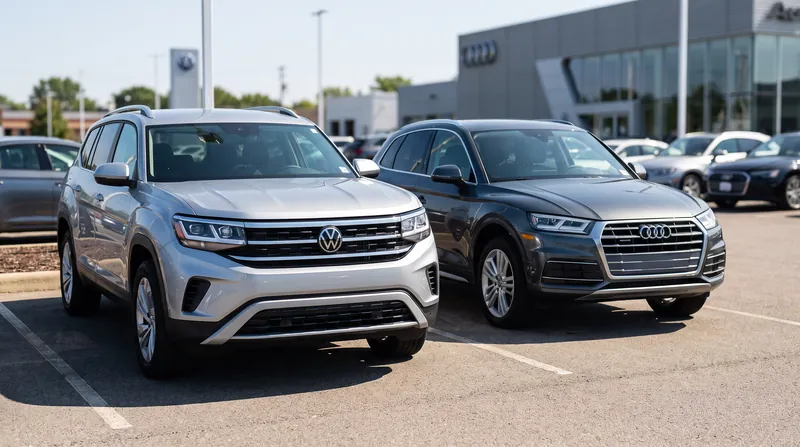
Volkswagen and Audi Recall 208,000 SUVs Over Corroding Steering Rack Bolts
7 sources
EV Safety Recalls
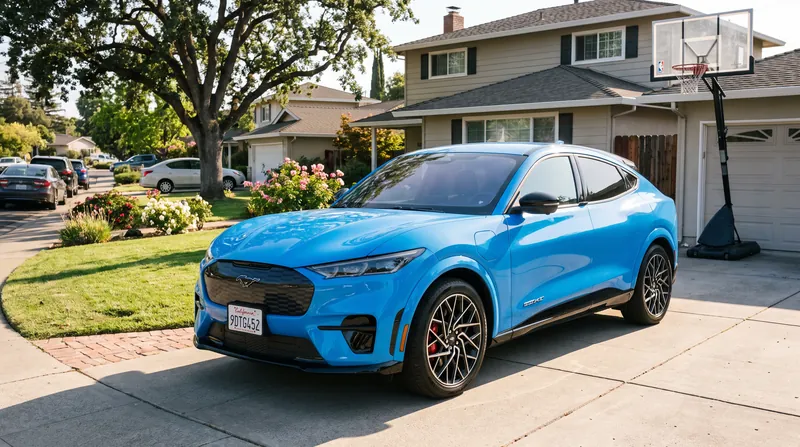
Ford Recalls 86 Mustang Mach-E EVs Over Battery Software Fire Risk
6 sources
Auto Industry
Volkswagen Takes €6 Billion Writedown on Porsche Stake Amid Sales and Margin Declines
4 sources

Every angle. Every day.
Get Automotive & Transportation stories with full source coverage and perspective breakdowns delivered to your inbox.