
Audi Ends Production of Flagship A8 Luxury Sedan After Three Decades
The German automaker has officially retired its flagship internal-combustion sedan, reallocating factory space to smaller models and SUVs. A fully electric successor is expected before the end of the decade, leaving the upcoming Q9 SUV to serve as the brand's interim flagship.

Share this story
The final Audi A8 has rolled off the assembly line at the company’s Neckarsulm factory, closing a 32-year production run for the flagship luxury sedan. The mid-October 2026 shutdown marks the end of the internal-combustion era for Audi's largest car, as the automaker reallocates factory space to smaller models.[1][2]
The retirement did not happen overnight. Audi stopped accepting new custom orders for the full-size model in the German market back in February 2026. Since then, prospective buyers have been limited to selecting from available dealership inventory, a significant hurdle in a segment where bespoke customization is highly valued.[1][2]
For luxury vehicle shoppers, the A8’s departure signals a narrowing field of traditional executive sedans. Buyers looking for a new 2027 model year A8 in the United States can still find remaining stock, with base prices starting at $95,100. Once those vehicles sell, the nameplate vanishes from showrooms.[2]
Plummeting sales figures sealed the sedan’s fate. In 2025, Audi sold just 1,406 examples of the A8 in the United States. By comparison, BMW moved 11,393 units of its 7 Series, while Mercedes-Benz delivered 7,408 S-Class models during the exact same period.[1]
The broader market shift toward high-riding luxury SUVs further eroded the A8’s standing among premium buyers. Shoppers have overwhelmingly voted with their wallets for increased ride height, cargo capacity, and commanding road presence. Traditional sedans simply cannot match the interior volume that modern luxury consumers demand.[3]
“So far, just 977 A8s have found buyers in 2026. Compare that to the Q8, which sold a whopping 10,439 units in the same timeframe... it's crystal clear why the A8 is going away,” wrote Zach Butler, managing editor for TFLcar.[3]
Reallocating Factory Capacity
With the A8 line now idle, Audi is rapidly restructuring its manufacturing footprint. The Neckarsulm facility is already reallocating its newly available capacity to support increased production of the brand’s smaller core models. This includes the A5 sedan and Avant wagon, alongside their performance-oriented variants.[2][4]
To fill the void at the top of its lineup, Audi is pivoting its flagship strategy toward the SUV segment. The upcoming Q9 sport utility vehicle will step in as the brand’s interim halo model. Manufactured in Slovakia, the Q9 is designed to compete directly with the Mercedes-Benz GLS.[1][4]
The transition marks a bittersweet moment for automotive historians. When the original A8 debuted in 1994, it revolutionized the industry with its lightweight aluminum Audi Space Frame architecture. That engineering breakthrough established Audi as a serious technological rival to its German peers.[1][3]
Over the decades, the A8 served as the launchpad for the brand's most advanced features. Successive generations introduced innovations like the Multimedia Interface system, matrix LED headlights, and predictive active suspension. The current fourth-generation model has been in production since 2017.[3][4]
For performance enthusiasts, the departure also means the eventual loss of the S8 variant. That high-performance model packs a 4.0-liter twin-turbocharged V8 engine delivering 563 horsepower and 590 pound-feet of torque. It remains one of the few large sedans capable of reaching 60 miles per hour in 3.8 seconds.[2]
Planning an Electric Successor
While the internal-combustion A8 is dead, company representatives have confirmed that the nameplate will eventually return. A successor has been approved and is scheduled for a global debut toward the end of the decade. Industry reports indicate the next-generation flagship will pivot heavily toward electric propulsion.[4][6]
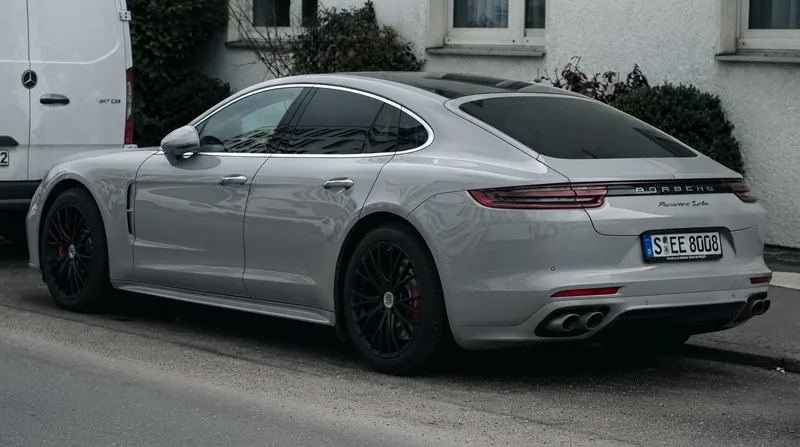
The upcoming model is expected to draw dynamic design inspiration from the sleek Grandsphere concept car. However, its underlying architecture may come from outside of Ingolstadt. Several reports suggest the revived A8 will share a platform with the next-generation Porsche Panamera to maximize development efficiency.[2][6]
If the Porsche partnership materializes, production of the future A8 would likely move away from its historic home. Manufacturing could shift to Porsche’s facility in Leipzig, Germany, where the Panamera is slated to enter series production around 2030. Sharing underpinnings across the Volkswagen Group reduces costs for low-volume flagships.[2]
Another potential lifeline for the A8 involves a completely different strategic partnership. German business publication Manager Magazin reports that Audi CEO Gernot Döllner has considered tapping Chinese technology giant Huawei to help develop a new luxury sedan. This model would be tailored specifically for the Chinese market.[2][5]
Large sedans retain strong sales in China, making it a critical region for flagship vehicles. A China-focused A8 could be developed in collaboration with local heavyweights like FAW or SAIC. If this model sees the light of day, it remains unclear whether it would be exported to Western markets.[2]
The Shrinking Sedan Landscape
The A8’s exit leaves Mercedes-Benz and BMW in a dominant position within the traditional executive sedan segment. With Audi out of the picture, the S-Class and 7 Series have only the Genesis G90 and the aging Lexus LS as direct internal-combustion competitors.[2][5]
Other luxury automakers have already abandoned the space entirely. Lincoln has no plans to revive a large sedan following the discontinuation of the Continental, and Infiniti exited the flagship sedan market decades ago. Cadillac’s new Celestiq costs $400,000, positioning it as an ultra-exclusive showcase rather than a volume competitor.[5]
European marques are fighting hard to keep the genre alive through electrification. Jaguar recently unveiled the Type 01, a fully electric full-size sedan that represents a massive brand reset. Meanwhile, Mercedes-Benz and BMW have heavily updated their flagship models to include advanced electric powertrain options.[5]
For current A8 owners, the discontinuation means their vehicles represent the final chapter of Audi’s internal-combustion flagship era. Dealerships will continue to service the vehicles, and parts availability is guaranteed for years to come. However, the resale market for these large sedans may soften as buyers gravitate toward SUVs.[1][2]
The next verifiable checkpoint for Audi's flagship ambitions will arrive before 2030, when the automaker is expected to reveal the A8's electric successor. Until that new architecture debuts, the brand will rely entirely on the upcoming Q9 SUV to retain its most affluent buyers.[4]
Key points
- Audi has ended production of the A8 luxury sedan at its Neckarsulm factory after a 32-year run spanning four generations.
- The automaker stopped accepting custom orders in February 2026, leaving buyers to choose from remaining dealership inventory.
- Plummeting sales drove the decision, with the A8 selling just 1,406 units in the US in 2025 compared to 11,393 BMW 7 Series models.
- An all-electric successor is expected before 2030, while the upcoming Q9 SUV will serve as Audi's interim flagship vehicle.
What we don’t know
- Whether the rumored China-focused luxury sedan developed with Huawei will actually reach production or be sold in Western markets.
- The exact pricing and performance specifications of the A8's eventual all-electric successor.
- How the absence of a flagship sedan will affect Audi's brand prestige against rivals Mercedes-Benz and BMW in the short term.
How we got here
1994
Audi introduces the first-generation A8, featuring the innovative aluminum Audi Space Frame.
2017
The fourth-generation A8 launches, introducing advanced predictive active suspension and mild-hybrid technology.
February 2026
Audi officially stops accepting new custom orders for the A8 in the German market.
Mid-October 2026
The final Audi A8 rolls off the assembly line at the Neckarsulm factory.
2030
Expected arrival window for the A8's fully electric successor.
- Automotive Industry Analysts
- Emphasize that cutting low-volume sedans to fund EV architectures is a necessary financial reality.
- Luxury SUV Buyers
- Value the increased interior space, commanding view of the road, and versatility that vehicles like the Q9 offer.
- Traditional Sedan Loyalists
- Prefer the superior driving dynamics, low center of gravity, and understated styling of classic flagship sedans.
Perspectives this story doesn't cover
- Dealership owners managing the transition to SUV-heavy inventories
Sources
Source coverage
6 outlets
3 viewpoints surfaced






- [1]CarscoopsTraditional Sedan Loyalists
Audi Axes The Luxurious A8 After 32 Years
Read on Carscoops → - [2]autoevolutionTraditional Sedan Loyalists
Audi Finally Ends A8 Luxury Sedan Production After 32 Years, New Gen Under Consideration
Read on autoevolution → - [3]TFLcarLuxury SUV Buyers
The Audi A8 Has Officially Reached the End of the Line, After 32 Years
Read on TFLcar → - [4]HT AutoLuxury SUV Buyers
Audi A8 production officially ends; successor expected to launch before 2030
Read on HT Auto → - [5]AutoblogAutomotive Industry Analysts
It's official: Audi has ended A8 production in Neckarsulm after 32 years, and there's no successor in sight, at least for now
Read on Autoblog → - [6]CAR MagazineAutomotive Industry Analysts
Audi ends production of tits flagship luxury sedan after three decades, paving the way for an electric Audi A8 replacement
Read on CAR Magazine →
More in Automotive & Transportation
See all →EV Performance
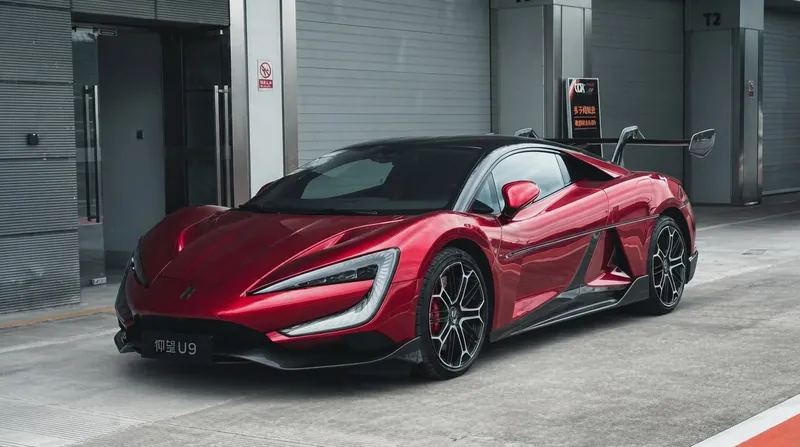
BYD Yangwang U9 Xtreme Breaks 500 KM/H Barrier in Abu Dhabi Speed Record
8 sources
Suspension Dynamics
Pneumatic Stiffness Scales With Inflation Pressure: Why Air Suspensions Preserve a Constant Ride Frequency
2 sources
Acoustic Engineering
How Suspension Accelerometers Exploit Structural Delay to Cancel Road Noise Before It Forms
3 sources
Suspension Tech
Solenoid Valves Vary Multi-Chamber Air Spring Volume to Modulate Dynamic Stiffness Without Altering Ride Height
6 sources
Comments
Every angle. Every day.
Get Automotive & Transportation stories with full source coverage and perspective breakdowns, free every day.