
BYD Yangwang U9 Xtreme Breaks 500 KM/H Barrier in Abu Dhabi Speed Record
The all-electric BYD Yangwang U9 Xtreme reached 503.17 km/h on a closed highway, becoming the first production car to surpass the 500 km/h milestone. The FIA and Guinness-certified run signals a shift in hypercar performance while stress-testing thermal management systems for future consumer EVs.
By Tao Yang

Share this story
The engineering team at BYD has officially pushed the boundaries of electric vehicle performance, driving the Yangwang U9 Xtreme past the 500-kilometer-per-hour mark. On a closed highway in Abu Dhabi, the electric hypercar reached a verified top speed of 503.17 km/h, or 312.66 mph.[5][7]
This achievement makes the U9 Xtreme the first production car of any powertrain type to officially break the 500 km/h barrier. Both the Fédération Internationale de l'Automobile (FIA) and Guinness World Records had representatives on site to certify the run.[1][3]
For the everyday automotive consumer, a 312-mph top speed might seem entirely disconnected from the reality of daily commuting. However, the extreme thermal management and battery discharge rates required to achieve this milestone directly influence the next generation of consumer electric vehicles.[2][8]
Pushing an electric vehicle to these speeds generates immense heat within the battery pack and the electric motors. Solving those thermal bottlenecks allows manufacturers to build consumer cars that can accept faster charging rates without degrading the battery cells.[4][7]
Engineering the milestone
The record-setting run took place on a specially cordoned section of public highway in the United Arab Emirates. Abu Dhabi’s long, perfectly paved straights provided the necessary runway for the U9 Xtreme to reach its terminal velocity safely.[5][8]
During the attempt, the vehicle utilized a quad-motor setup that delivers power independently to each wheel. This torque-vectoring system ensures maximum traction, keeping the car stable as aerodynamic drag increases exponentially at speeds above 400 km/h.[2][4]
The official certification statements from the FIA and Guinness World Records confirmed the two-way average speed required for global standards. While BYD's press materials contained extensive telemetry data, the company did not release direct quotations from the engineering team regarding the vehicle's handling at terminal velocity.[1][3]
The Yangwang U9 Xtreme is a track-focused evolution of BYD’s standard U9 supercar. It features aggressive aerodynamic elements, including a massive rear wing and a prominent front splitter, designed to keep the vehicle planted against the immense lifting forces generated at 300 mph.[2][5]
Thermal limits and battery tech
Electric motors face a unique challenge at extreme speeds compared to internal combustion engines. While gas engines can rely on ram air and massive radiators, electric powertrains must manage the rapid discharge of the high-voltage battery pack.[4]
To sustain maximum power output without triggering thermal throttling, BYD engineers developed a proprietary cooling architecture for the U9 Xtreme. This system circulates dielectric fluid directly across the battery cells, pulling heat away faster than traditional liquid cooling plates.[5][6]
For a prospective EV buyer weighing the long-term reliability of a new crossover, this hypercar record translates into tangible value. The same dielectric cooling technology that prevents the U9 Xtreme from overheating at 312 mph can theoretically allow a family SUV to charge from 10 to 80 percent in under ten minutes.[2][6]
Furthermore, managing extreme discharge rates improves overall battery longevity. When cells are protected from severe temperature spikes during high-stress events, the pack experiences less chemical degradation over its lifespan, preserving range for the vehicle's second or third owner.[4][8]
Shifting the performance benchmark
Historically, the pursuit of the 300-mph and 500-km/h milestones has been dominated by boutique European manufacturers utilizing massive internal combustion engines. Bugatti and Koenigsegg have spent decades refining quad-turbocharged V8 and W16 engines to chase these figures.[3]
The Yangwang U9 Xtreme’s record signals a definitive changing of the guard in the hypercar segment. By achieving 503.17 km/h with an all-electric powertrain, BYD has demonstrated that battery-electric vehicles can now match and exceed the absolute peak of combustion engine performance.[2][3]
The previous electric speed benchmark was held by the Rimac Nevera, which reached 412 km/h (256 mph) in 2022. BYD’s leap to 503 km/h represents a massive jump in capability over a relatively short period, underscoring the rapid pace of electric vehicle development.[4][5]
Guinness World Records adjudicators confirmed that the U9 Xtreme meets all criteria for a production vehicle. This means the car must be available for purchase by the general public and must complete the record run on street-legal tires.[3]
Market implications for buyers
Beyond the engineering triumph, the record serves as a powerful branding tool for BYD’s Yangwang luxury division. The Chinese automaker is aggressively expanding its premium offerings to compete with established European luxury marques on the global stage.[5][6]
While BYD built its reputation on affordable, mass-market electric vehicles, the Yangwang brand targets the ultra-high-net-worth demographic. Proving that they can build the fastest production car in the world lends immediate credibility to their six-figure luxury SUVs and sedans.[2][5]
For buyers cross-shopping premium electric vehicles, the halo effect of the U9 Xtreme is significant. A consumer purchasing a Yangwang U8 luxury SUV is buying into the same engineering pedigree that secured the 500 km/h world record.[6][8]
Key points
- The BYD Yangwang U9 Xtreme reached a verified top speed of 503.17 km/h (312.66 mph) on a closed highway in Abu Dhabi.
- The run makes the U9 Xtreme the first production vehicle of any powertrain type to officially break the 500 km/h barrier.
- Both the FIA and Guinness World Records certified the achievement, verifying the two-way average speed required for global standards.
- The extreme thermal management technology developed for the hypercar is expected to improve fast-charging capabilities in future consumer EVs.
Unanswered questions
- BYD has not yet released the final production numbers or official pricing for the U9 Xtreme variant.
- It remains unclear exactly how much of the proprietary dielectric cooling technology will be integrated into BYD's mass-market vehicles in the near term.
How we got here
2022
The Rimac Nevera sets the previous electric vehicle speed record at 412 km/h (256 mph).
Late 2025
BYD introduces the standard Yangwang U9 supercar to the Chinese market.
November 2026
The track-focused Yangwang U9 Xtreme breaks the 500 km/h barrier in Abu Dhabi.
- Performance Automotive Engineers
- Focuses on the technical leap required to manage thermal loads at extreme speeds.
- Consumer EV Market Analysts
- Views the hypercar record as a leading indicator for future mass-market charging technologies.
Perspectives this story doesn't cover
- Traditional combustion hypercar manufacturers
- Tire manufacturers developing ultra-high-speed compounds
Sources
Source coverage
8 outlets
2 viewpoints surfaced








- [1]Fédération Internationale de l'Automobile
YANGWANG U9 Xtreme surpasses 500 km/h with speed achievement recognised by the FIA
Read on Fédération Internationale de l'Automobile → - [2]CarScoopsPerformance Automotive Engineers
313 MPH Yangwang U9 Xtreme Is First Production Car To Break 500 KMH
Read on CarScoops → - [3]ForbesConsumer EV Market Analysts
Yangwang U9 Xtreme Sets New Guinness Production Car Speed Record
Read on Forbes → - [4]Motor1.comPerformance Automotive Engineers
Chinese EV Hits 312 MPH To Become The World's Fastest Production Car: Onboard Video
Read on Motor1.com → - [5]CarNewsChina
BYD's Yangwang U9 Xtreme hits 503.17 km/h in Abu Dhabi
Read on CarNewsChina → - [6]AutoNext
Yangwang U9 Xtreme hits 503.17 km/h, the first production car past 500
Read on AutoNext → - [7]ElectrekConsumer EV Market Analysts
BYD’s electric hypercar hits 312 mph, first production car over 500 km/h
Read on Electrek → - [8]InsideEVsConsumer EV Market Analysts
China’s Electric Supercar Slayer Just Did Something No Production Car Has Ever Done
Read on InsideEVs →
More in Automotive & Transportation
See all →Acoustic Engineering
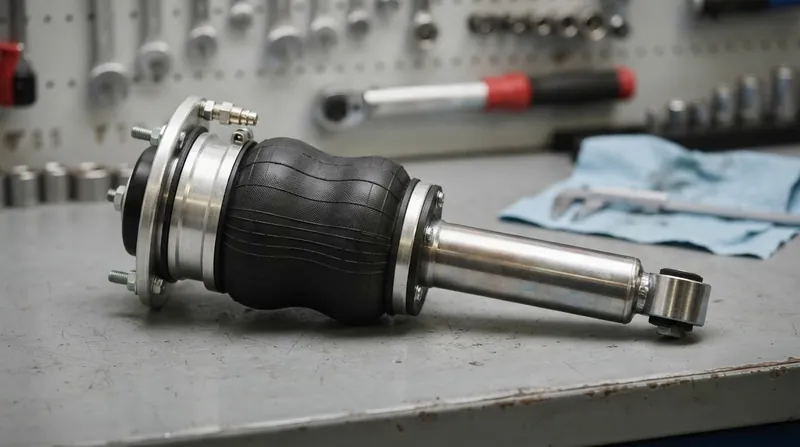
How Suspension Accelerometers Exploit Structural Delay to Cancel Road Noise Before It Forms
3 sources
Auto Industry Crisis
German Auto Workers at BMW, Mercedes, and Porsche Join Volkswagen Protests Against Mass Job Cuts
5 sources

Auto Industry
Volkswagen Takes €6 Billion Writedown on Porsche Stake Amid Sales and Margin Declines
4 sources
Carbon Fiber Tech
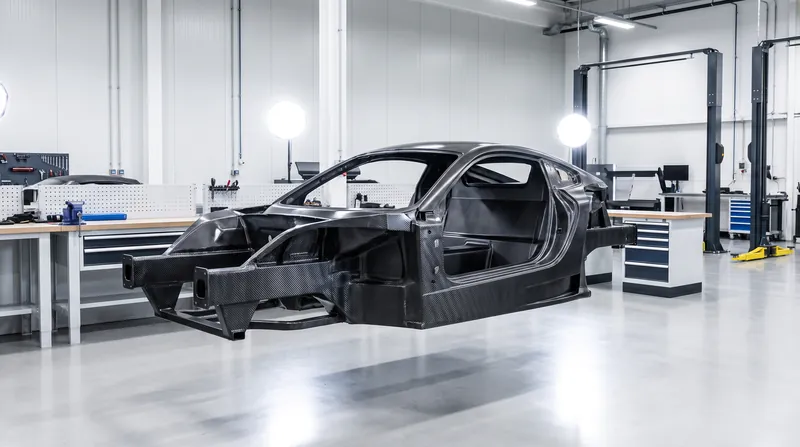
The Anisotropy of Carbon Fiber: How Fiber Orientation Dictates Strength and Stiffness in Different Directions
7 sources
Comments
Every angle. Every day.
Get Automotive & Transportation stories with full source coverage and perspective breakdowns, free every day.