
China Records 3.1% Drop in Quarterly Carbon Emissions Following Hormuz Disruption
China's carbon dioxide emissions fell by 3.1% in the third quarter of 2026, marking the steepest decline since the 2022 pandemic lockdowns. The reduction was driven by a sharp drop in oil consumption linked to shipping disruptions, alongside a massive expansion of renewable energy.
By Layla Zaher

Share this story
China’s carbon dioxide emissions fell by 3.1% in the third quarter of 2026, marking the sharpest quarterly reduction since the sweeping pandemic lockdowns of 2022. The decline extends a plateau in the country's greenhouse gas output that has now lasted more than two years.[1][2]
For the world's largest emitter, the drop represents a significant milestone. It was driven by a combination of geopolitical supply shocks and a massive domestic expansion of clean energy. The 3.1% drop between July and September means that China's total CO2 emissions have now fallen by an estimated 0.5% in the year to date.[1]
The figures, published by the Centre for Research on Energy and Clean Air (CREA) and featured in Carbon Brief, show a broad-based contraction across fossil fuels. The reduction was anchored by a sharp decline in oil consumption, which plummeted as international supply chains fractured.[1][4]
Severe disruptions to shipping traffic through the Strait of Hormuz heavily impacted oil deliveries to China, the world's top importer of crude. Overall oil use in the country fell by 4% year-on-year during the third quarter.[1][3]
The Strait of Hormuz is a critical maritime chokepoint for global energy supplies. The ongoing conflict in the Middle East has forced shipping companies to reroute vessels, driving up freight costs and delaying deliveries. For China, this geopolitical bottleneck translated directly into reduced domestic consumption.[3]
The impact was most pronounced in the transportation sector, where oil consumption plunged by 9% as fuel prices remained volatile and supplies tightened. While the Hormuz crisis provided the immediate catalyst for the drop, analysts argue it merely accelerated an existing structural shift.[1][3]
The Electrification Accelerator
Lauri Myllyvirta, CREA's co-founder and lead analyst, noted that China's oil consumption had likely already peaked before the geopolitical shock. "The shock has clearly accelerated the electrification trend and the shift away from oil," Myllyvirta stated.[1]
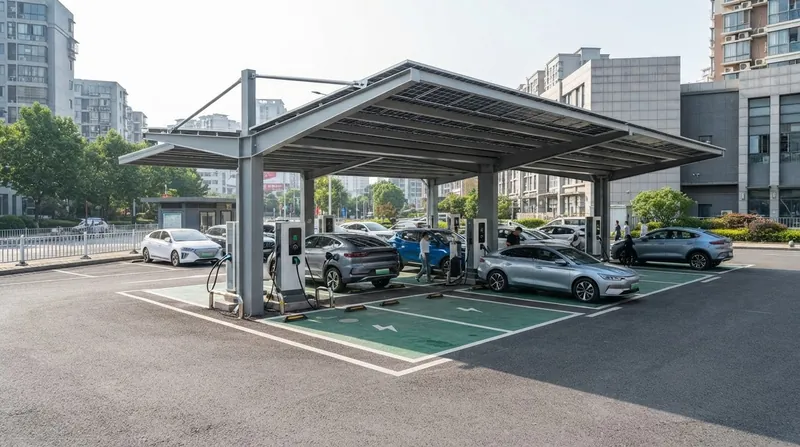
The rapid adoption of electric vehicles has fundamentally altered China's transport fuel dynamics. New energy vehicles have consistently accounted for more than 60% of domestic monthly vehicle sales throughout 2026, a staggering adoption rate that has displaced millions of barrels of oil demand.[4]
Furthermore, the country's vehicle exports have also surged, meaning domestic manufacturing is increasingly geared toward electrified transport rather than internal combustion engines. Myllyvirta acknowledged that while a rebound in oil consumption is possible if global prices stabilize, the underlying transition to electrified transport is now entrenched.[1][4]
The emissions drop was not limited to imported oil; domestic coal use also fell by 3% year-on-year. Coal-power generation specifically dropped by 3.3% during the third quarter, a notable decline given that China's overall electricity demand continued to rise.[1][2]
Renewables Outpace Demand
The gap between rising demand and falling coal generation was filled entirely by a historic surge in low-carbon power sources. Power generation from solar, wind, and nuclear sources increased by 110 terawatt-hours year-on-year in the third quarter.[1]
This addition alone was equal to Germany's total power output during the same period. Crucially, this clean energy growth was more than double the increase in China's total electricity demand, allowing grid operators to scale back fossil fuel generation.[1]
The fall in coal-power output occurred despite the fact that China continues to build new coal-fired power plants at near-record rates. The phenomenon of building new coal plants while burning less coal has puzzled international observers, but it reflects a shift in grid strategy.[1]
Chinese policymakers view these new plants as an insurance policy against energy shortages, particularly after severe droughts in recent years crippled hydropower output. Because renewable generation is taking priority on the grid, the average running hours for these coal plants are falling rapidly.[1]
According to the Centre for Research on Energy and Clean Air, wind generation rose 16.6% year-on-year in September, rebounding from a weak first half, while solar generation surged 21.6%. This allowed coal-fired output to fall for the third consecutive month.[4]
The rapid expansion of these renewable sources is fundamentally altering the grid's dispatch order. Coal plants are increasingly serving as expensive backup batteries rather than baseload generation, which alters their long-term emissions profile.[1][4]
Grid operators are now prioritizing the accommodation of intermittent wind and solar power. Without sufficient energy storage and flexible grid management, China has previously been forced to curtail significant amounts of renewable generation, but the third-quarter data suggests integration is improving.[1]
Industrial Contraction
Beyond the power and transport sectors, a contraction in carbon-intensive industrial output also contributed to the emissions decline. The steel and cement industries, which are among the largest CO2 emitters in China when their electricity use is included, have faced sustained headwinds.[4]
A prolonged slowdown in the real estate and infrastructure sectors has depressed demand for these foundational materials. The property sector previously accounted for roughly a quarter of China's gross domestic product and drove insatiable demand for construction materials.[4]
As the government has deliberately deflated the real estate bubble to reduce systemic financial risk, the corresponding drop in cement and steel production has removed a massive source of industrial carbon emissions. Crude steel output and cement production both fell during the quarter.[4]
The only major industrial sector to buck the trend was the coal-to-chemical industry, which uses fossil fuels as feedstocks for plastics and synthetic fibers. However, even in this sector, growth slowed significantly in the third quarter compared to earlier in the year.[1]
The combined effect of falling oil use, reduced coal generation, and contracting heavy industry has cemented a "flat or falling" emissions trend that began in March 2024. For a country responsible for over 30% of global greenhouse gases, this plateau is a critical development.[1][2][3]
Global Climate Implications
The sustained plateau suggests that China's emissions may have structurally peaked, years ahead of its official 2030 target. China's leaders have pledged to reach peak carbon emissions before the end of the decade and achieve carbon neutrality by 2060.[3]
The current trajectory indicates that the 2030 goal is well within reach, provided the government does not resort to massive carbon-intensive stimulus packages to counter a broader economic slowdown. The balance between economic growth and decarbonization remains the central tension in Beijing's policy planning.[1]
The global implications of China's emissions trajectory are profound. As the dominant driver of rising global carbon emissions for the past quarter-century, a structural peak in China would likely trigger a peak in global emissions as well.[1][2]
The third-quarter data provides the strongest evidence yet that the world's largest emitter is successfully decoupling its economic output from fossil fuel consumption. The durability of this trend will be tested in the coming months as the winter heating season begins.[1]
Key points
- China's carbon dioxide emissions fell by 3.1% in the third quarter of 2026, the largest quarterly drop since the 2022 pandemic lockdowns.
- Overall oil consumption dropped 4%, with transport oil use plunging 9% amid shipping disruptions in the Strait of Hormuz.
- Coal-power generation decreased by 3.3% despite rising electricity demand, as solar, wind, and nuclear output surged.
- The decline extends a "flat or falling" emissions trend that began in March 2024, signaling a potential structural shift.
Unanswered questions
- Whether the drop in oil consumption will reverse if shipping through the Strait of Hormuz normalizes and global fuel prices stabilize.
- How the Chinese government's upcoming economic stimulus measures might impact industrial emissions in the fourth quarter.
- Whether the rapid integration of renewable energy can be sustained during the winter heating season without relying on coal backups.
- The full extent of the emissions plateau, as independent coverage of the third-quarter data remains relatively thin across major international outlets.
How we got here
March 2024
China's carbon emissions begin a sustained "flat or falling" trend.
July 2026
New energy vehicles account for over 60% of domestic monthly vehicle sales for the first time.
November 2026
Third-quarter data reveals a 3.1% drop in emissions, the largest quarterly reduction since 2022.
- Climate Analysts
- Argue that the emissions drop reflects a structural acceleration of the energy transition, driven by massive renewable deployment and EV adoption.
- Energy Market Observers
- Emphasize the role of geopolitical supply shocks, noting that the Strait of Hormuz disruptions artificially depressed oil consumption.
Perspectives this story doesn't cover
- Domestic Chinese policymakers balancing economic stimulus with climate targets
- Fossil fuel industry representatives facing declining domestic demand
Sources
Source coverage
4 outlets
2 viewpoints surfaced




- [1]Carbon BriefClimate Analysts
Analysis: China's quarterly CO2 falls 3% in largest drop since Covid
Read on Carbon Brief → - [2]Carbon PulseEnergy Market Observers
China's CO2 emissions drop 3.1% in Q3 2026, extending two-year plateau
Read on Carbon Pulse → - [3]Arab NewsEnergy Market Observers
China sees fastest emissions drop since COVID-19 due to Mideast war: report
Read on Arab News → - [4]Centre for Research on Energy and Clean AirClimate Analysts
China Energy and Emissions Trends – September 2026 snapshot
Read on Centre for Research on Energy and Clean Air →

More in Environment
See all →Environmental Litigation
Legal Coalition Sues Meatpacker JBS Over Alleged Amazon Deforestation Laundering
5 sources

Methane Regulations
Trump Administration Terminates Biden-Era Methane Regulations Ahead of Midterms
5 sources

EV Transition
Electric Vehicles Capture Record Two-Thirds of China's Monthly Car Sales as Combustion Market Collapses
7 sources
Agricultural Tech
Breakthrough Breeding Offers Path to Shield Global Banana Crops From Disease and Warming
3 sources

Comments
Every angle. Every day.
Get Environment stories with full source coverage and perspective breakdowns, free every day.