
Agility Robotics Debuts on Nasdaq as First Publicly Listed Pure-Play Humanoid Robot Maker
The Oregon-based manufacturer behind the Digit bipedal robot began trading Thursday after a $465 million SPAC merger. The listing provides a rare look at the steep financial costs of scaling physical AI for commercial warehouses.

Share this story
Agility Robotics began trading on the Nasdaq on Thursday, November 5, 2026, testing Wall Street’s appetite for the capital-intensive humanoid robot sector. The Oregon-based manufacturer debuted under the ticker symbol AGLT after completing a merger with a special-purpose acquisition company.[2][4]
The transaction with Churchill Capital Corp XI generated approximately $465 million in gross capital before expenses. That funding provides a vital runway for a company attempting to scale manufacturing of its bipedal warehouse robot, Digit, amid mounting operating losses.[3][4][5]
Agility’s public listing marks the first time a pure-play humanoid robotics developer has opened its books to public market scrutiny in the United States. The disclosures offer a stark look at the financial realities behind the industry’s polished demonstration videos.[4][7]
The company reported just $1.8 million in revenue for 2025, while absorbing a $140 million operating loss. The financial strain accelerated in the first half of 2026, with Agility generating $174,000 in revenue against $362 million in losses.[6][7]
The cost of physical AI
Building machines that can balance, navigate, and manipulate objects in human environments requires immense capital. Agility’s merger filings acknowledge that the company has lost money since its inception and expects those operating deficits to continue for the foreseeable future.[6]
The $465 million capital injection was structured in three tranches to ensure the company entered the public markets with minimal debt. The total includes $164 million from the Churchill XI trust account and $100 million in equity funding secured earlier in the year.[3][5]
The largest single component is a $201 million private investment in public equity, or PIPE, led by Taiwanese manufacturing giant Foxconn. The original transaction terms, announced in June, had valued Agility at a $2.5 billion pre-money equity value.[3][5]
“Becoming a public company gives us access to more resources to help accelerate that progress, bring intelligent robots to more workplaces and help build a future where people and robots accomplish more together,” Agility CEO Peggy Johnson said in a statement.[4]
Unlike competitors that have focused on viral social media demonstrations, Agility has prioritized putting hardware into actual commercial facilities. The company says its robots have accumulated more than 65,000 hours of operation in real-world settings.[4][7]
Digit is currently deployed at logistics provider GXO, automotive supplier Schaeffler, and Toyota Motor Manufacturing Canada. At a GXO facility in Georgia, the bipedal robots have moved more than 100,000 totes, working alongside existing warehouse automation systems.[4][6]
The robots are designed to handle repetitive, physically demanding tasks that suffer from high human turnover. At the GXO site, Digit identifies, grasps, and moves plastic totes from autonomous mobile robots onto conveyor belts, operating within a defined workflow rather than navigating unstructured environments.[4][5]
Pricing the robotic worker
The public filings provide the first concrete look at how a humanoid robot manufacturer intends to price its hardware. Agility’s September registration statement outlined two distinct commercial models for customers acquiring the upcoming Digit 5 platform, which is slated for 2027.[6]
Under a subscription model, customers would pay approximately $25,000 per robot for delivery and deployment, followed by an $8,500 monthly fee for software and maintenance. This robots-as-a-service approach lowers the initial capital expenditure for warehouse operators.[6]
Customers choosing to purchase the hardware outright face a steeper upfront cost. The outright ownership model requires $200,000 for the robot itself, a $20,000 deployment fee, and an ongoing $36,000 annual charge for software and maintenance.[6]
Agility is explicitly pitching these figures against human labor rates. During an October investor presentation, Chief Financial Officer Michael Beer argued that a $100,000 annual subscription cost could replace $200,000 in equivalent human labor spending.[6]
Converting those economic arguments into recognized revenue remains the company’s primary challenge. Agility claims to have secured more than $300 million in committed multi-year orders for the Digit 5 model, which was unveiled in September 2026.[4][5][7]
However, those commitments are heavily conditional. The orders depend on Agility meeting specific contractual milestones, product features, and performance specifications before the hardware is delivered and the revenue can be recognized.[4][5]
The financial disclosures reveal that more than half of Agility's $1.8 million revenue in 2025 came from just five robots purchased by a single investor. This concentration underscores the early-stage nature of the commercial humanoid market, where pilot programs have yet to yield massive fleet deployments.[6]
Manufacturing and market pressures
Fulfilling those conditional orders requires scaling production far beyond the company’s current output. Agility has established a manufacturing facility in Salem, Oregon, dubbed RoboFab, which is designed for an eventual annual capacity of 10,000 robots.[4]
Design capacity does not equal immediate production volume. The newly raised $465 million will largely fund the transition from building robots in small batches to operating a continuous assembly line capable of supplying enterprise fleets.[4][5]
The company is also testing its hardware outside of traditional logistics environments. Agricultural equipment manufacturer AGCO has signed an agreement for a factory pilot program in Kansas, which is scheduled to begin next year to evaluate Digit's utility in heavy manufacturing.[4]
Agility currently reports having more than 30 prospective customers in its commercial pipeline. These span the automotive, aerospace, defense, and consumer products sectors, reflecting a broad industrial interest in automating tasks that remain difficult for fixed robotic arms to address.[4]
The U.S. listing arrives as geopolitical tensions reshape the global robotics market. In July 2026, the Federal Communications Commission restricted new foreign-made advanced robotic devices, creating a potential domestic advantage for U.S.-manufactured platforms like Digit.[7]
listing arrives as geopolitical tensions reshape the global robotics market.
Chinese manufacturers currently dominate the broader humanoid sector by volume. Unitree, a prominent Chinese robotics firm, went public on the Shanghai stock exchange earlier in the summer and achieved a market valuation of roughly $40 billion.[7]
Agility’s domestic manufacturing footprint offers a hedge against those trade restrictions. GXO Logistics has already agreed to expand its Digit deployments into two additional U.S. facilities, with operations expected to begin in early 2027.[4][5]
The SPAC revival
The mechanism of Agility’s public debut marks a notable return for the special-purpose acquisition company model. Shareholders of Churchill XI overwhelmingly approved the Agility merger during a special meeting on November 2, with more than 84 percent of votes cast supporting the transaction.[3][5]
Existing Agility shareholders rolled 100 percent of their equity into the combined company rather than cashing out. Those shares, along with the sponsor’s holdings, are subject to a standard 180-day lock-up period restricting immediate sales.
The market’s reception of AGLT will likely serve as a bellwether for other robotics startups currently relying on private venture capital. Competitors like Figure AI have raised massive private rounds but have yet to face the quarterly reporting requirements of public markets.[7]
For now, Agility must prove that its 65,000 hours of operational data can translate into a sustainable business. The transition from a research-driven startup to a publicly traded manufacturer requires delivering reliable hardware on schedule, a milestone the humanoid industry has yet to achieve at scale.[4]
Key points
- Agility Robotics became the first pure-play humanoid robot manufacturer to trade publicly in the U.S., debuting on the Nasdaq under the ticker AGLT.
- The company raised $465 million through a SPAC merger with Churchill Capital Corp XI, providing capital to scale its manufacturing operations.
- Financial disclosures reveal stark industry realities, with Agility reporting $174,000 in revenue against a $362 million loss in the first half of 2026.
- The company plans to charge $8,500 per month for a robot subscription, pitching the cost as half the equivalent expense of human warehouse labor.
Unanswered questions
- Whether the $300 million in committed orders for Digit 5 will convert into recognized revenue, as they remain subject to strict performance milestones.
- How quickly Agility can scale its RoboFab facility in Oregon to meet its 10,000-robot annual design capacity.
- When the company expects to reach profitability, given its $362 million loss in the first half of 2026.
How we got here
2015
Agility Robotics is spun out of Oregon State University to commercialize bipedal locomotion research.
Jun 2026
The company announces a $2.5 billion SPAC merger agreement with Churchill Capital Corp XI.
Sep 2026
Agility unveils Digit 5, its next-generation humanoid platform designed for cooperatively safe work.
Nov 2, 2026
Churchill XI shareholders overwhelmingly approve the business combination.
Nov 5, 2026
Agility Robotics begins trading on the Nasdaq under the ticker symbol AGLT.
- Humanoid Manufacturers
- Argue that physical AI is ready for commercial deployment and that robots-as-a-service models will solve persistent labor shortages in logistics.
- Financial Analysts
- Emphasize the massive capital requirements and ongoing operating losses of robotics hardware, questioning the timeline to profitability.
- Logistics Operators
- Focus on practical integration, valuing robots that can operate safely alongside existing automation and human workers without requiring facility redesigns.
Perspectives this story doesn't cover
- Warehouse labor unions
- Traditional fixed-automation providers
Sources
Source coverage
7 outlets
3 viewpoints surfaced







- [1]Traders Union
Agility Robotics goes public on Nasdaq, entering the U.S. humanoid robotics market after a SPAC merger with $465 million in funding
Read on Traders Union → - [2]The AI Insider
Agility Robotics Completes SPAC Merger Ahead of Nasdaq Debut
Read on The AI Insider → - [3]Manufacturing DiveLogistics Operators
Agility Robotics clears shareholder vote, expected to go public this week
Read on Manufacturing Dive → - [4]GlobeNewswireHumanoid Manufacturers
Agility Becomes First U.S. Publicly Listed Pure-Play Humanoid Robotics Company, Begins Trading Today on Nasdaq as AGLT
Read on GlobeNewswire → - [5]The Robot ReportLogistics Operators
Agility Robotics has cleared a major hurdle in its planned initial public offering
Read on The Robot Report → - [6]Superpower DailyFinancial Analysts
Agility Robotics became publicly traded on Nasdaq on November 5, 2026
Read on Superpower Daily → - [7]EmergentFinancial Analysts
Agility Robotics becomes first pure humanoid robot company to go public, raising $465 million through SPAC merger
Read on Emergent →
More in Technology
See all →Humanoid Robotics
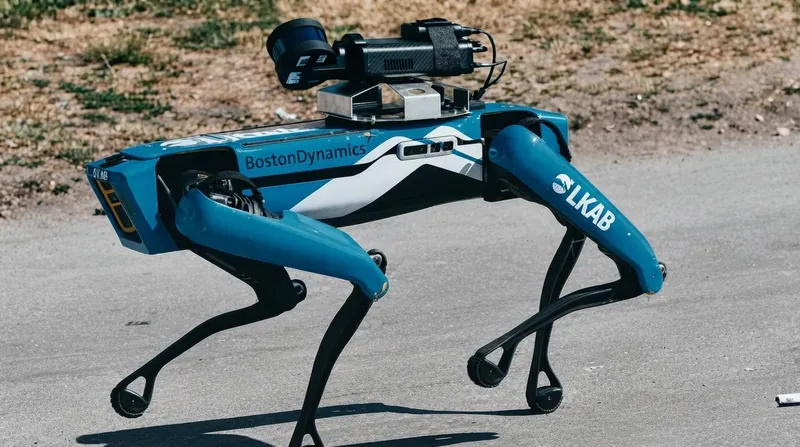
Tesla Starts Optimus Robot Production in Fremont as Quarterly Profit Drops 43%
8 sources
Strain Wave Gearing
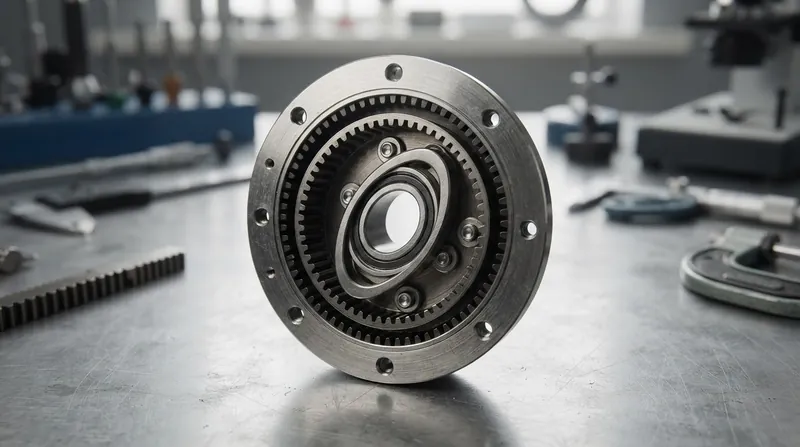
How Elliptic Gear Teeth Transmit Near-Zero Backlash in Strain Wave Drives
3 sources
Industrial Automation
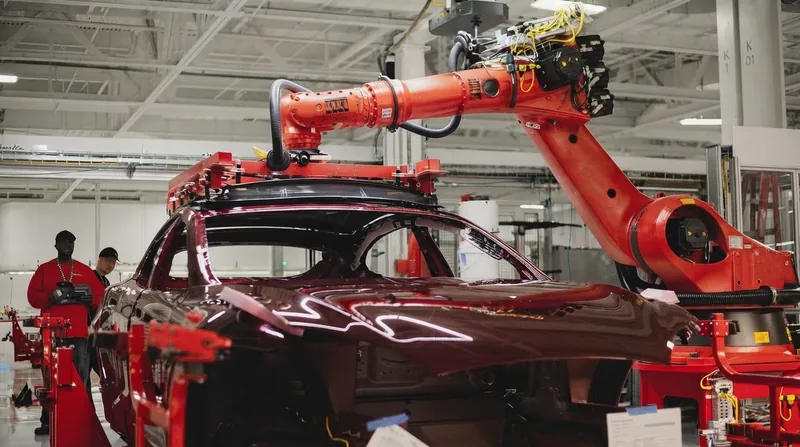
Collinear Joint Axes Collapse the Jacobian Matrix, Forcing Six-Axis Industrial Robots to Halt at Kinematic Singularities
2 sources
Actuator Physics
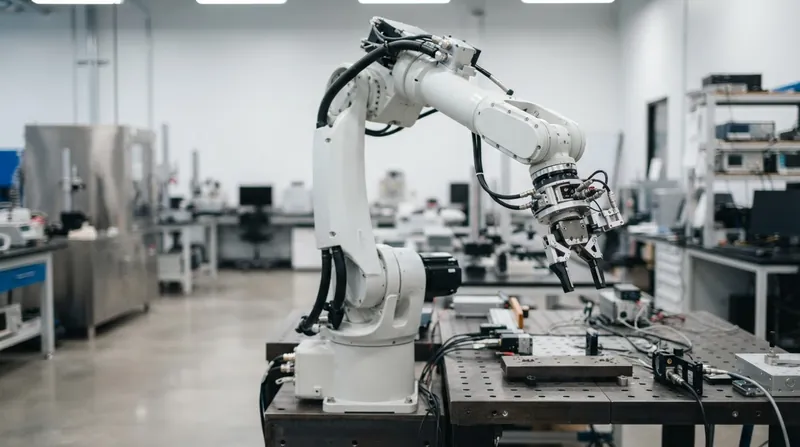
Reflected Rotor Inertia Scales With the Square of the Gear Ratio: Why Legged Robots Abandon Harmonic Drives
6 sources
Comments
Every angle. Every day.
Get Technology stories with full source coverage and perspective breakdowns, free every day.