
Maersk Reports $18.1 Billion Third-Quarter Revenue as Elevated Freight Rates Offset Volume Drop
The Danish shipping group posted a 27 percent revenue increase driven by its ocean division, prompting an upward revision to its full-year guidance. Despite the strong earnings, shares fell as markets weighed future rate normalization and slight declines in cargo volume.
By Marina Lopez

Share this story
A.P. Moller-Maersk generated $18.1 billion in third-quarter revenue, a 27 percent increase from the same period last year, as sustained disruptions in global maritime networks kept ocean freight rates elevated. The Danish logistics group raised its full-year earnings guidance on the strength of the results.[1][3]
The revenue surge was driven almost entirely by the company's Ocean Services division, which accounted for $12.6 billion of the total. That segment saw a 37 percent year-over-year increase in revenue, compensating for a slight dip in overall cargo volumes handled during the quarter.[2][3]
"This quarter demonstrates our ability to convert market opportunities into significantly higher earnings," Maersk stated in its official release, emphasizing the operational agility required to navigate the current environment.[1]
Despite the robust financial performance and the upgraded forecast, Maersk shares fell sharply in early trading following the announcement. The stock dropped by roughly 11.6 percent in the first 60 minutes of trading as markets digested the earnings report and the accompanying executive commentary.[2][5]
Market expectations and future rates
Financial analysts attributed the sell-off to a combination of profit-taking and forward-looking caution. Investors had largely priced in the strong third-quarter performance, shifting their focus toward the sustainability of current freight rates as supply chain pressures eventually ease.[5][6]
The slight decline in container volumes also signaled potential softening in underlying global demand. While high rates have insulated shipping companies from volume drops over the past year, a normalization of those rates would leave revenue more exposed to actual trade flows.[2][6]
"Maersk sinking, despite raising targets," noted MarketScreener, highlighting the disconnect between the company's immediate cash generation and the market's skepticism about its long-term trajectory.[6]
The broader container shipping industry has spent the last 10 months navigating structural bottlenecks, including the ongoing rerouting of vessels away from the Red Sea. These longer transit times have absorbed excess vessel capacity and kept spot rates unusually high.[3]
Analysts point out that the current profitability is heavily dependent on these external constraints. If geopolitical tensions ease and the Suez Canal fully reopens to commercial traffic, the sudden influx of effective vessel capacity could trigger a rapid decline in shipping costs.[4][5]
Operational shifts and capacity
To maintain service networks across extended routes, carriers have had to deploy additional tonnage and operate vessels at higher speeds. This operational pivot has increased fuel consumption and operating costs, though the elevated freight rates have more than covered the difference.[1][2]
The dynamic pushed Maersk's third-quarter profit up by 75 percent compared to the same 90-day period the previous year. The company's ability to manage the complex logistics of rerouted networks while expanding its margins has been a central feature of its 2026 financial narrative.[4]
"Ocean the star performer as Maersk reports a Q3 bump in revenue," The Loadstar observed, emphasizing how the core shipping business continues to anchor the group's wider logistics ambitions.[2]
In response to the strong quarter, Maersk revised its full-year underlying earnings expectations upward. The company now anticipates that the tight supply-demand balance in the ocean freight market will persist through the final months of the year.[1][3]
However, managing this capacity requires constant adjustment. Shipping lines are currently balancing the immediate financial benefits of the disruption against the need to prepare for eventual normalization, carefully managing their fleet deployments to avoid overexposure.[3]
Transitioning toward integrated logistics
Beyond its ocean operations, Maersk has been executing a long-term strategy to transform from a traditional shipping line into an integrated end-to-end logistics provider. The company aims to capture more value from land-based supply chain services, including warehousing and distribution.[1]
While the Ocean division dominated the third-quarter results, the company reported that revenue growth was visible across all its operating units. The logistics and services segments have continued to expand their footprint, securing new contracts despite the volatile macroeconomic environment.[2][3]
The market reaction suggests that investors remain heavily focused on the cyclical nature of the ocean freight business. The transition to a more stable, contract-driven logistics model has not yet insulated the company's valuation from the swings of spot shipping rates.[5][6]
The earnings call itself drew attention, with CEO Vincent Clerc delivering extensive prepared remarks that outlined the company's strategic positioning. The lengthy presentation attempted to contextualize the current windfall within the broader transformation effort.[2]
Clerc's detailed breakdown of the company's performance across all three main units was intended to build confidence in the integrated model. Yet, the immediate stock market response indicated that shareholders are still prioritizing the outsized impact of the ocean division.[2][5]
Navigating the fourth quarter
Looking ahead, the shipping industry faces a complex set of variables as 2026 draws to a close. The resolution or continuation of maritime security issues will dictate whether the current capacity constraints remain in place or begin to unwind.[3][4]
Retailers and manufacturers are also adjusting their inventory strategies in response to the sustained high costs. Some importers have pulled forward their shipments to avoid further rate hikes, which could lead to a softer demand environment in the traditional peak season.[3]
If vessels are able to return to traditional transit routes, the sudden injection of effective capacity could drive freight rates down rapidly. Shipping lines are currently balancing the immediate financial benefits of the disruption against the need to prepare for that eventual normalization.[5]
Key points
- Maersk reported $18.1 billion in third-quarter revenue, a 27 percent year-over-year increase driven primarily by high ocean freight rates.
- The company's Ocean Services division generated $12.6 billion, offsetting a slight decline in overall cargo volumes.
- Despite raising its full-year earnings guidance, Maersk shares fell over 11 percent as investors anticipated future rate normalization.
- The shipping industry continues to benefit financially from extended transit times and capacity constraints caused by ongoing maritime rerouting.
What we don’t know
- Exactly when global shipping routes will normalize and how rapidly freight rates will adjust when they do.
- Whether Maersk's growing land-based logistics contracts can fully offset the eventual decline in ocean freight margins.
How we got here
Early 2026
Maritime security issues force widespread rerouting of container vessels, absorbing excess capacity.
Mid 2026
Spot freight rates surge as supply chains tighten, driving up carrier revenues.
Nov 5, 2026
Maersk reports a 75 percent profit surge for the third quarter and raises its full-year guidance.
Nov 5, 2026
Markets react with skepticism, sending Maersk shares down 11.6 percent in early trading.
- Market Analysts
- Focused on the cyclical peak of freight rates and future volume risks.
- Industry Leadership
- Focused on immediate cash generation and long-term logistics integration.
Perspectives this story doesn't cover
- Retail importers facing higher delivered duty-paid shipping costs.
- Port operators managing the uneven flow of rerouted cargo.
Sources
Source coverage
6 outlets
2 viewpoints surfaced





- [1]A.P. Moller - MaerskIndustry Leadership
Maersk converts market opportunities into significantly higher earnings and raises full-year guidance
Read on A.P. Moller - Maersk → - [2]The LoadstarIndustry Leadership
Ocean the star as Maersk reports Q3 bump in revenue, but drop in volume
Read on The Loadstar → - [3]Container NewsIndustry Leadership
Maersk raises its 2026 earnings guidance after Q3 revenue reaches US$18.1 billion
Read on Container News → - [4]Investing.comMarket Analysts
Maersk hikes guidance as third quarter profit surges 75%
Read on Investing.com → - [5]Investing.comMarket Analysts
Why is AP Moeller - Maersk stock tumbling today?
Read on Investing.com → - [6]MarketScreenerMarket Analysts
Maersk sinking, despite raising targets
Read on MarketScreener →
More in Transportation
See all →Wind Propulsion
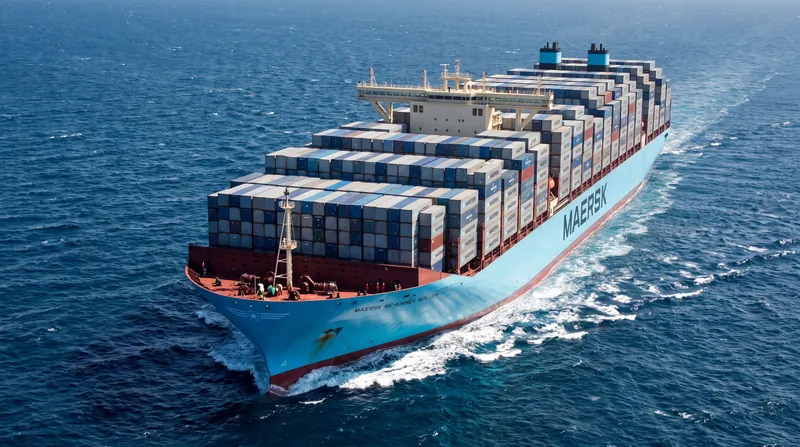
Flettner Rotors in Commercial Shipping: How the Magnus Effect Cuts Fuel Use
15 sources
Marine Engineering
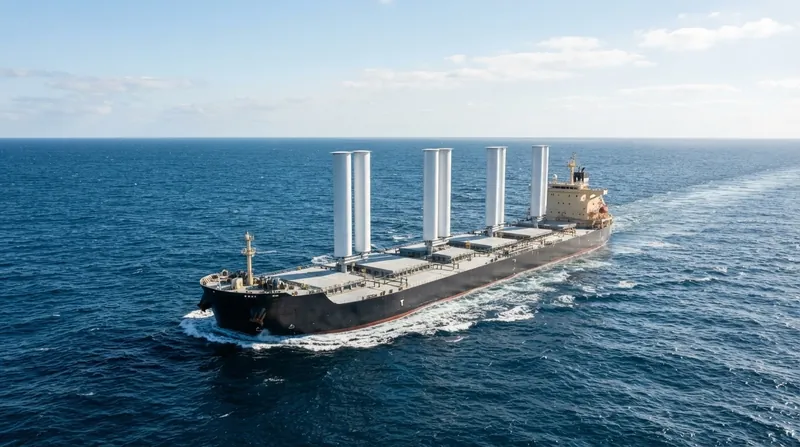
Skewed Blades and Kort Nozzles Quench Cavitation Pulses to Protect Ship Hulls
8 sources
Maritime Physics
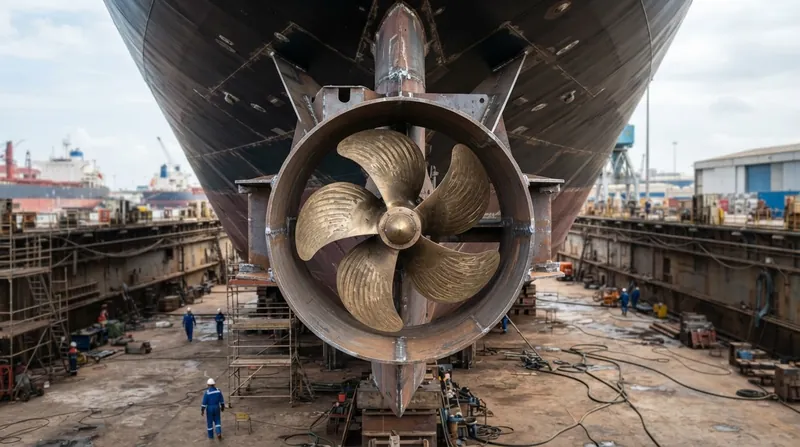
How Twistlocks and Lashing Rods Prevent Container Stacks From Collapsing During Parametric Rolling
6 sources
Cargo Liquefaction
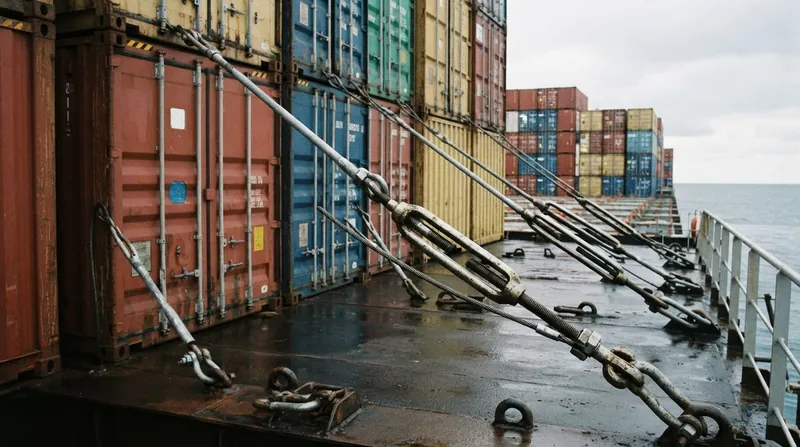
Cyclic Hull Compaction Spikes Pore Water Pressure to Liquefy Solid Ore Cargoes and Capsize Bulk Carriers
6 sources

Comments
Every angle. Every day.
Get Transportation stories with full source coverage and perspective breakdowns, free every day.