
EU Unveils Sustainable Tourism Strategy to Disperse Visitors Beyond Major Hubs
The European Commission has adopted its first comprehensive framework aimed at easing peak-season crowding by directing travelers toward lesser-known regions. The plan emphasizes off-season travel and active mobility, though industry observers note it lacks new dedicated funding.
By Lan Xu

Share this story
The European Commission has formalized its first comprehensive approach to managing the continent's massive visitor economy. Unveiled this week, the EU Sustainable Tourism Strategy aims to maintain Europe's status as the world's top destination while actively mitigating the pressures of overtourism.[5]
The core mechanism relies on spatial and temporal dispersal. Rather than simply capping visitor numbers at famous landmarks, the framework encourages steering travelers toward lesser-known regions and promoting off-season itineraries that swap crowded summer plazas for autumn harvest festivals.[2][5]
European Commissioner for Sustainable Transport and Tourism, Apostolos Tzitzikostas, formally presented the newly published strategy on November 5.[8]
The presentation took place during an EU Tourism Ministers' Summit in Mullingar, Ireland. Local media noted the town "takes centre stage as European tourism leaders gather for landmark summit" to discuss the practical realities of implementing the framework.[3][8]
Shifting the Travel Map
The strategy arrives as Europe grapples with the dual nature of its tourism success. While the sector remains a vital economic engine, intense summer crowding in major hubs has sparked local pushback and strained municipal resources.[2][9]
To counter this concentration, the Commission's plan heavily emphasizes active mobility and alternative routing. By building out infrastructure for slower, more deliberate travel, policymakers hope to naturally distribute economic benefits to rural communities that rarely see international arrivals.[5][6]
Cycling tourism features prominently in the new 2026 documentation. The strategy explicitly recognizes networks like EuroVelo as a "key enabler" for sustainable exploration, linking major transit hubs to quieter provincial towns through dedicated cycling corridors.[6]
The European Travel Commission welcomed the adoption, pointing to recent data that shows the industry is already shifting. The organization highlighted that the strategy was "adopted against background of increasing resilience and reducing seasonality" across the continent.[4]
Industry Reactions and Funding
Despite the broad consensus on the strategy's goals, some industry observers have pointed out structural limitations. The framework largely sits atop existing initiatives rather than introducing sweeping new regulations or mandates.[9]
A primary critique centers on the lack of dedicated financial backing. According to industry analysis, the plan "falls short of presenting measurable targets that would actually support its implementation" or attaching new funding streams specifically earmarked for these regional dispersal efforts.[9]
Without fresh capital, local municipalities may struggle to build the transit links and marketing campaigns needed to draw visitors away from established hotspots. Critics argue that ambitious dispersal goals require equally ambitious municipal budgets to execute properly.[9]
Meanwhile, hospitality representatives are focusing on the business implications. HOTREC, the umbrella association for European hotels, restaurants, and cafés, expressed support for the sustainability goals but urged policymakers to remember the sector's economic backbone.[7]
The association called for immediate "action on SME competitiveness," noting that small and medium-sized enterprises make up the vast majority of Europe's tourism operators and often operate on razor-thin margins.[7]
Any transition toward greener, more dispersed tourism must ensure that the smallest family-run hotels and local restaurants have the tools to adapt and thrive alongside larger corporate operators.[7]
A Year-Round Destination
The push for temporal dispersal—encouraging travel in autumn, winter, and early spring—requires a fundamental shift in how destinations market themselves. The strategy encourages member states to highlight cultural festivals, winter wellness retreats, and regional culinary tours.[2][4]
By smoothing out the peaks and troughs of visitor arrivals, destinations can offer more stable, year-round employment for hospitality workers. This approach aims to replace the precarious seasonal contracts that have long characterized the Mediterranean summer economy.[4]
As the summit in Mullingar concludes, the focus now shifts to individual member states. National tourism boards will be tasked with translating these Brussels-led directives into compelling campaigns that actually change where and when people book their flights in 2027 and beyond.[3][4]
The strategy also touches upon the digitalization of the travel experience. By leveraging data sharing between regions, local tourism boards can better predict crowd surges and redirect travelers to nearby alternatives in real-time through mobile applications.[2][5]
The immediate next step falls to the national tourism ministries returning from Ireland this week. Their upcoming 2027 budget allocations will reveal whether member states are willing to fund the rural infrastructure and off-season marketing required to turn the Commission's dispersal framework into a reality on the ground.[3][8]
Key points
- The European Commission has adopted its first common strategy to maintain Europe's tourism leadership while easing peak-season crowding.
- The framework prioritizes steering travelers toward lesser-known rural regions and promoting off-season visits to reduce strain on major hubs.
- Active mobility, particularly cycling networks like EuroVelo, is highlighted as a central tool for connecting transit centers to provincial towns.
- Industry observers note the plan currently lacks new dedicated funding streams or measurable targets to enforce these dispersal efforts.
Open questions
- How individual member states will fund the infrastructure improvements needed to draw tourists to rural areas without dedicated EU capital.
- Whether the strategy will eventually introduce binding, measurable targets for visitor dispersal in future legislative sessions.
Timeline
Nov 1, 2026
The Department of Enterprise, Trade and Employment announces the upcoming presentation of the strategy in Ireland.
Nov 4, 2026
The European Commission officially adopts the framework to strengthen Europe's position as a leading destination.
Nov 5, 2026
Commissioner Apostolos Tzitzikostas presents the strategy to continental leaders at the EU Tourism Ministers' Summit in Mullingar.
- European Commission
- Focuses on maintaining Europe's global tourism dominance while mitigating overtourism through strategic dispersal.
- Active Mobility Advocates
- Views the strategy as a critical opportunity to center cycling and slow travel in Europe's infrastructure planning.
- Hospitality Industry
- Prioritizes the economic viability of small and medium-sized enterprises during the transition to sustainable models.
- Industry Analysts
- Critiques the framework for lacking the measurable targets and dedicated funding necessary to force real change.
Perspectives this story doesn't cover
- Local residents in currently over-touristed cities
- Municipal governments in rural areas tasked with building new infrastructure
Sources
Source coverage
9 outlets
4 viewpoints surfaced








- [1]Travel TomorrowEuropean Commission
EU puts tourism at the heart of its policy agenda with first common strategy
Read on Travel Tomorrow → - [2]EUbusinessEuropean Commission
EU looks to strengthen Europe's position as world's leading tourism destination
Read on EUbusiness → - [3]Westmeath Examiner
Mullingar takes centre stage as European tourism leaders gather for landmark summit
Read on Westmeath Examiner → - [4]European Travel Commission
EU Sustainable Tourism Strategy adopted against background of increasing resilience and reducing seasonality
Read on European Travel Commission → - [5]European CommissionEuropean Commission
Commission strengthens Europe's position as the world's leading tourism destination
Read on European Commission → - [6]EuroVeloActive Mobility Advocates
EU Sustainable Tourism Strategy recognises active mobility as key enabler and includes references to cycling tourism and EuroVelo
Read on EuroVelo → - [7]Hotel News ResourceHospitality Industry
HOTREC Supports EU Sustainable Tourism Strategy, Calls for Action on SME Competitiveness
Read on Hotel News Resource → - [8]Department of Enterprise, Trade and Employment
European Commissioner for Sustainable Transport and Tourism, Apostolos Tzitzikostas, will present the newly published EU Sustainable Tourism Strategy at an EU Tourism Ministers' Summit in Mullingar tomorrow, 5 November
Read on Department of Enterprise, Trade and Employment → - [9]SkiftIndustry Analysts
EU’s Sustainable Tourism Plan Aims to Spread Visitors Out — With No Funding or Targets
Read on Skift →

More in Travel
See all →Oceanography
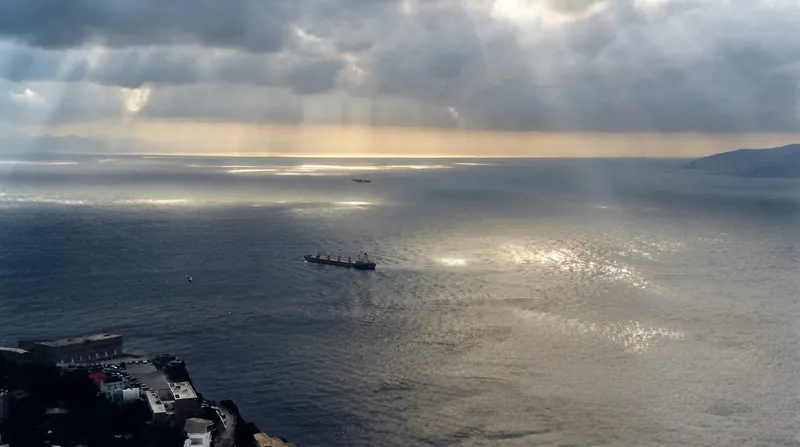
Gibraltar's Chokepoint and an 8-Hour Resonance Keep Mediterranean Tides Under 40 Centimeters
4 sources
Aviation Infrastructure
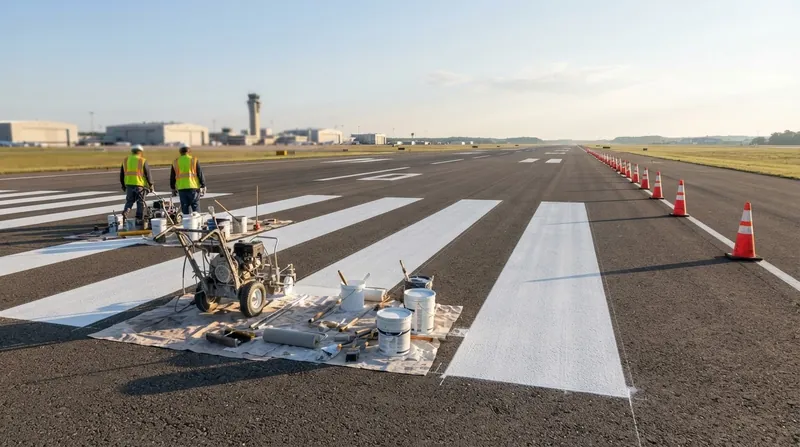
How Magnetic North's Drift Forces Airports to Renumber Their Runways
5 sources
Cabin Pressurization
The 8,000-Foot Maximum and the 8.6 PSI Differential: How FAA Regulations Actually Dictate Commercial Aircraft Cabin Pressure
5 sources

Resort Acquisitions
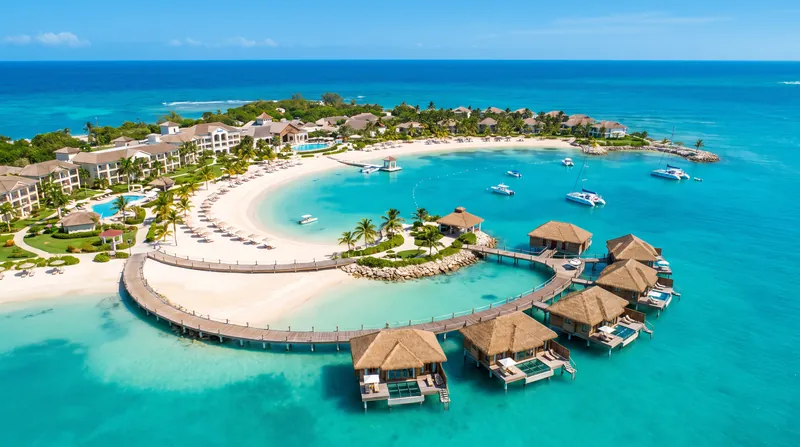
Royal Caribbean Acquires 50 Percent Stake in Sandals Resorts in $3 Billion Joint Venture
5 sources
Comments
Every angle. Every day.
Get Travel stories with full source coverage and perspective breakdowns, free every day.