
Why Bentley Extended Its Combustion and Hybrid Production Beyond 2035
Facing cooling demand for ultra-luxury EVs, Bentley has revised its Beyond100 strategy, extending the life of its internal combustion and plug-in hybrid models until at least 2035. The British automaker will still launch its first fully electric urban SUV in 2026, but is pivoting to high-performance hybrids to bridge the gap.
By Tao Yang

Share this story
The automotive industry spent the early 2020s racing toward a fully electric future, with luxury brands promising to abandon internal combustion entirely by 2030. But the buyers actually writing the checks for ultra-luxury vehicles are pushing back. They want the visceral roar of a V8, the mechanical engagement of a grand tourer, and the convenience of rapid refueling on long cross-country drives.
Automakers and regulators envisioned a seamless transition to battery-electric vehicles by the end of the decade, but the ultra-luxury market is proving to be a different landscape entirely. Buyers spending upwards of $250,000 on a bespoke vehicle are increasingly rejecting the mandated timeline, demanding the tactile feedback and unrestricted range that battery technology cannot yet replicate for heavy, high-performance vehicles.[1][6]
Acknowledging this reality, Bentley Motors has fundamentally altered its long-term product strategy. The British automaker recently announced that it is abandoning its ambitious goal to become an electric-only brand by 2030. Under a revised roadmap dubbed "Beyond100+," Bentley will extend the production of its internal combustion engines and plug-in hybrid models until at least 2035, ensuring that buyers can still choose gasoline-powered grand touring for another decade. The move marks a significant departure from the industry's previous trajectory and highlights the friction between regulatory ambitions and consumer realities.[2][3]
The shift is a direct concession to the preferences of high-net-worth individuals, particularly in North America and the Middle East, where EV charging infrastructure remains sparse across vast distances. Bentley CEO Dr. Frank-Steffen Walliser has been candid about the pivot, noting a distinct dip in demand for luxury electric vehicles. For a buyer configuring a custom Continental GT or Flying Spur, the powertrain is as much a part of the luxury experience as the hand-stitched leather—and for many, silent electric motors simply lack the required emotional engagement and acoustic drama.[1][6]
This does not mean Bentley is abandoning electrification; rather, the company is leaning heavily into high-performance plug-in hybrids as the ultimate bridge technology. By pairing a potent twin-turbo V8 with an electric motor and a substantial battery pack, Bentley can offer the best of both worlds. Owners can commute silently through zero-emission urban zones on battery power, then rely on the combustion engine for spirited weekend drives or long-distance travel without range anxiety.[1][4]
The engineering behind these new "Ultra Performance Hybrids" is formidable. The latest iteration of the Continental GT Speed, for example, utilizes a hybrid system that generates a combined output of over 770 horsepower. This setup actually outperforms the legendary W12 engine that Bentley retired earlier this year, proving that hybridization can enhance performance rather than merely serving as a regulatory compromise. The brand is positioning these hybrids not as stepping stones, but as pinnacle performance models in their own right.[1][4]
The broader Volkswagen Group ecosystem also played a crucial role in Bentley's strategic pivot. Bentley shares platforms, architectures, and software development with sister brands Porsche and Audi. When Porsche recently realigned its own product strategy and delayed the development of the highly anticipated SSP-61 electric vehicle platform into the 2030s, Bentley was forced to recalculate its product cadence. The shared technological foundation meant that Bentley could not easily forge ahead with a fully electric lineup in isolation, necessitating a longer runway for its existing architectures.[1][4]
Despite the delay in its all-electric transition, Bentley is still moving forward with its first dedicated EV. Slated for a global debut in late 2026 with deliveries beginning in 2027, the yet-unnamed model is described by the company as the world's first "Luxury Urban SUV." Designed to be slightly more compact than the flagship Bentayga, this new electric vehicle is aimed squarely at city dwellers who prioritize zero-emission running and maneuverability over cross-continental touring.[3][4]
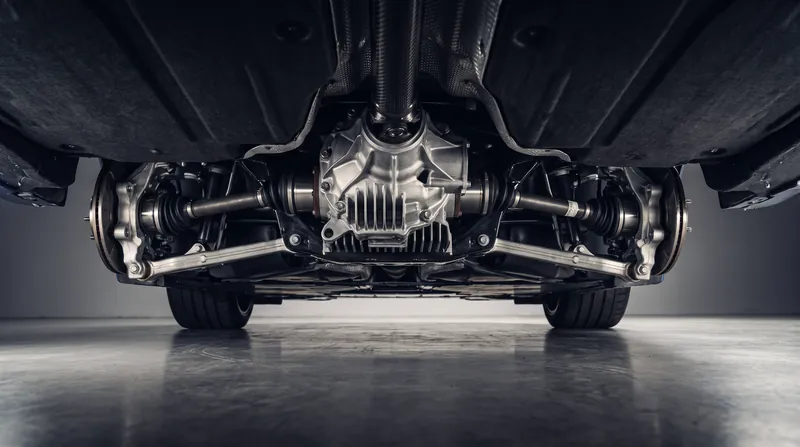
The upcoming electric SUV will be built at Bentley's historic Crewe headquarters, which is currently undergoing a massive transformation into a carbon-neutral "Dream Factory." While exact specifications remain guarded, the company has promised industry-leading charging capabilities, claiming the vehicle will be able to add 100 miles of range in under seven minutes. Furthermore, Bentley is investing in sustainable motor technologies, including a research project aimed at developing an "e-axle" that eliminates the need for rare-earth magnets, addressing both environmental and supply chain concerns.[4][5][6]
For the luxury car buyer, Bentley's revised strategy offers a reassuring level of choice. The mandate to switch entirely to battery power has been replaced by a flexible approach that respects the diverse needs of a global clientele. Whether a customer wants a plug-in hybrid Bentayga for the school run, a roaring V8 Continental GT for the open road, or a compact electric SUV for navigating London or Los Angeles, the brand intends to keep all options on the table for the foreseeable future.[1][2]
Ultimately, the Beyond100+ strategy reflects a maturing automotive market where the initial euphoria surrounding electric vehicles is being tempered by practical realities. Luxury automakers are realizing that true luxury means not forcing a customer's hand. By extending the life of the combustion engine and embracing the plug-in hybrid as a long-term solution, Bentley is betting that the transition to an electric future will be a gradual evolution rather than a sudden revolution.[1][6]
Key points
- Bentley has officially abandoned its goal to become an electric-only automaker by 2030, extending its timeline to at least 2035.
- The revised Beyond100+ strategy will keep internal combustion and plug-in hybrid models in production for another decade.
- The shift is driven by cooling demand for luxury EVs and a strong customer preference for the range and engagement of combustion engines.
- Bentley will still launch its first fully electric vehicle, a compact luxury urban SUV, in late 2026.
What we don’t know
- Whether the European Union will adjust its 2035 ban on the sale of new internal combustion engine vehicles, which could force another strategy shift.
- How the upcoming Luxury Urban SUV will be priced and positioned relative to the flagship Bentayga.
- The exact specifications and real-world electric range of Bentley's next-generation battery technology.
How we got here
Nov 2020
Bentley announces its original Beyond100 strategy, pledging to become an EV-only brand by 2030.
Mar 2024
Bentley delays its first EV launch to late 2026 due to software and platform development challenges.
Jul 2024
The company officially ends production of its iconic W12 combustion engine after two decades.
Nov 2025
Bentley unveils the Beyond100+ strategy, officially abandoning the 2030 EV-only goal and extending hybrid production to at least 2035.
Late 2026
Bentley is scheduled to reveal its first fully electric model, a luxury urban SUV.
- Ultra-Luxury Consumers
- Buyers in this segment prioritize emotional engagement, heritage, and convenience over mandated environmental timelines.
- Automotive Executives
- Industry leaders are balancing massive electrification investments with the immediate need to maintain profitability and satisfy current customer demand.
- Environmental Regulators
- Policymakers are pushing for rapid decarbonization, creating friction with automakers extending the life of combustion engines.
Perspectives this story doesn't cover
- Independent EV Infrastructure Developers
- Battery Supply Chain Manufacturers
Sources
Source coverage
6 outlets
3 viewpoints surfaced






- [1]CarScoopsUltra-Luxury Consumers
Bentley's EV-Only Strategy Fell Apart And The Timing Says A Lot
Read on CarScoops → - [2]ESG DiveAutomotive Executives
Bentley abandons plans to build only EVs by 2035
Read on ESG Dive → - [3]The GuardianEnvironmental Regulators
Bentley delays its switch to electric-only cars from 2030 to 2035
Read on The Guardian → - [4]WardsAutoAutomotive Executives
Bentley Profits Dive as it Readies for BEV Future
Read on WardsAuto → - [5]Green Car ReportsEnvironmental Regulators
First electric Bentley due in 2026 will say no to rare-earth magnets
Read on Green Car Reports → - [6]ForbesUltra-Luxury Consumers
Bentley CEO Dr Frank-Steffen Walliser on the future of luxury
Read on Forbes →
More in Automotive & Transportation
See all →EV Architecture
Mercedes-Benz Shifts Global Compact EV R&D to China, Taps Geely Tech for 'Phoenix' Platform
6 sources
Luxury Auto
Rolls-Royce Scraps 2030 All-Electric Deadline as V12 Demand Surges and Spectre EV Sales Drop 47%
4 sources
Suspension Tech
Magnetorheological Fluid's Microsecond Response Time: How Active Dampers Trade Comfort for Cornering Stiffness
8 sources
Torque Vectoring
How Clutch Packs and Planetary Gears Erase Understeer in Performance Cars
7 sources
Comments
Every angle. Every day.
Get Automotive & Transportation stories with full source coverage and perspective breakdowns, free every day.