
How Clutch Packs and Planetary Gears Erase Understeer in Performance Cars
By actively over-driving the outside wheel during a turn, modern torque-vectoring differentials eliminate the front-end push that plagues traditional drivetrains. For buyers weighing performance packages, this technology shifts the limit of cornering grip from the mechanical axle to the vehicle's onboard yaw sensors.
By Derya Kaplan

Share this story
The moment a driver turns the steering wheel, the outside tires must travel a longer arc than the inside tires. If the rear axle locks them together, the car resists turning; if it leaves them completely open, power spins away uselessly on the unloaded inside wheel.
The outcome of a corner is determined right here, at the differential, before the chassis even begins to rotate. For a buyer evaluating a modern performance car, the hardware sitting between the rear wheels dictates whether the vehicle pushes wide into understeer or tracks precisely through the apex.
Traditional open differentials, standard on most commuter vehicles since the early 20th century, split torque evenly. When a driver accelerates out of a tight corner, weight transfers to the outside rear wheel. The inside wheel loses traction and spins, and because an open differential can only send as much torque to the outside wheel as the inside wheel can handle, forward momentum stalls.[2]
Automakers historically solved this with mechanical limited-slip differentials. As MAT Foundry Group outlines in their technical documentation, these units use spring-loaded clutch packs or helical gears to physically bind the two axles together when one wheel begins to slip. While effective for maintaining forward momentum, mechanical limited-slip differentials are reactive. They require wheelspin to engage, and locking the rear axle inherently pushes the front of the car straight ahead—a phenomenon known as understeer.[2]
Active torque vectoring differentials rewrite this sequence. Instead of waiting for a wheel to slip, these systems use electronically controlled clutch packs and planetary gearsets to proactively send power to the outside wheel. "Torque vectoring is the ability to vary the torque to each half-shaft," explains PistonHeads in their 2018 technical breakdown. By over-driving the outside wheel, the differential creates a yaw moment—a rotational force that physically pivots the car into the turn before the front tires lose grip.[1][6]
The architecture relies on planetary gearsets mounted on either side of a traditional differential carrier. MathWorks documents this configuration in their active differential gear models, noting that the system uses an electric motor or hydraulic actuator to apply pressure to a multi-plate clutch. When the clutch engages, it connects the axle shaft to the planetary gearset, which spins the outside wheel up to 10 percent faster than the differential carrier itself.[4]
This hardware is governed by a network of sensors monitoring steering angle, throttle position, lateral acceleration, and wheel speed up to 100 times per second. Before the driver even reaches the apex of a corner, the vehicle's electronic control unit calculates the optimal torque distribution. If the sensors detect the onset of understeer, the computer clamps the outside clutch pack, instantly shifting up to 100 percent of the available rear torque to the loaded outside tire.[1][7]
Autocar's 2019 engineering analysis highlights the transformative effect of this proactive distribution. "The effect is to 'yaw' or rotate the car around its vertical axis, helping it turn into the corner," the publication notes. This mechanism allows a heavy, front-engine luxury sedan to exhibit the agility of a much smaller, mid-engine sports car. For a buyer cross-shopping a 4,500-pound grand tourer against a dedicated sports coupe, the presence of an active differential often bridges the handling gap.[5]
Automakers frequently market "torque vectoring" on entry-level models, but buyers must distinguish between active differentials and brake-based systems. As Carwow detailed in 2022, brake-based vectoring simply applies the brake caliper to the inside spinning wheel, forcing the open differential to send power across the axle. While this mimics the rotational effect, it consumes brake pads, generates excess heat, and ultimately slows the vehicle down.[3]
True mechanical torque vectoring requires heavy, expensive hardware. A modern active rear differential can add over 80 pounds to a vehicle's curb weight and thousands of dollars to the sticker price. This is why the technology remains concentrated in high-margin luxury performance vehicles and heavy electric vehicles, where the sheer mass of the battery pack makes mechanical yaw control a necessity rather than a luxury.[7]
The transition to electric architectures is currently reshaping how this torque is delivered. While combustion vehicles rely on complex planetary gears to route power from a single driveshaft, dual-motor electric axles achieve the same effect by simply commanding the outside motor to spin faster. This software-defined approach eliminates the heavy clutch packs entirely, though it requires precise calibration to avoid unnatural handling characteristics.[6][7]
For the owner behind the wheel, the sensation of an active differential is distinct. Instead of the steering growing heavy and the front tires scrubbing across the pavement as the car understeers, the vehicle feels as though it is being pulled into the turn by an invisible tether. The harder the driver presses the accelerator, the tighter the car turns—a counterintuitive response that requires recalibrating decades of driving habits.[1]
From an ownership perspective, active differentials introduce new maintenance requirements. The hydraulic fluids and friction modifiers that allow the clutch packs to slip smoothly degrade over time. Manufacturers typically mandate differential fluid changes every 30,000 to 40,000 miles. Neglecting this service leads to clutch chatter—a physical shuddering felt through the chassis during tight, low-speed maneuvers like parking.[7]
Despite their capability, active differentials cannot manufacture grip where none exists. If the outside tire exceeds its maximum slip angle, sending more torque will simply break traction entirely, resulting in sudden oversteer. The system relies entirely on the mechanical grip provided by the tire compound and the road surface, acting only as a multiplier for the traction that is already there.[5][7]
The next evolution of this hardware focuses on integration with active suspension systems and rear-wheel steering. By networking the differential with adaptive dampers, engineers can dynamically increase the vertical load on the outside tire precisely when the differential sends it maximum torque. For buyers navigating the current performance market, verifying whether a vehicle uses true planetary gear vectoring or a brake-based simulation remains the most critical step in evaluating its handling claims.[7]
Where opinion splits
Performance Engineers
Automotive engineers view active differentials as a necessary tool to combat the rising curb weights of modern vehicles.
As luxury cars and electric vehicles grow heavier to accommodate battery packs and safety equipment, traditional suspension tuning is no longer sufficient to mask the mass. Engineers argue that active torque vectoring is the only physical mechanism capable of making a 4,500-pound vehicle rotate like a lightweight sports car. By using engine torque to create a yaw moment, they can overcome the immense forward momentum that would otherwise push a heavy vehicle into terminal understeer.
Traditional Driving Purists
Enthusiasts often prefer the predictable, analog response of a mechanical limited-slip differential.
For drivers who frequent race tracks, the software-defined nature of an active differential can feel synthetic. Purists argue that because the computer is constantly shifting torque based on its own algorithms, the car's handling balance changes mid-corner. A traditional mechanical limited-slip differential, while prone to initial understeer, locks up predictably every time, allowing an experienced driver to manage the chassis entirely with their right foot rather than relying on a microprocessor.
Cost-Conscious Buyers
Everyday drivers weigh the high cost of planetary gearsets against the adequate performance of brake-based systems.
A true active differential adds significant cost, weight, and maintenance complexity to a vehicle. For buyers who do not push their cars to the limit on a track, brake-based torque vectoring—which uses the existing ABS hardware to pinch the inside brake rotor—provides a similar rotational feel during spirited street driving. These buyers argue that the thousands of dollars saved on the initial purchase price, plus the avoidance of expensive 30,000-mile differential fluid services, make brake-based systems the more logical choice for daily commuters.
- Performance Engineers
- Argue that active differentials are essential for managing the increasing weight of modern luxury and electric vehicles, allowing heavy cars to handle nimbly.
- Traditional Driving Purists
- Argue that active systems create an artificial handling feel that isolates the driver from the true mechanical limits of the chassis.
- Cost-Conscious Buyers
- Point out that brake-based torque vectoring provides most of the real-world benefit for daily driving without the added weight and maintenance costs.
Sources
Source coverage
7 outlets
3 viewpoints surfaced







- [1]PistonHeads UKTraditional Driving Purists
What is torque vectoring? PH Explains
Read on PistonHeads UK → - [2]MAT Foundry Group
Types of Differential and How They Work
Read on MAT Foundry Group → - [3]CarwowCost-Conscious Buyers
Torque vectoring explained
Read on Carwow → - [4]MathWorksPerformance Engineers
Spur or planetary active differential gear
Read on MathWorks → - [5]AutocarPerformance Engineers
Under the skin: the technology behind torque vectoring
Read on Autocar → - [6]Wikipedia
Torque vectoring
Read on Wikipedia → - [7]Factlen Editorial Team
Synthesis by Factlen editorial team
Read on Factlen Editorial Team →
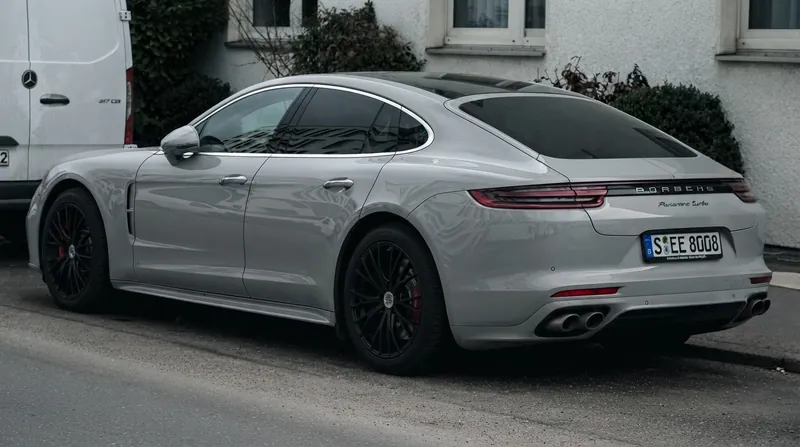
More in Automotive & Transportation
See all →Auto Industry Crisis
German Auto Workers at BMW, Mercedes, and Porsche Join Volkswagen Protests Against Mass Job Cuts
5 sources

Auto Industry
Volkswagen Takes €6 Billion Writedown on Porsche Stake Amid Sales and Margin Declines
4 sources
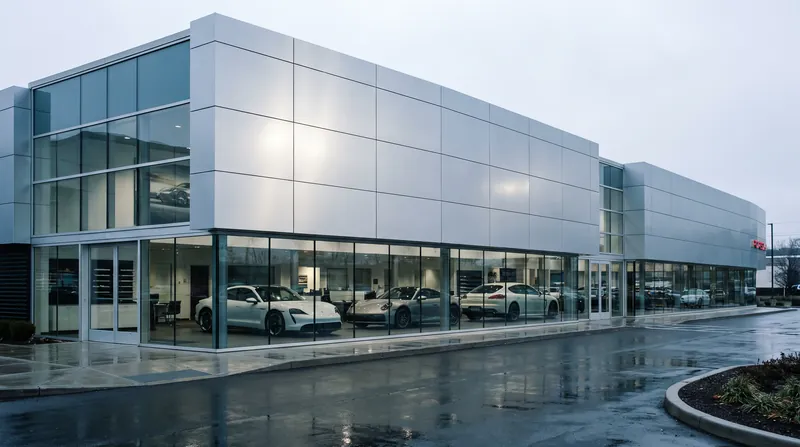
Carbon Fiber Tech
The Anisotropy of Carbon Fiber: How Fiber Orientation Dictates Strength and Stiffness in Different Directions
7 sources
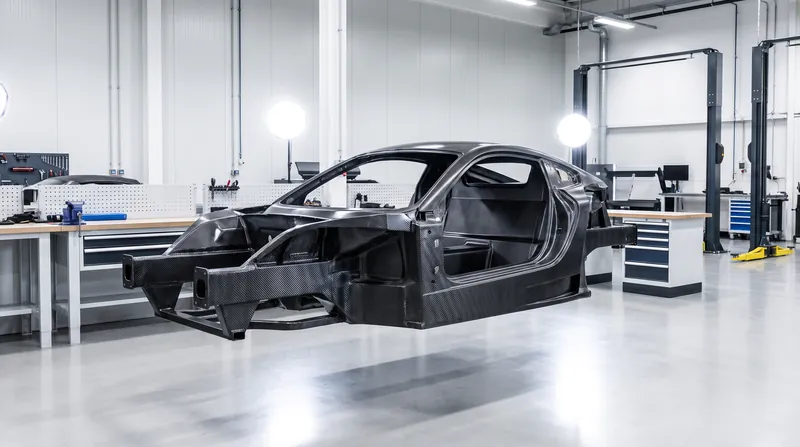
EV Efficiency
Volkswagen's Mission Efficiency Uses Aerodynamics to Reach 9.59 Miles Per Kilowatt-Hour
3 sources
Comments
Every angle. Every day.
Get Automotive & Transportation stories with full source coverage and perspective breakdowns, free every day.