
Senate Democrats Block Must-Pass Defense Bill Over Iran War and Israel Integration
A coalition of Senate Democrats has successfully filibustered the annual defense authorization bill, citing fierce opposition to the ongoing U.S. conflict with Iran and provisions deepening military integration with Israel. The legislative blockade threatens to delay military funding amid escalating clashes in the Persian Gulf.

How this story has developed
This report is part of a developing story — read the earlier chapters below.
- The End of Global Oil Security: How the Strait of Hormuz Conflict Rewrites the Rules of Energy Geopolitics
- U.S. and Iran Weigh Potential Peace Deal to Reopen Strait of Hormuz Amid Conflicting Claims
- US-Iran Ceasefire Falters as Regional Strikes Resume and US House Weighs War Powers Resolution
- One Dead, Dozens Injured After Drone Strike Hits Kuwait International Airport Amid US-Iran Escalation
- US and Iran Exchange Direct Strikes in the Gulf, Shattering Ceasefire Hopes
- U.S. Launches Strikes on Iranian Military Targets Following Downing of Army Helicopter
- Military Strikes Destroy Iranian Water Facilities Near Strait of Hormuz, Prompting War Crime Warnings
- The Stakes of Kharg Island: Why the U.S. is Threatening Iran's Oil Fortress
- Trump Halts Planned Strikes on Iran, Claims Peace Deal is Imminent Despite Tehran's Caution
- Risk the Strait or Wait: The Costly Dilemma Trapping 500 Ships in the Persian Gulf
- Trump Rejects Leaked Iran Ceasefire Terms as 'Fake News' Amid Fragile Negotiations
- US and Iran Reach Final Text for Peace Agreement Following Pakistani Mediation
- Israel Strikes Beirut Suburbs Following Ceasefire Violation as U.S.-Iran Peace Deal Hangs in Balance
- Hegseth Clashes With CBS Over U.S. Munitions Crisis as Iran War Drains Stockpiles
- US and Iran Reach Deal to Reopen Strait of Hormuz, Ending Four-Month Global Trade Blockade
- Economic Rebound in Focus as U.S.-Iran Conflict Winds Down
- US and Iran Sign Preliminary Deal to End 109-Day War: What the MoU Actually Says
- US and Iran Reach Historic Truce to End 2026 War, but Regional Tensions Persist
- Senate Blocks Bid to Limit Trump's War Powers as US-Iran Peace Deal Nears
- Trump Rebukes Netanyahu Over Lebanon Offensive as US-Iran Peace Deal Advances
- From Supply Shock to Oil Glut: How the Iran War is Destroying Global Energy Demand
- U.S. and Iran Agree to 60-Day Ceasefire MOU Featuring Immediate Oil Waivers and $300 Billion Investment Framework
- Vance Rebukes Israeli Critics of U.S.-Iran Peace Agreement, Warning Against Alienating 'Only Powerful Ally'
- Vance Postpones Switzerland Trip for Iran Nuclear Talks Amid Friction with Israel and EU Sanctions Stance
- Vance Delays Switzerland Trip for Iran Talks, Rebukes Israeli Critics of Peace Deal
- Public Support Wanes as Congress Questions the Mounting Costs of the US-Iran Conflict
- Trump's $1.5 Trillion Military Budget Stalls as Congress Balks at Iran War Costs
- U.S. and Iran Postpone High-Stakes Nuclear Talks in Switzerland Amid Regional Tensions
- Iran Closes Strait of Hormuz, Shattering Three-Day-Old Ceasefire Over Lebanon Strikes
- Iran Halts Strait of Hormuz Traffic as Regional Tensions Escalate Over US-Brokered Deal
- Iran Declares Strait of Hormuz Closed Over Lebanon Strikes; U.S. Military Denies Blockade
- US and Iran Open Nuclear Talks in Switzerland Amid Dispute Over Strait of Hormuz
- U.S. and Iran Launch 60-Day Push for New Nuclear and Security Agreement in Switzerland
- US and Iran Claim Progress in Peace Talks as Trump Threats Complicate Vance's Diplomacy
- US Eases Iran Oil Sanctions as Tehran Agrees to Resume Nuclear Inspections
- US and Iran Agree to Lebanon 'De-Confliction Cell' to Salvage Regional Peace Talks
- US Waives Iranian Oil Sanctions and Releases $12 Billion in Exchange for Nuclear Inspections
- US Issues Sweeping Iran Oil Sanctions Waivers, Reshaping Global Energy Markets
- Iran and Oman Advance Plans to Toll the Strait of Hormuz: What It Means for Global Trade
- US-Iran Crisis and Peace Push: Strait of Hormuz Tolls, Nuclear Inspections, and the Senate Vote Explained
- Senate Passes Historic War Powers Resolution on Iran as NATO Praises Ceasefire Deal
- US-Iran Ceasefire Reopens Strait of Hormuz, Easing Global Shipping and Oil Prices
- UN Nuclear Chief Says Inspectors Will Visit Iran Sites Under Fragile War Deal
- Trump Rebukes NATO Over Iran War as White House Seeks $87.6 Billion to Replenish Military
- Iran Strikes Commercial Ship in Strait of Hormuz, Halting UN Evacuation Route
- US Strikes Iranian Missile Sites Following Drone Attack on Cargo Ship, Testing Fragile Ceasefire
- Iran Launches Drone Attack on Bahrain Targeting US Military After Retaliatory US Strikes
- FACT CHECK: Did Iran Request a Meeting With the U.S. in Doha?
- US Warned Iran of Alleged Israeli Plot to Assassinate Negotiators During Ceasefire Talks
- Trump Signs New Iran Executive Orders, Threatens to Decimate Infrastructure by Tomorrow Night
- U.S. Launches Retaliatory Strikes on Iran and Revokes Oil Waivers Following Strait of Hormuz Attacks
- The New Middle East Order: How China Brokered a Ceasefire After U.S. and Israeli Strikes on Iran
- The Collapse of the Islamabad Memorandum: Analyzing the Return to US-Iran Hostilities and the Global Economic Fallout
- Trump Suggests Standing Order to Attack Iran if Assassinated, Leaving Execution to VP Vance
- U.S. Imposes 20% Tariff on Strait of Hormuz Cargo, Reinstates Naval Blockade on Iran
- Senate Democrats Block Must-Pass Defense Bill Over Iran War and Israel Integration (this article)
- The Evidence Pack: Analyzing the Resumption of US-Iran Strikes and Competing Radar Claims
- Global Real Estate Investment Volumes Slip as Iran Conflict Triggers 'State-Altering Shock' and Capital Pullback
- Iran Rejects U.S. Ceasefire Proposal and Threatens Tel Aviv as Trump Weighs 'Massive Attack'
- U.S. General Warns Pentagon of Insufficient Naval Forces to Protect Israel from Iranian Missiles
- Is the Strait of Hormuz Closure a Supply Shock That Has Rendered Central Bank Policy Obsolete?
- US-Iran War Escalates to Second Maritime Front as Houthis Blockade Bab el-Mandeb Strait
- How the Strait of Hormuz Crisis Turned Global Food Security into a Geopolitical Weapon
- $75M Esports World Cup Relocates to Paris Amid Middle East Security Concerns
- Esports Nations Cup Postponed to 2027 Citing 'Regional Uncertainty,' Following EWC Relocation
- AG.AL Wins $7 Million Esports World Cup Club Championship, Denying Team Falcons Third Title
- Esports World Cup 2026 Viewership Jumps 37%, Driven by Kick and 300% Growth in Hindi Broadcasts
- Defense Hawks
- Believes stalling the bill endangers deployed troops and emboldens adversaries in the Middle East.
- Anti-War Coalition
- Argues that passing the bill without debate effectively authorizes an undeclared war with Iran and unchecked military integration.
- Institutional Pragmatists
- Focuses on the necessity of passing the annual bill to maintain military readiness and administrative function.
Perspectives this story doesn't cover
- Rank-and-file military personnel whose pay raises are delayed
- Defense contractors facing procurement freezes
Why this matters
The National Defense Authorization Act (NDAA) has passed consecutively for over six decades; its obstruction freezes critical military funding, troop pay raises, and strategic deployments. If unresolved, the standoff could force a temporary halt to certain Pentagon operations and reshape U.S. military posture during an active conflict in the Persian Gulf.
Key points
- Senate Democrats blocked the $895 billion National Defense Authorization Act, denying the 60 votes needed to advance.
- The holdouts are protesting the ongoing U.S. military conflict with Iran and demanding a War Powers vote.
- Lawmakers also objected to provisions mandating deeper operational integration between U.S. and Israeli forces.
- Republicans condemned the filibuster, arguing it endangers U.S. troops currently under fire in the Middle East.
- The standoff threatens to delay military pay raises and critical weapons procurement if unresolved.
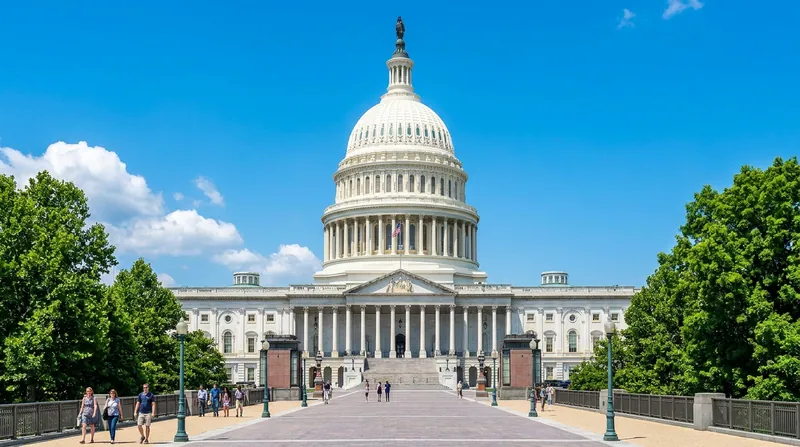
The US Senate has hit a historic legislative wall after a coalition of Democrats successfully blocked the advancement of the annual National Defense Authorization Act (NDAA). The $895 billion must-pass bill was derailed late Tuesday when 44 Democratic and Independent senators voted against cloture, denying the 60 votes required to move the legislation forward. The revolt stems from deep intra-party opposition to the administration's ongoing military engagement with Iran and controversial provisions that would further integrate U.S. and Israeli military command structures.[1][2][4]
The legislative blockade arrives at a precarious moment for U.S. forces in the Middle East. Over the past 48 hours, the United States has resumed a naval blockade on Iranian ports and conducted a wave of airstrikes, while the Islamic Revolutionary Guard Corps (IRGC) claims to have targeted U.S. military sites in the Gulf. Progressive lawmakers argue that passing the defense bill in its current form effectively rubber-stamps an undeclared war, providing unchecked funding for a conflict they warn could spiral into a regional conflagration.[3]
Compounding the anti-war sentiment is a new rider attached to the NDAA that mandates deeper operational integration between the U.S. Central Command (CENTCOM) and the Israel Defense Forces (IDF). The provision, championed by conservative hawks, aims to create a unified air-defense network across the Middle East to counter Iranian ballistic missiles and drone swarms. However, dissenting Democrats argue the language bypasses congressional oversight and risks drawing American troops directly into localized Israeli conflicts without a clear exit strategy.[2][5]
Republican leadership immediately condemned the filibuster, accusing Democrats of abandoning American troops during an active crisis. Senate conservatives argued that while Iranian missiles are being fired at servicemembers, the opposition party is playing political games with the very funding needed to protect them. Conservative outlets and defense hawks maintain that stalling the NDAA projects weakness to adversaries in Tehran and Beijing at a time when global deterrence is already fraying.[5]
Republican leadership immediately condemned the filibuster, accusing Democrats of abandoning American troops during an active crisis.
The Democratic holdouts, led by members of the Senate Foreign Relations and Armed Services committees, insist they are not attempting to defund the military. Instead, they are demanding floor votes on two specific amendments: one that would invoke the War Powers Resolution to require explicit congressional authorization for offensive strikes against Iran, and another stripping the mandatory U.S.-Israel integration clauses. Lawmakers leading the charge stated they refuse to sign a blank check for an endless war in the Gulf.[1][4]
The immediate fallout of the blocked bill is a logistical nightmare for the Pentagon. The NDAA authorizes everything from the procurement of new munitions to a planned 4.5% pay raise for active-duty troops. While actual appropriations are handled in a separate bill, the NDAA provides the legal authority for the Defense Department to spend that money. A prolonged delay could disrupt supply chains for critical weapons systems, including the Tomahawk missiles recently promised to European allies.[1][2]
Internationally, the gridlock is being watched closely. In Israel, officials expressed concern that the politicization of the defense bill could delay the deployment of joint early-warning radar systems crucial for intercepting Iranian drones. Meanwhile, regional analysts suggest that Tehran may view the congressional dysfunction as a sign of waning U.S. domestic appetite for a prolonged military confrontation in the Strait of Hormuz, potentially emboldening further IRGC actions.[3]
Senate leadership is now scrambling to negotiate a compromise before the August recess. Options include stripping the most contentious Middle East provisions into a separate standalone bill or forcing a grueling series of marathon votes to break the filibuster. With the U.S. military actively engaged in the Gulf and the 64-year streak of passing the NDAA on the line, the pressure to find a bipartisan off-ramp is mounting by the hour.[2][4][5]
Sources
Source coverage
5 outlets
3 viewpoints surfaced





- [1]ReutersInstitutional Pragmatists
Senate Democrats halt defense bill over Iran, Israel provisions
Read on Reuters → - [2]PoliticoInstitutional Pragmatists
Senate NDAA derailed as Democrats revolt over Middle East policy
Read on Politico → - [3]Al JazeeraInstitutional Pragmatists
US attacks Iran as IRGC claims strikes on US military sites in Gulf
Read on Al Jazeera → - [4]The HillAnti-War Coalition
Progressives force NDAA standoff over War Powers and Israel integration
Read on The Hill → - [5]Wall Street JournalDefense Hawks
A Dangerous Democratic Filibuster on Defense
Read on Wall Street Journal →
Comments
More in News & Politics
See all →9/11 Health Records
New York City Releases 170,000 Pages of Withheld 9/11 Air Quality Records
5 sources

Election Integrity
Justice Department Deploys Monitors to New Hampshire Primary Polling Sites
3 sources

Visa Regulations
DHS Proposal to End H-1B 60-Day Grace Period Clears White House Review
7 sources

Treaty Law
The Judicial Threshold That Determines a Treaty's Direct Effect in US Courts
10 sources
Every angle. Every day.
Get News & Politics stories with full source coverage and perspective breakdowns delivered to your inbox.