
U.S. Drastically Cuts Commitment to NATO Rapid Response Force, Demands Europe Fill the Gap
The United States is significantly reducing the fighter jets, submarines, and aircraft carriers it commits to NATO's crisis pool, shifting the burden of conventional defense to European allies.
By Javier Cruz

The United States is drastically scaling back the military assets it commits to NATO’s rapid response crisis pool, issuing a public demand for European allies and Canada to immediately fill the resulting gaps in air and naval power. The move represents one of the most significant shifts in transatlantic security architecture in decades, transferring the primary burden of conventional defense onto European capitals.[1][2]
U.S. Air Force Gen. Alexus G. Grynkewich, the Supreme Allied Commander Europe, confirmed the reductions following a force-sourcing conference at NATO’s military headquarters in Mons, Belgium. In a starkly worded statement, Grynkewich declared an end to what he described as an "unhealthy co-dependence" on American forces within the NATO Force Model. "President Trump, Secretary Hegseth, and others have been clear that this needs to change, and it will change," Grynkewich said, adding that the reality of simultaneous conflicts in multiple global theaters demands the shift.[2]
The NATO Force Model is a closely guarded framework of high-readiness troops, aircraft, and ships that member states pledge to deploy within 10 days of a major crisis, such as an attack on an allied nation. While the exact composition of the pool is classified, leaked documents published in European media reveal the sheer scale of the American withdrawal.[1]
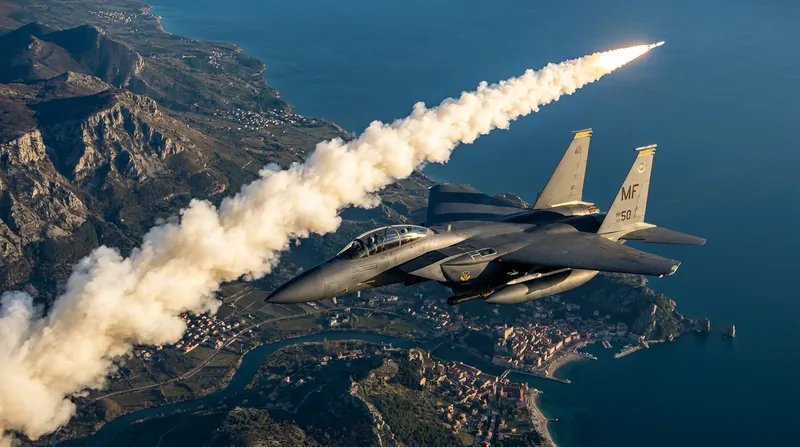
Under the new plan, the number of U.S. F-16 and F-15E fighter jets assigned to the rapid response force will be slashed by more than a third, dropping from 153 to 99 aircraft. The Pentagon is also cutting its commitment of aerial refueling planes from 79 to 63, and nearly halving its contribution of MQ-4 and MQ-9 Reaper reconnaissance drones.
The naval reductions are equally severe. The U.S. will remove one of its two aircraft carrier strike groups currently earmarked for European defense. Furthermore, Washington is withdrawing all of its submarines capable of launching Tomahawk cruise missiles from the crisis pool, alongside a significant reduction in P-8 Poseidon maritime patrol aircraft used for tracking enemy submarines.[1]
The drawdown is the operational centerpiece of "NATO 3.0," a policy initiative spearheaded by Under Secretary of War for Policy Elbridge Colby. The strategy is designed to force Europe to take primary responsibility for its own conventional defense, allowing the Pentagon to redirect high-end military assets toward the Indo-Pacific and the Western Hemisphere. U.S. officials formally notified allied defense policy chiefs of the impending cuts during a closed-door meeting in Brussels on May 22.[1][2]
The abruptness of the capability reduction has triggered unease across European capitals, with several allied governments seeking urgent clarification on the timeline of the withdrawal. The cuts arrive on the heels of other high-profile American drawdowns, including the cancellation of a planned 4,000-soldier armored brigade rotation to Poland and an order to withdraw 5,000 U.S. troops permanently stationed in Germany.[1][3]
Some European defense officials have warned that the rapid transition could create a dangerous vulnerability before the continent's defense industrial base can adequately scale up production. The commander of Latvia's armed forces recently cautioned that Russia could exploit a "window of opportunity" to threaten the Baltic states as early as 2028 if NATO's conventional deterrence wavers during the handover.[1]
Despite the anxiety, NATO's military leadership insists the alliance can absorb the American reductions without compromising its defensive posture. U.S. Army Col. Martin O'Donnell, a spokesperson for NATO's military headquarters, stated that the specific categories being cut by Washington are areas where European allies "already have or soon will have sufficient capabilities." The challenge, O'Donnell noted, is simply compelling member nations to formally assign those existing assets to the NATO Force Model.
The burden-sharing mandate will dominate the agenda at the upcoming NATO leaders' summit in Ankara, Turkey, this July. Grynkewich emphasized that the transition will be an ongoing process over several years, but the immediate demand signal is clear. "As the European pillar of the alliance gets stronger, this allows the U.S. to reduce its presence in Europe and limit itself to providing only those critical capabilities that allies cannot yet provide," he said.
Key points
- The U.S. is significantly reducing its contribution to the NATO Force Model, a rapid response pool for major crises.
- Cuts include a third of assigned F-16 and F-15E fighter jets, aerial refueling planes, and maritime patrol aircraft.
- Washington is also removing one aircraft carrier strike group and all cruise-missile submarines from the European crisis pool.
- U.S. military leadership states the move will end an 'unhealthy co-dependence' and force Europe to lead its own conventional defense.
Open questions
- It remains unclear exactly how quickly the Pentagon plans to withdraw these specific assets from the European theater.
- It is not yet known which European nations will step up to fill the specific shortfalls in maritime patrol and aerial refueling capabilities.
- The final impact on NATO's overall readiness timeline will not be fully understood until the July summit in Ankara.
Timeline
May 2, 2026
The U.S. announces the withdrawal of 5,000 troops from Germany.
May 19, 2026
Gen. Grynkewich warns Europe to expect additional U.S. troop withdrawals over time.
May 22, 2026
U.S. officials formally notify allied defense chiefs of the impending NATO Force Model cuts.
June 3, 2026
The U.S. publicly demands Europe and Canada rapidly increase their air and naval contributions to fill the gap.
July 2026
NATO leaders are scheduled to meet in Ankara, Turkey, to address the burden-sharing crisis.
- European Security Advocates
- Expresses concern over the speed of the U.S. drawdown and fears a potential capability gap that adversaries could exploit.
- U.S. Defense Leadership
- Argues that Europe must take primary responsibility for its own conventional defense to free up U.S. forces for other global theaters.
- NATO Command
- Maintains that the alliance can absorb the changes without critical gaps if member nations properly assign their existing military assets to the crisis pool.
- International Observers
- Focuses on the specific hardware reductions and the broader geopolitical implications of the U.S. pivot.
Perspectives this story doesn't cover
- Russian military analysts
- European defense contractors
Sources
Source coverage
3 outlets
4 viewpoints surfaced



- [1]Financial TimesEuropean Security Advocates
European allies seek clarification on US plans to remove key military assets
Read on Financial Times → - [2]U.S. European CommandU.S. Defense Leadership
Department of War officials notify Allies of rightsizing NATO Force Model contributions
Read on U.S. European Command → - [3]The GuardianEuropean Security Advocates
Vance says details of US-Iran agreement still to be worked out amid scepticism from Republicans
Read on The Guardian →
More in News & Politics
See all →Pacific Defense
Japanese Torpedo Sinks US Navy Vessel in Friendly Fire Incident During Valiant Shield Exercise
3 sources
Military Space
US Army Establishes Dedicated Space Operations Branch in Major Strategic Shift
4 sources
Ukraine Air War
Ukraine Signs $2.5 Billion Contract With Sweden for Gripen E Fighters, Securing Major Air Force Upgrade
5 sources
NATO Posture
Pentagon Discloses Massive Cuts to Strategic Military Assets Available to NATO
4 sources
Comments
Every angle. Every day.
Get News & Politics stories with full source coverage and perspective breakdowns, free every day.