
US Marines Deploy Iron Dome-Based Missile Defense System to Japan Amid Taiwan Tensions
The U.S. Marine Corps has deployed its new Medium-Range Interceptor Capability (MRIC), an air defense system utilizing Israel's Iron Dome technology, to Okinawa, Japan. The move aims to protect forward-deployed forces and counter Chinese military aggression near Taiwan.
By Hailey Scott

Share this story
The U.S. Marine Corps has officially deployed its new Medium-Range Interceptor Capability (MRIC) to Okinawa, Japan, marking a significant escalation in the Pentagon's efforts to counter Chinese military power in the Pacific. The deployment places advanced air defense batteries—built around the combat-proven technology of Israel's Iron Dome—directly on the "first island chain" just hundreds of miles from Taiwan.[1]
The MRIC system represents a critical technological leap for the Marines. It integrates the Corps' existing AN/TPS-80 Ground/Air Task-Oriented Radar (G/ATOR) and command systems with the SkyHunter missile, the American-manufactured variant of the Israeli Tamir interceptor. Each mobile launcher houses 20 SkyHunter missiles capable of neutralizing cruise missiles, drones, and fixed-wing aircraft at ranges up to 70 kilometers.
The strategic timing of the deployment coincides with heightened anxieties over Taiwan. In recent months, Beijing has intensified its military pressure campaign, frequently sending waves of fighter jets, bombers, and naval vessels across the Taiwan Strait's median line. U.S. defense officials have explicitly framed the MRIC deployment as a necessary measure to ensure American forces can survive and operate within China's weapon engagement zones if a regional conflict erupts.[2]
For decades, the U.S. military relied heavily on the assumption of absolute air supremacy, depending on Navy Aegis destroyers and Air Force fighter squadrons to protect ground troops. However, the rapid expansion of China's long-range cruise missile and drone arsenals has forced a strategic reckoning. The Marine Corps realized it needed organic, mobile air defense to protect its forward-deployed command posts, refueling points, and anti-ship missile batteries.[1]
The Okinawa deployment follows rigorous operational testing in the Pacific. Just last month, Marines from the III Marine Expeditionary Force evaluated the MRIC system during the Valiant Shield 2026 exercises in Guam. During those live-fire tests, the system successfully tracked and destroyed multiple subsonic aerial targets acting as surrogate cruise missiles, proving its viability in an island-hopping scenario.[3]
In Tokyo, the arrival of the MRIC has been quietly welcomed by defense planners who are rapidly expanding Japan's own military capabilities. The Japanese government views the hardened U.S. presence as a vital layer of deterrence against potential Chinese aggression. The U.S. and Japanese militaries are increasingly integrating their command-and-control networks to create a seamless air defense umbrella over the Ryukyu Islands.[3]
However, the deployment has sparked intense backlash from Beijing. Chinese state media and defense ministry spokespeople condemned the move, labeling it a dangerous provocation that militarizes the Asia-Pacific region. Beijing argues that by placing advanced interceptors so close to Taiwan, the U.S. is emboldening pro-independence forces in Taipei and artificially inflating regional tensions to justify its hegemonic presence.
Locally, the deployment has also reignited complex political dynamics within Okinawa. The prefecture already hosts the majority of U.S. military facilities in Japan, and local residents frequently protest the noise, environmental impact, and safety risks associated with the bases. Some Okinawan civic leaders have expressed alarm that hosting high-value assets like the MRIC makes their communities a primary target for preemptive strikes in the event of a Sino-American war.[2]
Looking ahead, the Marine Corps plans to scale the MRIC program significantly. Following this initial fielding with the 12th Marine Littoral Regiment in Okinawa, additional batteries are slated for deployment to Hawaii and Guam. As the Pentagon continues its sweeping redesign of Pacific forces, the ability to shoot down incoming cruise missiles from remote island outposts will become a foundational pillar of U.S. deterrence strategy in the Indo-Pacific.[1]
Viewpoints in depth
U.S. and Allied Planners
A necessary shield for forward-deployed forces in a contested environment.
For U.S. defense planners, the MRIC is a cornerstone of Force Design 2030—the Marine Corps' sweeping overhaul aimed at preparing for a potential conflict with China. By dispersing small, mobile units across the Pacific islands, the Marines aim to choke off critical sea lanes. However, these units must survive inside China's massive 'Weapon Engagement Zone.' Planners argue that relying solely on Navy destroyers for air defense is no longer viable; ground forces need their own organic shield against the thousands of cruise missiles and drones Beijing could launch in a conflict.
Beijing's View
An aggressive containment strategy that forces an arms race.
Chinese officials view the deployment of advanced missile defense systems to the first island chain as a direct threat to their national sovereignty and a blatant attempt at military containment. From Beijing's perspective, hardening U.S. bases in Japan is not a defensive measure, but an offensive enabler that allows Washington to intervene more freely in a Taiwan contingency. Chinese state media frequently argues that such deployments force China to expand its own missile capabilities, thereby fueling a dangerous regional arms race.
Okinawan Residents
Fear of becoming the frontline target in a superpower conflict.
In Okinawa, the deployment exacerbates long-standing tensions between local residents and the central government in Tokyo. Okinawans have historically borne the brunt of the U.S. military presence in Japan, and many civic leaders fear that hosting high-value assets like the MRIC paints a bullseye on their communities. Anti-base activists argue that rather than providing security, the presence of advanced missile batteries guarantees that Okinawa would be among the first targets struck in a preemptive attack during a Sino-American war.
Key points
- The U.S. Marine Corps deployed the MRIC air defense system to Okinawa, Japan.
- The system uses Iron Dome interceptors integrated with Marine radar and command networks.
- The deployment aims to protect U.S. forces from Chinese cruise missiles and drones.
- Beijing condemned the move as a provocation that destabilizes the region.
What we don’t know
- Whether the MRIC systems will be permanently stationed in Okinawa or rotated throughout the Pacific.
- How China might alter its own cruise missile deployment or targeting strategies in response to the hardened U.S. defenses.
How we got here
2019
The U.S. Army purchases two Iron Dome batteries to begin testing the system's capabilities.
July 2022
The Marine Corps successfully tests an MRIC prototype against cruise missile targets at White Sands Missile Range.
January 2024
The Marines showcase the MRIC system at Quantico, paving the way for its eventual fielding.
June 2026
The MRIC undergoes operational evaluation in Guam during the Valiant Shield military exercises.
July 2026
The first operational MRIC systems are deployed to Okinawa, Japan.
- U.S. Defense Establishment
- Argues that organic, mobile air defense is essential for the survival of forward-deployed Marines in the Pacific.
- Japanese Government
- Views the U.S. deployment as a necessary and welcome layer of deterrence against regional threats.
- Chinese State Media
- Condemns the deployment as a dangerous provocation that militarizes the region and threatens China's security.
- Regional Observers
- Highlights the escalating arms race in the Indo-Pacific and the complex local politics of hosting U.S. weapons.
Perspectives this story doesn't cover
- Taiwanese defense officials
- Okinawan anti-base activists
Sources
Source coverage
3 outlets
4 viewpoints surfaced



- [1]ReutersU.S. Defense Establishment
U.S. Marines deploy Iron Dome-based missile defense to Japan
Read on Reuters → - [2]Al JazeeraRegional Observers
Why the US Strategic Petroleum Reserve matters amid US-Iran tensions
Read on Al Jazeera → - [3]The Japan TimesJapanese Government
U.S. Marines deploy new air defense system to Okinawa amid regional security fears
Read on The Japan Times →

More in News & Politics
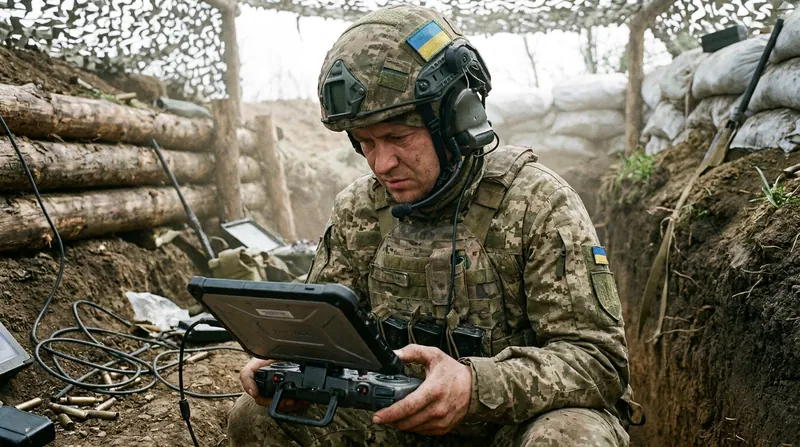
See all →Drone Warfare
CIA Director Says Russian Recruits Survive Just 20 to 30 Minutes on Ukraine Front Lines
8 sources
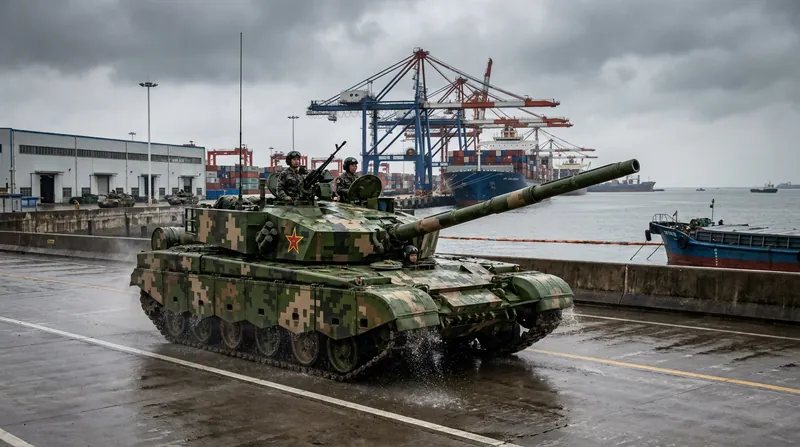
PLA Armor
China Deploys Premier Type 99 Heavy Tanks to Coastal Units Facing Taiwan and Japan
4 sources
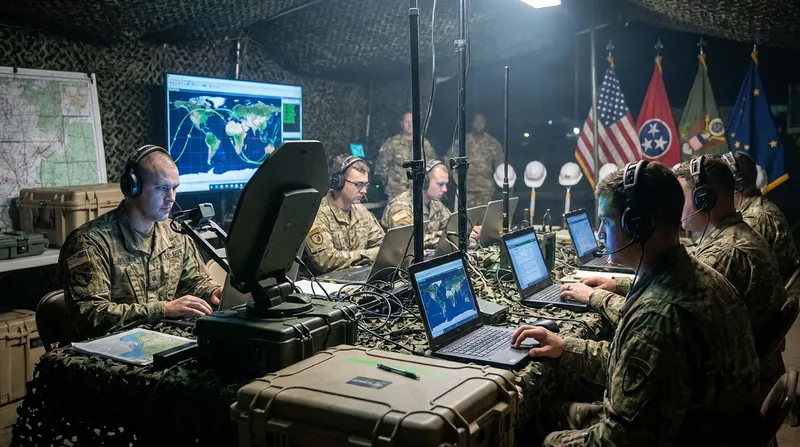
Military Space
US Army Establishes Dedicated Space Operations Branch in Major Strategic Shift
3 sources
Ukraine Air War
Ukraine Signs $2.5 Billion Contract With Sweden for Gripen E Fighters, Securing Major Air Force Upgrade
4 sources

Comments
Every angle. Every day.
Get News & Politics stories with full source coverage and perspective breakdowns, free every day.