
Gunmen Kill Seven and Wound Ten in Attack on Greek Orthodox Church in Southern Jordan
Assailants opened fire on a congregation attending a funeral in the city of Karak, prompting a massive security lockdown. Jordanian authorities have launched a manhunt for the attackers as the death toll reached seven.
Share this story
Gunmen armed with automatic weapons stormed a Greek Orthodox church in the southern Jordanian city of Karak on Friday, opening fire on a congregation gathered for a funeral. The assault on October 23, 2026, left at least seven people dead and ten others wounded.[1][5][7]
The attackers targeted the sanctuary while mourners were inside, firing indiscriminately before fleeing the scene. Jordanian state television broadcast emergency bulletins confirming the casualty count, marking one of the deadliest civilian attacks in the kingdom in recent years.[3][4]
Security forces immediately cordoned off the surrounding neighborhoods and launched a massive manhunt across the Karak governorate. Heavily armed tactical units deployed checkpoints along major highways connecting the southern city to the capital, Amman.[1][6]
Emergency medical teams transported the ten wounded victims to government hospitals in the region. Health ministry officials issued urgent appeals for blood donations, noting that several of the injured arrived in critical condition with severe gunshot wounds.[5][6]
Local hospitals in Karak activated mass casualty protocols to handle the sudden influx of victims from the church. Surgical teams were called in for emergency shifts, as several of the ten wounded individuals required immediate operative care to stabilize their conditions.[5][6]
Security lockdown and manhunt
The identity and affiliation of the gunmen remain unconfirmed, and no group immediately claimed responsibility for the massacre. Investigators are examining whether the shooters had ties to regional militant networks or if the attack stemmed from a localized dispute.[1][2]
Early reports from international outlets presented slight variations in the initial death toll. While CBS News initially cited authorities reporting six fatalities, Jordanian state media and regional networks later standardized the confirmed count at seven dead.[2][3]
The New Arab reported that state broadcasts explicitly announced "7 killed, 10 wounded in church shooting" as the situation developed. The Jordanian Public Security Directorate subsequently ordered residents to remain indoors as specialized units swept the district.[3][4]
Karak, a historic city renowned for its massive Crusader-era castle, sits approximately 140 kilometers south of the capital, Amman. The municipality features a mixed demographic where Christian and Muslim communities have historically maintained a peaceful and integrated coexistence.[6][7]
Targeting a minority community
The Greek Orthodox church serves as a central gathering point for Karak’s Christian minority. Attacking the congregation during a funeral service maximized the civilian presence inside the building, leaving families highly vulnerable in a confined space.[5][7]
Christians make up approximately four to six percent of Jordan’s total population of 11 million people. The kingdom is widely recognized as a sanctuary of religious tolerance in a deeply volatile region, making targeted sectarian violence exceptionally rare.[1][7]
King Abdullah II has consistently positioned Jordan as a protector of Christian heritage in the Middle East. The monarchy maintains custodial rights over major Christian and Islamic holy sites in neighboring Jerusalem, reinforcing its commitment to interfaith stability.[4][7]
The Vatican closely monitored the unfolding situation in Karak as the casualty figures emerged. Catholic and Orthodox leaders across the region expressed immediate alarm over the breach of a sacred space, warning that such violence threatens the kingdom's social fabric.[7]
Regional church leaders immediately called for heightened security protocols around all Christian places of worship across the country. The swift condemnation from international religious authorities underscored the global sensitivity surrounding the safety of ancient Christian communities in the Levant.[7]
Echoes of previous violence
The shooting revives memories of a deadly siege in the exact same city a decade ago. In December 2016, militants affiliated with the Islamic State group attacked Karak Castle, killing ten people, including seven Jordanian security officers.[1][6]
That deadly 2016 assault triggered a sweeping, nationwide crackdown on extremist cells operating within the country's borders. Jordanian intelligence agencies subsequently dismantled multiple underground networks that were attempting to recruit marginalized youth across the southern governorates.[1][6]
Economic pressures in southern Jordan have occasionally fueled localized unrest, complicating the broader security landscape. High unemployment rates and reduced public spending have created structural vulnerabilities that radical organizations historically attempt to exploit during periods of instability.[4][6]
The kingdom shares extensive borders with Syria, Iraq, and the occupied West Bank, requiring constant military vigilance to prevent weapons smuggling. Border guard units regularly intercept illicit arms shipments attempting to transit through Jordanian territory.[1][4]
Jordanian security forces have increasingly focused on neutralizing domestic threats before they materialize into coordinated attacks. The General Intelligence Directorate frequently conducts preemptive raids against suspected militant safe houses, though the Karak church shooting managed to bypass these early warning systems.[1][6]
Regional implications and next steps
Maintaining internal security remains an existential priority for the Jordanian government. The state relies heavily on its enduring reputation for stability to attract foreign investment, secure international financial aid, and sustain its vital tourism industry.[4][6]
Key points
- Gunmen attacked a Greek Orthodox church in Karak, Jordan, on October 23, 2026, during a funeral service.
- The assault killed at least seven people and left ten others wounded, according to state television.
- Security forces cordoned off the southern city and launched a manhunt for the fleeing perpetrators.
- The massacre marks a rare instance of sectarian violence in a kingdom known for religious tolerance.
Unanswered questions
- The identities and organizational affiliations of the gunmen remain unconfirmed.
- It is unclear whether the attackers targeted specific individuals at the funeral or aimed to maximize general casualties.
- Authorities have not confirmed exactly how many shooters were involved in the assault.
How we got here
December 2016
Militants attack Karak Castle, killing ten people and prompting a nationwide security crackdown.
October 23, 2026
Gunmen storm a Greek Orthodox church in Karak during a funeral, killing seven and wounding ten.
October 23, 2026
Jordanian security forces lock down the governorate and initiate a massive manhunt for the attackers.
- Jordanian Authorities
- Emphasize swift law enforcement action, the preservation of national stability, and the containment of the immediate threat.
- International Observers
- Focus on the implications for regional security, historical parallels to past attacks, and the protection of minority groups.
- Religious Leadership
- Condemn the violation of sacred spaces and advocate for interfaith solidarity and the protection of Christian heritage.
Perspectives this story doesn't cover
- Surviving congregation members
- Local Karak municipal leaders
Sources
Source coverage
7 outlets
3 viewpoints surfaced





- [1]Al JazeeraInternational Observers
At least seven killed after gunmen open fire at church in Jordan
Read on Al Jazeera → - [2]CBS NewsInternational Observers
At least 6 killed in attack on Jordan church during funeral, authorities say
Read on CBS News → - [3]The New ArabJordanian Authorities
7 killed, 10 wounded in church shooting in southern Jordan: state TV
Read on The New Arab → - [4]Arab NewsJordanian Authorities
Gunmen kill open fire at church in Jordan killing at least 7 people
Read on Arab News → - [5]Gulf NewsJordanian Authorities
Seven killed, ten injured in church shooting during funeral in southern Jordan
Read on Gulf News → - [6]Deutsche WelleInternational Observers
Jordan: Karak church shooting leaves 7 dead
Read on Deutsche Welle → - [7]Vatican NewsReligious Leadership
Jordan: Shooting at Greek Orthodox church in Karak
Read on Vatican News →

More in News & Politics
See all →Abortion Rights
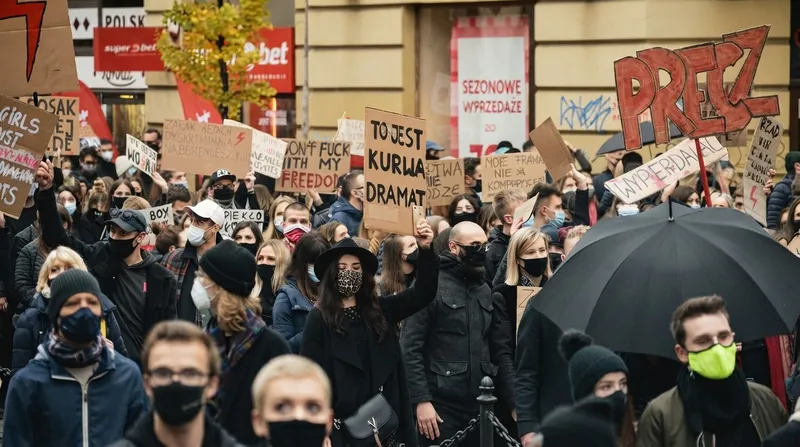
Thousands Rally Across Polish Cities Demanding Restoration of Legal Abortion Access
7 sources
Tibet Earthquake
Magnitude 7.0 Earthquake Strikes Tibet, Leaving at Least 16 Dead and Dozens Injured
5 sources
Sahel Security
Burkina Faso Reinstates Death Penalty for Terrorism and Treason Six Years After Abolition
7 sources
High Seas Jurisdiction
Flag State Jurisdiction Prevents Coastal Interceptions of Foreign Vessels Under UNCLOS Article 92
3 sources

Comments
Every angle. Every day.
Get News & Politics stories with full source coverage and perspective breakdowns, free every day.