
Ukraine Signs $2.5 Billion Contract With Sweden for Gripen E Fighters, Securing Major Air Force Upgrade
Kyiv has finalized a landmark $2.5 billion agreement to acquire Swedish-made Saab JAS 39 Gripen E fighter jets, marking a significant modernization of Ukraine's air combat capabilities. The deal signals a long-term European commitment to Ukraine's defense infrastructure independent of U.S. political shifts.
By Adel Khoury

Share this story
Ukraine and Sweden have finalized a historic $2.5 billion defense contract that will supply the Ukrainian Air Force with a fleet of advanced Saab JAS 39 Gripen E fighter jets. The agreement, signed Wednesday in Stockholm, marks one of the largest single defense procurement deals by Kyiv since the full-scale Russian invasion began, fundamentally reshaping the trajectory of Ukraine's air combat capabilities.[1]
The contract covers the manufacturing and delivery of an estimated 48 Gripen E aircraft, alongside comprehensive pilot training, ground crew instruction, and an initial logistics and spare parts package. While exact delivery schedules remain classified for operational security, defense officials indicated that the first operational squadron is expected to be combat-ready by late 2027, following an accelerated training pipeline at Swedish air bases.
For Ukraine, the Gripen E represents a highly specialized asset tailored to its exact operational environment. Unlike the F-16s currently in Ukrainian service, which require pristine, long runways, the Gripen was explicitly designed during the Cold War to operate from dispersed, improvised road bases hidden in forests. This agile combat employment capability makes the aircraft exceptionally difficult for Russian ballistic and cruise missiles to target on the ground.
Ukrainian Defense Minister Rustem Umerov hailed the agreement as a cornerstone of the country's future security architecture. Umerov stated during the signing ceremony that the Gripen is not just a fighter, but a survival mechanism for Ukrainian cities and frontline troops, emphasizing that the jets will be equipped with advanced electronic warfare suites capable of blinding Russian air defense radars.
In Stockholm, the deal is viewed as a watershed moment for Sweden's defense industry and its new role within NATO. Swedish Prime Minister Ulf Kristersson noted that the contract will require Saab to significantly expand its production lines in Linkoping, creating hundreds of jobs while solidifying Sweden's position as a premier arsenal of democracy in Northern Europe. The Swedish government is reportedly facilitating the financing through long-term, low-interest credit lines backed by the European Union.[1]
The procurement also signals a strategic pivot by Kyiv to diversify its military supply chains away from Washington. With U.S. military aid facing persistent political headwinds and shifting priorities in Congress, Ukraine is increasingly looking to European partners to guarantee its long-term defense. U.S. officials have quietly welcomed the deal, viewing it as a prime example of European allies shouldering a greater share of the continental security burden.[1][2]
Moscow reacted swiftly and aggressively to the announcement. The Russian Foreign Ministry summoned the Swedish ambassador, while Kremlin spokespeople warned that any Swedish-supplied aircraft would be considered legitimate, high-priority targets for Russian aerospace forces. Russian state media heavily emphasized that the introduction of Gripens would not alter the fundamental dynamics of the war, but would instead invite devastating retaliatory strikes against Ukrainian airfields.
Despite the Kremlin's rhetoric, international defense analysts argue the Gripen E's advanced sensor fusion and integration with the Meteor beyond-visual-range air-to-air missile will pose a severe challenge to Russian air superiority. The Meteor missile, which boasts a no-escape zone significantly larger than current Russian equivalents, could allow Ukrainian pilots to engage Russian bombers from deep within safe airspace.[4]
The integration of the Gripen fleet will run parallel to Ukraine's ongoing deployment of F-16s and Mirage 2000s, creating a complex but highly capable mixed-fleet air force. While managing multiple platforms presents a logistical hurdle, NATO advisors have been working with Kyiv for over a year to establish unified maintenance hubs in neighboring Poland and Romania to service the diverse aircraft.[3][4]
As the ink dries on the $2.5 billion contract, the immediate focus shifts to the human element. The first cohort of Ukrainian pilots, many of whom already have combat experience in Soviet-era MiG-29s, are scheduled to arrive in Sweden next month to begin the intensive transition course. Their rapid mastery of the Gripen's digital cockpit will dictate how soon this major air force upgrade can make its presence felt in the skies over Ukraine.[1]
Viewpoints in depth
Ukrainian Defense Ministry
Focuses on the Gripen's survivability and its ability to blind Russian radar systems.
For Kyiv, the Gripen is the answer to a specific tactical nightmare: Russia's persistent ballistic missile strikes on Ukrainian airfields. Because the Gripen can be hidden in forests and flown off public highways by a small team of mobile mechanics, the Ukrainian Defense Ministry views it as the only Western fighter truly capable of surviving a long-term war of attrition. Furthermore, officials emphasize the jet's advanced electronic warfare suite, which they believe will allow Ukrainian pilots to operate closer to the front lines without being targeted by Russian S-400 air defense systems.
Swedish Government & Saab
Views the deal as a historic expansion of Sweden's defense industrial base and its role in NATO.
Stockholm sees this contract as validation of its independent defense doctrine. For decades, Sweden built fighters specifically to fight Russia without relying on NATO airbases. Now, as a full NATO member, Sweden is exporting that exact capability to the front lines. The $2.5 billion injection will allow Saab to scale up its production facilities in Linkoping, securing high-tech manufacturing jobs and cementing Sweden's status as a critical supplier of advanced weaponry for the European continent.
Russian Ministry of Defense
Frames the procurement as a dangerous escalation that will not change the war's outcome.
The Kremlin has consistently downplayed the impact of Western wonder-weapons, and the Gripen is no exception. Russian defense officials argue that their aerospace forces and ground-based air defenses are more than capable of neutralizing the Swedish jets. However, Moscow has also issued stark warnings that any infrastructure used to house or service the Gripens—potentially including facilities in neighboring NATO countries if used as safe havens—will be treated as legitimate military targets, raising the specter of cross-border escalation.
Key points
- Ukraine and Sweden signed a $2.5 billion contract for Saab JAS 39 Gripen E fighter jets.
- The Gripen is designed to operate from improvised road runways, protecting it from Russian airfield strikes.
- The deal includes an estimated 48 aircraft, pilot training, and long-term logistics support.
- The first operational squadron is expected to be combat-ready by late 2027.
What we don’t know
- The exact delivery schedule for the first batch of Gripen E fighters.
- Whether the contract includes the highly sought-after Meteor beyond-visual-range missiles.
- How Russia will adapt its targeting strategies to hunt Gripens operating from dispersed road bases.
How we got here
May 2023
Ukraine officially requests the Gripen fighter jet from the Swedish government.
Late 2024
Swedish pilots begin familiarization training for a select group of Ukrainian aviators.
Early 2025
Sweden formally joins NATO, clearing domestic political hurdles for major arms exports to conflict zones.
July 2026
Ukraine and Sweden officially sign the $2.5 billion procurement contract in Stockholm.
- European Security Establishment
- See the deal as a major step toward European strategic autonomy and a boost for the continent's defense industrial base.
- Ukrainian Defense Advocates
- View the Gripen as the ultimate survival tool for Ukraine's air force due to its ability to operate from hidden road bases.
- U.S. Burden-Sharing Proponents
- Welcome the contract as evidence that European allies are finally taking financial and material responsibility for their own backyard.
- Russian State Apparatus
- Frame the delivery of advanced Western jets as a dangerous escalation that will result in the destruction of Ukrainian airfields.
Perspectives this story doesn't cover
- Swedish taxpayers funding the EU-backed credit lines
- Frontline Ukrainian infantry awaiting close air support
Sources
Source coverage
4 outlets
4 viewpoints surfaced




- [1]ReutersEuropean Security Establishment
Ukraine and Sweden sign $2.5 bln deal for Gripen fighter jets
Read on Reuters → - [2]Fox NewsU.S. Burden-Sharing Proponents
Trump enters final NATO summit day as Ukraine, defense spending take center stage
Read on Fox News → - [3]Al JazeeraRussian State Apparatus
Russia touts ‘war with NATO’ amid losses in Ukraine
Read on Al Jazeera → - [4]The GuardianEuropean Security Establishment
European parliament finally approves Trump tariff deal
Read on The Guardian →
More in News & Politics
See all →Defense Procurement
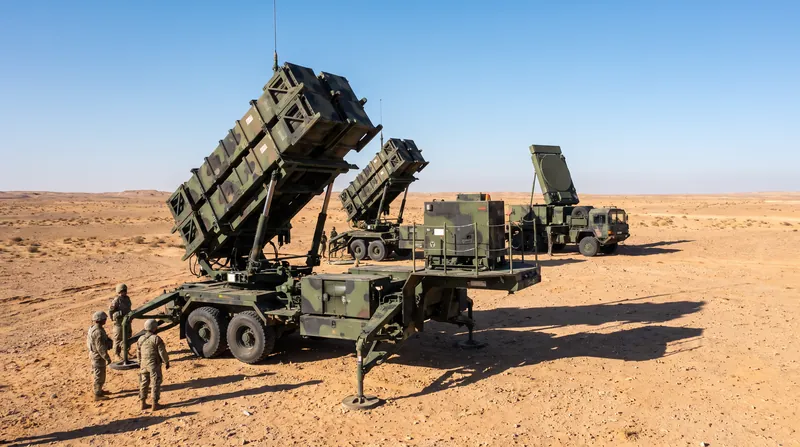
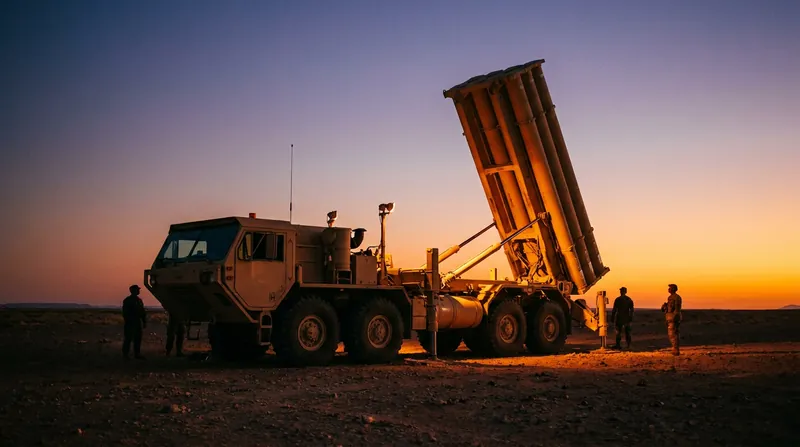
Lockheed Martin Secures $35 Billion Contract to Quadruple THAAD Interceptor Production
4 sources
Drone Warfare
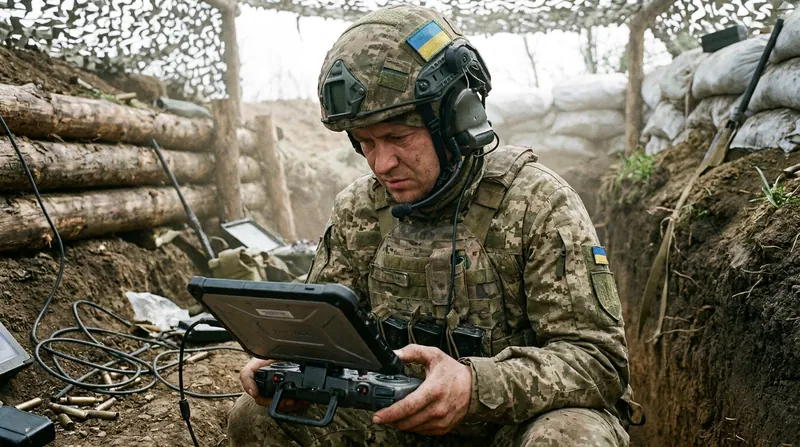
CIA Director Says Russian Recruits Survive Just 20 to 30 Minutes on Ukraine Front Lines
8 sources
PLA Armor
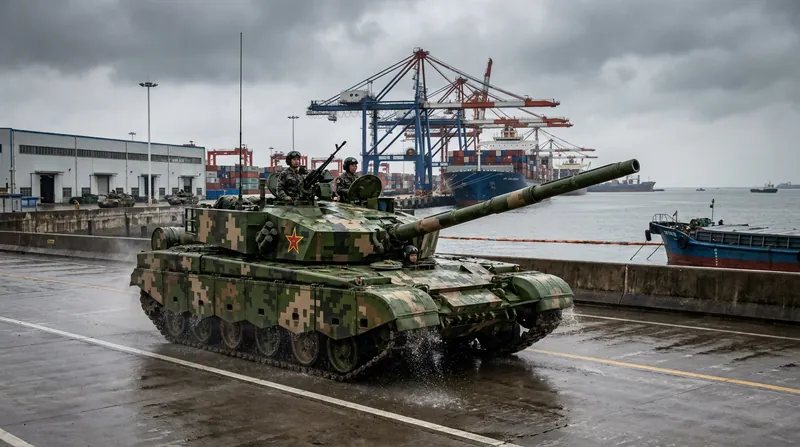
China Deploys Premier Type 99 Heavy Tanks to Coastal Units Facing Taiwan and Japan
4 sources
Pacific Defense
US Marines Deploy Iron Dome-Based Missile Defense System to Japan Amid Taiwan Tensions
3 sources
Comments
Every angle. Every day.
Get News & Politics stories with full source coverage and perspective breakdowns, free every day.