
How Bus Rapid Transit (BRT) Systems Actually Work: The Cost-Effective Alternative to Light Rail
By combining the speed and capacity of light rail with the flexibility of rubber-tired vehicles, Bus Rapid Transit is transforming how cities solve urban congestion. Dedicated lanes, off-board ticketing, and smart intersections allow these systems to bypass traffic at a fraction of the cost of a new train line.

- Transit Pragmatists
- Urban planners and municipal leaders who view BRT as the most cost-effective way to rapidly deploy high-quality mass transit.
- Rail Advocates
- Transit purists who argue that light rail offers superior ride quality, higher capacity, and stronger permanence for real estate development.
- Street-Space Preservationists
- Local business owners and drivers who resist the removal of general traffic lanes and street parking required to build dedicated busways.
Perspectives this story doesn't cover
- Disability Rights Advocates
- Transit Union Operators
The short answer
- Bus Rapid Transit (BRT) is a high-capacity transit mode designed to emulate the speed and reliability of light rail using rubber-tired vehicles.
- Core features include dedicated bus-only lanes, off-board fare collection, platform-level boarding, and transit signal priority at intersections.
- BRT can typically be constructed for a fraction of the cost of light rail, allowing cities to build comprehensive networks rapidly.
- The 'BRT Standard' scorecard was created to prevent 'BRT creep,' where cities water down essential features to avoid removing street parking or general traffic lanes.
Every growing city eventually hits a wall where traffic congestion strangles daily life. For the average commuter, the daily drive becomes a creeping, unpredictable crawl. When residents demand a solution, the conversation almost inevitably turns to trains. Light rail and subways offer the gold standard of urban mobility: speed, reliability, and the dignity of stepping out of the elements into a climate-controlled station. But for municipal taxpayers and city councils, rail presents a paralyzing financial reality. Laying track can cost upwards of $100 million to $200 million per mile, and the environmental reviews, land acquisition, and construction can take decades.[2]
This leaves local governments facing a seemingly impossible choice: bankrupt the city to build a few miles of train track for the next generation, or settle for cheap, slow local buses that sit in the exact same traffic as the cars they are meant to replace. For the commuter standing in the rain waiting for a delayed bus, neither option solves the problem today. But over the last two decades, a third option has emerged that resolves this tension, offering the performance of a train on the budget of a bus.[5]
Enter Bus Rapid Transit (BRT). At its core, BRT is a high-capacity urban public-transit system designed to emulate the speed, reliability, and passenger experience of light rail, but using rubber-tired vehicles. It is not simply a standard bus with a new paint job. True BRT requires a fundamental redesign of how the vehicle interacts with the street, stripping away the friction points that make traditional bus routes so agonizingly slow.[1][2]
The most critical mechanism of a successful BRT system is the dedicated right-of-way. The primary reason local buses are slow is that they share lanes with private cars, delivery trucks, and turning traffic. BRT solves this by physically separating the transit vehicle from general traffic, often placing bus-only lanes in the center of the roadway rather than along the curb. For a commuter, this means gliding past miles of gridlocked cars, completely insulated from the congestion of the rush hour commute.[1][4]
But avoiding traffic is only half the battle; the other major source of delay is the boarding process. On a traditional bus, passengers queue at a single front door, fumbling with cash, cards, or mobile apps while the vehicle idles at the curb. BRT eliminates this bottleneck through off-board fare collection. Passengers purchase tickets or tap their transit cards at kiosks before the vehicle arrives. When the bus pulls up, multiple wide doors open simultaneously, allowing dozens of people to board and exit in seconds—exactly like a subway train.[3][4]
To make this rapid boarding possible, BRT stations utilize platform-level boarding. Instead of forcing passengers to climb steep steps or wait for the driver to deploy a mechanical wheelchair ramp, the station platform is elevated to sit perfectly flush with the floor of the bus. For a parent with a stroller, a rider with a bicycle, or a commuter using a wheelchair, this roll-on, roll-off access transforms the transit experience from a physical hurdle into a seamless transition.[1][4]
Behind the scenes, BRT systems rely on invisible digital infrastructure to maintain their speed. Transit Signal Priority (TSP) technology allows the approaching bus to communicate directly with traffic lights. If a BRT vehicle is nearing an intersection, the system can hold a green light for a few extra seconds or truncate a red light early. This ensures that the bus rarely has to stop for anything other than picking up passengers, shaving crucial minutes off the total travel time.[3][4]
Behind the scenes, BRT systems rely on invisible digital infrastructure to maintain their speed.
The financial implications of these mechanisms are staggering. Because BRT utilizes existing roadways and avoids the immense costs of laying steel track and building overhead catenary wires, it can be constructed for a fraction of the cost of light rail. A city can often build ten miles of high-quality BRT for the price of a single mile of light rail. For taxpayers voting on transit bonds, this means a comprehensive, city-wide rapid transit network can be funded and delivered in a matter of years, rather than waiting decades for a single train line to reach their neighborhood.[2][5]
The concept was not born in the wealthy transit capitals of Europe or North America, but in the rapidly growing cities of Latin America. Curitiba, Brazil, pioneered the first fully integrated BRT system in 1974, proving that a developing city could achieve mass transit without a subway budget. The model was later supercharged by Bogotá, Colombia, whose TransMilenio system moves millions of passengers a day with efficiency that rivals the world's busiest underground metros.[1]
In the United States, transit agencies have increasingly embraced the mode to rapidly scale their networks. Cities that lack the density or capital for rail—such as Indianapolis, which launched its Red Line, and the Twin Cities region, which is expanding a 165-mile network—have successfully launched BRT corridors that have dramatically increased ridership. Since 2016, hundreds of miles of BRT lines have been put into service across the country, fundamentally altering local real estate and commuting patterns.[3][5]
However, the flexibility of BRT is also its greatest vulnerability. Because it does not require permanent steel tracks, local politicians are often tempted to compromise on its core features to appease vocal opposition. This phenomenon, known as "BRT creep," occurs when a city waters down the design—perhaps removing the dedicated lane to save street parking, or abandoning off-board fare collection to cut station costs. The result is a compromised system that looks like BRT but operates with the sluggishness of a standard local bus, ultimately failing to attract riders who have the option to drive.[1][2][5]
To protect the integrity of the mode, international transit organizations established the BRT Standard. This rigorous scorecard evaluates corridors based on their right-of-way, station design, and service planning, awarding Gold, Silver, or Bronze ratings. For a local resident advocating for better transit, the BRT Standard provides a vital tool to hold city planners accountable, ensuring that the promised "rapid" transit actually delivers rail-like performance rather than just a branded bus.[1][2][5]
Beyond speed and cost, true BRT serves as a powerful catalyst for urban equity and environmental sustainability. By providing reliable, dignified mobility, it connects transit-dependent populations to broader job markets, healthcare, and educational opportunities that were previously out of reach. Furthermore, as transit agencies increasingly adopt battery-electric articulated buses, these corridors are becoming entirely zero-emission, significantly reducing local air pollution and greenhouse gas emissions compared to the thousands of private cars they replace.[3][4]
The permanence of high-quality BRT infrastructure also triggers a shift in local real estate markets. Developers are historically hesitant to build dense housing or retail around a painted bus stop that a transit agency could relocate overnight. But a Gold-standard BRT station—with its concrete platforms, glass shelters, and dedicated right-of-way—signals a permanent municipal investment. This transit-oriented development brings cafes, apartments, and grocery stores directly to the station, allowing residents to live comfortably without the financial burden of owning a car.[2][3]
Ultimately, the rise of Bus Rapid Transit challenges the deeply ingrained assumption that high-quality public transportation must involve a train. For the daily commuter deciding whether to grab their car keys or walk to the station, the propulsion mechanism of the vehicle matters far less than its frequency, reliability, and speed. By reallocating street space to prioritize the movement of people rather than the storage of private vehicles, BRT proves that cities already possess the infrastructure to solve their transit crises—they just need the political will to use it differently.[1][2][5]
Jargon, explained
- Bus Rapid Transit (BRT)
- A high-capacity public transit system that uses buses in dedicated lanes to emulate the speed and reliability of light rail.
- Dedicated Right-of-Way
- A traffic lane exclusively reserved for transit vehicles, physically separated from private cars to prevent congestion delays.
- Off-Board Fare Collection
- A system where passengers pay for their tickets at the station before the bus arrives, allowing for rapid boarding through all doors.
- Platform-Level Boarding
- Station designs where the waiting platform is elevated to the exact height of the bus floor, enabling seamless roll-on access without stairs.
- Transit Signal Priority (TSP)
- Technology that allows approaching transit vehicles to communicate with traffic lights, extending green lights or shortening red lights to reduce delays.
- BRT Creep
- The gradual watering down of BRT features during the planning process, often resulting in a system that operates no faster than a standard local bus.
Sources
Source coverage
5 outlets
3 viewpoints surfaced




- [1]WikipediaStreet-Space Preservationists
Bus rapid transit
Read on Wikipedia → - [2]Victoria Transport Policy InstituteRail Advocates
Bus Rapid Transit
Read on Victoria Transport Policy Institute → - [3]Metro TransitTransit Pragmatists
Bus Rapid Transit
Read on Metro Transit → - [4]MARTATransit Pragmatists
BRT: Bus Rapid Transit
Read on MARTA → - [5]Factlen Editorial TeamTransit Pragmatists
Synthesis by Factlen editorial team
Read on Factlen Editorial Team →
Comments

More in Automotive & Transportation
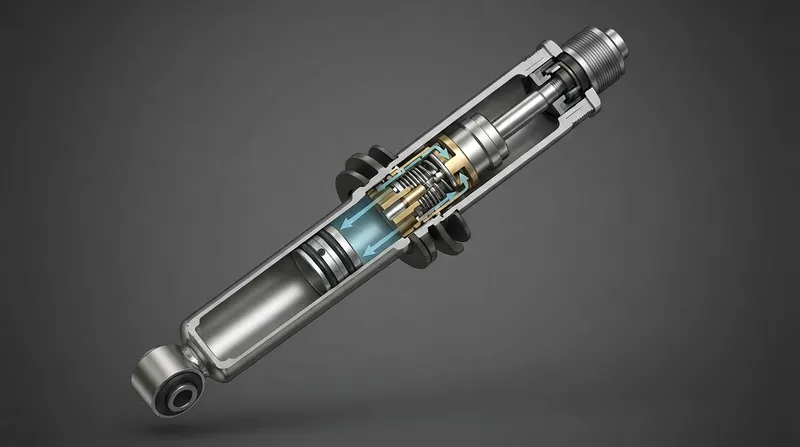
See all →Suspension Dynamics
The Trade-Off Between High-Frequency and Low-Frequency Damping: How Shock Absorber Valving Dictates Ride and Handling
7 sources
Infrastructure Standard
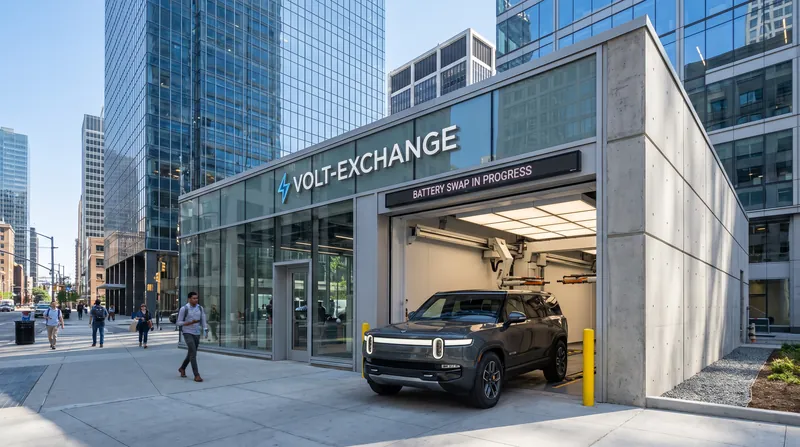
Geely Takes 30 Percent Stake in Nio Power at $2.4 Billion Valuation to Expand Battery Swapping
7 sources
Charging Infrastructure
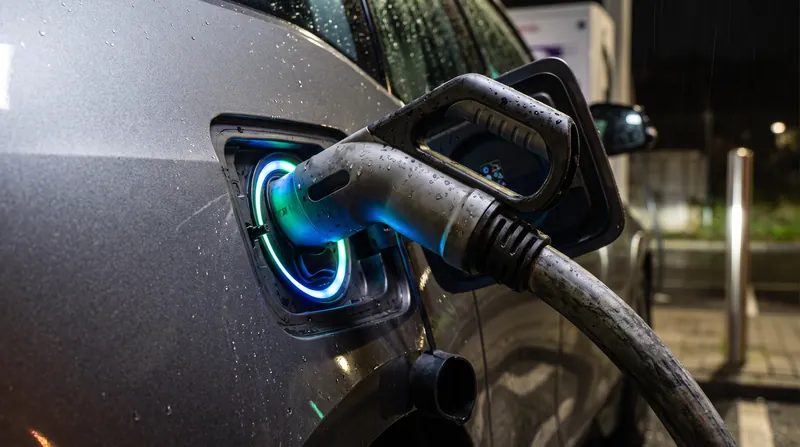
CCS, CHAdeMO, and GB/T: The Three Global Standards for EV Charging Connectors
6 sources
Solid-State Batteries
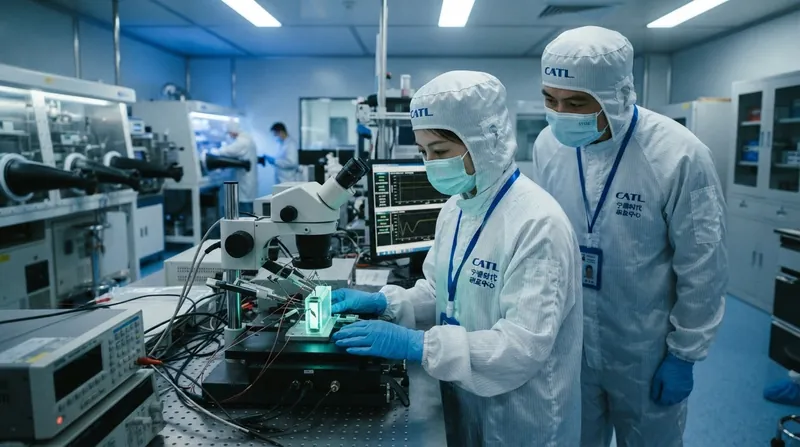
China Unveils National 5-Year Plan to Lead Global Solid-State Battery Mass Deployment by 2030
8 sources
Every angle. Every day.
Get Automotive & Transportation stories with full source coverage and perspective breakdowns delivered to your inbox.