
China Approves Construction of Eight New Nuclear Reactors in Major Expansion Push
China's State Council has greenlit an estimated $25 billion investment to build eight new nuclear reactors across four coastal provinces, accelerating the country's push for zero-carbon baseload power.

On July 31, 2026, China's State Council approved the construction of eight new nuclear reactors across four coastal provinces, committing approximately $25 billion to the expansion. The decision greenlights a mix of domestically developed third-generation technologies, marking the first batch of atomic energy approvals under the country's 15th Five-Year Plan.
Chaired by Premier Li Qiang, the executive meeting emphasized that the new units must adhere to the highest global safety standards, signaling a continued acceleration of China's nuclear buildout. The move cements the nation's position as the primary driver of global nuclear capacity growth, contrasting sharply with the sluggish pace of reactor construction in Western markets.[2][3][4]
The sheer scale of the deployment underscores the speed at which Chinese energy planners are moving. The eight units will be distributed across four distinct sites: the Jinqimen plant in Zhejiang, the Taipingling facility in Guangdong, the Zhuanghe site in Liaoning, and the Laiyang plant in Shandong.
Once operational, each reactor will add over 1,100 megawatts of capacity to the grid. Collectively, this $25 billion infrastructure package will generate enough electricity to power millions of homes and heavy industrial centers along China's eastern seaboard, providing a massive injection of zero-carbon energy into the country's most economically vital regions.[1][2][7]
Technologically, the approvals represent a maturation of China's domestic engineering capabilities. Six of the newly approved reactors will utilize the Hualong One, or HPR1000, design. This pressurized water reactor has become China's flagship export and domestic workhorse. Notably, four of these units—located at the Jinqimen and Taipingling sites—have been specifically designated as demonstration projects for the upgraded Hualong One 2.0. This next-generation iteration incorporates years of operational feedback from the first wave of units, optimizing the plant layout for faster modular construction and integrating highly advanced digital control systems.[1][2]
The mechanical architecture of the Hualong One series relies on a sophisticated combination of active and passive safety systems. In a conventional reactor, electrically driven pumps are required to circulate cooling water over the hot nuclear fuel. If the plant loses power, the core can overheat.
Third-generation designs like the Hualong One solve this by installing massive, gravity-driven water tanks above the reactor. In the event of a total station blackout, valves automatically open, allowing gravity and natural thermal circulation to cool the core for days without any human intervention or external electricity.[1][6]
While the Hualong One dominates the current pipeline, the remaining two reactors slated for the Laiyang plant in Shandong will deploy a different technology: the Guohe One, or CAP1400. Developed by the State Power Investment Corporation, the Guohe One is an enlarged, 1,500-megawatt evolution derived from the Westinghouse AP1000 design.
The Laiyang project is particularly significant because it represents the first standardized, batch-built deployment of this specific reactor class. Once all six planned units are completed at the Laiyang site, it is projected to become China's largest single nuclear power station by installed capacity.[1][2][7]
This aggressive nuclear buildout is fundamentally a grid management strategy. China currently leads the world in renewable energy deployment, adding hundreds of gigawatts of wind and solar capacity to its grid annually. However, the intermittent nature of weather-dependent generation creates severe balancing challenges for grid operators. When the sun sets or the wind stops blowing, the grid experiences sudden, massive drops in power supply that must be instantly replaced to prevent frequency collapses and rolling blackouts.[5][6]
To maintain stability, a power grid requires vast amounts of firm, dispatchable baseload power—electricity that can be generated continuously, 24 hours a day, regardless of the weather. Historically, China has relied heavily on its massive fleet of coal-fired power plants to provide this essential stability. As the country pushes to decarbonize its economy, nuclear energy has emerged as the only scalable, zero-carbon alternative capable of running continuously at the high capacity factors required to replace coal.[3][5]
The July approvals are a calculated step toward meeting Beijing's binding energy targets. The central government has set an ambitious goal to reach 110 gigawatts of installed nuclear capacity by 2030. As of mid-2026, China operates 64 commercial reactors with a combined capacity of approximately 64 gigawatts, already making it one of the largest atomic fleets in the world. Achieving the 2030 target requires connecting dozens of new reactors to the grid over the next four years, representing a 76 percent surge from recent levels.[4][5][6]
The urgency of this timeline is compounded by surging domestic electricity demand. The rapid electrification of China's transportation sector, combined with the explosive growth of energy-intensive artificial intelligence data centers and advanced manufacturing hubs, has pushed regional grids to their absolute limits. Nuclear power is uniquely positioned to provide the high-density, reliable energy required to fuel this industrial transition without derailing the nation's climate commitments.[4][5]
By approving reactors in steady batches of six to ten per year, China has cultivated a deeply integrated and highly efficient domestic supply chain. The research, development, and construction of these plants now support an ecosystem of nearly 6,000 upstream and downstream enterprises. These domestic companies manufacture the specialized metallurgy, precision valves, heavy forgings, and digital instrumentation required for the nuclear island, effectively steering the broader upgrading of China's high-end manufacturing sector.[3]
This standardized approach unlocks economies of scale that have eluded Western nuclear programs. By building the same reactor designs repeatedly, construction crews move seamlessly from one unit to the next, applying lessons learned, streamlining logistics, and drastically reducing build times. Unlike the bespoke, first-of-a-kind reactor projects that have faced severe delays and multi-billion-dollar cost overruns in the United States and Europe, China's batch-building strategy treats nuclear plants more like heavy manufacturing products than unique infrastructure megaprojects.[2][6]
Beyond national energy policy, the $25 billion investment serves as a targeted economic stimulus for the host regions. The projects are explicitly designed to attract private capital participation, stabilize regional economic operations, and provide long-term, high-paying employment in advanced engineering sectors. The influx of capital and infrastructure development will provide a sustained economic boost to the coastal provinces over the decade-long construction lifecycle.[3]
The geographic distribution of the new plants is highly deliberate. By clustering the reactors in Liaoning, Shandong, Zhejiang, and Guangdong, energy planners are locating generation capacity directly adjacent to China's most power-hungry coastal economies. This strategic siting minimizes the need to build expensive, long-distance ultra-high-voltage transmission lines to carry power from the resource-rich interior to the industrialized coast, reducing transmission losses and improving regional energy resilience.[4][5]
The environmental stakes of the expansion are globally significant. A single 1,200-megawatt nuclear reactor can generate roughly 10 billion kilowatt-hours of electricity annually. Displacing that volume of coal-fired generation prevents millions of tons of carbon dioxide from entering the atmosphere each year. This substitution is a critical mechanism for China to meet its pledge of peaking carbon emissions before 2030 and achieving full carbon neutrality before 2060.[3][7]
As China cements its domestic nuclear ecosystem, it simultaneously positions itself as a dominant exporter of atomic technology. The operational track record currently being established by the Hualong One fleet provides a powerful proof-of-concept for international buyers. Countries seeking turnkey, financed nuclear power solutions to meet their own climate and energy security goals are increasingly looking to Beijing, which can now point to a proven, standardized product backed by a robust supply chain.[3][6]
While the 110-gigawatt target remains an ambitious logistical hurdle, the steady cadence of State Council approvals indicates that the administrative and financial bottlenecks that previously slowed China's nuclear sector have been largely resolved. The focus has now shifted entirely to execution. With 37 reactors already under construction and eight more now greenlit, tens of thousands of engineers are working around the clock to bring the next generation of atomic power online before the decade closes.[3][5][6]
Key points
- China's State Council approved eight new nuclear reactors across four coastal provinces, representing a $25 billion investment.
- Six of the units will utilize the domestically developed Hualong One design, including four upgraded 2.0 demonstration models.
- Two reactors in Shandong will deploy the 1,500-megawatt Guohe One technology, marking its first standardized batch-built project.
- The expansion is designed to provide firm, zero-carbon baseload power to balance China's massive influx of intermittent solar and wind energy.
Unanswered questions
- Whether the domestic supply chain can maintain its current pace without encountering raw material or specialized labor shortages as the 2030 deadline approaches.
- The exact timeline for when the Hualong One 2.0 demonstration units will achieve commercial operation.
How we got here
2011–2019
China pauses new nuclear approvals following the Fukushima disaster to review safety standards.
2020
The government resumes steady approvals, shifting focus to domestically developed third-generation reactor designs.
March 2024
Beijing sets a binding target to reach 110 gigawatts of installed nuclear capacity by 2030.
July 2026
The State Council approves eight new reactors, marking the first batch of the 15th Five-Year Plan.
- State Energy Strategists
- Prioritize energy security, grid stability, and technological sovereignty through domestic reactor designs.
- Nuclear Industry Observers
- Focus on the economies of scale, supply chain maturation, and export potential of China's batch-building strategy.
- Economic & Climate Analysts
- Highlight the role of nuclear as a zero-carbon baseload to enable deeper penetration of intermittent renewables.
Perspectives this story doesn't cover
- Local Coastal Residents
- Renewable Energy Developers
Sources
Source coverage
7 outlets
3 viewpoints surfaced







- [1]NucNetNuclear Industry Observers
China Approves Eight New Nuclear Plants, Including Four With Hualong One 2.0 Technology
Read on NucNet → - [2]World Nuclear NewsNuclear Industry Observers
China approves construction of eight more reactors
Read on World Nuclear News → - [3]China DailyState Energy Strategists
8 new nuclear reactors given full approval
Read on China Daily → - [4]South China Morning PostState Energy Strategists
China accelerates nuclear roll-out with new reactor plans in energy-security push
Read on South China Morning Post → - [5]Caixin GlobalEconomic & Climate Analysts
Beijing Clears Eight New Reactors as China Accelerates Nuclear Buildout
Read on Caixin Global → - [6]Energy News BeatNuclear Industry Observers
China Approves Eight New Nuclear Plants, Including Four With Hualong One 2.0 Tech
Read on Energy News Beat → - [7]Nuclear Engineering InternationalNuclear Industry Observers
China approves eight new nuclear reactors
Read on Nuclear Engineering International →
More in Energy
See all →Nuclear Policy
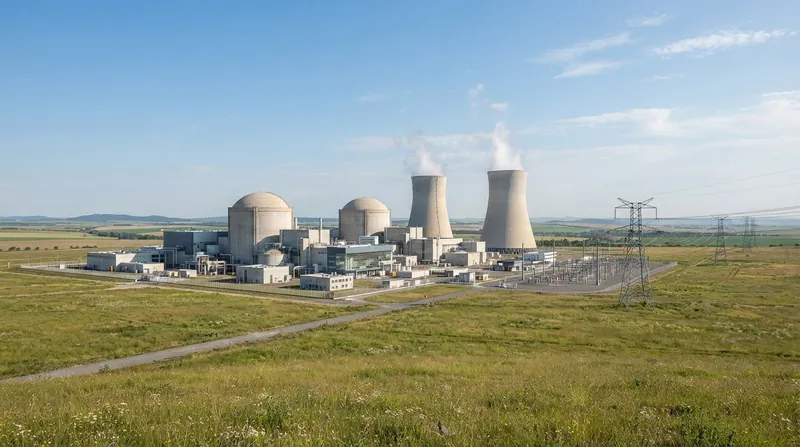
Taiwan Clears First Regulatory Hurdle to Restart Maanshan Nuclear Plant Amid Chipmaker Demand
3 sources
Radiation Dosimetry
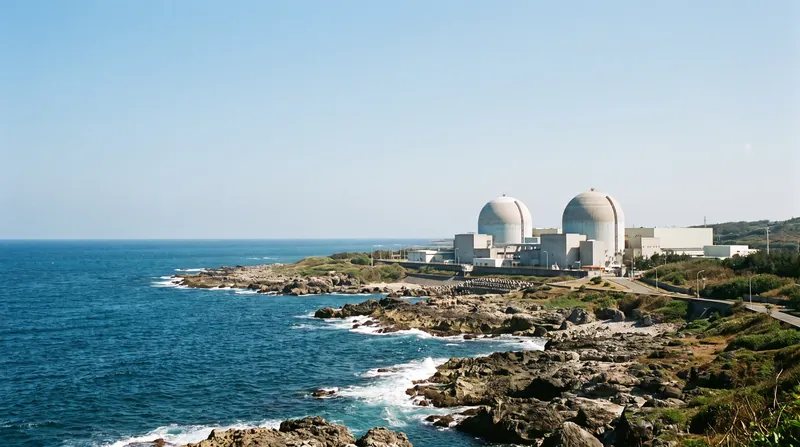
Converting Physical Radiation to Biological Risk: The Math Behind the Gray and the Sievert
9 sources
Waste Management
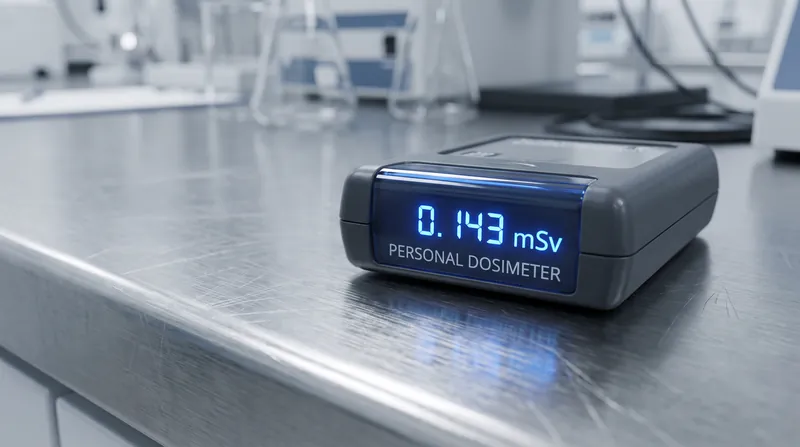
How the 30-Year Half-Lives of Cesium-137 and Strontium-90 Dictate Nuclear Waste Storage Duration
5 sources
Fusion Physics
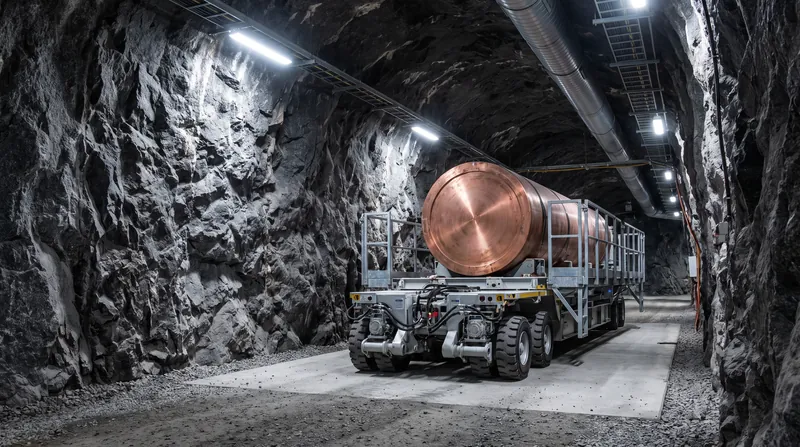
How the Lawson Criterion's Triple Product Dictates the Threshold for Sustained Nuclear Fusion
7 sources
Comments
Every angle. Every day.
Get Energy stories with full source coverage and perspective breakdowns, free every day.