
Autonomous Robot Assembles First Structural Component in Space
A robotic truss builder developed by Caltech and funded by DARPA has successfully assembled a structure in orbit without astronaut assistance. The milestone overcomes the physical size limits of rocket fairings, paving the way for massive space telescopes and solar arrays constructed directly in space.
By Ishani Patel

Share this story
For the first time, an autonomous robot has successfully assembled a structure in the vacuum of space without the help of astronauts. The robotic truss builder spent six months in low Earth orbit piecing together the framework for a reflector antenna.[1][3]
Developed by researchers at the California Institute of Technology, the payload is known as the Autonomous In-Space Tensioned Reflector Assembly, or ASTRA. The demonstration marks a fundamental shift in how large spacecraft and scientific instruments could be built in the future.[1][4]
"This is the first time that a structure has been autonomously constructed in space," said Sergio Pellegrino, a Caltech aerospace professor and senior research scientist at the Jet Propulsion Laboratory who led the ASTRA team.[1]
The robot was tasked with building a 1.4-meter-diameter reflector antenna. To achieve this, the system utilized composite fiber tubes, aluminum joints, and a lightweight reflective surface made from Kapton, a durable polymer film commonly used in spacecraft.[1][3]
Hitching a Ride to Orbit
ASTRA began its journey on March 30, 2026, launching from Vandenberg Space Force Base in California. The payload hitched a ride to low Earth orbit aboard a SpaceX Transporter-16 mission, sharing the flight with multiple other projects.[1]
The robotic builder traveled aboard the Vigoride 7 orbital space vehicle, operated by the commercial space company Momentus Inc. The Vigoride 7 spacecraft provided the necessary power, communications, and imaging support for the ASTRA payload during its six-month mission.[1]
Despite the complexity of its task, the entire ASTRA payload occupied approximately one cubic meter of space. This compact package contained both the assembly machinery and all the raw materials required for the orbital construction project.[1]
The payload launched with two pre-built bays of the truss, which were reinforced with diagonal tubes and connecting joints. It also carried an arm-like manipulator and motorized dispensers loaded with the individual components needed to construct the remaining sections.[1]
Snapping Together Space Structures
Operating on commands sent by researchers on Earth, the autonomous manipulator systematically retrieved structural tubes and connecting joints from its storage dispensers. The robotic arm then snapped the components together to form a larger supporting framework known as a perimeter truss.[1][4]
The robot joined the components into repeating, identical sections called bays. As each bay was completed, the system attached the Kapton reflective mesh and pushed the finished section outward, making room in the assembly box to begin constructing the next segment.[1][3]
The Defense Advanced Research Projects Agency, which funded the mission, compared the automated assembly process to piecing together a high-tech K'Nex or Tinkertoy structure. However, engineers noted that automating these precise connections in the harsh environment of space is incredibly complex.[1][3]
The robotic system had to maintain its geometry and tolerate the extreme conditions of low Earth orbit. The delicate structure was required to withstand spacecraft maneuvers, thermal cycling, and eclipses without sagging or losing its intended shape.[1]
From Laboratory to Orbit
Before reaching space, the ASTRA team spent years developing the concept and design methodology. During the first two phases of the DARPA project, researchers successfully demonstrated that the autonomous assembly approach worked in laboratory settings on Earth.[1][3]
The transition from ground testing to flight readiness happened rapidly. The Caltech team completed, tested, and delivered the space payload to their commercial host, Momentus Inc., in less than 12 months, ensuring it was ready for the March 2026 launch window.[1][3]
During the orbital mission, the engineering team faced strict operational constraints. Daily communications with the Vigoride 7 spacecraft were limited, forcing the autonomous system to execute its complex assembly sequences with minimal real-time oversight from the ground control team.[1]
Breaking the Launch Bottleneck
Historically, humanity’s ambitions in space have been strictly bottlenecked by the physical size of rocket fairings. Every structure placed in orbit has been limited by the diameter of the launch vehicle that carried it from Earth.[4]
To deploy large systems, space agencies have traditionally relied on two methods. Engineers either fold massive structures like origami and hope they unfurl correctly in orbit, or they send astronauts on grueling spacewalks to assemble the pieces manually.[4]
Both traditional approaches impose severe practical limits on the size, mass, and complexity of the finished structure. The ASTRA demonstration introduces a third, highly scalable option: transporting raw materials into orbit and using robots to assemble the complete system on-site.[4]
By overcoming cargo size constraints, this autonomous construction technology paves the way for a new generation of space architecture. Engineers can now design structures optimized specifically for the space environment, rather than prioritizing ground testing and launch survival.[2][4]
Manufacturing in the Void
The ASTRA space demonstration serves as the third phase of DARPA’s Novel Orbital and Moon Manufacturing, Materials, and Mass-efficient Design program. Known as NOM4D, the initiative was established in 2022 to pioneer in-orbit manufacturing technologies.[1][4]
The ultimate vision of the NOM4D program is to ferry raw materials from Earth and manufacture enormous structures directly in space. The initiative aims to develop the foundational materials, processes, and designs needed to support future off-Earth space systems.[2][4]
"NOM4D's objective is to enable efficient, scalable construction of very large structures in space," said Andrew Detor, the DARPA program manager. "By 'very large,' I mean hundreds of meters or kilometers in scale. Nothing approaching that scale can be achieved today."[1]
Caltech’s ASTRA experiment is one of only two projects selected to advance to the program’s third phase of orbital demonstrations. The other project, led by the University of Illinois Urbana-Champaign, is testing a method for hardening carbon tubes aboard the International Space Station.[1][4]
Scaling Up for Deep Space
During its six months in orbit, the ASTRA truss builder successfully constructed a third bay of the truss structure. While the team ran into time limitations and could only build the initial section of the antenna, the mission achieved its primary goal.[1][3]
The orbital demonstration proved the feasibility of the proposed assembly concept under real space conditions. Caltech researchers confirmed that the robotic approach works and is highly scalable to very large perimeter trusses holding giant reflective surfaces.[1][3]
The success of the ASTRA mission could dramatically change how scientific instruments are built in the future. The technology lays the groundwork for constructing gargantuan space telescopes capable of gazing deeper into the universe than ever before.[4]
The success of the ASTRA mission could dramatically change how scientific instruments are built in the future.
Beyond telescopes, autonomous orbital construction could enable massive solar power stations capable of harvesting clean energy directly from space. As the technology matures, the next generation of space exploration infrastructure will likely be built entirely on-site.[4]
Key points
- A Caltech-designed robot successfully assembled a structural truss in low Earth orbit without human intervention.
- The ASTRA payload launched aboard a Momentus Vigoride 7 vehicle on a SpaceX Transporter-16 mission in March 2026.
- The robot used a mechanical arm to connect composite fiber tubes and aluminum joints into a reflector antenna framework.
- The DARPA-funded demonstration proves that giant space structures can be built on-orbit, bypassing the size constraints of rocket fairings.
Unanswered questions
- How the autonomous assembly system will scale to handle the thermal and dynamic loads of kilometer-wide structures.
- The exact timeline and funding for deploying a fully operational, autonomously built space telescope or solar array.
- Whether future iterations will utilize materials mined directly from the Moon, as envisioned by the broader NOM4D program.
How we got here
March 2022
DARPA establishes the NOM4D program to investigate in-orbit manufacturing technologies.
March 30, 2026
The ASTRA payload launches to low Earth orbit aboard a SpaceX Transporter-16 mission.
November 2026
Caltech and DARPA confirm the robot successfully assembled a structural bay in space.
- Payload Engineers
- Focuses on the mechanics of the ASTRA payload and the successful deployment of the truss bays in orbit.
- Defense Research Planners
- Focuses on the NOM4D program's strategic goal of manufacturing kilometer-scale structures in space.
- Scientific Community
- Focuses on the broader implications for future space exploration, telescopes, and solar power.
Perspectives this story doesn't cover
- Commercial satellite operators
- Astronaut corps
Sources
Source coverage
4 outlets
3 viewpoints surfaced




- [1]California Institute of TechnologyPayload Engineers
Caltech Robotic Space Demo Successfully Builds in Space
Read on California Institute of Technology → - [2]Defense Advanced Research Projects AgencyDefense Research Planners
NOM4D program demonstrates automated in-space assembly
Read on Defense Advanced Research Projects Agency → - [3]Phys.orgScientific Community
Robot successfully builds space structure in first autonomous construction demo
Read on Phys.org → - [4]ScienceDailyScientific Community
Robot Builds in Space for the First Time
Read on ScienceDaily →

More in Science
See all →Space Agriculture
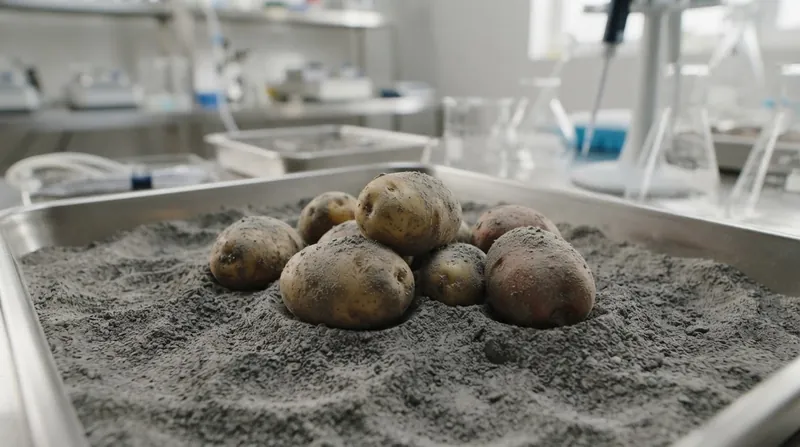
Scientists Successfully Cultivate Potatoes in Simulated Lunar Soil for Future Moon Bases
7 sources
Stellar Evolution
Astronomers Observe Rare Stellar Merger as Giant Star Engulfs Companion in Andromeda
5 sources

Planetary Defense
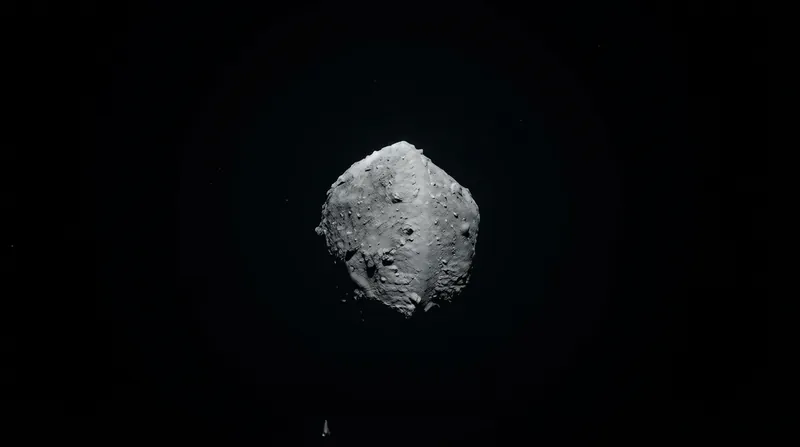
Europe's Hera Spacecraft Begins Close Inspection of Asteroid Rammed by NASA
5 sources
Stellar Evolution
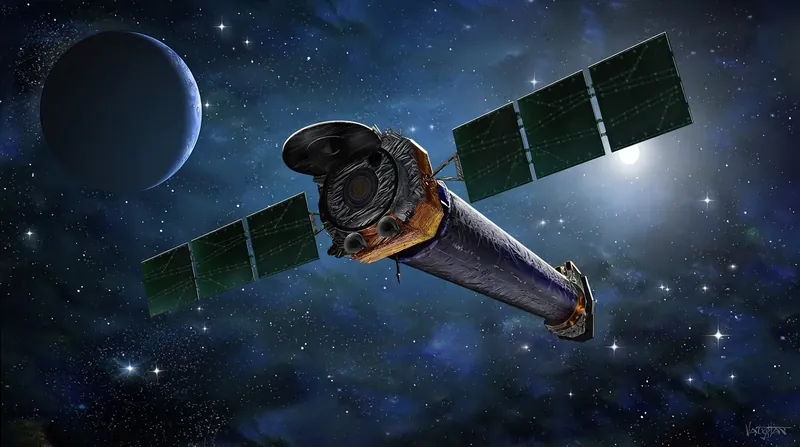
Chandra X-ray Observatory Identifies Hidden Black Hole or Neutron Star Driving Giant Star's Eruptions
4 sources
Comments
Every angle. Every day.
Get Science stories with full source coverage and perspective breakdowns, free every day.